
Kirjahaku
Etsi kirjoja tekijän nimen, kirjan nimen tai ISBN:n perusteella.
1000 tulosta hakusanalla Turing Sara
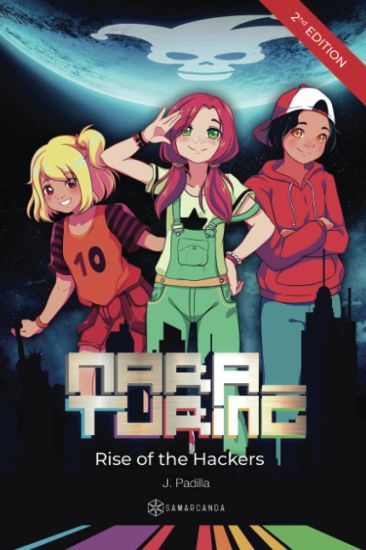
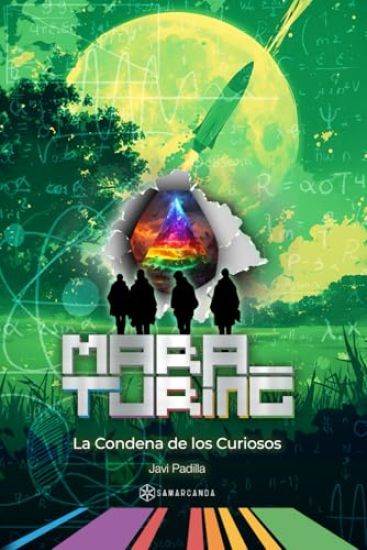
Hacker girl Mara Turing receives a mysterious message right before leaving for her summer vacations: "I need your help." This cry for help comes from her uncle, a member of the famous group of hackers known as the "Dirtee Loopers". He had disappeared without a trace five years ago, leaving a blank space in Mara's life, which had a great impact on her childhood. The young hacker and her friends embark on an adventure to find her uncle, Arnold Turing, that leads them to learn how to program in a garage in Queens (New York), see the world through more critical eyes and face the evil duo: Hermes, an extremely advanced artificial intelligence, and Falko McKinnon, the most dangerous hacker in the world.


Alan Turing: Kann eine Maschine denken? (Mit dem englischen Originaltext im Anhang)
Alan Turing
Brave New Books
2025
nidottu

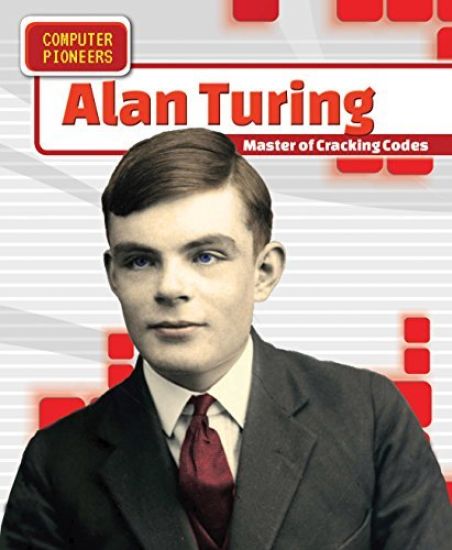
This book explores the life of Alan Turing, the man regarded as the father of computer science and artificial intelligence. Readers will discover the fascinating facts of Turing's exciting code breaking career during World War II, which helped the Allies win many important battles. The text includes details about his designs for one of the first computers, and how his work laid the foundation for other computer pioneers. Turing's life story is told through engaging text, accompanied by vivid photographs, a timeline, and sidebars. Readers are sure to grasp important STEM topics through the accessible scope of this captivating biography.
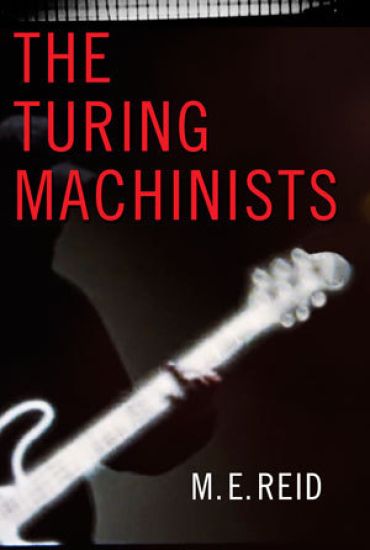
At seventeen, Del’s world seems to be falling apart. He’s managed his Asperger’s well, has a solid group of friends in his special needs class at school, and even manages to get by among people who don’t understand his brand of communication. But his parents are splitting up, and Del is certain he can save his family. To do it, he decides he needs to live out his father’s dream of musical stardom. He gets together with some of his friends and they form The Turing Machinists, an all-Asperger’s rock band. But they’ll need help — and Del seeks that help in the form of his neighbour, a reclusive rock legend who would rather have nothing to do with the music scene.
Das Turing-Paradoxon: wie viel Freiheit dürfen wir für unsere Sicherheit opfern?
Sven Truderung
tredition GmbH
2025
nidottu

Alan Turing's Puzzle Machine: 100 Number Puzzles
Emily Stead; Lucy Doncaster
ARCTURUS PUBLISHING LTD
2026
nidottu

Alan Turing's Puzzle Machine: 100 Brain Teasers
Emily Stead; Lucy Doncaster
ARCTURUS PUBLISHING LTD
2026
nidottu

Das Turing-Paradoxon
tredition
2026
sidottu
The Turing Protocol
Harpercollins
2026
pokkari

Alan Turing
VDM Publishing House
2010
nidottu
Observera att förlaget som ger ut denna produkt baserar innehållet i sina produkter på fria källor som Wikipedia. Boken är med stor sannolikhet endast ett utdrag ur dessa informationskällor, alltså inte en vanlig bok i den bemärkelsen.

Church-Turing Thesis
OmniScriptum
2026
pokkari

Church-Turing-Deutsch Principle
VDM Publishing House
2010
nidottu
Observera att förlaget som ger ut denna produkt baserar innehållet i sina produkter på fria källor som Wikipedia. Boken är med stor sannolikhet endast ett utdrag ur dessa informationskällor, alltså inte en vanlig bok i den bemärkelsen.

Symmetric Turing Machine
VDM Publishing House
2010
nidottu
Observera att förlaget som ger ut denna produkt baserar innehållet i sina produkter på fria källor som Wikipedia. Boken är med stor sannolikhet endast ett utdrag ur dessa informationskällor, alltså inte en vanlig bok i den bemärkelsen.
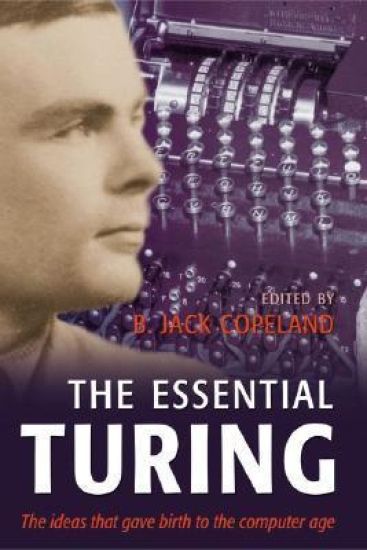
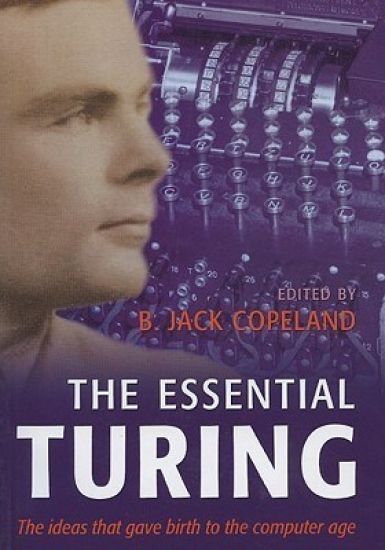
The Essential Turing
Clarendon Press
2004
sidottu
Alan Turing was one of the most influential thinkers of the 20th cwentury. In 1935, aged 22, he developed the mathematicl theory which explained what computers would and would not be able to do. All subsequent computer design was modelled on this work. At the outbreak of hostilities with Germany in September 1939, he hoined the Goverment Codebreaking team at Bletchley Park, Buckinghamshire and played a crucial part in deciphering the Engima code. After the war, his theoretical work was turned into reality as he developed Britain's first computers at the National Physical Laboratory and the Royal Society Computing Machine Laboratory at Manchester University. Turing also worked extensively on the study of how the mind operates. He was a founding father of modern cognitive science and pioneered the concept of Artifical Intelligence. He developed the use of computers to model biological growth, launching the discipline now referred to as Artificial Life. The papers in this book are the key works for understanding Turing's phenomenal contribution across all these fields. The collection includes Turing's declassified wartime "Treatise on the Enigma"; letters from Turing to Churchill and to codebreakers; lectures, papers and broadcasts which opened up the concept of AI and its implications; and the paper which formed the genesis of the investigation of Artifical Life.
The Essential Turing
Clarendon Press
2004
nidottu
Alan Turing, pioneer of computing and WWII codebreaker, is one of the most important and influential thinkers of the twentieth century. In this volume for the first time his key writings are made available to a broad, non-specialist readership. They make fascinating reading both in their own right and for their historic significance: contemporary computational theory, cognitive science, artificial intelligence, and artificial life all spring from this ground-breaking work, which is also rich in philosophical and logical insight. An introduction by leading Turing expert Jack Copeland provides the background and guides the reader through the selection. About Alan Turing Alan Turing FRS OBE, (1912-1954) studied mathematics at King's College, Cambridge. He was elected a Fellow of King's in March 1935, at the age of only 22. In the same year he invented the abstract computing machines - now known simply as Turing machines - on which all subsequent stored-program digital computers are modelled. During 1936-1938 Turing continued his studies, now at Princeton University. He completed a PhD in mathematical logic, analysing the notion of 'intuition' in mathematics and introducing the idea of oracular computation, now fundamental in mathematical recursion theory. An 'oracle' is an abstract device able to solve mathematical problems too difficult for the universal Turing machine. In the summer of 1938 Turing returned to his Fellowship at King's. When WWII started in 1939 he joined the wartime headquarters of the Government Code and Cypher School (GC&CS) at Bletchley Park, Buckinghamshire. Building on earlier work by Polish cryptanalysts, Turing contributed crucially to the design of electro-mechanical machines ('bombes') used to decipher Enigma, the code by means of which the German armed forces sought to protect their radio communications. Turing's work on the version of Enigma used by the German navy was vital to the battle for supremacy in the North Atlantic. He also contributed to the attack on the cyphers known as 'Fish'. Based on binary teleprinter code, Fish was used during the latter part of the war in preference to morse-based Enigma for the encryption of high-level signals, for example messages from Hitler and other members of the German High Command. It is estimated that the work of GC&CS shortened the war in Europe by at least two years. Turing received the Order of the British Empire for the part he played. In 1945, the war over, Turing was recruited to the National Physical Laboratory (NPL) in London, his brief to design and develop an electronic computer - a concrete form of the universal Turing machine. Turing's report setting out his design for the Automatic Computing Engine (ACE) was the first relatively complete specification of an electronic stored-program general-purpose digital computer. Delays beyond Turing's control resulted in NPL's losing the race to build the world's first working electronic stored-program digital computer - an honour that went to the Royal Society Computing Machine Laboratory at Manchester University, in June 1948. Discouraged by the delays at NPL, Turing took up the Deputy Directorship of the Royal Society Computing Machine Laboratory in that year. Turing was a founding father of modern cognitive science and a leading early exponent of the hypothesis that the human brain is in large part a digital computing machine, theorising that the cortex at birth is an 'unorganised machine' which through 'training' becomes organised 'into a universal machine or something like it'. He also pioneered Artificial Intelligence. Turing spent the rest of his short career at Manchester University, being appointed to a specially created Readership in the Theory of Computing in May 1953. He was elected a Fellow of the Royal Society of London in March 1951 (a high honour).
The Universal Turing Machine
Oxford University Press
1991
nidottu
This volume commemorates the work of Alan Turing, because it was Turing who not only introduced the most persuasive and influential concept of a machine model of effective computability but who also anticipated in his work the diversity of topics brought together here. As Newman put it in his memoir of Turing, "The central problem with which he started and to which he constantly returned is the extent and the limitations of mechanistic explanations of nature." Turing's paper "On computable numbers, with an application to the Entscheidungs problem" appeared in print in 1937. It contained Turing's thesis that every `effective' computation can be programmed on a Turing machine. Furthermore it contained the unsolvability of the halting problem and of the decision problem for first-order logic, and it presented the invention of the universal Turing machine. The publication of this idea is acknowledged as a landmark of the computer age. Part I of the volume explores the historical aspect with essays on the background, on Turing's work, and on subsequent developments. Part II contains an extensive series of essays on the influence and applications of these ideas in mathematics, mathematical logic, philosophy of mathematics, computer science, artificial intelligence, philosophy of language, philosophy of mind, and physics.