

Kirjahaku
Etsi kirjoja tekijän nimen, kirjan nimen tai ISBN:n perusteella.
1000 tulosta hakusanalla Veryl Obodi

Very Like a Whale
Edward M. White; Norbert Elliot; Irvin Peckham
Utah State University Press
2015
nidottu
Winner of the 2015 CPTSC Award for Excellence in Program Assessment Written for those who design, redesign, and assess writing programs, "Very Like a Whale" is an intensive discussion of writing program assessment issues. Taking its title from "Hamlet," the book explores the multifaceted forces that shape writing programs and the central role these programs can and should play in defining college education. Given the new era of assessment in higher education, writing programs must provide valid evidence that they are serving students, instructors, administrators, alumni, accreditors, and policymakers. This book introduces new conceptualizations associated with assessment, making them clear and available to those in the profession of rhetoric and composition/writing studies. It also offers strategies that aid in gathering information about the relative success of a writing program in achieving its identified goals. Philosophically and historically aligned with quantitative approaches, White, Elliot, and Peckham use case study and best-practice scholarship to demonstrate the applicability of their innovative approach, termed Design for Assessment (DFA). Well grounded in assessment theory, "Very Like a Whale "will be of practical use to new and seasoned writing program administrators alike, as well as to any educator involved with the accreditation process.
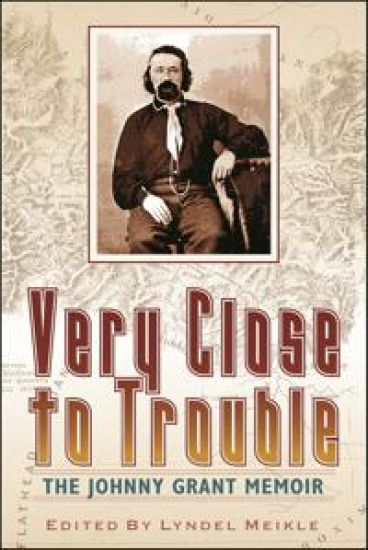
Very Close to Trouble
Washington State University Press
1996
pokkari
Trader, wrangler, and raconteur, Johnny Grant (1831-1907) lived "very close to trouble" on the wide open Montana/Idaho frontier of the mid-nineteenth century. A key pioneer of western Montana, Grant is memorialized today by the Grant-Kohrs Ranch National Historic Site, operated by the National Park Service at Deer Lodge, Montana.The son of a Hudson's Bay Company official, he was a young man caught in the cross-currents of Indian, Canadian, and American cultures. In his entertaining reminiscences, Grant delineates the differences as well as the frequent interaction and cooperation of these frontier peoples. As such, Very Close to Trouble brings to life the chiefs, warriors, traders, and ranchmen of the 1840s-1850s, and the miners, merchants, entrepreneurs, settlers, soldiers, and road agents who surged into the Bitterroots and northern Rockies with the gold strikes of the 1860s. In 1867, he relocated to Canada's Great Plains, witnessing the famous Riel Rebellion.Grant's description of the landscape and population of the early interior Northwest is a much anticipated addition to the meager historical writings of this pioneer era. His exciting observations of Montana's famous vigilante movement, for example, provide valuable new testimony to the Montana gold rush literature of the early 1860s. Grant himself barely escaped robbery and probable death at the hands of highwaymen. He never doubted that Sheriff Henry Plummer's extensive network of criminals were guilty as charged by the vigilance forces and deserved summary punishment. This and other valuable first-hand observations appear in this rare, long overdue addition to early Montana and Idaho history.
Very Much Better: A Cancer Memoir by a Boy Who Lived
Jason Paul Greer
Mountain Press Publishing Company
2019
nidottu
A classic story of an Inuit girl's first experience going alone under the ice to collect mussels. Eva's journey is a very special one. Today, she will walk on the bottom of the sea alone. She will go into the cave that is under the ice when the tide is out. She will search for mussels as her people have done for centuries. She will find herself in darkness. She will find too she has brought what she needs with her. She will come again into the light. Correlates to the Common Core State Standards in English Language Arts: CCSS.ELA-LITERACY.RL.K.3 With prompting and support, identify characters, settings, and major events in a story. CCSS.ELA-LITERACY.RL.2.5 Describe the overall structure of a story, including describing how the beginning introduces the story and the ending concludes the action.

Very few people realize that meditation can be used for more than simple relaxation. With visualization techniques, it can be applied to any problem or goal a person may have. For the first time, there is not only a case and a method for meditation, but a program of specific affirmations for use in such circumstances as: dieting, finding a new home, overcoming anger, buying a car, relieving tension, healing the body, and many others. With this guide, individuals may begin to apply the benefits of meditation to achieve real results in their daily lives. Try it and see for yourself.
Very Alternative Guide to Spinal Cord Injury
Anthony Papathomas; Joe Robinson
Easy On The Eye Books
2017
sidottu
An informative look at the ups, downs and sideways of having a spinal injury. From initial injury to escaping hospital and beyond, this guide might help you, or someone you know survive - maybe with a smile.
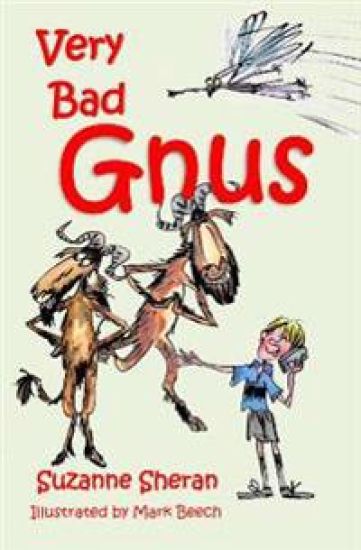
Suzanne Sheran, with her experience as an elementary school teacher had put together an engaging story where her protagonist Nat, or is that Gnat, along with his friends the Gnus, get into trouble dealing with difficult words with silent letters, and of course the dreaded homophone where words in different contexts are spelled differently. Oh dear It was not a good day for Nat Newman.Mrs. Nash at Newton School was having a spelling bee. It was Nat Newman's turn and his word to spell was...GnuNat went nuts When he got home he found some very upset gnus that went on a bit of a rampage introducing Nat to animals and objects that silent letters or more than one spelling. Beautifully illustrated by Mark Beech this book is an ideal reader for school or at home.

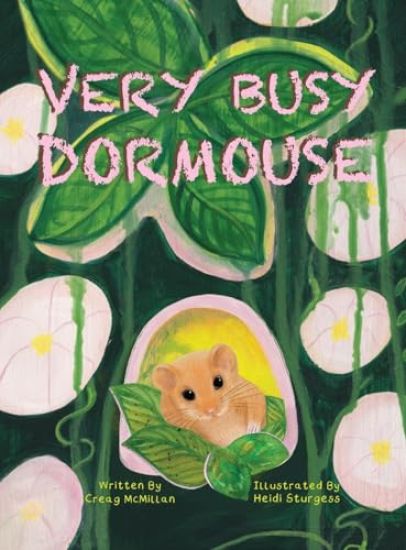
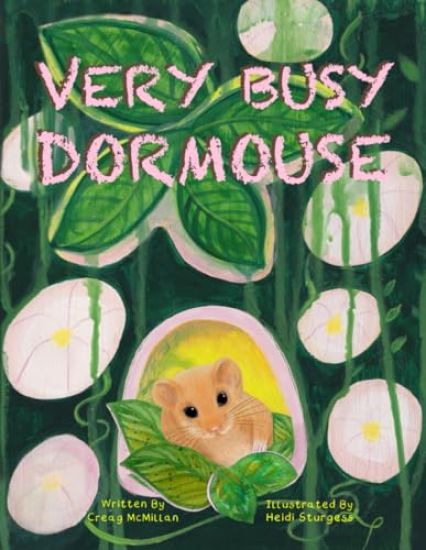
A beautifully illustrated, heartwarming, rhyming, read aloud holiday story.Bitsy, Pip Squeak and wee Squeaky Jack are running out of time. They must find a new home before Santa Mouse passes them by. And then they spot the glowing windows of a cozy house. It smells like cheese and candy canes and cherry pie. It is every mouse's dream come true. But when the three mice explore their new home, they discover that someone already lives there, and it isn't someone they want to meet ...56 pages of full colour illustrationsMore titles by the author: Halloween on the FarmThe Dream Team on the FarmKitty Cat CatnapA Snake on the MoonA Snake in the PaintA Snake in the CakeStomp, Stomp, StompVisit SrigleyArts.com for author/artist updates

Very High Finance & Policy of a Patriot
Paul Cahill; Otto Strasser
The A. K. Chesterton Trust
2016
nidottu
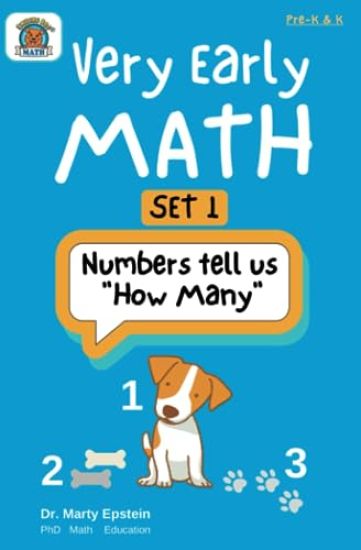
Think of this book series as the math equivalent of early phonics books. The goal of this first book SET is to start where math starts for a child. And that starting point is Not Counting. SET 1 of this series doesn't start with counting because for counting to make sense, a child must first understand why we count-to find out how many of something are in a group. So, an even better place to begin when trying to help a child understand numbers and to lay the foundation for math is to help a child understand the idea of a group by helping them recognize and label the small groups they can already "see." Children and adults have a natural ability to see and tell apart small quantities without counting. This ability is called subitizing. Most of us can easily identify a group of 1 ( * ) versus a group of 2 ( * * ) versus a group of 3 ( * * * ). But, a group with more just looks like different amounts of "many." SET 1 of this series helps a child recognize and name the size of small groups a child can already see and tell apart without counting: a group of "one" ( * ) a group of "two" ( * * ) and a group of "three" ( * * * ). Later SETS focus on counting and how counting is used to tell us "how many" in these small groups we can "see" as well as groups that are too large to tell "how many" just by looking.
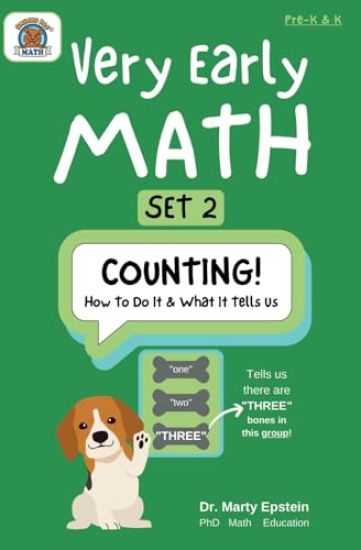
COUNTING It's not as easy as "1 - 2 - 3 " YIKES Many young children who can "count" don't understand why we count (to find out a group's size) or how counting works to tell us a group's size (the Cardinal Principle). This book is designed to help Informed by research and building on skills from Very Early Math SET 1, SET 2 provides tools to help your child understand the foundational math ideas of: Why we count (i.e., to find out a group's size), How counting tells us a group's size, How to count.This matters a lot Arithmetic simply won't make sense to a child who can "count," but who doesn't understand the idea of a group, that numbers tell us the size of a group, and how counting tells us a group's size. That child might think 1 + 2 = 3 meansSomething named "1" (because it happened to be counted first) combined with Something named "2" (because it happened to be counted second) becomes Something named "3?" This simply makes no sense It's not what 1 + 2 = 3 means mathematically.What does 1 + 2 = 3 mean mathematically? Here's an example of how it could be usedA group with 1 apple combined with a group with 2 apples equals a group with 3 apples.See how core (please excuse the pun when writing about apples) the idea of a "group" is to mathematics, even the most basic arithmetic? Understanding the idea of a group and how counting tells us the size of a group is a nonnegotiable, critical foundation to math.A child who doesn't yet have this understanding may be able to memorize 1 + 2 = 3, for example, but will not understand what 1 + 2 = 3 means. It's a bit like knowing how to pronounce and spell "cat" and "dog" without understanding what they mean.It turns out that many adults, caregivers, and early childhood educators assume a child understands the idea of a group and how counting tells us a group's size when the child, in fact, doesn't yet understand these ideas. And it turns out that many approaches we use to help a child learn these key ideas actually don't work as well as we think they do.That's why I made these books-to help children understand these core math ideas.

Grigsby is running the world's most dangerous game show. In Very Ferry, the third novella in the Grigsby Series, the stakes have never been higher. Grigsby has acquired the rights to launch a Japanese game show in America. Contestants are pushed to their absolute limits, physically and mentally, while aboard a ferry. The audience votes on how treacherous the obstacles are, which leads to chaos. Grigsby stands to make millions but learns the Yakuza have become involved. It's days away from the show's premiere, some of the contestants have jumped off the ferry to escape the audience's bloodlust. The police are questioning the safety of the show. Grigsby must leverage everything to foil his enemies while pleasing the greedy TV networks. Anything can happen aboard Very Ferry.

Very Truly Run After: A Novel of Squirrels and Romance
William H. DuQuette
Zymurgia House
2018
nidottu
A black-clad intruder. An ambush on the way to philosophy class. A full tackle on the way home from Sunday dinner. As a Traveler, Michael Henderson is better than most at running away from trouble-an important skill when the people who want a piece of you mean it literally. But what do you when your troubles can Travel after you? Turns out, it's all in where you run to. A light tale of manners, steam, squirrels, and romance, to say nothing of Maundelson's Finest Patented Engineer's Biscuits.