Kirjojen hintavertailu. Mukana 11 699 587 kirjaa ja 12 kauppaa.

Kirjahaku

Etsi kirjoja tekijän nimen, kirjan nimen tai ISBN:n perusteella.

1000 tulosta hakusanalla Vivek Aggarwal

Practical .NET for Financial Markets

Practical .NET for Financial Markets

Vivek Shetty; Manish Jayaswal

APress
2014
nidottu
This unique book examines up-to-the-minute uses of technology in financial markets and then explains how you can profit from that knowledge. To participate in mainstream .NET development, you must address the changes in financial markets by using the most sophisticated tools available, Microsoft .NET technology. Software developers and architects, IT pros, and tech-savvy business users alike will find this book comprehensive and relevant. Each chapter presents problems and solutions that cover business aspects and relevant .NET features. Each aspect of .NET is analyzed in its proper context, so you'll understand why it is relevant and applicable in a real-life business case.
Collaborative Care of the Facial Injury Patient, An Issue of Oral and Maxillofacial Surgery Clinics
Articles include: The Problem of Orofacial Injury, Acute and Chronic Psychological Reactions to Orofacial Injury, Technological Advances to Foster Collaborative Care, Screening for Psychological Problems in the Trauma Setting, Barriers to Collaborative Care: Patient and Provider Perceptions, Substance Use Problems and Correlates of Facial Injury, Facial Injury as a Marker of Domestic Violence, Social Support and Resource Needs as Mediators of Recovery After Facial Injury, and Integrated Care in General Trauma.
Web-Based and Traditional Outsourcing

Web-Based and Traditional Outsourcing

Vivek Sharma; Varun Sharma; K.S. Rajasekaran

Taylor Francis Inc
2011
sidottu
In today’s increasingly competitive business environment, organizations must be able to adapt to the ever-changing business landscape where traditional business concepts no longer ensure success. The future will be driven by value and competing ideas—creating an environment where old alignments and equations will be replaced by a global network of projects and brand equity can evaporate quickly. Scale business relationships or perish is becoming the new mantra. Written by a team of authors from the world's largest software outsourcer, Web-Based and Traditional Outsourcing explains how to leverage the Web to effectively manage and deploy people, resources, and competencies—regardless of their location. It introduces ground-breaking business models and frameworks that add significant value to outsourcing. This cutting-edge reference: Integrates sourcing, acquisition, payment, and sales into a single end-to-end solutionAddresses outsourced project management, as well as the offer and acceptance of technology servicesDetails how to reduce costs and improve delivery times in software projects through reuse Explains risk sharing, co-ownership, win-win business approaches, and equity-based contracts Examining emerging trends and the future of outsourcing, the text provides authoritative insights into what are becoming the new ways of doing business. The authors supply the enterprise-wide vision of corporate capabilities needed to address contemporary outsourcing issues and include helpful tools for evaluating offshore vendors and determining the best location for your infrastructure needs.
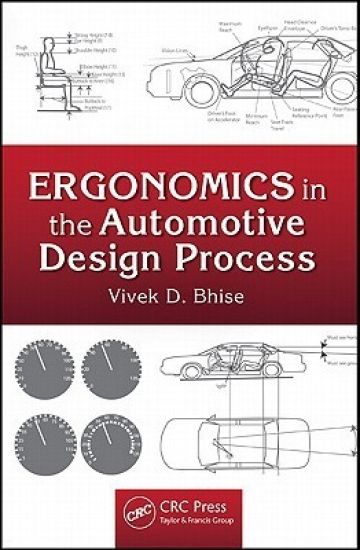
Ergonomics in the Automotive Design Process
The auto industry is facing tough competition and severe economic constraints. Their products need to be designed "right the first time" with the right combinations of features that not only satisfy the customers but continually please and delight them by providing increased functionality, comfort, convenience, safety, and craftsmanship. Based on the author's forty plus years of experience as a human factors researcher, engineer, manager, and teacher who has conducted numerous studies and analyses, Ergonomics in the Automotive Design Process covers the entire range of ergonomics issues involved in designing a car or truck and provides evaluation techniques to avoid costly mistakes and assure high customer satisfaction. The book begins with the definitions and goals of ergonomics, historic background, and ergonomics approaches. It covers human characteristics, capabilities, and limitations considered in vehicle design in key areas such as anthropometry, biomechanics, and human information processing. It then examines how the driver and the occupants are positioned in the vehicle space and how package drawings and/or computer-aided design models are created from key vehicle dimensions used in the automobile industry. The author describes design tools used in the industry for occupant packaging, driver vision, and applications of other psychophysical methods. He covers important driver information processing concepts and models and driver error categories to understand key considerations and principles used in designing controls, displays, and their usages, including current issues related to driver workload and driver distractions.The author has included only the topics and materials that he found to be useful in designing car and truck products and concentrated on the ergonomic issues generally discussed in the automotive design studios and product development teams. He distills the information needed to be a member of an automotive product development team and create an ergonomically superior vehicle.
Hamiltonian Cycle Problem and Markov Chains

Hamiltonian Cycle Problem and Markov Chains

Vivek S. Borkar; Vladimir Ejov; Jerzy A. Filar; Giang T. Nguyen

Springer-Verlag New York Inc.
2012
sidottu
This research monograph summarizes a line of research that maps certain classical problems of discrete mathematics and operations research - such as the Hamiltonian Cycle and the Travelling Salesman Problems - into convex domains where continuum analysis can be carried out. Arguably, the inherent difficulty of these, now classical, problems stems precisely from the discrete nature of domains in which these problems are posed. The convexification of domains underpinning these results is achieved by assigning probabilistic interpretation to key elements of the original deterministic problems. In particular, the approaches summarized here build on a technique that embeds Hamiltonian Cycle and Travelling Salesman Problems in a structured singularly perturbed Markov decision process. The unifying idea is to interpret subgraphs traced out by deterministic policies (including Hamiltonian cycles, if any) as extreme points of a convex polyhedron in a space filled with randomized policies.The above innovative approach has now evolved to the point where there are many, both theoretical and algorithmic, results that exploit the nexus between graph theoretic structures and both probabilistic and algebraic entities of related Markov chains. The latter include moments of first return times, limiting frequencies of visits to nodes, or the spectra of certain matrices traditionally associated with the analysis of Markov chains. However, these results and algorithms are dispersed over many research papers appearing in journals catering to disparate audiences. As a result, the published manuscripts are often written in a very terse manner and use disparate notation, thereby making it difficult for new researchers to make use of the many reported advances.Hence the main purpose of this book is to present a concise and yet easily accessible synthesis of the majority of the theoretical and algorithmicresults obtained so far. In addition, the book discusses numerous open questions and problems that arise from this body of work and which are yet to be fully solved. The approach casts the Hamiltonian Cycle Problem in a mathematical framework that permits analytical concepts and techniques, not used hitherto in this context, to be brought to bear to further clarify both the underlying difficulty of NP-completeness of this problem and the relative exceptionality of truly difficult instances. Finally, the material is arranged in such a manner that the introductory chapters require very little mathematical background and discuss instances of graphs with interesting structures that motivated a lot of the research in this topic. More difficult results are introduced later and are illustrated with numerous examples.
Inverting the Paradox of Excellence

Inverting the Paradox of Excellence

Vivek Kale

CRC Press Inc
2014
sidottu
Over time, overemphasis and adherence to the same proven routines that helped your organization achieve success can also lead to its decline resulting from organizational inertia, complacency, and inflexibility. Drawing lessons from one of the best models of success, the evolutionary model, Inverting the Paradox of Excellence explains why your organization must proactively seek out changes or variations on a continuous basis for ensuring excellence by testing out a continuum of opportunities and advantages. In other words, to maintain excellence, the company must be in a constant state of flux!The book introduces the patterns and anti-patterns of excellence and includes detailed case studies based on different dimensions of variations, including shared values variations, structure variations, and staff variations. It presents these case studies through the prism of the "variations" idea to help you visualize the difference of the "case history" approach presented here. The case studies illustrate the different dimensions of business variations available to help your organization in its quest towards achieving and sustaining excellence. The book extends a set of variations inspired by the pioneering McKinsey 7S model, namely shared values, strategy, structure, stuff, style, staff, skills, systems, and sequence. It includes case history segments for Toyota, Acer, eBay, ABB, Cisco, Blackberry, Tata, Samsung, Volvo, Charles Schwab, McDonald's, Scania, Starbucks, Google, Disney, and NUMMI. It also includes detailed case histories of GE, IBM, and UPS.
Your CCIE Lab Success Strategy: The Non-Technical Guidebook

Your CCIE Lab Success Strategy: The Non-Technical Guidebook

Vivek Tiwari; Dean Bahizad

Createspace Independent Publishing Platform
2012
nidottu
Your CCIE lab Success strategy (preview at www.2doubleccies.com) is a unique guidebook which has been written by two double CCIEs, and deals with the non-technical aspects of CCIE Lab exam. In addition it answers the following questions: - Where and how do I start preparing for my CCIE Lab? - How much time do I need to prepare for CCIE Lab exam? - What are the dos and don'ts for the CCIE Lab? - When do I know I am ready to take my CCIE lab? - How do I study efficiently for the CCIE lab exam? - How much time should I devote daily and on weekends for studying? - What do I need to do Three months, Three weeks and the day before the lab? - What do I need to do the day after the lab (in case I don't pass)? This first of its kind guidebook is a result of filtering and crystallizing all of the ideas and strategies that we collected from talking with a large number of CCIEs. In this guidebook we: - Share our stories and stories of many successful CCIEs with you. - Offer the knowledge that we have gained throughout our CCIE journey two times. - Cover over 30 topics and issues that we have faced and that you will likely be facing. - Will walk you through every step of the journey. - Give you multiple timelines for engineers with different skill sets. - Tell you the right frame of mind that you will need to pass your CCIE lab. This book is written in a very relaxing casual conversational format in which, we present to you the strategies that we used and then give our own personal example as "what we did." Each chapter is about 3 to 4 short pages right to the point with clear and precise answers to your questions. Please visit our website www.2doubleccies.com for Videos and more.
The Complete Verilog Book

The Complete Verilog Book

Vivek Sagdeo

Springer-Verlag New York Inc.
2014
nidottu
The Verilog hardware description language (HDL) provides the ability to describe digital and analog systems. This ability spans the range from descriptions that express conceptual and architectural design to detailed descriptions of implementations in gates and transistors. Verilog was developed originally at Gateway Design Automation Corporation during the mid-eighties. Tools to verify designs expressed in Verilog were implemented at the same time and marketed. Now Verilog is an open standard of IEEE with the number 1364. Verilog HDL is now used universally for digital designs in ASIC, FPGA, microprocessor, DSP and many other kinds of design-centers and is supported by most of the EDA companies. The research and education that is conducted in many universities is also using Verilog. This book introduces the Verilog hardware description language and describes it in a comprehensive manner. Verilog HDL was originally developed and specified with the intent of use with a simulator. Semantics of the language had not been fully described until now. In this book, each feature of the language is described using semantic introduction, syntax and examples. Chapter 4 leads to the full semantics of the language by providing definitions of terms, and explaining data structures and algorithms. The book is written with the approach that Verilog is not only a simulation or synthesis language, or a formal method of describing design, but a complete language addressing all of these aspects. This book covers many aspects of Verilog HDL that are essential parts of any design process.
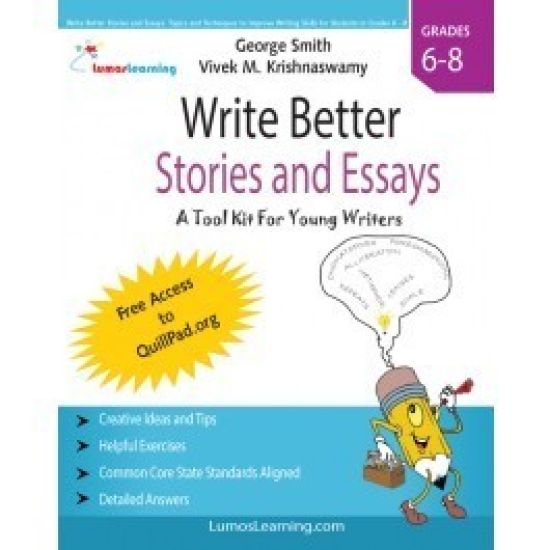
Write Better Stories and Essays: Topics and Techniques to Improve Writing Skills for Students in Grades 6 - 8: Common Core State Standards Aligned
Mr. George Smith, a children's book author, has been conductingwriting workshops at schools since 2004.Write Better Stories and Essays is his writing workshop published in the form of a workbook. It is designed to help students in middle school improve their writing skills. Key Benefits Explore different writing techniques Recognize common mistakes in writing Master creative techniques to improve writing Expand ideas into full length stories or essaysKey Topics CoveredFour Ways to Expand a Story Idea into a Story Creative Techniques for Using Words and Paragraphs Identifying Illogical or Incomplete Content, Inconsistent Voice (active or passive), Inconsistent Verb Tense (present and past) and Incorrect grammar Expressing the Emotions of a Character: Show, Don't Tell Using the Personification Technique Using the Flashback and Story Within a Story Techniques Using the Circular d104 Technique Using the Five Senses Using the Persuasion Technique The Role of the Setting in a Story Presenting and Supporting Theories Techniques in Action: Stories and Essays Written by Middle School Students Detailed Answers Common Core State Standards Correlation Grading Rubrics Online Resources (QuillPad.org)ObjectivesThe workbook has three objectives: The first objective of these workbook exercises is to give student authors practice in writing techniques that meet the standards for writing and language included in the Common Core State Standards Initiative (CCSSI). The second objective of these workbook exercises is to provide tools in the form of techniques that middle school student authors in grades 6 through 8 can use to improve the content of their narrative, persuasive, expository and descriptive writing. The third objective of this program is to create a platform for students to easily publish their writing online and get feedback from peers and educators. Writing is a skill that requires practice and mentoring. Children can become good writers through guided practice and constructive feedback. Please visit QuillPad.org to create an account and start publishing your stories and essays More than 11,000+ Schools, 21,000+ Teachers, and 160,000+ Students use Lumos Learning Study Programs to improve student achievement.
A Concise Windows 8 Guide: For Homes and Corporates

A Concise Windows 8 Guide: For Homes and Corporates

Vivek Nayyar

Createspace Independent Publishing Platform
2012
nidottu
'A Concise Windows 8 Guide for Homes and Corporates' is a screenshots enriched 'Must-Have' guide book especially written for Home Users. This book makes Windows 8 quite easy to use and operate even for entirely new users. Each topic in the book contains a detailed corresponding screenshot, and description in simple language that would help readers understand the new Windows 8 both practically and conceptually, hence making it easier for them to troubleshoot errors, not only of Windows 8 but also of Windows Vista and Windows 7. Moreover, this book can also play a role of beginners guide for novice Desktop Engineers, new Systems Administrators, IT Scholars, and all others who are currently using or are planning to use Windows 8 operating system on any Windows 8 supported device.