Kirjojen hintavertailu. Mukana 11 244 527 kirjaa ja 12 kauppaa.

Kirjahaku

Etsi kirjoja tekijän nimen, kirjan nimen tai ISBN:n perusteella.

475 tulosta hakusanalla Wainwright Nicholas B.

Yorkshire. an Historical and Topographical View of the Wapentake of Strafford and Tickhill; Intended Chiefly to Illustrate Its Ancient State.
Title: Yorkshire. An historical and topographical view of the Wapentake of Strafford and Tickhill; intended chiefly to illustrate its ancient state.Publisher: British Library, Historical Print EditionsThe British Library is the national library of the United Kingdom. It is one of the world's largest research libraries holding over 150 million items in all known languages and formats: books, journals, newspapers, sound recordings, patents, maps, stamps, prints and much more. Its collections include around 14 million books, along with substantial additional collections of manuscripts and historical items dating back as far as 300 BC.The HISTORY OF BRITAIN & IRELAND collection includes books from the British Library digitised by Microsoft. As well as historical works, this collection includes geographies, travelogues, and titles covering periods of competition and cooperation among the people of Great Britain and Ireland. Works also explore the countries' relations with France, Germany, the Low Countries, Denmark, and Scandinavia. ++++The below data was compiled from various identification fields in the bibliographic record of this title. This data is provided as an additional tool in helping to insure edition identification: ++++ British Library Wainwright, John; 1826. Vol. 1.; 4 . 10368.i.36.

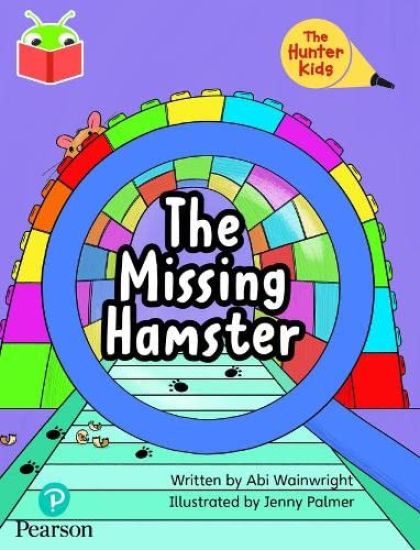
Bug Club Independent Phase 5 Unit 22: The Hunter Kids: The Missing Hamster
Age: 5–6 (Year 1/P2) Level: Key Stage 1 Subject: phonics In this fiction phonics book, Sanjay, Annika and Krishnan are great at finding things! What will they do when their new hamster goes missing? Part of the Bug Club reading series used in over 3500 schools Helps your child develop reading fluency and confidence Suitable for children aged 5–6 (Year 1/P2) Phonics phase: 5 This book aligns with Letters and Sounds (2007) Phase 5. This title is part of Pearson's Bug Club, a reading programme used in over 3500 schools. Bug Club books are designed to help children enjoy learning to read. For more Bug Club books and learn at home resources, search for Bug Club.
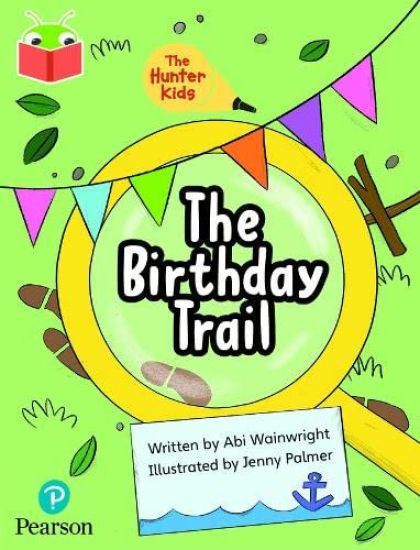
Bug Club Independent Phase 5 Unit 23: The Hunter Kids: The Birthday Trail
Age: 5–6 (Year 1/P2) Level: Key Stage 1 Subject: phonics In this fiction phonics book, the kids in the Hunter family love finding things! Will they manage to follow the clues that Dad sets for Sanjay's birthday trail? Part of the Bug Club reading series used in over 3500 schools Helps your child develop reading fluency and confidence Suitable for children aged 5–6 (Year 1/P2) Phonics phase: 5 This book aligns with Letters and Sounds (2007) Phase 5. This title is part of Pearson's Bug Club, a reading programme used in over 3500 schools. Bug Club books are designed to help children enjoy learning to read. For more Bug Club books and learn at home resources, search for Bug Club.
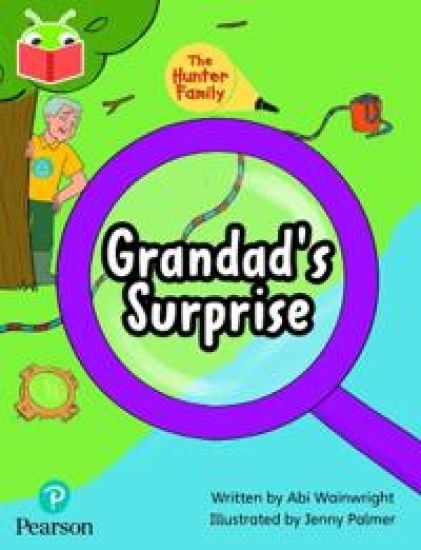
Bug Club Independent Phase 5 Unit 24: The Hunter Kids: Grandad's Surprise
Age: 5–6 (Year 1/P2) Level: Key Stage 1 Subject: phonics In this fiction phonics book, Grandad is making a surprise for the Hunter family kids. He just needs their help in finding a few things ... Part of the Bug Club reading series used in over 3500 schools Helps your child develop reading fluency and confidence Suitable for children aged 5–6 (Year 1/P2) Phonics phase: 5 This book aligns with Letters and Sounds (2007) Phase 5. This title is part of Pearson's Bug Club, a reading programme used in over 3500 schools. Bug Club books are designed to help children enjoy learning to read. For more Bug Club books and learn at home resources, search for Bug Club.
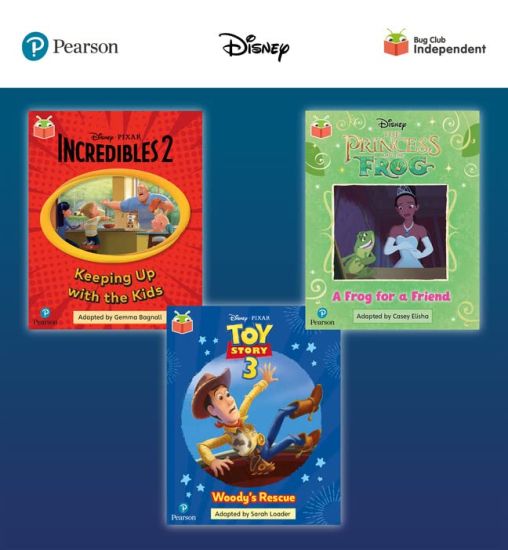
Pearson Bug Club Disney Year 1 Pack C, including decodable phonics readers for phase 5; The Incredibles: Keeping Up with the Kids, The Princess and the Frog: A Frog for a Friend, Toy Story: Woody's Rescue
Bring reading to life with well-known, family favourite characters! Help your child progress at home with Bug Club and Disney decodable readers for phonics phases 1-3..Bug Club captures children's imagination, nurtures lifelong readers, and is proven to work: research shows that after 18 months, children using Bug Club were 11 months ahead of their expected reading age.Bug Club at home will complement children's school learning as they develop comprehension and fluency and provide independent reading practice with fully decodable phonics patterns.Children can engage with extra learning content, and activities at the back of each book – now with their favourite Disney characters!The books all feature our specially designed dyslexia-friendly font and are set on pastel coloured backgrounds to help reduce visual stress.Already used by 1.5 million children in over 3,300 Primary schools in the UK, Bug Club is an ideal solution to help fill in any reading gaps.
Game Theory and Postwar American Literature

Game Theory and Postwar American Literature

Michael Wainwright

Palgrave Macmillan
2016
nidottu
If game theory, the mathematical simulation of rational decision-making first axiomatically established by the Hungarian-born American mathematician John von Neumann, is to prove worthy of literary hermeneutics, then critics must be able to apply its models to texts written without a working knowledge of von Neumann's discipline in mind. Reading such iconic novels as Fahrenheit 451, In Cold Blood, and Kiss Tomorrow Goodbye from the perspective of the four most frequently encountered coordination problems - the Stag Hunt, the Prisoner's Dilemma, Chicken, and Deadlock, Game Theory and Postwar American Literature illustrates the significant contribution of mathematical models to literary interpretation. The interdisciplinary approach of this book contributes to an understanding of the historical, political, and social contexts that surround the texts produced in the post-Cold War years, as well as providing a comprehensive model of joining game theory and literary criticism.
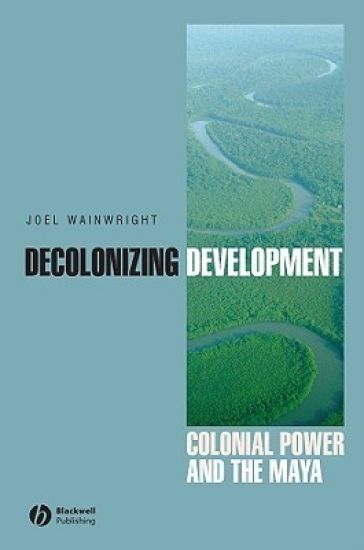
Decolonizing Development

Decolonizing Development

Joel Wainwright

Wiley-Blackwell (an imprint of John Wiley Sons Ltd)
2008
sidottu
Winner of the 2010 James M. Blaut Award in recognition of innovative scholarship in cultural and political ecology (Honors of the CAPE specialty group (Cultural and Political Ecology)) Decolonizing Development investigates the ways colonialism shaped the modern world by analyzing the relationship between colonialism and development as forms of power. Based on novel interpretations of postcolonial and Marxist theory and applied to original research dataAmply supplemented with maps and illustrationsAn intriguing and invaluable resource for scholars of postcolonialism, development, geography, and the Maya
Decolonizing Development

Decolonizing Development

Joel Wainwright

Wiley-Blackwell (an imprint of John Wiley Sons Ltd)
2008
nidottu
Winner of the 2010 James M. Blaut Award in recognition of innovative scholarship in cultural and political ecology (Honors of the CAPE specialty group (Cultural and Political Ecology)) Decolonizing Development investigates the ways colonialism shaped the modern world by analyzing the relationship between colonialism and development as forms of power. Based on novel interpretations of postcolonial and Marxist theory and applied to original research dataAmply supplemented with maps and illustrationsAn intriguing and invaluable resource for scholars of postcolonialism, development, geography, and the Maya
An Introduction to Environmental Biotechnology

An Introduction to Environmental Biotechnology

Milton Wainwright

Springer-Verlag New York Inc.
2012
nidottu
An Introduction to Environmental Biotechnology provides an introduction to the subject of environmental biotechnology. Environmental biotechnology refers to the use of micro-organisms and other living systems to solve current environmental problems such as the detoxification of pollutants and clean-up of oil tanker spills. Additionally, it refers to the biotechnology of the agricultural environment, as well as the use of biopesticides and the application of microorganisms to the mining, metal recovery and paper industries. This is the only comprehensive introductory account of this subject matter. Beginning with an introduction to microbial growth, An Introduction to Environmental Biotechnology aims to provide the non-specialist with a complete overview of environmental biotechnology. It is presented in an easy to read style with illustrations and includes frequent references to the use of higher plants as well as micro-organisms in environmental biotechnology. An Introduction to Environmental Biotechnology is geared toward a non-specialist audience, including engineers and environmental chemists, and environmental scientists who have limited knowledge of microbiology and biotechnology.