Kirjojen hintavertailu. Mukana 11 717 486 kirjaa ja 12 kauppaa.

Kirjahaku

Etsi kirjoja tekijän nimen, kirjan nimen tai ISBN:n perusteella.

1000 tulosta hakusanalla Walter Benjamin

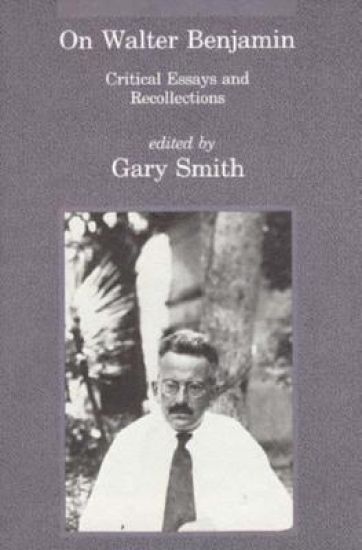
On Walter Benjamin
Bringing together the best critical essays on one of the most fascinating literary figures of our time, this book immediately takes its place as a major source for Benjamin scholarship. Hannah Arendt called Walter Benjamin "the outstanding literary critic of the twentieth century" when she introduced him to English-language readers in 1968 with the selection of essays entitled Illuminations. Since then, his life and work have entered the domain of literary legend. The seventeen essays collected here cover the full range of Benjamin's interests, from hashish to Goethe to the modern city. They include important critical essays by Gershom Scholem and Jurgen Habermas as well as several moving and evocative recollections of Benjamin by friends and colleagues such as Theodor Adorno and Ernst Bloch. Gary Smith served as coeditor of the seventh volume of Benjamin's Gesammelte Schriften and prepared both the German and English editions of Benjamin's Moscow Diary.

Uncovering Walter Benjamin: Volume 2

Uncovering Walter Benjamin: Volume 2

Rolande Glicenstein

Passe-Partout Books
2018
nidottu
Characters of days. In slow time the unspoken passions of the two young men transform into signals of their purity for each other, even as they disappoint. Millions of men their age from all walks of Europe and the Middle East are casually wiped out in days. Characters of days. Big stick figures make pronouncements and plans. Big weapons turn their aim as liberally as the sun. No one seems to believe they are not alone until they can pour their heart into a written letter.
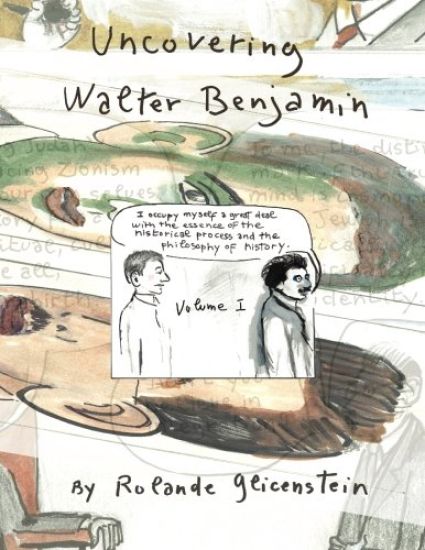
Uncovering Walter Benjamin: Volume 1

Uncovering Walter Benjamin: Volume 1

Rolande Glicenstein

Passe-Partout Books
2018
nidottu
A graphic biography, first installment. It opens in Berlin at the start of World War I. 23-year-old Walter Benjamin meets Gerhard Scholem, 17. They become fast friends. Benjamin is already a strikingly original thinker with a voracious curiosity. Scholem is forming the commitments that sent him to Palestine in 1923 and led him eventually to write the definitive book on Jewish mysticism. This is the story of a friendship between two extraordinary young men in a world that is falling apart. Author/illustrator Rolande Glicenstein is fascinated by the two men's preoccupations: war, Zionism, language, philosophy. She is charmed by their brilliance, their attachment to each other, their competitiveness. The comic form enables her to touch many notes without pounding any. She is not a cartoonist; every page is original. Volume I introduces a noisy, colorful crowd of German intellectuals in a time when socialist politics, mysticism, gender relations and the idea of a Jewish state were red-hot topics. Glicenstein attends closely to the heedless slaughter of World War I, to the blossoming and abrupt suppression of Socialism in Germany during and after World War I, and to the varieties of Zionism that were in the air, notably Martin Buber's utopian version.
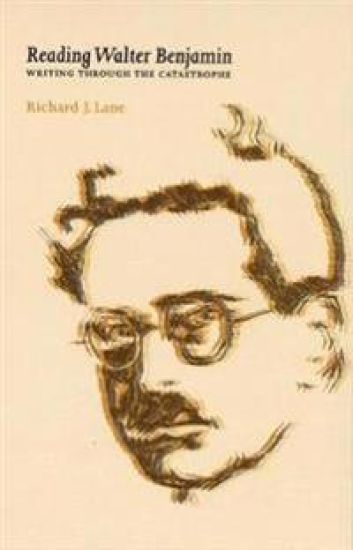
Reading Walter Benjamin

Reading Walter Benjamin

Richard Lane

Manchester University Press
2005
nidottu
'Reading Walter Benjamin' explores the persistence of absolute in Benjamin's work by sketching-out the relationship between philosphy and theology apparent in his diverse writings, from the early youth-movement essays to the later books, essays and fragments.The book examines Benjamin from two main perspectives: a history-of-ideas approach situating Benjamin in relation to the new German-Jewish thinking at the turn of the twentieth-century, as well as the German youth movements, Surrealism and the 'Georgekreis'; and a conceptual approach examining more critical issues in relation to Benjamin and Kant, modern aesthetics and narrative order.Chapters cover: 'Kulturpessimismus' and the new thinking; metaphysics of youth: Wyneken and 'Rausch'; history: surreal Messianism; Goethe and the 'Georgekreis'; Kant's experience; casting the work of art; disrupting textual order; and exile and the time of crisis. The book uses new translations of Benjamin's essays, fragments and his 'Arcades Project', and makes substantial reference to previously untranslated material.Lane’s text allows the non-specialist entry into complex areas of critical theory, simultaneously offering original readings of Benjamin and twentieth-century arts and literature.
Working with Walter Benjamin

Working with Walter Benjamin

Andrew Benjamin

Edinburgh University Press
2013
sidottu
This book provides a highly original approach to the writings of the twentieth-century German philosopher Walter Benjamin by one of his most distinguished readers. It develops the idea of 'working with' Benjamin, seeking both to read his corpus and to put it to work - to show how a reading of Benjamin can open up issues that may not themselves be immediately at stake in his texts. The defining elements in Benjamin's writings that Andrew Benjamin isolates - history, experience, translation, technical reproducibility and politics - are put to work; that is, their utility is established in engaging the works of others. The question is how utility is understood. As Andrew Benjamin argues, utility involves demonstrating the different ways in which Benjamin is a central thinker within the project of understanding the nature of modernity. This is best achieved by noting connections and points of differentiation between his work and the writings of Adorno and Heidegger. However, the more demanding project is that 'working with' Benjamin necessitates deploying the implicit assumptions within his writings as well as demanding of his formulations more than is provided by their initial presentation. What is at stake is not the application of Benjamin's thought. Rather what counts is its use. Working with Benjamin engages with the themes central to Benjamin's work with deftness, daring and critical insight while at the same time situating those themes within current academic and cultural debates.
Working with Walter Benjamin

Working with Walter Benjamin

Andrew Benjamin

Edinburgh University Press
2013
nidottu
This book provides a highly original approach to the writings of the twentieth-century German philosopher Walter Benjamin by one of his most distinguished readers. It develops the idea of 'working with' Benjamin, seeking both to read his corpus and to put it to work - to show how a reading of Benjamin can open up issues that may not themselves be immediately at stake in his texts. The defining elements in Benjamin's writings that Andrew Benjamin isolates - history, experience, translation, technical reproducibility and politics - are put to work; that is, their utility is established in engaging the works of others. The question is how utility is understood. As Andrew Benjamin argues, utility involves demonstrating the different ways in which Benjamin is a central thinker within the project of understanding the nature of modernity. This is best achieved by noting connections and points of differentiation between his work and the writings of Adorno and Heidegger. However, the more demanding project is that 'working with' Benjamin necessitates deploying the implicit assumptions within his writings as well as demanding of his formulations more than is provided by their initial presentation. What is at stake is not the application of Benjamin's thought. Rather what counts is its use.Working with Benjamin engages with the themes central to Benjamin's work with deftness, daring and critical insight while at the same time situating those themes within current academic and cultural debates.
Inheriting Walter Benjamin

Inheriting Walter Benjamin

Gerhard Richter

Bloomsbury Academic
2016
nidottu
Gerhard Richter examines, in the work of Walter Benjamin, one of the central problems of modernity: the question of how to receive an intellectual inheritance. Covering aspects of Benjamin’s complex relationship to the legacies of such writers as Kant, Nietzsche, Kafka, Heidegger, and Derrida, each chapter attends to a key concern in Benjamin’s writing, while reflecting on the challenges that this issue presents for the question of inheritability and transmissibility. Both reading Benjamin and watching himself reading Benjamin, Richter participates in the act of inheriting while also inquiring into the conditions of possibility for inheriting Benjamin’s corpus today.
Inheriting Walter Benjamin

Inheriting Walter Benjamin

Gerhard Richter

Bloomsbury Academic
2016
sidottu
Gerhard Richter examines, in the work of Walter Benjamin, one of the central problems of modernity: the question of how to receive an intellectual inheritance. Covering aspects of Benjamin’s complex relationship to the legacies of such writers as Kant, Nietzsche, Kafka, Heidegger, and Derrida, each chapter attends to a key concern in Benjamin’s writing, while reflecting on the challenges that this issue presents for the question of inheritability and transmissibility. Both reading Benjamin and watching himself reading Benjamin, Richter participates in the act of inheriting while also inquiring into the conditions of possibility for inheriting Benjamin’s corpus today.
Introducing Walter Benjamin

Introducing Walter Benjamin

Alex Coles; Andrzej Klimowski; Howard Caygill

Icon Books Ltd
2014
nidottu
Walter Benjamin is often considered the key modern philosopher and critic of modern art.Tracing his influence on modern aesthetics and cultural history, Introducing Walter Benjamin highlights his commitment to political transformation of the arts as a means to bring about social change.Benjamin witnessed first-hand many of the cataclysmic events of modern European history. He took a critical stance on the dominant ideologies of Marxism, Zionism and Technocracy, and his attempt to flee Nazi Europe ultimately led to his suicide in 1940.With its brilliant combination of words and images, this is an ideal introduction to one of the most elusive philosophers.
Mikhail Bakhtin and Walter Benjamin

Mikhail Bakhtin and Walter Benjamin

T. Beasley-Murray

Palgrave Macmillan
2007
sidottu
This first comparative study of the philosophers and literary critics, Walter Benjamin and Mikhail Bakhtin, focuses on the two thinkers' conceptions of experience and form, investigating parallels between Bakhtin's theories of responsibility, dialogue, and the novel, and Benjamin's theories of translation, montage, allegory, and the aura.
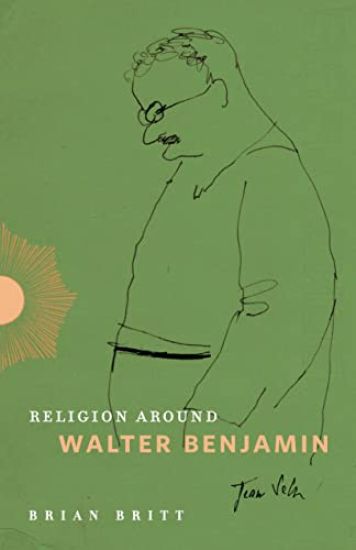
Religion Around Walter Benjamin

Religion Around Walter Benjamin

Brian Britt

Pennsylvania State University Press
2022
sidottu
This book shows how institutional religion and the religiosity of political and cultural life provide a necessary dimension to Walter Benjamin, one of the twentieth century’s greatest thinkers. Lived religion surrounded Benjamin, whose upper-middle-class Jewish family celebrated Christmas and Hanukkah in Berlin as the turmoil of war, collapsing empires, and modern urban life gave rise to the Nazi regime that would destroy most of Europe’s Jews, including Benjamin himself. Documenting the vitality and diversity of religious life that surrounded Benjamin in Germany, France, and beyond, Brian Britt shows the extent to which religious communities and traditions, especially those of Christians, influenced his work. Britt surveys and analyzes the intellectual, cultural, and social contexts of religion in Benjamin’s world and broadens the religious frame around discussions of his work to include lived religion—the daily practices of ordinary people. Seeing religion around Benjamin requires looking at forms of life and institutions that he rarely discussed. As Britt shows, dramatic changes in religious practices, particularly in Berlin, reflected broader political and cultural currents that would soon transform the lives of all Europeans.An original perspective on the religious context of a thinker who habitually raised questions about the survival of religion in modernity, Religion Around Walter Benjamin contributes to wider discussions of religious tradition and secular modernity in religious and cultural studies. It provides a foundational overview and introduction to the context of Benjamin’s writing that will be appreciated by scholars and students alike.
Religion Around Walter Benjamin

Religion Around Walter Benjamin

Brian Britt

Pennsylvania State University Press
2022
pokkari
This book shows how institutional religion and the religiosity of political and cultural life provide a necessary dimension to Walter Benjamin, one of the twentieth century’s greatest thinkers. Lived religion surrounded Benjamin, whose upper-middle-class Jewish family celebrated Christmas and Hanukkah in Berlin as the turmoil of war, collapsing empires, and modern urban life gave rise to the Nazi regime that would destroy most of Europe’s Jews, including Benjamin himself. Documenting the vitality and diversity of religious life that surrounded Benjamin in Germany, France, and beyond, Brian Britt shows the extent to which religious communities and traditions, especially those of Christians, influenced his work. Britt surveys and analyzes the intellectual, cultural, and social contexts of religion in Benjamin’s world and broadens the religious frame around discussions of his work to include lived religion—the daily practices of ordinary people. Seeing religion around Benjamin requires looking at forms of life and institutions that he rarely discussed. As Britt shows, dramatic changes in religious practices, particularly in Berlin, reflected broader political and cultural currents that would soon transform the lives of all Europeans.An original perspective on the religious context of a thinker who habitually raised questions about the survival of religion in modernity, Religion Around Walter Benjamin contributes to wider discussions of religious tradition and secular modernity in religious and cultural studies. It provides a foundational overview and introduction to the context of Benjamin’s writing that will be appreciated by scholars and students alike.