Kirjojen hintavertailu. Mukana 11 342 296 kirjaa ja 12 kauppaa.

Kirjahaku

Etsi kirjoja tekijän nimen, kirjan nimen tai ISBN:n perusteella.

1000 tulosta hakusanalla William Butler

Águas Sombrias

Águas Sombrias

William Butler Yeats

Lulu.com
2017
pokkari
O texto teatral po tico "The Shadowy Waters" foi escrito por William Butler Yeats em 1906. A presente publica o se baseia na seguinte edi o: Plays for an Irish Theatre by W. B. Yeats (London & Stratford-Upon-Avon: A. H. Bullen, 1911). A presente tradu o de Roberto de Andrade Martins.
The Winding Stair and Other Poems (1933): A Facsimile Edition

The Winding Stair and Other Poems (1933): A Facsimile Edition

William Butler Yeats

Scribner Book Company
2011
nidottu
W. B. Yeats's The Winding Stair and Other Poems was published in 1933 when Yeats was sixty-eight, ten years after he won the Nobel Prize and six years before his death in 1939. Yeats famously invoked in "Adam's Curse" the time he spent "stitching and unstitching" the lines of his work, but he also spent considerable time stitching and unstitching his poems to each other. The Winding Stair demonstrates that care, combining and reordering the poems of two earlier publications in an edition intended as the companion volume to The Tower, published in 1928. This Scribner facsimile edition reproduces exactly the pages of the elegantly planned and designed first edition of The Winding Stair and Other Poems as it first appeared, including a photo of the cover design on which Yeats collaborated. It adds an introduction and notes by celebrated Yeats scholar George Bornstein. Yeats's longest separate volume of verse, it features sixty-four poems written in the late 1920s and early 1930s. Among them are such masterpieces as "Blood and the Moon," "Byzantium," the Coole Park poems, "Vacillation," and two separately titled long sequences ending with the exquisite lyric "From the 'Antigone.'" These poems amply justify T. S. Eliot's contention that Yeats was one of the few poets "whose history is the history of their own time, who are a part of the consciousness of an age which cannot be understood without them."
The Collected Works of W.B. Yeats Vol X

The Collected Works of W.B. Yeats Vol X

William Butler Yeats

Scribner
2010
pokkari
"The Collected Works of W. B. Yeats, Volume X: Later Articles and Reviews" is part of a fourteen-volume series under the general editorship of eminent Yeats scholars Richard J. Finneran and George Mills Harper. This first complete edition includes virtually all of the Nobel laureate's published work, in authoritative texts and with extensive explanatory notes. "Later Articles and Reviews" consists of fifty-four prose pieces published between 1900 and Yeats's death in January 1939 and benefits from the notes and emendations of Yeats scholar Colton Johnson. The pieces collected here are occasional, and they reflect the many interests and engagements of Yeats in his maturity. No longer a reviewer or polemicist, Yeats is an international figure: a senator in the fledgling Irish state, a defining modern poet, a distinguished essayist. And here we have him writing -- with grace, wit, and passion -- on the state of Ireland in the world, on Irish language and Irish literature, on his artistic contemporaries, on the Abbey Theater, on divorce, on censorship, on his evolution as a poet and dramatist, on his own poetry. "Volume X" also includes texts of ten radio programs Yeats broadcast between 1931 and 1937. This is not only the first collection but also the first printing of Yeats's radio work, which constitutes the largest previously uncollected body of his writings and possibly the most important to remain largely unstudied. Carefully assembled from manuscripts, typescripts, broadcast scripts, and fragmentary recordings, the programs range from a scripted interview on contemporary issues to elaborate stagings of his own and others' poetry. One of the radio programs is presented in an appendix complete with the commissioned musical score that set Yeats's poetry to music, Yeats's own emendations on the BBC broadcast script, and the diacritical notes with which the broadcast reader indicated Yeats's interpretive instructions. Here, then, is seasoned Yeats, writing and speaking vigorously and with keen personal insight about the modern age and his place in it.
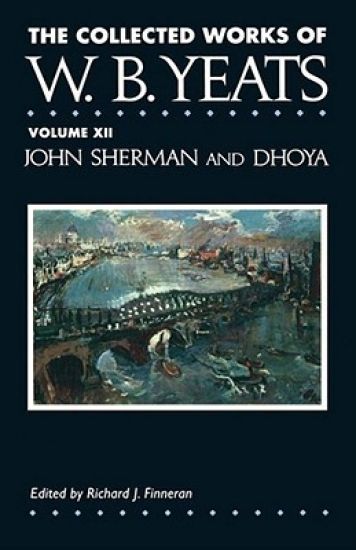
The Collected Works of W.B. Yeats Vol. XII: John Sherm

The Collected Works of W.B. Yeats Vol. XII: John Sherm

William Butler Yeats

Scribner Book Company
2011
nidottu
First published in 1891, John Sherman and Dhoya was Yeats's third separate publication. The stories were revised and reprinted in the 1908 Collected Works in Verse and Prose but not published again in Yeats's lifetime. John Sherman, Yeats's only completed attempt at realistic fiction, details the title character's dilemma: He must choose between life in London and marriage to Margaret Leland, an English girl, and life in Ireland and marriage to a childhood sweetheart, Mary Carton. In addition to containing numerous autobiographical elements (for instance, the town of Ballah is modeled on Yeats's Sligo), the novelette treats many of Yeats's persistent themes, such as the debate between nationality and cosmopolitanism and the conflict between what he would later call the Self and the Anti-Self. In the end, Sherman reaffirms his Irish roots, and Margaret Leland's affections are transferred to Sherman's friend, the Reverend William Howard. Dhoya, a mythological tale set in the remote past, depicts a liasion between a mortal and a fairy, a motif that Yeats used in many other works. Describing the inevitable conflict between a world of perfection and the mortal world, the short story suggests that "only the changing, and moody, and angry, and weary can love." Well received by most contemporary reviewers, John Sherman and Dhoya are important both as works of fiction and as indications of the fundamental continuity of subject and theme in Yeats's career. This edition offers an accurate text, an introduction, and explanatory notes.
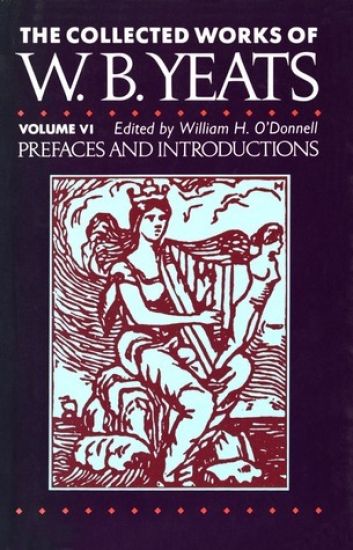
The Collected Works of W.B. Yeats Vol. VI: Prefaces an

The Collected Works of W.B. Yeats Vol. VI: Prefaces an

William Butler Yeats

Scribner Book Company
2011
nidottu
Prefaces and Introductions, Volume VI of The Collected Works of W.B. Yeats, brings together for the first time thirty-two introductions by Yeats to the works of such literary greats as William Blake, J.M. Synge, Lady Gregory, Oscar Wilde, Oliver St. John Gogarty, Lionel Johnson, and Rabindranath Tagore. The introductions, which span the Nobel laureate's entire career, reflect the broad reach of Yeats's literary and cultural interests. Always insightful and often charming, Prefaces and Introductions reveals the breadth of Yeats's talent as essayist, critic, folklorist, and raconteur.
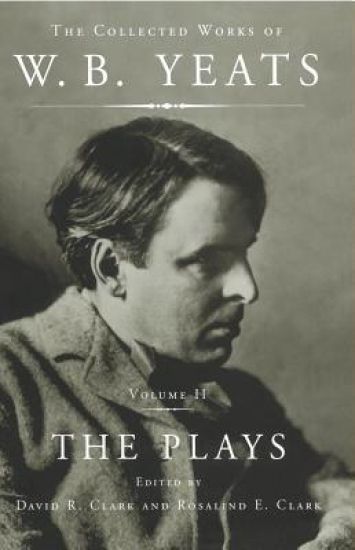
The Collected Works of W.B. Yeats Vol II: The Plays

The Collected Works of W.B. Yeats Vol II: The Plays

William Butler Yeats

Scribner Book Company
2011
nidottu
The Collected Works of W. B. Yeats, Volume II: The Plays is part of a fourteen-volume series under the general editorship of eminent Yeats scholars Richard J. Finneran and George Mills Harper. This complete edition includes virtually all of the Nobel laureate's published work, in authoritative texts and with extensive explanatory notes. The Plays, edited by David R. Clark and Rosalind E. Clark, is the first-ever complete collection of Yeats's plays that honors the order in which the plays first appeared. It provides the latest and most accurate texts in Yeats's lifetime, as well as extensive editorial notes and emendations. Though best known as one of the most important poets of the twentieth century, from the beginning of his career William Butler Yeats understood the value of his plays and his poetry to be the same. In 1923, when he accepted the Nobel Prize for Literature, Yeats suggested that "perhaps the English committees would never have sent you my name if I had written no plays...if my lyric poetry had not a quality of speech practiced on the stage." Indeed, Yeats's great achievement in poetry should not be allowed to obscure his impressive and innovative accomplishments as a dramatist. In The Plays, David and Rosalind Clark have restored the plays to the final order in which Yeats planned for them to be published. This volume opens with Yeats's introduction for an unpublished Scribner collection and encompasses all of his dramatic work, from The Countess Cathleen to The Death of Cuchulain. The Plays enables readers to see clearly, for the first time, the ways in which Yeats's very different dramatic forms evolved over the course of his life, and to appreciate fully the importance of drama in the oeuvre of this greatest of modern poets.
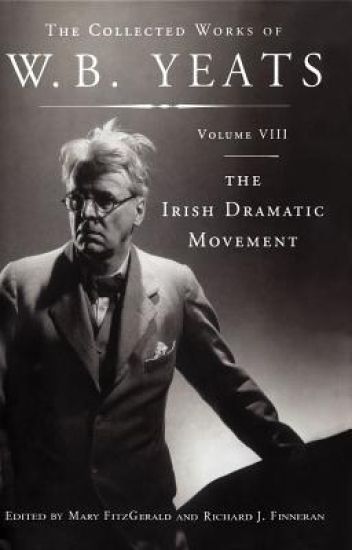
The Collected Works of W.B. Yeats Volume VIII: The Iri

The Collected Works of W.B. Yeats Volume VIII: The Iri

William Butler Yeats

Scribner Book Company
2011
nidottu
The Collected Works of W. B. Yeats, Volume VIII: The Irish Dramatic Movement is part of a fourteen-volume series under the general editorship of eminent Yeats scholars Richard J. Finneran and George Mills Harper. This complete edition includes virtually all of the Nobel laureate's published work, in authoritative texts and with extensive explanatory notes. Edited by the distinguished Yeats scholars Mary FitzGerald and Richard J. Finneran, The Irish Dramatic Movement gathers together -- for the first time -- all of the poet's time-honored essays on drama and the groundbreaking movement that led to the enduring Irish theater of today. Although the reputation of W. B. Yeats as one of the preeminent writers of the twentieth century rests primarily on his poetry, drama and the theatre were among his abiding concerns. Indeed, in 1917 he wrote, "I need a theatre; I believe myself to be a dramatist." Here in this volume is the collection of all his major dramatic criticism for the years 1899-1919, including previously uncollected material. A practicing dramatist himself, Yeats had strong convictions about the goals of the Irish theater and the appropriate plays to be produced. The essays in this collection address many topics, from the turbulent early years of what became the Abbey Theatre to the controversies over the plays of John Millington Synge and the relationship between drama and nationalism. Also evident are Yeats's judgments on numerous plays, playwrights, and productions, both in Irish and in English. FitzGerald and Finneran's volume includes an Introduction and a History of the Text, as well as copious but unobtrusive annotation. The Irish Dramatic Movement is an essential volume for both readers of Yeats and students of the early years of twentieth-century theater.
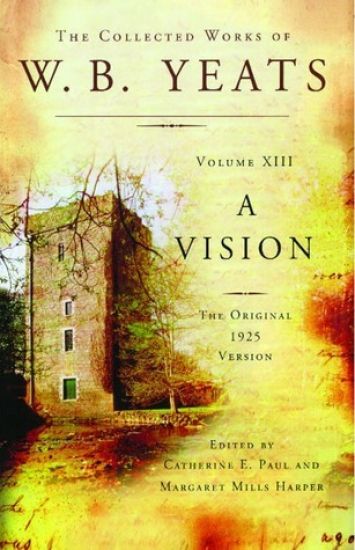
The Collected Works of W.B. Yeats Volume XIII: A Vision: The Original 1925 Version
The Collected Works of W. B. Yeats, Volume XIII: A Vision is part of a fourteen-volume series under the general editorship of eminent Yeats scholar George Bornstein and formerly the late Richard J. Finneran and George Mills Harper. One of the strangest works of literary modernism, A Vision is Yeats's greatest occult work. Edited by Yeats scholars Catherine E. Paul and Margaret Mills Harper, the volume presents the "system" of philosophy, psychology, history, and the life of the soul that Yeats and his wife George (n e Hyde Lees) received and created by means of mediumistic experiments from 1917 through the early 1920s. Yeats obsessively revised the book, and the revised 1937 version is much more widely available than its predecessor. The original 1925 version of A Vision, poetic, unpolished, masked in fiction, and close to the excitement of the automatic writing that the Yeatses believed to be its supernatural origin, is presented here in a scholarly edition for the first time. The text, minimally corrected to retain the sense of the original, is extensively annotated, with particular attention paid to the relationship between the published book and its complex genetic materials. Indispensable to an understanding of the poet's late work and entrancing on its own merit, A Vision aims to be, all at once, a work of theoretical history, an esoteric philosophy, an aesthetic symbology, a psychological schema, and a sacred book. It is as difficult as it is essential reading for any student of Yeats.
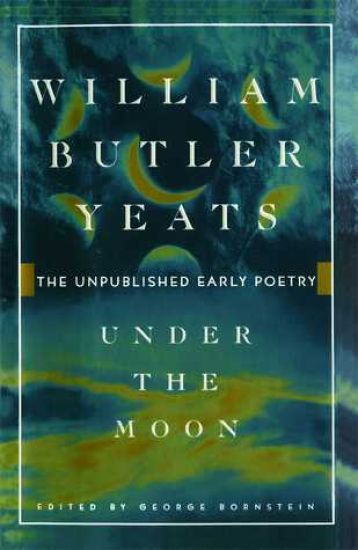
Under the Moon

Under the Moon

William Butler Yeats

Scribner Book Company
2014
nidottu
While working on a facsimile edition and transcription of W. B. Yeats's surviving early manuscripts, renowned Yeats scholar George Bornstein made a thrilling literary discovery: thirty-eight unpublished poems written between the poet's late teens and late twenties. These works span the crucial years during which the poet "remade himself from the unknown and insecure young student Willie Yeats to the more public literary, cultural, and even political figure W. B. Yeats whom we know today." "Here is a poetry marked by a rich, exuberant, awk-ward, soaring sense of potential, bracingly youthful in its promise and its clumsiness, in its moments of startling beauty and irrepressible excess," says Brendan Kennelly. And the Yeats in these pages is already experimenting with those themes with which his readers will become intimate: his stake in Irish nationalism; his profound love for Maud Gonne; his intense fascination with the esoteric and the spiritual. With Bornstein's help, one can trace Yeats's process of self-discovery through constant revision and personal reassessment, as he develops from the innocent and derivative lyricist of the early 1880s to the passionate and original poet/philosopher of the 1890s. Reading-texts of over two dozen of these poems appear here for the first time, together with those previously available only in specialized literary journals or monographs. Bornstein has assembled all thirty-eight under the title Yeats had once planned to give his first volume of collected poems. Under the Moon is essential reading for anyone interested in modern poetry.