Kirjojen hintavertailu. Mukana 11 244 527 kirjaa ja 12 kauppaa.

Kirjahaku

Etsi kirjoja tekijän nimen, kirjan nimen tai ISBN:n perusteella.

1000 tulosta hakusanalla William R Cook

American Global Pre-Eminence

American Global Pre-Eminence

William R. Thompson

OXFORD UNIVERSITY PRESS INC
2022
sidottu
A unique analysis that assesses how we can determine which country will be the next world leader. Will China surpass the United States as the world's leader? In American Global Pre-eminence, William R. Thompson argues that the answer depends on leads in technological innovation, energy, and global reach. These are the forces that influence the hierarchy of global power--a system which began emerging a thousand years ago and started becoming more evident after the 1490s, especially after Dutch activities in the seventeenth century and British operations in the nineteenth century. The US followed in this fashion after 1945. Yet leads do not last forever. Ironically, as it becomes clearer how technological innovation, military force, and energy power interact, the processes under scrutiny may themselves be fundamentally transforming. Thus, Thompson contends, the real policy question is not whether the US is ahead or behind China but, rather, whether it will remain possible for a single state to lead the global system. As technological innovation, energy consumption, and global reach capability grow less concentrated, the prospects for systemic leadership shrink--even as global problems become more complex and acute. With a sweeping analysis of global power, Thompson provides a foundation for understanding the realities and possibilities of lead states past, present, and future.
American Global Pre-Eminence

American Global Pre-Eminence

William R. Thompson

OXFORD UNIVERSITY PRESS INC
2022
nidottu
A unique analysis that assesses how we can determine which country will be the next world leader. Will China surpass the United States as the world's leader? In American Global Pre-eminence, William R. Thompson argues that the answer depends on leads in technological innovation, energy, and global reach. These are the forces that influence the hierarchy of global power--a system which began emerging a thousand years ago and started becoming more evident after the 1490s, especially after Dutch activities in the seventeenth century and British operations in the nineteenth century. The US followed in this fashion after 1945. Yet leads do not last forever. Ironically, as it becomes clearer how technological innovation, military force, and energy power interact, the processes under scrutiny may themselves be fundamentally transforming. Thus, Thompson contends, the real policy question is not whether the US is ahead or behind China but, rather, whether it will remain possible for a single state to lead the global system. As technological innovation, energy consumption, and global reach capability grow less concentrated, the prospects for systemic leadership shrink--even as global problems become more complex and acute. With a sweeping analysis of global power, Thompson provides a foundation for understanding the realities and possibilities of lead states past, present, and future.
The Twentieth-Century World and Beyond

The Twentieth-Century World and Beyond

William R. Keylor

Oxford University Press Inc
2012
nidottu
The Twentieth-Century World and Beyond: An International History since 1900 explores the history of modern relations between the U.S., Europe, Africa, Asia, Latin America, and the Middle East. The book's unique analytical framework—which focuses on the relationships between and among countries rather than on individual histories—helps students easily examine how the nations of the world have interacted since the beginning of the last century. The Twentieth-Century World and Beyond, Sixth Edition, is ideal for undergraduate and graduate courses in twentieth-century world history, and courses in international relations and international studies.
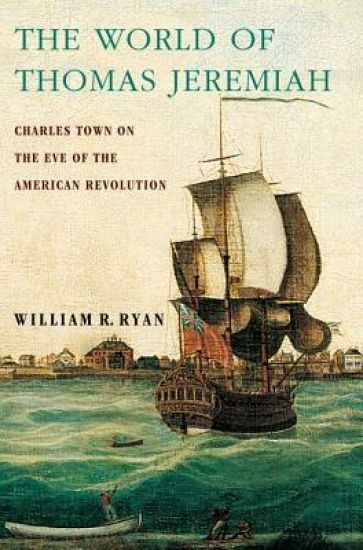
The World of Thomas Jeremiah

The World of Thomas Jeremiah

William R. Ryan

Oxford University Press Inc
2012
nidottu
This book profiles the port of Charles Town, South Carolina, during the two-year period leading up to the Declaration of Independence. It focuses on the dramatic hanging and burning of Thomas Jeremiah, a free black harbor pilot and firefighter accused by the patriot party of plotting a slave insurrection during the tumultous spring and summer of 1775. To examine the world of this wealthy, slave-holding African American through his trial and execution, William R. Ryan uses a wide array of letters, naval records, personal and official correspondence, memoirs, and newspapers. He shows that the black majority of the South Carolina Low Country managed to assist the British in their invasion efforts, despite patriot attempts to frighten Afro-Carolinians into passivity and submission. Although Whigs attempted, through brutality and violence, to keep their slaves from participating in the conflict, Afro-Carolinians became actively involved in the struggle between colonists and the Crown as spies, messengers, navigators and marauders. The book demonstrates that an understanding of what was going on in this vital seaport during the mid-1770s has broader implications for the study of the Atlantic world, African American history, naval history, urban race relations, labor history, and the turbulent politics of America's move toward independence.
Hospitals and Patients

Hospitals and Patients

William R. Rosengren; Mark Lefton

AldineTransaction
2007
nidottu
This book examines the current social crisis in American medicine. The authors, two well-known sociologists, search out-and fi nd-the roots of this crisis in three areas: the organization of the hospital, the attitudes of the hospital toward its patients, and the relationship of hospitals to one another.
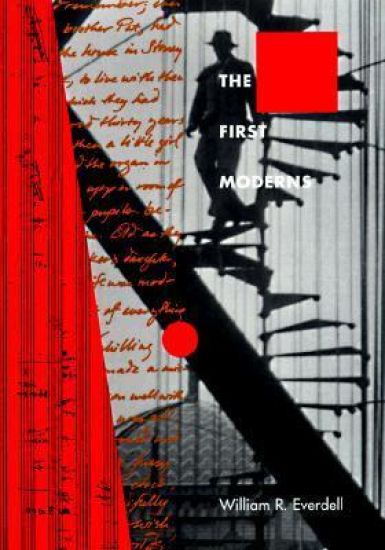
The First Moderns

The First Moderns

William R. Everdell

University of Chicago Press
1998
nidottu
A lively and accessible history of Modernism, The First Moderns is filled with portraits of genius, and intellectual breakthroughs, that richly evoke the fin-de-siècle atmosphere of Paris, Vienna, St. Louis, and St. Petersburg. William Everdell offers readers an invigorating look at the unfolding of an age."This exceptionally wide-ranging history is chock-a-block with anecdotes, factoids, odd juxtapositions, and useful insights. Most impressive. . . . For anyone interested in learning about late 19th- and early 20th- century imaginative thought, this engagingly written book is a good place to start."—Washington Post Book World"The First Moderns brilliantly maps the beginning of a path at whose end loom as many diasporas as there are men."—Frederic Morton, The Los Angeles Times Book Review"In this truly exciting study of the origins of modernist thought, poet and teacher Everdell roams freely across disciplinary lines. . . . A brilliant book that will prove useful to scholars and generalists for years to come; enthusiastically recommended."—Library Journal, starred review"Everdell has performed a rare service for his readers. Dispelling much of the current nonsense about 'postmodernism,' this book belongs on the very short list of profound works of cultural analysis."—Booklist"Innovative and impressive . . . [Everdell] has written a marvelous, erudite, and readable study."-Mark Bevir, Spectator"A richly eclectic history of the dawn of a new era in painting, music, literature, mathematics, physics, genetics, neuroscience, psychiatry and philosophy."—Margaret Wertheim, New Scientist"[Everdell] has himself recombined the parts of our era's intellectual history in new and startling ways, shedding light for which the reader of The First Moderns will be eternally grateful."—Hugh Kenner, The New York Times Book Review"Everdell shows how the idea of "modernity" arose before the First World War by telling the stories of heroes such as T. S. Eliot, Max Planck, and Georges Serault with such a lively eye for detail, irony, and ambiance that you feel as if you're reliving those miraculous years."—Jon Spayde, Utne Reader
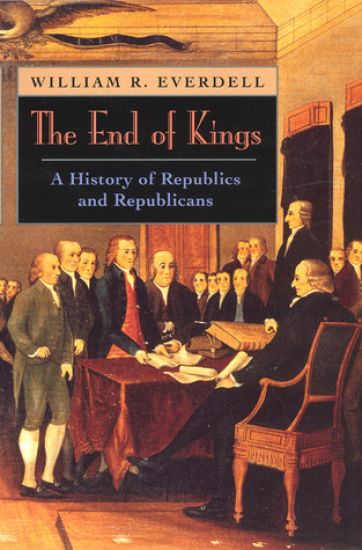
The End of Kings

The End of Kings

William R. Everdell

University of Chicago Press
2000
nidottu
Written in clear, lively prose, The End of Kings traces the history of republican governments and the key figures that are united by the simple republican maxim: No man shall rule alone. Breathtaking in its scope, Everdell's book moves from the Hebrew Bible, Solon's Athens and Brutus's Rome to the impeachment trial of Andrew Johnson and the Watergate proceedings during which Nixon resigned. Along the way, he carefully builds a definition of "republic" which distinguishes democratic republics from aristocratic ones for both history and political science. In a new foreword, Everdell addresses the impeachment trial of President Clinton and argues that impeachment was never meant to punish private crimes. Ultimately, Everdell's brilliant analysis helps us understand how examining the past can shed light on the present."[An] energetic, aphoristic, wide-ranging book."—Marcus Cunliffe, Washington Post Book World"Ambitious in conception and presented in a clear and sprightly prose. . . . [This] excellent study . . . is the best statement of the republican faith since Alphonse Aulard's essays almost a century ago." —Choice"A book which ought to be in the hand of every American who agrees with Benjamin Franklin that the Founding Fathers gave us a Republic and hoped that we would be able to keep it."-Sam J. Ervin, Jr.
Errand to the World

Errand to the World

William R. Hutchison

University of Chicago Press
1993
nidottu
In this comprehensive history of American foreign-mission thought from the colonial period to the current era, William R. Hutchinson analyzes the varied and changing expressions of an American "sense of mission" that was more than religious in its implications. His account illuminates the dilemmas intrinsic to any venture in which one culture attempts to apply its ideals and technology to the supposed benefit of another.
Promethean Ambitions

Promethean Ambitions

William R. Newman

University of Chicago Press
2005
nidottu
"In Promethean Ambitions", William R. Newman uses alchemy as a means to discuss the thinning boundary between the natural and the artificial. Focusing primarily on the period between 1200 and 1700, Newman examines the labors of pioneering alchemists and the impassioned - and often negative - responses to their efforts. Newman also shows that alchemy was not an unformed and capricious precursor to chemistry; it was an art founded on coherent philosophical and empirical principles - with vocal supporters and even louder critics - that attracted individuals of first-rate intellect. The historical relationship that he charts here between human creation and nature has innumerable implications today. "Promethean Ambitions" ably imbues a millennium-old scientific and ethical debate with modern relevance.
Atoms and Alchemy

Atoms and Alchemy

William R. Newman

University of Chicago Press
2006
sidottu
Since the Enlightenment, alchemy has been viewed as a sort of antiscience, disparaged by many historians as a form of lunacy that impeded the development of rational chemistry. But, in "Atoms and Alchemy", William R. Newman - a historian widely credited for reviving recent interest in alchemy - exposes the speciousness of these views and challenges widely held beliefs about the origins of the Scientific Revolution. Tracing the alchemical roots of Robert Boyle's famous mechanical philosophy, Newman shows that alchemy contributed to the mechanization of nature, a movement that lay at the very heart of scientific discovery. Boyle and his predecessors - figures like the mysterious medieval Geber or the Lutheran professor Daniel Sennert - provided convincing experimental proof that matter is made up of enduring particles at the microlevel. At the same time, Newman argues that alchemists created the operational criterion of an "atomic" element as the last point of analysis, thereby contributing a key feature to the development of later chemistry. "Atoms and Alchemy" thus provokes a refreshing debate about the origins of modern science and will be welcomed - and deliberated - by all who are interested in the development of scientific theory and practice.
Atoms and Alchemy

Atoms and Alchemy

William R. Newman

University of Chicago Press
2006
nidottu
Since the Enlightenment, alchemy has been viewed as a sort of antiscience, disparaged by many historians as a form of lunacy that impeded the development of rational chemistry. But, in "Atoms and Alchemy", William R. Newman - a historian widely credited for reviving recent interest in alchemy - exposes the speciousness of these views and challenges widely held beliefs about the origins of the Scientific Revolution. Tracing the alchemical roots of Robert Boyle's famous mechanical philosophy, Newman shows that alchemy contributed to the mechanization of nature, a movement that lay at the very heart of scientific discovery. Boyle and his predecessors - figures like the mysterious medieval Geber or the Lutheran professor Daniel Sennert - provided convincing experimental proof that matter is made up of enduring particles at the microlevel. At the same time, Newman argues that alchemists created the operational criterion of an "atomic" element as the last point of analysis, thereby contributing a key feature to the development of later chemistry. "Atoms and Alchemy" thus provokes a refreshing debate about the origins of modern science and will be welcomed - and deliberated - by all who are interested in the development of scientific theory and practice.
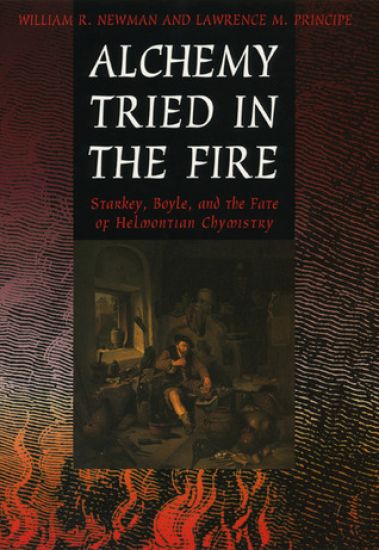
Alchemy Tried in the Fire

Alchemy Tried in the Fire

William R. Newman; Lawrence M. Principe

University of Chicago Press
2005
nidottu
Using the previously misunderstood interactions between Robert Boyle, widely known as "the father of chemistry," and George Starkey, an alchemist and the most prominent American scientific writer before Benjamin Franklin, as their guide, William R. Newman and Lawrence M. Principle reveal the hitherto hidden operations of Starkey's laboratory and argue that many of the principles and practices characteristic of modern chemistry derive from alchemy. By analyzing Starkey's extraordinary laboratory notebooks, the authors show how this American "chymist" translated the wildly figurative writings of traditional alchemy into quantitative, carefully reasoned laboratory practice - and then encoded his own work in allegorical, secretive treatises under the name of Eirenaeus Philalethes. A common emphasis on quantification, material production, and analysis/synthesis, the authors argue, illustrates a continuity of goals and practices from late medieval alchemy down to and beyond the Chemical Revolution.
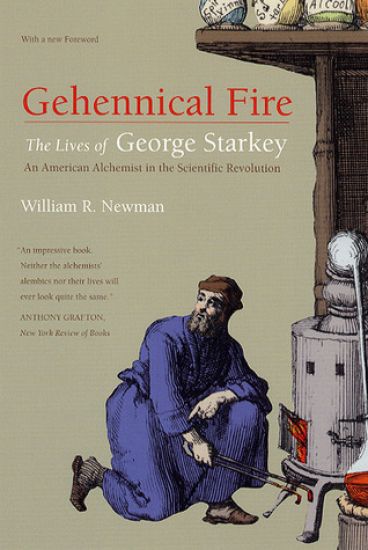
Gehennical Fire

Gehennical Fire

William R. Newman

University of Chicago Press
2003
nidottu
Both the quest for natural knowledge and the aspiration to alchemical wisdom played crucial roles in the Scientific Revolution, as William R. Newman demonstrates in this fascinating book about George Starkey (1628-1665), America's first famous scientist. Beginning with Starkey's unusual education in colonial New England, Newman traces out his many interconnected careers - natural philosopher, alchemist, chemist, medical practitioner, economic projector, and creator of the fabulous adept, "Eirenaeus Philalethes." Newman reveals the profound impact Starkey had on the work of Isaac Newton, Robert Boyle, Samuel Hartlib, and other key thinkers in the realm of early modern science.
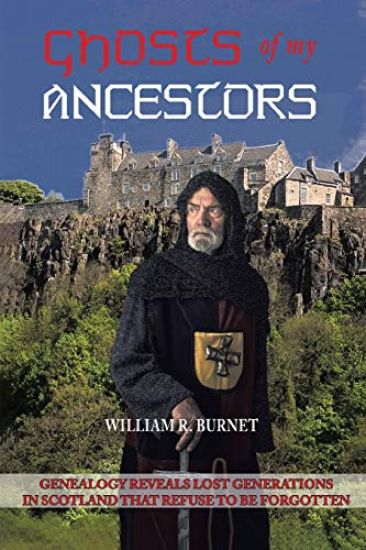
Ghosts of My Ancestors

Ghosts of My Ancestors

William R Burnet

Tellwell Talent
2020
pokkari
Looking back through the window of our tour bus at the moor, where thousands had fought a better equipped military, left me with a very eerie feeling. This battle had killed over 2000 Jacobites that day with another 500 or more killed in pursuit. Later I found out that 700 of those taken prisoner had been executed or died in prisons, with almost another 800 more loaded onto prison ships and transported to the colonies. These actions must have been a major horror and terror these brave Scottish Jacobites felt that day as they lay wounded and dying, to the fading sounds of the bagpipes, while gasping their last breaths.
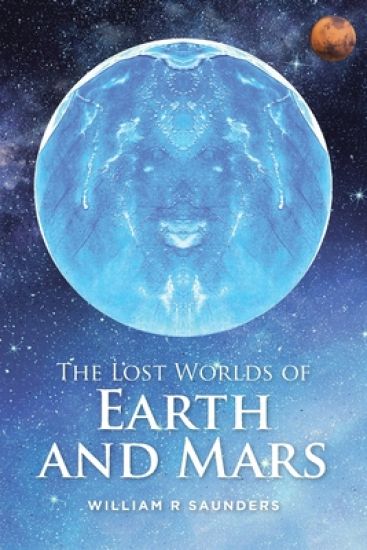
The Lost Worlds of Earth and Mars

The Lost Worlds of Earth and Mars

William R Saunders

Tellwell Talent
2021
pokkari
The original book, written long ago, existed, but its sight is hidden from the searcher and the thinker. - The Maya Popol VuhOver the last half century, an abundance of evidence has been put forward to indicate a highly advanced civilization once existed on planet Earth. The Lost Worlds of Earth and Mars presents the ultimate proof. But, did this civilization evolve on Earth, or did beings from another world create that civilization? Cultures around the world claim their ancestors descended from the heavens. Why should we not believe them? In this book you will see images from NASA, the European Space Agency and Google Earth that present some of the history and mythology of those civilizations. The documentation of the mythology is presented in the motif of half, bifurcated and profile images contained in rock formations or geoglyphs. The motif is that used by the Olmec and Maya civilizations in presenting some of their religious and mythological symbols and beliefs. Similar depictions have been found on Earth, the moon and Mars. They are there for us to see, but hidden from the searcher and the thinker.
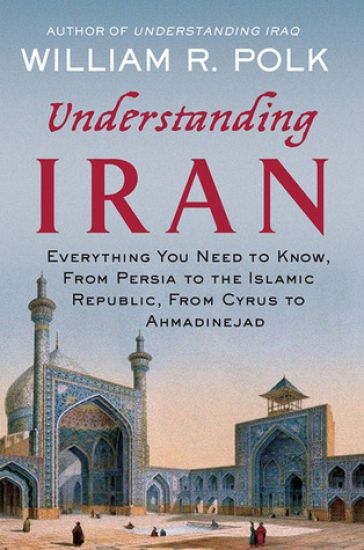
Understanding Iran

Understanding Iran

William R. Polk

Palgrave Macmillan
2011
nidottu
William R. Polk provides an informative, readable history of a country which is moving quickly toward becoming the dominant power and culture of the Middle East. A former member of the State Department's Policy Planning Council, Polk describes a country and a history misunderstood by many in the West. While Iranians chafe under the yolk of their current leaders, they also have bitter memories of generations of British, Russian and American espionage, invasion, and dominance. There are important lessons to be learned from the past, and Polk teases them out of a long and rich history and shows that it is not just now, but for decades to come that an understanding of Iran will be essential to American safety and well-being.
Criminal Justice at the Crossroads

Criminal Justice at the Crossroads

William R. Kelly

Columbia University Press
2015
sidottu
Over the past forty years, the criminal justice system in the United States has engaged in a very expensive policy failure, attempting to punish its way to public safety, with dismal results. So-called "tough on crime" policies have not only failed to effectively reduce crime, recidivism, and victimization but also created an incredibly inefficient system that routinely fails the public, taxpayers, crime victims, criminal offenders, their families, and their communities. Strategies that focus on behavior change are much more productive and cost effective for reducing crime than punishment, and in this book, William R. Kelly discusses the policy, process, and funding innovations and priorities that the United States needs to effectively reduce crime, recidivism, victimization, and cost. He recommends proactive, evidence-based interventions to address criminogenic behavior; collaborative decision making from a variety of professions and disciplines; and a focus on innovative alternatives to incarceration, such as problem-solving courts and probation. Students, professionals, and policy makers alike will find in this comprehensive text a bracing discussion of how our criminal justice system became broken and the best strategies by which to fix it.
Criminal Justice at the Crossroads

Criminal Justice at the Crossroads

William R. Kelly

Columbia University Press
2015
pokkari
Over the past forty years, the criminal justice system in the United States has engaged in a very expensive policy failure, attempting to punish its way to public safety, with dismal results. So-called "tough on crime" policies have not only failed to effectively reduce crime, recidivism, and victimization but also created an incredibly inefficient system that routinely fails the public, taxpayers, crime victims, criminal offenders, their families, and their communities. Strategies that focus on behavior change are much more productive and cost effective for reducing crime than punishment, and in this book, William R. Kelly discusses the policy, process, and funding innovations and priorities that the United States needs to effectively reduce crime, recidivism, victimization, and cost. He recommends proactive, evidence-based interventions to address criminogenic behavior; collaborative decision making from a variety of professions and disciplines; and a focus on innovative alternatives to incarceration, such as problem-solving courts and probation. Students, professionals, and policy makers alike will find in this comprehensive text a bracing discussion of how our criminal justice system became broken and the best strategies by which to fix it.
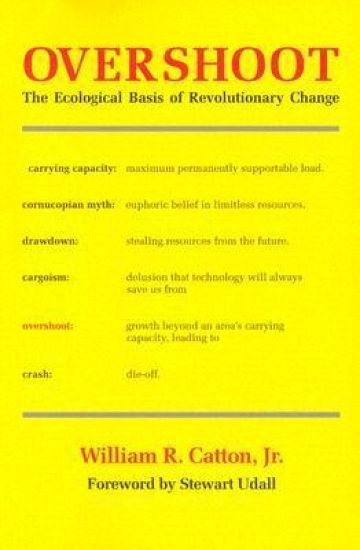
Overshoot

Overshoot

William R. Catton

University of Illinois Press
1982
nidottu
Our day-to-day experiences over the past decade have taught us that there must be limits to our tremendous appetite for energy, natural resources, and consumer goods. Even utility and oil companies now promote conservation in the face of demands for dwindling energy reserves. And for years some biologists have warned us of the direct correlation between scarcity and population growth. These scientists see an appalling future riding the tidal wave of a worldwide growth of population and technology. A calm but unflinching realist, Catton suggests that we cannot stop this wave - for we have already overshot the Earth's capacity to support so huge a load. He contradicts those scientists, engineers, and technocrats who continue to write optimistically about energy alternatives. Catton asserts that the technological panaceas proposed by those who would harvest from the seas, harness the winds, and farm the deserts are ignoring the fundamental premise that "the principals of ecology apply to all living things." These principles tell us that, within a finite system, economic expansion is not irreversible and population growth cannot continue indefinitely. If we disregard these facts, our sagging American Dream will soon shatter completely.
Charles Johnson's Fiction

Charles Johnson's Fiction

William R. Nash

University of Illinois Press
2002
sidottu
A fearless experimenter and one of the most important contemporary American writers, Charles Johnson challenges separatist politics and tries to get beyond race as a literary category. In Charles Johnson's Fiction, William R. Nash emphasizes and explores the tensions in Johnson's work between his ideal of race as illusion and his methods of articulating racial grievance. Nash examines Johnson's short stories, novels–-Faith and the Good Thing, Oxherding Tale, Middle Passage, and Dreamer–-and the nonfiction work Being and Race. Tracing the themes of Johnson's political and artistic concerns as they evolved in his work, Nash locates his fascination with the aesthetics of the Black Arts Movement and his dismissal of separatist black politics and racialist thought. He also considers Johnson's adoption of Western and Eastern philosophies and belief that race is a blinding, limiting category that impedes the exploration of individual and collective identity. In formulating a mode of expression that balances the conflicting demands of race and aesthetics, Johnson crafts a new vision of history and African American identity that signifies on a range of black and white literary predecessors, including Zora Neale Hurston, Theodore Dreiser, Ralph Waldo Emerson, Ralph Ellison, James Baldwin, and Herman Melville. Nash argues that Johnson's hybrid philosophy of Buddhism and phenomenology defies the basic premises of identity formation and leads to the perception of a different self. Juxtaposed with jarring storylines of racial injustice, Johnson's notion that race is an illusion informs his aesthetic, promotes his strategies for battling oppression, and reminds readers what African Americans have already overcome in the quest to cultivate new visions of identity. Charles Johnson's Fiction also includes eight of Johnson's cartoons published in Black Humor and Half-Past Nation Time in the early 1970s.