

Kirjahaku
Etsi kirjoja tekijän nimen, kirjan nimen tai ISBN:n perusteella.
1000 tulosta hakusanalla ""


Desafiando la inclemencia del brillante sol del tr pico, en pleno mediod a, va de regreso el muchacho a su rancho de bahareque, techo de zinc y piso de tierra endurecido por el diario trajinar. Caminan junto a l su madre y su hermano menor. El joven de contextura delgada apura el paso, ansioso de llegar para refrescarse y almorzar. La v a se conoce como la Carretera Negra, nombre que seguramente le asigna el populacho a la v a de comunicaci n que conectaba a esta y otras ciudades con el occidente del pa s y con Caracas, la Capital. El nombre de Carretera Negra debe ser por el color del asfalto que la distingue, en los pa ses subdesarrollados de la Suram rica de los a os 60, de las calles de tierra rojiza, caminos polvorientos y pedregosos. Han caminado unas siete cuadras desde la capilla, trayecto que se ha convertido en una rutina de quince minutos todos los d as domingos, ma ana y tarde, adem s de algunas noches entre semana.Hoy el misionero norteamericano ha predicado con pasi n y convicci n su serm n dominical. Como siempre, ha enfatizado algunos puntos del serm n con un golpe en rgico en el p lpito de madera. No sabe el predicador que est marcando una vida, que est sembrando una semilla que dar frutos para la eternidad, que est sembrando un sue o. No se imagina tampoco que est ense ando "como se hace una iglesia". En el alma de este muchacho p lido y flaco se est encendiendo un fuego. Pero l, el muchacho, tampoco sabe. Eso lo sabr Dios. Pero l, Dios, no parece decir nada. Es mediod a en el tr pico, el sol brillante desaf a de nuevo, como todos los domingos, al ya adolescente muchacho de nuestra historia. Han pasado no s cu ntos a os. Lo cierto es que el misionero no est . El p lpito tampoco, porque fue obsequiado a una iglesia hija. Pero hay uno, tambi n de madera, que sustituye al "fundador". El predicador es un pastor venezolano con dotes de maestro, bueno para la historia y para la reflexi n. Buena ense anza para alimentar el sue o que ya est empezando a tomar forma. La banda musical no es otra cosa que un acorde n a piano de ciento veinte bajos, y quien lo toca es el joven de nuestra historia. Se despide de los hermanos con un estrech n de manos, saludo aprendido en la iglesia, no en casa, y se dispone a enfrentar el candente sol llanero. Hora de almuerzo, la casa ya ha sido frisada, por lo menos por dentro, y el piso ya no es de tierra, es de concreto pulido. El comedor es una vieja mesa de cedro, cubierta siempre con alg n mantel de pl stico estampado. Pero hay que apurarse, ya se hace tarde para salir de nuevo hacia "el barrio El Muertico". Como si fuera un aderezo inseparable del almuerzo, nuestro joven escucha el rega o de su querida madre: -C mete esa comida tranquilo, muchacho...as nunca vas a engordar Qu vas a hacer para ese barrio tan peligroso? Esa gente, si se quiere salvar, que venga a la iglesia .....Pero este serm n no surte efecto.....el fuego est encendido...esa gente no va a venir...... alguien tiene que ir
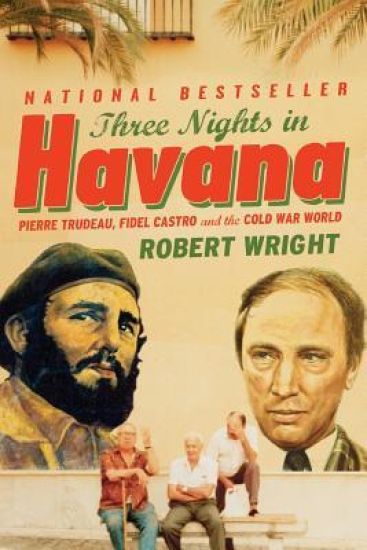
On January 26, 1976, Prime Minister Pierre Trudeau became the first leader of a NATO country to visit Cuba since the crippling 1960 American economic embargo. Accompanied by his wife, Margaret, and baby Michel, Trudeau was greeted in Havana by 250,000 cheering Cubans and a 30-foot poster of himself. Long live Prime Minister Fidel Castro Trudeau would famously shout at the love-in.In this fascinating portrait of an unusual relationship between two enigmatic world leaders, author and historian Robert Wright brings to life three days of Canadian politics played out on the international stage. In a revealing look at both leaders personalities and political ideologies, Wright shows how these two towering figuresdespite their official positions as allies of rival empiresdeterminedlyrefused to exist merely as handmaidens to the United States and forged a long-lasting relationship."
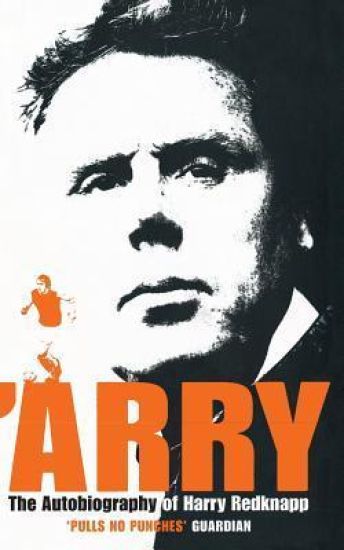
The hugely entertaining autobiography of one of the most popular and highly respected managers in the English Football League. Mention West Ham United FC and the name Harry Redknapp immediately springs to mind. The Hammers’ boss is an institution in the game; his experience of English football in the Nineties from the perspective of one club is unsurpassed. His was a controversial appointment, as he took over as manager at West Ham in 1994 to succeed former favourite Billy Bonds. But Redknapp broke the mould: he was one of the first Premiership managers to recruit heavily from abroad, and he gives a refreshing insight into how such players as Raducioiu, Dani, Boogers and other foreign buys adjusted – or in many cases, failed – to adapt to the frenetic pace and unique culture of English football. More recently he has proved a shrewd investor in British talent. The likes of Trevor Sinclair, Neil Ruddock and Ian Wright have ensured that the Hammers have been a force to be reckoned with throughout this season’s Premiership campaign. Away from football, Redknapp recalls his narrow escape from a near-fatal car accident in 1990 and the unique relationship with son Jamie, a quality player for Liverpool and England who is now married to pop star Louise. In an extra chapter to the original hardback edition, Harry comments on the Hammers’ performance during the 1998–99 season, and reveals the truth behind the many colourful and often controversial incidents that have beset the East End club in recent months.

Michael Owen reveals the highlights and pitfalls of being a professional footballer in his first official autobiography, which contains his personal reflections on eight years in the game, including two World Cups, two European Championships and goalscoring records for club and country. Updated to include his first full season with Real Madrid. After his famous goal against Argentina in France ‘98, Michael Owen was forced to grow up almost overnight, his sudden fame propelling him to stardom to the extent that the hopes of a football nation now rest on the slender frame of this 26-year-old. In his autobiography, Owen is forthright in his views on the game: he reacts to the accusations of diving, his susceptibility to injury, and his alleged gambling addiction; he writes candidly about his career at Liverpool, from Roy Evans to Gerard Houllier, and the reasons behind him leaving the club that made him as a player; and he talks about his ambitions for the England team and his new club Newcastle. He is also opinionated about his England striking partnership with Wayne Rooney and the threat from Jermaine Defoe; his complex and at times difficult relationship with coaches such as Glenn Hoddle, Kevin Keegan and Sven-Goran Eriksson; and he has strong views on the thug culture still rife in English football. Outside of the game, he talks openly for the first time about the death threats to him and his family, his relationship with childhood sweetheart Louise Bonsall – including her serious injury from a riding accident – and their baby Gemma as well as his passion for horse racing and betting. Exclusive to this paperback edition, there are two new chapters covering Owen’s dramatic transfer to Real Madrid, the frustrations of his first season in La Liga and the reasons for his return to England. The book will also expose the inside story of England’s 2006 World Cup qualifying campaign.
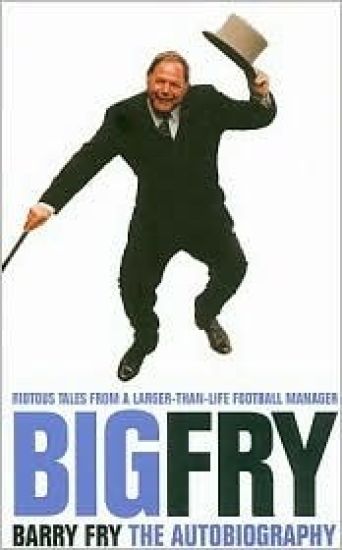
Whether it's tax evasion, fraud, transfer bribes or chicanery in the dressing room, Barry Fry has experienced it all as a player, manager and now club owner. He is ready to tell everything in his autobiography.

Contains 100 colourful portraits of the cricketing characters whom Ian Botham has come across in his eventful career and who have influenced the game for good in his time - from top players, umpires and coaches to pop stars, writers and philanthropists.
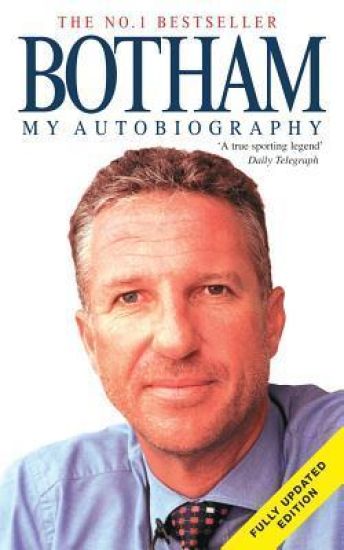
A completely updated edition of cricketing legend Ian Botham's biography, including first-hand insight into the 1999/2000 winter tour of South Africa.
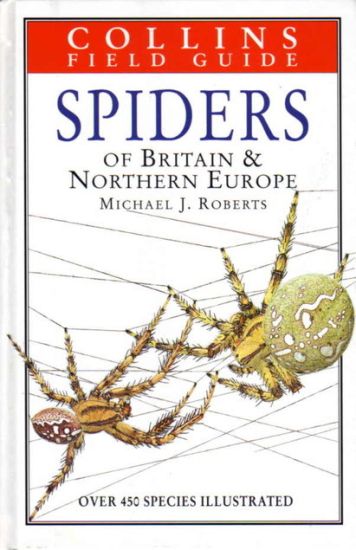
An illustrated reference guide to identifying all types of spiders. The general features of each family are also described, with information on courtship, hunting and web-making behaviour. A key to spiders' webs is also included in the introduction.

Ponds and pools are a common feature of our landscape – there are at least ten times as many ponds as lakes in the UK – and they are also important wildlife habitats. This book provides a comprehensive and detailed account of these freshwater habitats. The first chapter discusses what ponds, pools and puddles are, how they differ from rivers and lakes, their origin – natural or man-made, the different types of ponds and their abundance and distribution in Britain. A second chapter looks at ponds as ancient natural habitats that have existed for millennia on the earth’s surface. Ancient pond communities, as preserved in inter- and post-glacial sediments, are compared with modern pond communities. This chapter also examines the physical and chemical environment of ponds, covering aspects such as size, shape and depth, hydrology, oxygen and temperature. Ponds, pools and puddles are important wildlife habitats; they are as rich in species as rivers, and support rare and uncommon taxa including about half of Britain’s Red Data Book wetland plant and animal species. The authors give a comprehensive survey of the variety of plant and animal life for which ponds, pools and puddles are a habitat, with a chapter each on plants, invertebrates, amphibians, and fish, birds and mammals. The book discusses the importance of ponds to each of these groups and the ways in which the organisms exploit ponds, describing their habitats and major variations in life cycles. The pond ecosystem and colonisation and succession are discussed in two further chapters, before the final chapter, which is devoted to the subject of conservation and how best to protect and manage ponds and pond wildlife in Britain today. In spite of their evident importance, ponds have been largely ignored by freshwater biologists during this century. Ponds, Pools and Puddles makes an invaluable contribution to raising awareness of these popular, yet frequently underrated freshwater habitats, giving them the attention they rightly deserve.
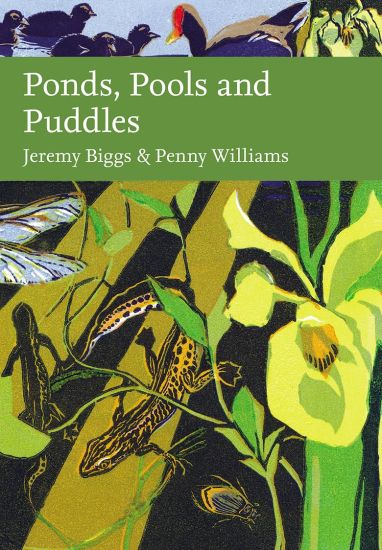
Ponds and pools are a common feature of our landscape – there are at least ten times as many ponds as lakes in the UK – and they are also important wildlife habitats. This book provides a comprehensive and detailed account of these freshwater habitats. The first chapter discusses what ponds, pools and puddles are, how they differ from rivers and lakes, their origin – natural or man-made, the different types of ponds and their abundance and distribution in Britain. A second chapter looks at ponds as ancient natural habitats that have existed for millennia on the earth’s surface. Ancient pond communities, as preserved in inter- and post-glacial sediments, are compared with modern pond communities. This chapter also examines the physical and chemical environment of ponds, covering aspects such as size, shape and depth, hydrology, oxygen and temperature. Ponds, pools and puddles are important wildlife habitats; they are as rich in species as rivers, and support rare and uncommon taxa including about half of Britain’s Red Data Book wetland plant and animal species. The authors give a comprehensive survey of the variety of plant and animal life for which ponds, pools and puddles are a habitat, with a chapter each on plants, invertebrates, amphibians, and fish, birds and mammals. The book discusses the importance of ponds to each of these groups and the ways in which the organisms exploit ponds, describing their habitats and major variations in life cycles. The pond ecosystem and colonisation and succession are discussed in two further chapters, before the final chapter, which is devoted to the subject of conservation and how best to protect and manage ponds and pond wildlife in Britain today. In spite of their evident importance, ponds have been largely ignored by freshwater biologists during this century. Ponds, Pools and Puddles makes an invaluable contribution to raising awareness of these popular, yet frequently underrated freshwater habitats, giving them the attention they rightly deserve.
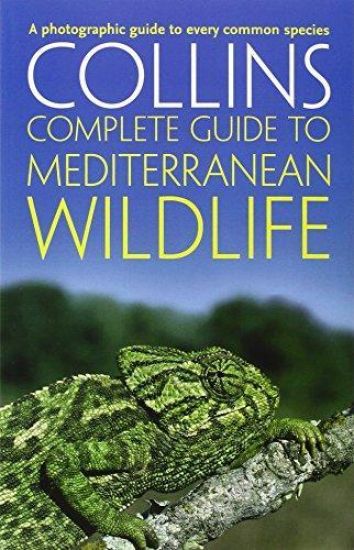
Mammals, birds, reptiles and amphibians, butterflies and moths, other insects, spiders, slugs and snails, trees and flowering plants from all round the Mediterranean are all included here, and each section is coded with a symbol for quick reference.

From seers to scientists, mystics to meteorologists, there have always been peoplewho claim to know what will happen in the future. The Oracle at Delphi, Pythagoras, Newton and the stock analyst on a business report have all endeavoured to look forward in time. But even with recent technological advances and the help of computers and satellites, are we any better at predicting the future now than we were in the distant past? How can scientists claim to foresee future climate events when even three-day forecasts prove a serious challenge?In Apollo's Arrow, David Orrell looks at the history of prognostication to show how scientists (and charlatans) have tried to forecast the future. He then breaks down the mathematics of what really goes into apredictive model. Orrell has created a compelling, elegantly written history of our future that addresses some of the most important issues of our time.

The fifth volume in the greatest epic work of the modern age. In the aftermath of a colossal battle, the future of the Seven Kingdoms hangs in the balance--beset by newly emerging threats from every direction. In the east, Daenerys Targaryen, the last scion of House Targaryen, rules with her three dragons as queen of a city built on dust and death. But Daenerys has thousands of enemies, and many have set out to find her. As they gather, one young man embarks upon his own quest for the queen, with an entirely different goal in mind. Fleeing from Westeros with a price on his head, Tyrion Lannister, too, is making his way to Daenerys. But his newest allies in this quest are not the rag-tag band they seem, and at their heart lies one who could undo Daenerys's claim to Westeros forever. Meanwhile, to the north lies the mammoth Wall of ice and stone--a structure only as strong as those guarding it. There, Jon Snow, 998th Lord Commander of the Night's Watch, will face his greatest challenge. For he has powerful foes not only within the Watch but also beyond, in the land of the creatures of ice. From all corners, bitter conflicts reignite, intimate betrayals are perpetrated, and a grand cast of outlaws and priests, soldiers and skinchangers, nobles and slaves, will face seemingly insurmountable obstacles. Some will fail, others will grow in the strength of darkness. But in a time of rising restlessness, the tides of destiny and politics will lead inevitably to the greatest dance of all.
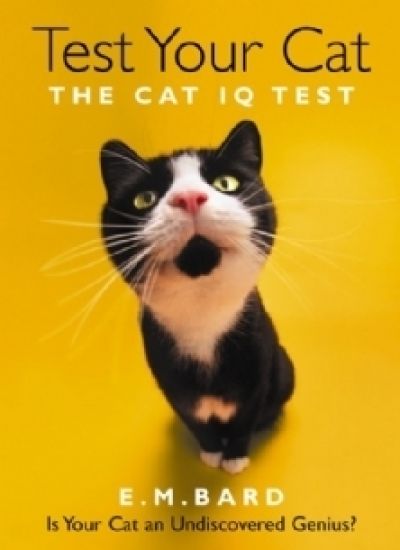
The perfect gift book for cat lovers everywhere, showing how to measure your catâ??s intelligence in a series of easy and fun tests.
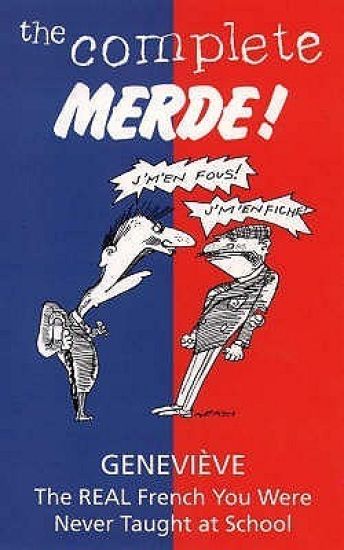
A saucy guide to survival in everyday French. With chapters on insults, sex, drink and those expressive Gallic gestures, this book reveals the necessary vocabulary, explains its proper use and gives examples and exercises for the eager student.

Robert Carver, journalist and author of the acclaimed ‘Among the Mountains’, searches for high adventure and intense experiences as he follows the trail of a family mystery . Once upon a time when Buenos Aires was still a tiny village, there existed an almost magical sub-tropical paradise in the lost heart of South America – Old Paraguay. In 1537 a group of Europeans founded Asuncion on the banks of the Parana river, where they were enthusiastically welcomed by the Gurani. An extraordinary fusion of New World and Old was created – a place where magnificent baroque cathedrals were built of carved stone in the heart of the jungle and solemn Catholic masses and high oratorios were sung and performed on European instruments by Gurani Indians and their Jesuit mentors. But every paradise has its serpents and the history of Paraguay is also studded with oppressive and even demented dictators. Robert Carver’s long-term fascination with this intoxicating world was fuelled by childhood stories of his great-uncle Charlie Carver, who vanished into the Amazonian jungle of old north Paraguay in search of Inca silver. He never returned, but his smashed gold pocket watch was traded down river and returned to the family in England. Today Paraguay is the only South American country which is truly bilingual, in Spanish and Gurani: here everyone is a mestizo and proud of their dual heritage. Pink, freshwater dolphins play in the rivers of the Huan Chaco while in the forests soldier-ants cut paths six feet wide and eat anything in their way – they can devour a nylon tent in an hour. Carver (a fluent Spanish-speaker) travels into this forbidden lost world in search of his own golden city of outlandish experience. The physically reckless journey takes him from mule trains high in frozen mountains to steamers up remote rivers in dense tropical jungle and he faces the threat of malaria, dengue fever and the odd marauding outlaw.