Kirjojen hintavertailu. Mukana 11 699 587 kirjaa ja 12 kauppaa.

Kirjahaku

Etsi kirjoja tekijän nimen, kirjan nimen tai ISBN:n perusteella.

1000 tulosta hakusanalla "Integration"

Integration of the Army National Guard in Force Projection Operations: A Concept for a New Millenium
In the summer of 1989, following the breakup of the Soviet Union and the ending of the Cold War, the Department of Defense announced plans to modify the structure and size of the armed forces based upon the changing security environment. Of particular interest to the Army was the appropriate balance and mix of combat, combat support (CS), and combat service support (CSS) units between the Regular Army and the Reserve Components. The "Bottom-Up-Review" identified a critical Total Army shortfall in the number of CS/CSS units necessary to enable the United States to successfully conduct military operations in two nearly simultaneous major theater wars, and determined that much of the National Guard's combat force structure was not necessary based on the contemporary security environment. Following Operations Desert Shield and Desert Storm, the National Guard began the Army National Guard Division Redesign Study (ADRS), to restructure its forces in order to make them more relevant to the needs of the Army, and the present global security situation. As a part of this initiative, the National Guard and the Regular Army created two integrated divisions by using Guard enhanced separate brigades as the subordinate ground maneuver units of two Regular Army division headquarters. The Guard also began the conversion of the ground maneuver brigades of two of its eight combat divisions into combat support and combat service support units in an effort to reduce the critical shortfall identified in the "Bottom-Up-Review." The remaining six National Guard divisions were teamed with Regular Army divisions in a mutually beneficial training, deployment, and operational support relationship. As a part of the emerging mission of homeland defense, the National Guard also began developing rapid assessment and initial detection teams in order to facilitate the consequence management of weapons of mass destruction incidents. This monograph assesses the relevancy of the National Guard's forc This work has been selected by scholars as being culturally important, and is part of the knowledge base of civilization as we know it. This work was reproduced from the original artifact, and remains as true to the original work as possible. Therefore, you will see the original copyright references, library stamps (as most of these works have been housed in our most important libraries around the world), and other notations in the work. This work is in the public domain in the United States of America, and possibly other nations. Within the United States, you may freely copy and distribute this work, as no entity (individual or corporate) has a copyright on the body of the work. As a reproduction of a historical artifact, this work may contain missing or blurred pages, poor pictures, errant marks, etc. Scholars believe, and we concur, that this work is important enough to be preserved, reproduced, and made generally available to the public. We appreciate your support of the preservation process, and thank you for being an important part of keeping this knowledge alive and relevant.
Integration of Lethal and Nonlethal Fires: The Future of the Joint Fires Cell
The term "fires" is not new within the US Army. But after years of confining fires to solely its lethal component, the Army broke with tradition. Subsequently, the Army released its new Operations manual, FM 3-0 (2008), articulating the newest operational concept, full spectrum operations. Full spectrum operations expanded previous concepts, such as Airland Battle doctrine, and sought to represent the current operating environment. FM 3-0 represented a fundamental change in the Army's approach to warfighting. Leaders must seek to employ elements of fires, lethal and nonlethal, proportional to mission and informed through the variables contained within the operating environment. FM 3-0 went even further tasking the Fires Cell with integrating and synchronizing the effects of lethal and nonlethal fires with the effects of other warfighting functions. By screening the current operating environment, this monograph examines how traditional fires cell organizations involved in current operations have adapted to achieve integration and synchronization of fires. From that examination, best practices are identified in order to anticipate future fires cell requirements necessary to achieve FM 3-0's imperatives. Commensurate with those imperatives, this paper explores what the US Army can learn from the current operating environment that can be applied to future operational level fires cells functionality? FM 3-0 makes mention of the term nonlethal fires and tasks the fires cell with its integration using the targeting process, but does not define the term. A clear definition of nonlethal fires is necessary to proceed. This monograph extrapolates a definition of nonlethal fires and uses the essentials from FM 3-0, integration and synchronization of nonlethal fires, as screening criteria to make recommendations as to the way ahead for future Army operational fires cells. The document argues that the accepted definition of nonlethal is too simplistic and should be expanded to i This work has been selected by scholars as being culturally important, and is part of the knowledge base of civilization as we know it. This work was reproduced from the original artifact, and remains as true to the original work as possible. Therefore, you will see the original copyright references, library stamps (as most of these works have been housed in our most important libraries around the world), and other notations in the work. This work is in the public domain in the United States of America, and possibly other nations. Within the United States, you may freely copy and distribute this work, as no entity (individual or corporate) has a copyright on the body of the work. As a reproduction of a historical artifact, this work may contain missing or blurred pages, poor pictures, errant marks, etc. Scholars believe, and we concur, that this work is important enough to be preserved, reproduced, and made generally available to the public. We appreciate your support of the preservation process, and thank you for being an important part of keeping this knowledge alive and relevant.
Integration of Armored Forces in the U.S. Army Infantry Division
The integration of armored units within the U.S. Army's infantry divisions has historically been pivotal to the success of the infantry division in combat. Currently, none of the Army's tank or mechanized infantry battalions are organized or trained to directly support the Army's light, air assault or airborne infantry divisions. The 10th Mountain Division, the 25th Infantry Division, the 101st Air Assault Division and the 82nd Airborne Division currently have to draw armored support from the Army's armored or mechanized infantry divisions. This organizational shortfall is compounded by training and doctrinal issues. The most important of which is that the tank and mechanized infantry battalions within the Army's heavy divisions do not routinely train in the role of providing support to the Army's light, air assault or airborne infantry divisions. The monograph initially examines the period from 1940 until 1947, which was characterized by increasing integration of the two arms. This provides a basis for comparison with the current Army in terms of organization, doctrine and training. Subsequently, the monograph examines the changes associated with the Army's adoption of the Army of Excellence in the 1980s. This examination provides insight into how the Army currently achieves integration of its armored units and infantry divisions with respect to organization, doctrine and training. The monograph then evaluates the Army's current level of integration largely based on the Army's lessons from the Second World War. This study recommends that the Army re-allocate armored forces to directly support the Army's infantry divisions, even if this must be done at the expense of existing heavy forces. The study further recommends changes to the Army's current armored-infantry training model in order to establish habitual relationships between supporting armored units and supported infantry divisions. Finally, the study recommends limited changes to the current U.S. Army doctri This work has been selected by scholars as being culturally important, and is part of the knowledge base of civilization as we know it. This work was reproduced from the original artifact, and remains as true to the original work as possible. Therefore, you will see the original copyright references, library stamps (as most of these works have been housed in our most important libraries around the world), and other notations in the work. This work is in the public domain in the United States of America, and possibly other nations. Within the United States, you may freely copy and distribute this work, as no entity (individual or corporate) has a copyright on the body of the work. As a reproduction of a historical artifact, this work may contain missing or blurred pages, poor pictures, errant marks, etc. Scholars believe, and we concur, that this work is important enough to be preserved, reproduced, and made generally available to the public. We appreciate your support of the preservation process, and thank you for being an important part of keeping this knowledge alive and relevant.
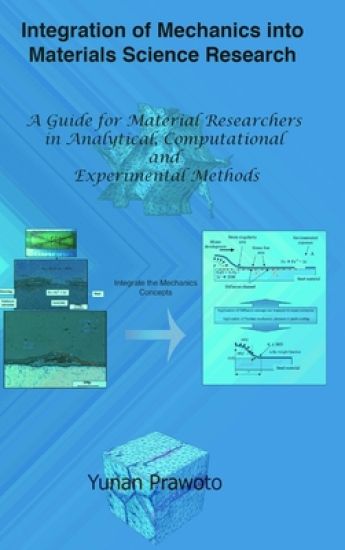
Integration of Mechanics into Materials Science Research: A Guide for Material Researchers in Analytical, Computational and Experimental Methods
It is a mechanics book written for materials scientists. It provides very simple basic principle written for audience with non mechanics background, so that readers who plan to adopt and integrate the mechanics in their research areas can do it the smart way. The book also has plenty examples on the simple applications of mechanics in various materials science areas: in metallurgy, in coating, in design and in materials science in general. This book is filling the gap between the concept of mechanics used in the 'mechanics world' and the concept of mechanics 'outside mechanics world'. It is perfect for researchers outside mechanics, especially in materials science, who want to incorporate the concept of mechanics in their works. It is originally a script used by a research group in materials science with no mechanics background.
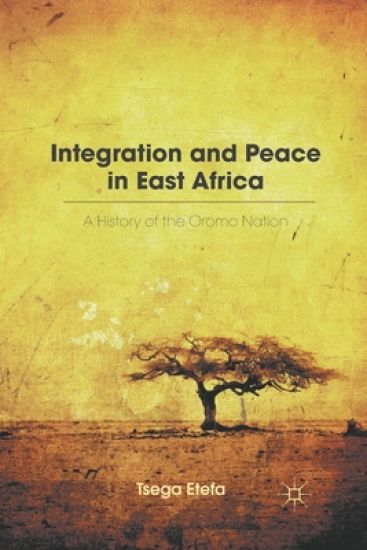
Integration and Peace in East Africa

Integration and Peace in East Africa

T. Etefa

Palgrave Macmillan
2012
nidottu
This book analyzes the development of indigenous religious, commercial, and political institutions among the Oromo mainly during the relatively peaceful two centuries in its history, from 1704 to 1882. The largest ethnic group in East Africa, the Oromo promoted peace, cultural assimilation, and ethnic integration.
Integration and New Limits on Citizenship Rights

Integration and New Limits on Citizenship Rights

N. Stokes-DuPass

Palgrave Macmillan
2015
nidottu
Integration and New Limits on Citizenship Rights is a state-centered analysis of citizenship, immigration and social identity. It explores the increasing role of nation states as critical actors in using social policy to affect the social location of immigrants and ethnics and also to redefine what it means to be a full citizen.
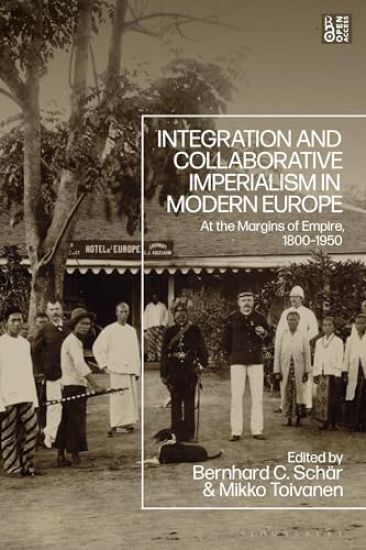
Integration and Collaborative Imperialism in Modern Europe
This open access book provides a thought-provoking new perspective on European imperialism in the 19th and 20th centuries. It does so by inquiring how smaller European powers and regions at the margins of the continent integrated into a globally interconnected world that was heavily shaped by their more powerful European neighbours. Case studies on Nordic, Eastern and Central European regions uncover how countries such as Sweden, Serbia or Switzerland became imperial, despite having no or only short-lived overseas colonies of their own. By uncovering the structures and networks that enabled these regions to actively participate in and benefit from the imperial world around them, these case studies also reveal a crucial dynamic of European imperialism that has rarely been analysed in extant historiographies of Empire and Europe: the fact that 19th-century European imperial subjugation of almost the entire planet was driven not only by undeniable rivalry and competition among the greater European powers, but also necessarily depended on collaboration and exchanges across national and imperial boundaries.The ebook editions of this book are available open access under a CC BY-NC-ND 4.0 licence on bloomsburycollections.com. Open access was funded by the Swiss National Science Foundation (SNSF).
Integration in Multicultural England

Integration in Multicultural England

Jörg Friedrichs

BLOOMSBURY PUBLISHING PLC
2025
sidottu
Positive relations between Muslims and non-Muslims are important for the future, in Britain and beyond. By studying community relations, this book takes an innovative approach that moves beyond mapping “British Muslims” or “British Islam”. Instead, Jörg Friedrichs discusses the actual ways Muslims and non-Muslims relate, or fail to relate, where it matters most, namely in diverse inner cities. Is Britain a multicultural country, is it moving towards greater integration, or is this a false dichotomy?Given their unique everyday experience, inner city residents prove to be experts when it comes to community relations. To give them a voice and learn from their experience, the book takes us on a tour of diverse English inner cities. Reassuringly, the grassroots perspective of residents is consistent with a vision of integration in multicultural England. Residents are concerned not so much about hot-button issues like extremism or terrorism. Instead, their minds are set on practical matters: how to coexist peacefully in stressful urban environments, and how to find love and raise families when norms diverge.Caught between grievance and aspiration, inner city residents from any background express disappointment at Muslim and non-Muslim parents sending their children to different schools. They also discuss whether governance should be community-blind or community-based, and if Britain is ready for a Muslim Prime Minister. In all of this, Muslim and non-Muslim residents acknowledge that we live in a multicultural society. For most, however, it does not follow that we should adopt multiculturalism as an ideology. Instead, most people crave and support a move towards greater integration.
Integration of Biomaterials for Gene Therapy
INTEGRATION OF BIOMATERIALS FOR GENE THERAPY Brings industrial practitioners and researchers together to discuss how the deeper integration of biomaterial platforms could play a significant role in enabling breakthroughs in the application of gene editing for the treatment of human disease. This book comprises research and review articles from leading researchers with multidisciplinary experience. It discusses many broad topics, including nanoparticle-enabled gene therapy, inorganic nanocarrier-based gene delivery, non-viral delivery of nucleic acid, biocompatible hydrogels, silk, and polysaccharides-based gene delivery. Other gene delivery topics discussed include the use of smart and engineered biomaterials, combined therapy with growth factors and cell transportation, and the prospects and challenges in the treatment of different diseases, including cancer. This book bridges the knowledge of pharmaceutics, engineering, basic science, and clinical research fields in a way that will help the research community expedite the clinical application of these therapies for various diseases and conditions. Audience A broad range of researchers, scientists, and engineers in diverse fields such as materials science, biomedicine, biomedical engineering, biology, chemistry, physics, biotechnology, pharmacology, toxicology, and formulation scientists.
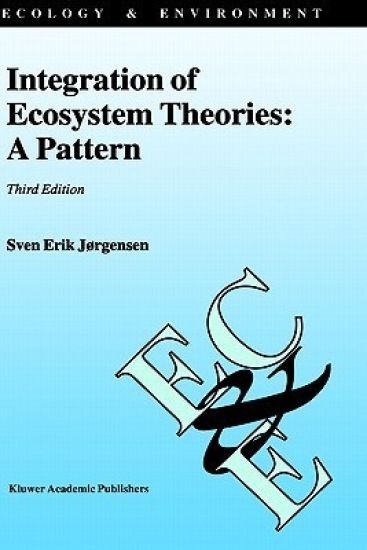
Integration of Ecosystem Theories: A Pattern

Integration of Ecosystem Theories: A Pattern

Sven Erik Jørgensen

Springer-Verlag New York Inc.
2002
sidottu
The book presents an integration of existing ecosystem theories in such a comprehensive way as to enable a full ecological and theoretical pattern to be presented. It shows that ecosystems and their reactions may be understood, provided that all basic systems ecology is applied to different aspects of the properties of ecosystems. Since the publication of the previous two editions of this book, ongoing research and discussions on an international scale have greatly clarified and enhanced this pattern. This progress is presented as Chapter 16 in this new, third edition. It is shown that the integrated ecosystem theory presented can be applied to explain various ecological observations and rules. Audience: Researchers and decision makers whose work involves the study of ecosystems and ecology. This book is also recommended for use in graduate courses.
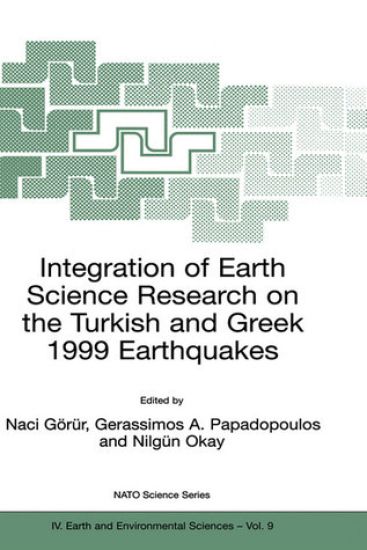
Integration of Earth Science Research on the Turkish and Greek 1999 Earthquakes
In 1999, two earthquakes occurred in the Istanbul-Marmara region of Turkey and the Athens-Corinth region of Greece, and an increased risk of further events caused great concern among the earth science community. This book presents and discusses the latest results from studies of the Izmit-Düzce and Athens earthquakes and assesses the data that are available and relevant to the geology, seismology, tectonics, geodesy and other fields related to earthquake studies and to evaluate earthquake hazard potential.
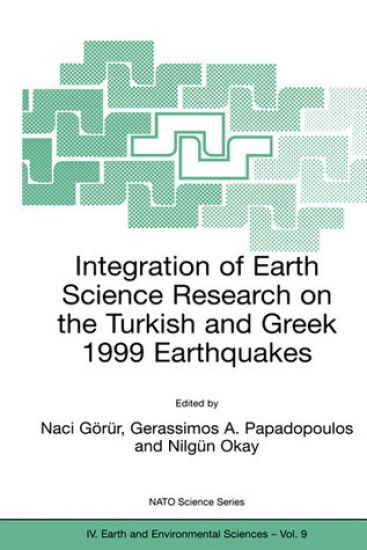
Integration of Earth Science Research on the Turkish and Greek 1999 Earthquakes
In 1999, two earthquakes occurred in the Istanbul-Marmara region of Turkey and the Athens-Corinth region of Greece, and an increased risk of further events caused great concern among the earth science community. This book presents and discusses the latest results from studies of the Izmit-Düzce and Athens earthquakes and assesses the data that are available and relevant to the geology, seismology, tectonics, geodesy and other fields related to earthquake studies and to evaluate earthquake hazard potential.