Kirjojen hintavertailu. Mukana 11 342 296 kirjaa ja 12 kauppaa.

Kirjahaku

Etsi kirjoja tekijän nimen, kirjan nimen tai ISBN:n perusteella.

1000 tulosta hakusanalla "Protest"

Protest Movements and Parties of the Left

Protest Movements and Parties of the Left

David J. Bailey

Rowman Littlefield International
2017
sidottu
How successful are social movements and left parties at achieving social and political change? How, if at all, can movements and parties work together to challenge existing hierarchies? Is the political left witnessing a revival in contemporary politics? This book highlights some of the key achievements of left parties and protest movements in their goal of challenging different types of inequality – and considers the ways in which their challenge to authority and power could be intensified. It combines new theoretical ideas with rich empirical detail on the debates and concrete activities undertaken by left parties and protest movements over a broad historical period, from the early European labour movement to the recent anti-austerity global protests. The book will offer unique insight into the broad history and theory of emancipatory politics; as well as making an important contribution to ongoing debates between left-leaning academics, researchers and activists.

Protest Movements and Parties of the Left

Protest Movements and Parties of the Left

David J. Bailey

Rowman Littlefield International
2017
nidottu
How successful are social movements and left parties at achieving social and political change? How, if at all, can movements and parties work together to challenge existing hierarchies? Is the political left witnessing a revival in contemporary politics? This book highlights some of the key achievements of left parties and protest movements in their goal of challenging different types of inequality – and considers the ways in which their challenge to authority and power could be intensified. It combines new theoretical ideas with rich empirical detail on the debates and concrete activities undertaken by left parties and protest movements over a broad historical period, from the early European labour movement to the recent anti-austerity global protests. The book will offer unique insight into the broad history and theory of emancipatory politics; as well as making an important contribution to ongoing debates between left-leaning academics, researchers and activists.

Protest Campaigns, Media and Political Opportunities

Protest Campaigns, Media and Political Opportunities

Jonathan Cable

Rowman Littlefield International
2016
sidottu
The attention paid to protest groups and social movements has rarely been higher, be it the Occupy movement, austerity protests, or student demonstrations. These formations are under continual scrutiny by academics, the press and politicians who are all attempting to interpret and understand protest groups, their tactics, demands, and their wider influence on society. Protest Campaigns, Media and Political Opportunities takes an in-depth look at three different protest groups including a community campaign, environmental direct action activists, and a mass demonstration. It offers a broad perspective of each group through a comprehensive combination of insider stories from activists, the authors own involvement with one group, newspaper coverage, each group's social media, websites and leaflets, and government documents. This wealth of material is pieced together to provide compelling narratives for each group's campaign, from the inception of their protest messages and actions, through media coverage, and into political discourse. This book provides a vibrant contribution to debates around the communication and protest tactics employed by protest groups and the significance news media has on advancing their campaigns.
Protest Campaigns, Media and Political Opportunities

Protest Campaigns, Media and Political Opportunities

Jonathan Cable

Rowman Littlefield International
2016
nidottu
The attention paid to protest groups and social movements has rarely been higher, be it the Occupy movement, austerity protests, or student demonstrations. These formations are under continual scrutiny by academics, the press and politicians who are all attempting to interpret and understand protest groups, their tactics, demands, and their wider influence on society. Protest Campaigns, Media and Political Opportunities takes an in-depth look at three different protest groups including a community campaign, environmental direct action activists, and a mass demonstration. It offers a broad perspective of each group through a comprehensive combination of insider stories from activists, the authors own involvement with one group, newspaper coverage, each group's social media, websites and leaflets, and government documents. This wealth of material is pieced together to provide compelling narratives for each group's campaign, from the inception of their protest messages and actions, through media coverage, and into political discourse. This book provides a vibrant contribution to debates around the communication and protest tactics employed by protest groups and the significance news media has on advancing their campaigns.
Protest Cultures

Protest Cultures

Berghahn Books
2016
sidottu
Protest is a ubiquitous and richly varied social phenomenon, one that finds expression not only in modern social movements and political organizations but also in grassroots initiatives, individual action, and creative works. It constitutes a distinct cultural domain, one whose symbolic content is regularly deployed by media and advertisers, among other actors. Yet within social movement scholarship, such cultural considerations have been comparatively neglected. Protest Cultures: A Companion dramatically expands the analytical perspective on protest beyond its political and sociological aspects. It combines cutting-edge synthetic essays with concise, accessible case studies on a remarkable array of protest cultures, outlining key literature and future lines of inquiry.
Protest in Hitler's “National Community”
That Hitler’s Gestapo harshly suppressed any signs of opposition inside the Third Reich is a common misconception. This book presents studies of public dissent that prove this was not always the case. It examines circumstances under which “racial” Germans were motivated to protest, as well as the conditions determining the regime’s response. Workers, women, and religious groups all convinced the Nazis to appease rather than repress “racial” Germans. Expressions of discontent actually increased during the war, and Hitler remained willing to compromise in governing the German Volk as long as he thought the Reich could salvage victory.
Protest, Social Movements, and Global Democracy since 2011
In light of the limited achievements of the Arab Spring and other pro-democracy movements, volume 39 examines and unpacks arguments that these protests represent both a new phase and new prospects for democratic mobilization. The volume engages with new theoretical and methodological perspectives and illuminates novel aspects of transnational social movement dynamics, such as the evolving role of information technology, deterritorialisation and government counter-responses.
Protest, Youth and Precariousness
After over a decade of the austerity measures that followed the 2008 financial crisis—entailing severe, unpopular policies that have galvanized opposition and frayed social ties—what lies next for European societies? Portugal offers an interesting case for exploring this question, as a nation that was among the hardest hit by austerity and is now seeking a fresh path forward. This collection brings together sociologists, social movement specialists, political scientists, and other scholars to look specifically at how Portuguese youth have navigated this politically and economically difficult period, negotiating uncertain social circumstances as they channel their discontent into protest and collective action.
Protest Cultures

Protest Cultures

Berghahn Books
2020
pokkari
Protest is a ubiquitous and richly varied social phenomenon, one that finds expression not only in modern social movements and political organizations but also in grassroots initiatives, individual action, and creative works. It constitutes a distinct cultural domain, one whose symbolic content is regularly deployed by media and advertisers, among other actors. Yet within social movement scholarship, such cultural considerations have been comparatively neglected. Protest Cultures: A Companion dramatically expands the analytical perspective on protest beyond its political and sociological aspects. It combines cutting-edge synthetic essays with concise, accessible case studies on a remarkable array of protest cultures, outlining key literature and future lines of inquiry.
Protest Poetry

Protest Poetry

Kimberlynne Darby Newton

Independently Published
2018
nidottu
Protest Poetry by Kimberlynne Darby Newton and Subterranean Blue Poetry confronts the demons of life N.A. and turns the darkness of injustice into a treatise for love. From an embattled place, the Black culture in the dominant white culture and what this means, from beleaguered social interactions, to broken love lives, to rape, to outright violence. Acknowledging the pain of violence, she is an incredibly intelligent Poet creating an eloquent treatise against the injustice of an underground war. She calls on the Spirit world, the ancient goddesses, Morrigu, Erzulie, Nzinga, and more, the goddesses of war for protection and the goddesses of love for change. This poetry is a very powerful prayer to the ancients for their descendants, so they can live and thrive in peace. The beauty of the sisterhood is a celebration, Black women, the Madonna, is the beauty of love itself, a very powerful spiritus that can heal all wounds, pours water on fire, brings life and peace to a troubled world.- Subterranean Blue PoetryBiography: Kimberlynne Darby Newton is a retired professor of history, she is a native of Montgomery, Alabama.She hopes that her writing will help someone; with a smile, a shared experience, and hopefully, an inspiration. She is happily writing her next book, and lives with son, Issac and husband, Barney.
Protest Technologies and Media Revolutions
Contains an Open Access chapter. Protest Technologies and Media Revolutions portrays the critical role of mass connection in the success of any movement, resurrection, protest, and revolution. The communication mechanisms for this connection have, at times, evolved and elsewhere undergone revolutions of their own. Authors debate this relationship, and the strategies and lessons of 'connecting to the masses' considering the development of media, technology and communication strategies over the last century. Key topics covered include revolution, communication, protest and technology, spanning from the Russian Revolution to the present day. The discussion is not limited to historic cases of technology and revolution, nor to contemporary ones. The book, therefore, generates a debate about how art, media and communication technologies have been operationalized to connect, mobilize and organize, in different historical times, and in diverse national, political, and socio-economic contexts.
Protest Beyond Borders
The protest movements that followed the Second World War have recently become the object of study for various disciplines; however, the exchange of ideas between research fields, and comparative research in general, is lacking. An international and interdisciplinary dialogue is vital to not only describe the similarities and differences between the single national movements but also to evaluate how they contributed to the formation and evolution of a transnational civil society in Europe. This volume undertakes this challenge as well as questions some major assumptions of post-1945 protest and social mobilization both in Western and Eastern Europe. Historians, political scientists, sociologists and media studies scholars come together and offer insights into social movement research beyond conventional repertoires of protest and strictly defined periods, borders and paradigms, offering new perspectives on past and present processes of social change of the contemporary world.
Protest and Social Movements in the Developing World
In this insightful book, the contributors focus on the impact of contextual factors on social movements in the developing world, pushing major existing theories beyond their traditional focus. With wide coverage of the developing world, leading academics explore a variety of forms and mechanisms of social movement. They present discussions on resource and institutional endowment for mobilization in Colombia and Thailand, and explore the structure behind political opportunities in Argentina, China and South Africa. The history and reality of identity-making in India, Mexico and Nigeria are also examined.Presenting novel analytical frameworks to study social movements in developing countries, this book will be warmly welcomed by academics and researchers with an interest in sociology, development and political science. It will also strongly appeal to social movement activists.
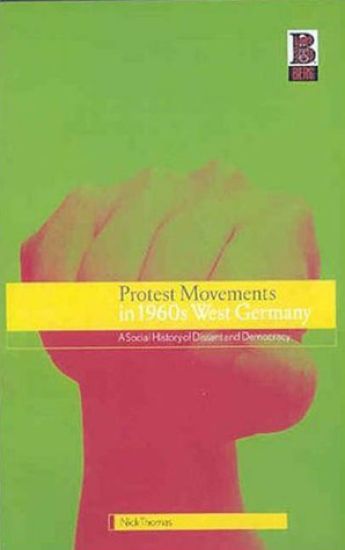
Protest Movements in 1960s West Germany

Protest Movements in 1960s West Germany

Nick Thomas

BLOOMSBURY PUBLISHING PLC
2003
sidottu
This social history of protest movements in 1960s Germany departs from the limited and often politically biased reports of participants by placing the protests within the wider contexts of social change and international events. Thomas makes extensive use of archival material, much of which has never been used before, to reconstruct an historical narrative that begins with the peace and anti-nuclear campaigns of the 1950s and moves seamlessly on to the defining events of the 1960s -the Vietnam War, university reform, and the womens movement.Through this original reconstruction, Thomas expertly shows how the protest movements both reflected and influenced fundamental social and political change in post-war Germany. He documents their role in helping to establish a critical and politically mature democracy, despite the escalating violence between protesters and government authorities that culminated in the terrorism of the 1970s. This book is a benchmark publication. Not only is it the first to document these events in English, but it challenges previously biased accounts and offers a much needed reassessment of popular assumptions.
Protest Movements in 1960s West Germany

Protest Movements in 1960s West Germany

Nick Thomas

Berg Publishers
2003
nidottu
This social history of protest movements in 1960s Germany departs from the limited and often politically biased reports of participants by placing the protests within the wider contexts of social change and international events. Thomas makes extensive use of archival material, much of which has never been used before, to reconstruct an historical narrative that begins with the peace and anti-nuclear campaigns of the 1950s and moves seamlessly on to the defining events of the 1960s -the Vietnam War, university reform, and the womens movement.Through this original reconstruction, Thomas expertly shows how the protest movements both reflected and influenced fundamental social and political change in post-war Germany. He documents their role in helping to establish a critical and politically mature democracy, despite the escalating violence between protesters and government authorities that culminated in the terrorism of the 1970s. This book is a benchmark publication. Not only is it the first to document these events in English, but it challenges previously biased accounts and offers a much needed reassessment of popular assumptions.
Protest Nation

Protest Nation

Jane Duncan

University of KwaZulu-Natal Press
2016
nidottu
South Africa has become a nation defined by its protests. Protests can, and do, bring societal problems to public attention in direct, at times dramatic, ways. But governments the world over are also tempted to suppress this right, as they often feel threatened by public challenges to their authority.Apartheid South Africa had a shameful history of repressing protests. The architects of the country’s democracy expressed a determination to break with this past and recognise protest as a basic democratic right. Yet, today, there is concern about the violent nature of protests.Protest Nation challenges the dominant narrative that it has become necessary for the state to step in to limit the right to protest in the broader public interest because media and official representations have created a public perception that violence has become endemic to protests. Bringing together data gathered from municipalities, the police, protestor and activist interviews, as well as media reports, the book analyses the extent to which the right to protest is respected in democratic South Africa. It throws a spotlight on the municipal role in enabling or mostly thwarting the right.This book is a call to action to defend the right to protest: a right that is clearly under threat. It also urges South Africans to critique the often-skewed public discourses that inform debates about protests and their limitations.
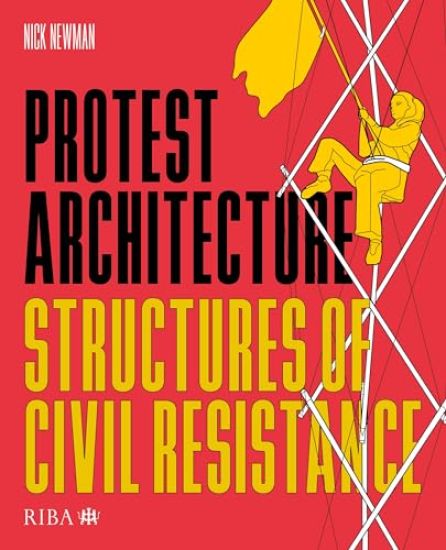
Protest Architecture

Protest Architecture

Nick Newman

RIBA PUBLISHING
2024
nidottu
A complex bamboo pyramid to block a busy crossing in London. A maze of ‘mini Stonehenge’ brick structures to hinder government crackdowns in Hong Kong. The takeover of a Dallas highway to create a temporary public square. Architects have often used their skills in struggles for civil rights, gender equality and climate justice. Illuminating the role that design has played in protest movements, Nick Newman explores the colliding worlds of architecture and activism through the stories of those who have built for change. Using historic and contemporary examples, Protest Architecture analyses the design problems and solutions faced by protestors on the streets through detailed drawings, photography and expert insight. From beacons to barricades, towers to treehouses, this unique design typology demonstrates architectural influence over moments of societal change. This is a retelling of protest history through the eyes of an architect.
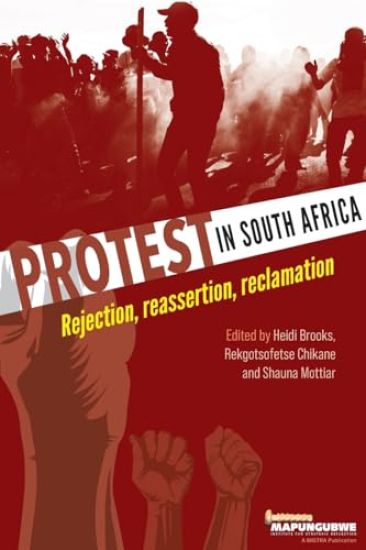
Protest in South Africa

Protest in South Africa

Mapungubwe Institute (MISTRA)
2023
pokkari
Popular protest has become a regular feature of post-1994 South Africa. As a young democracy born out of resistance, we may understand the contemporary manifestations of protest as extensions of this broader history. However, it is notably in the context of formal democratic institutions that popular protest has become an increasingly normalised mode of influencing policy, demanding service delivery and forcing change. Protest is constitutive of South Africa's democratic politics, but also reflective of it.Protest in South Africa: Rejection, reassertion, reclamation explores the underpinnings of contemporary protest and both its short-term causes and structural drivers. Focusing on the surge of protest from the mid-2000s, this edited volume provides an overview of the complexity of protest action, the diversity of protest spaces and actors, and responses to protest from both citizens and state. The volume situates its analysis against the backdrop of the global wave of protest witnessed since the turn of the 21 century, while examining protest in South Africa's local and historical contexts.Contributors to the volume examine protests in relation to, among other factors, provision of infrastructure and services, contestations around socio-economic development, issues of citizenship, and demands for inclusive democratic governance. Chapters also examine the role of women in protest action, the policing of protest, and the intersection of protest action with spaces of formal politics. The volume also alerts us to the darker side of protest, and the destruction and division it may foment. It thus considers the prospects of South Africa's evolving, sometimes violent, protest terrain for social and state stability and democratic progress.In the diversity of spaces, sectors and communities of interests in which collective action has emerged, Protest in South Africa: Rejection, reassertion, reclamation shows how protest is underpinned by a rejection of the status quo, a reassertion of interests, and a reclaiming of the political and democratic space.