Kirjojen hintavertailu. Mukana 11 699 587 kirjaa ja 12 kauppaa.

Kirjahaku

Etsi kirjoja tekijän nimen, kirjan nimen tai ISBN:n perusteella.

1000 tulosta hakusanalla ART WIEDERHOLD

Art Scents

Art Scents

Larry Shiner

Oxford University Press Inc
2020
sidottu
Although the arts of incense and perfume making are among the oldest of human cultural practices, it is only in the last two decades that the use of odors in the creation of art has begun to attract attention under the rubrics of 'olfactory art' or 'scent art.' Contemporary olfactory art ranges from gallery and museum installations and the use of scents in music, film, and drama, to the ambient scenting of stores and the use of scents in cuisine. All these practices raise aesthetic and ethical issues, but there is a long-standing philosophical tradition, most notably articulated in the work of Kant and Hegel, which argues that the sense of smell lacks the cognitive capacity to be a vehicle for either serious art or reflective aesthetic experience. This neglect and denigration of the aesthetic potential of smell was further reinforced by Darwin's and Freud's views of the human sense of smell as a near useless evolutionary vestige. Smell has thus been widely neglected within the philosophy of art. Larry Shiner's wide-ranging book counters this tendency, aiming to reinvigorate an interest in smell as an aesthetic experience. He begins by countering the classic arguments against the aesthetic potential of smell with both philosophical arguments and evidence from neuroscience, psychology, anthropology, history, linguistics, and literature. He then draws on this empirical evidence to explore the range of aesthetic issues that arise in each of the major areas of the olfactory arts, whether those issues arise from the use of scents with theater and music, sculpture and installation, architecture and urban design, or avant-garde cuisine. Shiner gives special attention to the art status of perfumes and to the ethical issues that arise from scenting the body, the ambient scenting of buildings, and the use of scents in fast food. Shiner's book provides both philosophers and other academic readers with not only a comprehensive overview of the aesthetic issues raised by the emergence of the olfactory arts, but also shows the way forward for further studies of the aesthetics of smell.
Art of the Non-Western World: Asia, Africa, Oceania, and the Americas
Art of the Non-Western World: Asia, Africa, Oceania, and the Americas gives students the tools to better understand and appreciate the arts in a global world. It offers an in-depth, contextual exploration of the art from the larger world beyond the European tradition, including painting, sculpture, pottery, graphic arts, and architecture of Asia, the Americas, Africa, Australia, and the Pacific Islands, from the Neolithic to the Contemporary. All new print and electronic versions of Art of the Non-Western World come with access to a full suite of engaging digital learning tools.
Art and Design Fundamentals

Art and Design Fundamentals

Steven Bleicher

Oxford University Press
2021
nidottu
Written for visual learners, Art and Design Fundamentals offers thorough yet succinct coverage of both traditional topics and new technologies. Details are crucial to Art and Design Fundamentals; diverse visual examples highlight new perspectives, encourage cultural awareness, and support an equal emphasis on male and female artists. Students and professors alike will appreciate its logical organization, recommended projects, and resources that encourage detailed image analysis and illustrate how art and design principles and elements work together. Art and Design Fundamentals' robust suite of digital resources and wealth of projects help students hone the skills they need to produce exceptional work in a dynamic field. *NOTE: This text is available in two versions: For coverage of 3D and 4D design, Oxford publishes this comprehensive version of the text, which includes a Part Four: Three-Dimensional Design and Beyond (enhanced e-Book ISBN 978-0-19-063267-0 / softcover ISBN 978-0-19-063260-1). For courses that focus on two-dimensional design, Oxford publishes a separate, briefer version of this text, entitled Art and Design Fundamentals: 2D and Color (enhanced e-Book ISBN 978-0-19-753711-4 / softcover ISBN 978-0-19-063268-7).
Art and Design Fundamentals: 2D and Color

Art and Design Fundamentals: 2D and Color

Steven Bleicher

Oxford University Press
2021
nidottu
Written for visual learners, Art and Design Fundamentals offers thorough yet succinct coverage of both traditional topics and new technologies. Details are crucial to Art and Design Fundamentals; diverse visual examples highlight new perspectives, encourage cultural awareness, and support an equal emphasis on male and female artists. Students and professors alike will appreciate its logical organization, recommended projects, and resources that encourage detailed image analysis and illustrate how art and design principles and elements work together. Art and Design Fundamentals' robust suite of digital resources and wealth of projects help students hone the skills they need to produce exceptional work in a dynamic field. * NOTE: This text is available in two versions. For courses that focus on two-dimensional design, Oxford publishes this separate, briefer version of this text (enhanced e-Book ISBN 978-0-19-753711-4 / softcover ISBN 978-0-19-063268-7). For coverage of 3D and 4D design, Oxford publishes a separate, more comprehensive version of this text that includes a Part Four: Three-Dimensional Design and Beyond: Art and Design Fundamentals (enhanced e-book ISBN 978-0-19-063267-0 / softcover ISBN 978-0-19-063260-1).
Art & Science in the Choral Rehearsal

Art & Science in the Choral Rehearsal

Sharon J. Paul

Oxford University Press Inc
2020
sidottu
In recent decades, cognitive neuroscience research has increased our understanding of how the brain learns, retains, and recalls information. At the same time, social psychologists have developed insights into group dynamics, exploring what motivates individuals in a group to give their full effort, or conversely, what might instead inspire them to become free loaders. Art and Science in the Choral Rehearsal explores the idea that choral conductors whobetter understand how the brain learns, and how individuals within groups function, can lead more efficient, productive, and enjoyable rehearsals. Armed with this knowledge, conductors can create rehearsal techniques which take advantage of certain fundamental brain and social psychology principles. Through suchapproaches, singers will become increasingly engaged physically and mentally in the rehearsal process. Art and Science in the Choral Rehearsal draws from a range of scientific studies to suggest and encourage effective, evidence-based techniques, and can help serve to reset and inspire new approaches toward teaching. Each chapter outlines exercises and creative ideas for conductors and music teachers, including the importance of embedding problem solving into rehearsal, the use of multiple entry points for newly acquired information, techniques to encourage an emotional connection tothe music, and ways to incorporate writing exercises into rehearsal. Additional topics include brain-compatible teaching strategies to complement thorough score study, the science behind motivation, the role imagination plays in teaching, the psychology of rehearsal, and conducting tips and advice. All of thesebrain-friendly strategies serve to encourage singers' active participation in rehearsals, with the goal of motivating beautiful, inspired, and memorable performances.
Art & Science in the Choral Rehearsal

Art & Science in the Choral Rehearsal

Sharon J. Paul

Oxford University Press Inc
2020
nidottu
In recent decades, cognitive neuroscience research has increased our understanding of how the brain learns, retains, and recalls information. At the same time, social psychologists have developed insights into group dynamics, exploring what motivates individuals in a group to give their full effort, or conversely, what might instead inspire them to become free loaders. Art and Science in the Choral Rehearsal explores the idea that choral conductors whobetter understand how the brain learns, and how individuals within groups function, can lead more efficient, productive, and enjoyable rehearsals. Armed with this knowledge, conductors can create rehearsal techniques which take advantage of certain fundamental brain and social psychology principles. Through suchapproaches, singers will become increasingly engaged physically and mentally in the rehearsal process. Art and Science in the Choral Rehearsal draws from a range of scientific studies to suggest and encourage effective, evidence-based techniques, and can help serve to reset and inspire new approaches toward teaching. Each chapter outlines exercises and creative ideas for conductors and music teachers, including the importance of embedding problem solving into rehearsal, the use of multiple entry points for newly acquired information, techniques to encourage an emotional connection tothe music, and ways to incorporate writing exercises into rehearsal. Additional topics include brain-compatible teaching strategies to complement thorough score study, the science behind motivation, the role imagination plays in teaching, the psychology of rehearsal, and conducting tips and advice. All of thesebrain-friendly strategies serve to encourage singers' active participation in rehearsals, with the goal of motivating beautiful, inspired, and memorable performances.
Art for Everyone

Art for Everyone

Community Community College Art Faculty

Oxford University Press
2022
nidottu
Developed by practicing artists, Art for Everyone is a practical and accessible guide to art appreciation that emphasizes the creative process and the importance of art in our everyday lives. Art for Everyone pairs a thorough exploration of art techniques with the most concise introduction to art history available, highlighting topics that are meaningful to today's students.
Art Theory

Art Theory

Cynthia Freeland

Oxford University Press
2003
nidottu
In today's art world many strange, even shocking, things qualify as art. In this Very Short Introduction Cynthia Freeland explains why innovation and controversy are valued in the arts, weaving together philosophy and art theory with many fascinating examples. She discusses blood, beauty, culture, money, museums, sex, and politics, clarifying contemporary and historical accounts of the nature, function, and interpretation of the arts. Freeland also propels us into the future by surveying cutting-edge web sites, alongside the latest research on the brain's role in perceiving art. This clear, provocative book engages with the big debates surrounding our responses to art and is an invaluable introduction to anyone interested in thinking about art. ABOUT THE SERIES: The Very Short Introductions series from Oxford University Press contains hundreds of titles in almost every subject area. These pocket-sized books are the perfect way to get ahead in a new subject quickly. Our expert authors combine facts, analysis, perspective, new ideas, and enthusiasm to make interesting and challenging topics highly readable.
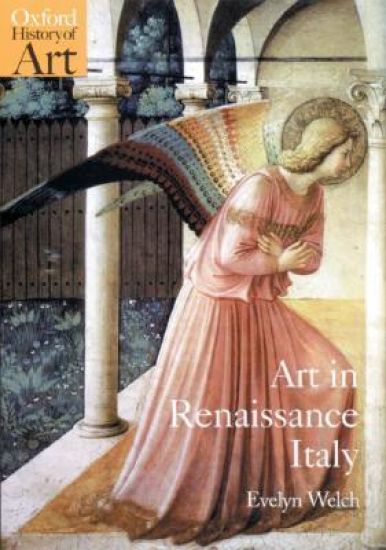
Art in Renaissance Italy 1350-1500

Art in Renaissance Italy 1350-1500

Evelyn Welch

Oxford University Press
2000
nidottu
Presents a picture of the Italian Renaissance. Giving equal weight to the Italian regions outside Florence, the author discusses works, from painting to sculptures to tapestries, and examines the issues of materials, workshop practises, and artist-patron relationships.
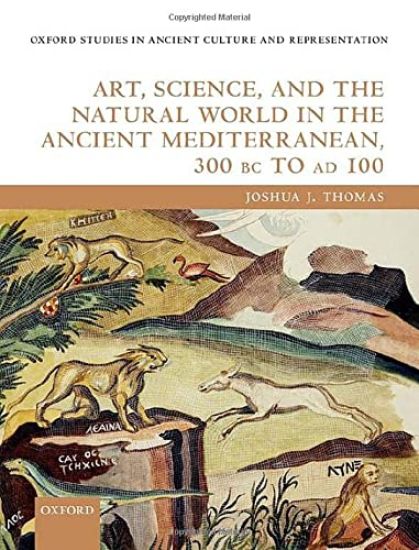
Art, Science, and the Natural World in the Ancient Mediterranean, 300 BC to AD 100
The Hellenistic Period witnessed striking new developments in art, literature and science. This volume addresses a particularly vibrant area of innovation: the study of animals and the natural world. While Aristotle and his followers had revolutionized fields such as zoology and botany during the fourth century BC, these disciplines took on exciting new directions during Hellenistic times. Kings imported exotic species into their royal capitals from faraway lands. Travel writers described unusual creatures that they had never previously encountered. And buyers from a range of social levels chose works of art featuring animals and plants to decorate their palaces, houses and tombs. While textual sources shed some light on these developments, the central premise of Art, Science and the Natural World in the Ancient Mediterranean is that our surviving artistic evidence permits a fuller understanding. Accordingly, the study brings together a rich body of visual material that invites new observations on how and why knowledge of the natural world became so important during this period. It is suggested that this cultural phenomenon affected many different groups in society: from kings in Alexandria and Pergamon to provincial aristocrats in the Levant, and from the Julio-Claudian imperial family to prosperous homeowners in Pompeii. By analysing the works of art produced for these individuals, a vivid picture emerges of this remarkable aspect of ancient culture.
Art and Crafts with Children

Art and Crafts with Children

Andrew Wright

Oxford University Press
2001
nidottu
This popular series addresses the needs of primary teachers, teacher trainers, and trainee teachers. Each book contains guidance for the teacher, 60 to 100 activities for primary children, and 20 photocopiable worksheets. The activities are explained clearly and simply, with aims, age range and level clearly laid out. Art and Craft with Children Provides a wealth of creative activities with integrated language practice, which require minimal resources and do not need special artistic expertise on the part of the teacher. Key Features Art, craft, and design activities offer children an excellent way to learn language while developing creative skills and an awareness of the world around them. This book provides a wealth of creative, imaginative activities with integrated language practice. The activities can be done with the minimum of resources, and do not need special artistic expertise on the part of the teacher. The companion website (Resource Books for Teachers) provides regular updates to the information and ideas in the book.
Art from the Ashes

Art from the Ashes

Langer

Oxford University Press Inc
1995
nidottu
A comprehensive anthology of Holocaust literature that comprises selected fiction, poetry, and drama, as well as memoirs, transcripts of interviews with survivors, and diaries. With works by such authors as Elie Wiesel, Primo Levi, Paul Celan, and Tadeusz Borowski, this collection is envisaged as a textbook for the growing number of courses in the literature of the Holocaust, and as a supplementary text for broader courses in the history of the Holocaust.
Art, Self and Knowledge

Art, Self and Knowledge

Keith Lehrer

Oxford University Press Inc
2011
sidottu
Art can provide us with a sensory experience that provokes us to reconfigure how we think about our world and ourselves. Theories of art have often sought to find some feature of art that isolates it from the rest of experience. Keith Lehrer argues, in opposition, that art is connected, not isolated, from how we think and feel, represent and react. When art directs our attention to sensory exemplars in aesthetic experience of which we become conscious in a special way, it also shows us our autonomy as we represent ourselves and our world, ourselves in our world, and our world in ourselves. This form of representation, exemplar representation, uses the exemplar as a term of representation and exhibits the nature of the content it represents in terms of itself. It shows us both what our world is like and how we represent the world thereby revealing the nature of intentionality to us. Issues of general interest in philosophy such as knowledge, autonomy, rationality and self-trust enter the book along with more specifically aesthetic issues of formalism, expressionism, representation, artistic creativity and beauty. The author goes on to demonstrate how the connection between art and broader issues of feminism, globalization, collective wisdom, and death show us the connection between art, life, politics and the self. Drawing from Hume, Reid, Goodman, Danto, Brand, Ismael and Lopes, Lehrer argues here that the artwork is a mentalized physical object engaging us philosophically with the content of exemplar experience. The exemplar representation of experience provoked by art ties art and science, mind and body, self and world, together in a dynamic loop, reconfiguring them all as it reconfigures art itself.
Art, Self and Knowledge

Art, Self and Knowledge

Keith Lehrer

Oxford University Press Inc
2011
nidottu
Art can provide us with a sensory experience that provokes us to reconfigure how we think about our world and ourselves. Theories of art have often sought to find some feature of art that isolates it from the rest of experience. Keith Lehrer argues, in opposition, that art is connected, not isolated, from how we think and feel, represent and react. When art directs our attention to sensory exemplars in aesthetic experience of which we become conscious in a special way, it also shows us our autonomy as we represent ourselves and our world, ourselves in our world, and our world in ourselves. This form of representation, exemplar representation, uses the exemplar as a term of representation and exhibits the nature of the content it represents in terms of itself. It shows us both what our world is like and how we represent the world thereby revealing the nature of intentionality to us. Issues of general interest in philosophy such as knowledge, autonomy, rationality and self-trust enter the book along with more specifically aesthetic issues of formalism, expressionism, representation, artistic creativity and beauty. The author goes on to demonstrate how the connection between art and broader issues of feminism, globalization, collective wisdom, and death show us the connection between art, life, politics and the self. Drawing from Hume, Reid, Goodman, Danto, Brand, Ismael and Lopes, Lehrer argues here that the artwork is a mentalized physical object engaging us philosophically with the content of exemplar experience. The exemplar representation of experience provoked by art ties art and science, mind and body, self and world, together in a dynamic loop, reconfiguring them all as it reconfigures art itself.
Art and Homosexuality

Art and Homosexuality

Christopher Reed

Oxford University Press Inc
2011
sidottu
Lavishly illustrated with over 175 black-and-white and color images that range from high to popular culture and from Ancient Greece to contemporary America, Christopher Reed's arresting book reveals the deep linkages between art and homosexuality as we understand those terms. This is the first book to fully explore the interdependence between the identity of the artist and the homosexual. It offers a bold, globe-spanning narrative that draws on artwork from all the important periods in the Western tradition, including classical, Renaissance, and contemporary, with special focus on the modern period. It was in the nineteenth century that the identities of the avant-garde artist and the homosexual took shape, and almost as quickly overlapped. The figures involved--Ingres, Courbet, Wilde, Whitman--are among that era's most iconic artists. The development of twentieth-century art--exemplified in the work of figures like Gertrude Stein, Jasper Johns, David Hockney, and David Wojnarowicz--this book argues is simply not understandable apart from the concurrent development of ideas about sexual identity. This highly readable volume challenges the ideas of many prominent art critics and punctures the platitudes surrounding discussions of both art and sexuality. The book discusses what it means to be an insider and outsider, how sexuality came to define one's fundamental humanity, and what people risk (and gain) in rejecting economic and social conformity. Reed shows that many of the core ideas that define modern thought more generally are nearly indecipherable without an understanding of this pairing. The debates that have surrounded artists and homosexuals in effect capture the dramatic history of the evolution of the modern mind.
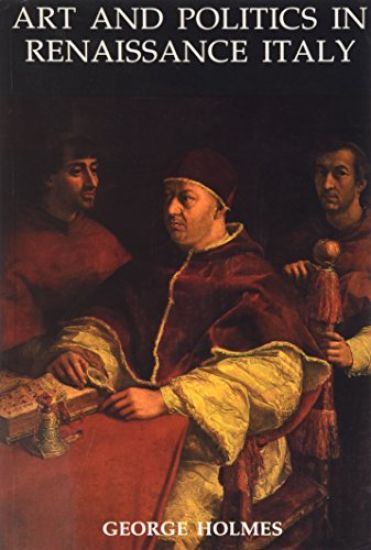
Art and Politics in Renaissance Italy
Our modern conception of the Renaissance has been changed sustantially by the scholarship of the last 50 years, and the British contribution to this research has been enormous. An essential part of this scholarship is now made more widely available within this lavishly illustrated selection of lectures delivered by distinguished historians to the British Academy.
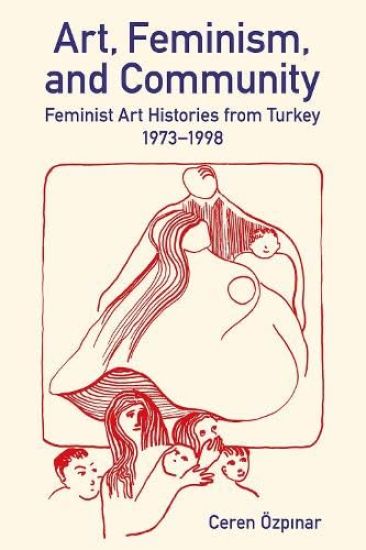
Art, Feminism, and Community

Art, Feminism, and Community

Ceren Özpinar

Oxford University Press
2024
sidottu
How do artists, communities, and art connect with one another? How might multiple feminist views be used to interpret art? Art, Feminism, and Community: Feminist Art Histories from Turkey, 1973-1998 examines the lives and communities of artists and their works from Turkey. It suggests that feminisms shape artists' relationships and practices. It analyses seven major case studies and details rarely seen paintings, installations, photographs, drawings, batik, and performance art from 1973 to 1998. The work brings together twenty artists and cultural figures in a world of multifaceted relationships that influence the creation of new art. Uncovering familial, professional, and friendship links, it recreates transnational networks, intellectual collectives, political alliances, and ethnic communities. It demonstrates how artists have analysed their own experiences in their works, reflecting the effects of their communities and lives, even though these themes have been mostly overlooked in Turkish art history.
Art Matters

Art Matters

Pamela Gordon

OXFORD UNIVERSITY PRESS INC
2023
nidottu
Make your Art Appreciation course as inspiring as the rich world of art that it covers. Art Matters enables students to experience art actively and meaningfully, weaving together innovative pedagogy and compelling stories about a wide assortment of artworks and artists to show students that art is everywhere, art is vibrant, and art matters. Art Matters presents a contemporary approach to art appreciation, offering a compelling narrative, a wide range of works created by numerous artists from around the world, and an active and meaningful learning experience. Through stories, examples, thoughtful pedagogy, and in-depth discussions of process and history, Art Matters motivates students to experience art actively and meaningfully. By asking questions and exposing students to different viewpoints and ideas, the author gives them the tools to speak, write, think critically, and form conclusions about what they see in familiar and unfamiliar works. Important updates to the second edition include: Two new thought-provoking "How Art Matters" stories on the graphic design for the 2020 U.S. Census and Faith Ringgold's For the Women's House "Practice Art Matters" activities that now build in complexity throughout each chapter, enabling students to develop progressively more sophisticated skills A reconceptualized Chapter 2 that introduces how to understand art Nearly 100 new artworks - including an Asmat shield, Harley-Davidson motorcycle, and works by Marie-Guillemine Benoist and Kader Attia - that add to the large variety of objects and artists