Kirjojen hintavertailu. Mukana 11 717 486 kirjaa ja 12 kauppaa.

Kirjahaku

Etsi kirjoja tekijän nimen, kirjan nimen tai ISBN:n perusteella.

1000 tulosta hakusanalla Albert Tschepe

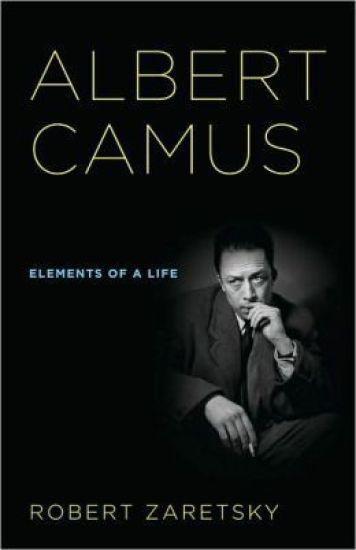
Albert Camus

Albert Camus

Zaretsky Robert D.

Cornell University Press
2010
sidottu
Like many others of my generation, I first read Camus in high school. I carried him in my backpack while traveling across Europe, I carried him into (and out of) relationships, and I carried him into (and out of) difficult periods of my life. More recently, I have carried him into university classes that I have taught, coming out of them with a renewed appreciation of his art. To be sure, my idea of Camus thirty years ago scarcely resembles my idea of him today. While my admiration and attachment to his writings remain as great as they were long ago, the reasons are more complicated and critical.—Robert Zaretsky On October 16, 1957, Albert Camus was dining in a small restaurant on Paris's Left Bank when a waiter approached him with news: the radio had just announced that Camus had won the Nobel Prize for Literature. Camus insisted that a mistake had been made and that others were far more deserving of the honor than he. Yet Camus was already recognized around the world as the voice of a generation—a status he had achieved with dizzying speed. He published his first novel, The Stranger, in 1942 and emerged from the war as the spokesperson for the Resistance and, although he consistently rejected the label, for existentialism. Subsequent works of fiction (including the novels The Plague and The Fall), philosophy (notably, The Myth of Sisyphus and The Rebel), drama, and social criticism secured his literary and intellectual reputation. And then on January 4, 1960, three years after accepting the Nobel Prize, he was killed in a car accident. In a book distinguished by clarity and passion, Robert Zaretsky considers why Albert Camus mattered in his own lifetime and continues to matter today, focusing on key moments that shaped Camus's development as a writer, a public intellectual, and a man. Each chapter is devoted to a specific event: Camus's visit to Kabylia in 1939 to report on the conditions of the local Berber tribes; his decision in 1945 to sign a petition to commute the death sentence of collaborationist writer Robert Brasillach; his famous quarrel with Jean-Paul Sartre in 1952 over the nature of communism; and his silence about the war in Algeria in 1956. Both engaged and engaging, Albert Camus: Elements of a Life is a searching companion to a profoundly moral and lucid writer whose works provide a guide for those perplexed by the absurdity of the human condition and the world's resistance to meaning.
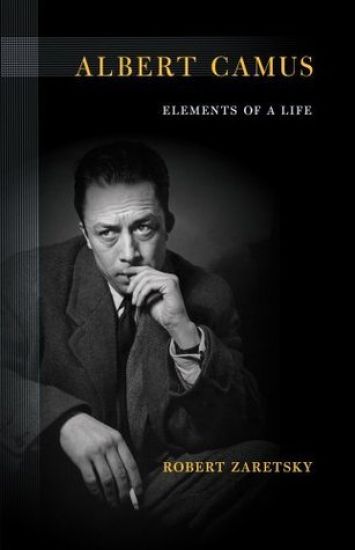
Albert Camus

Albert Camus

Robert D. Zaretsky

Cornell University Press
2013
pokkari
Like many others of my generation, I first read Camus in high school. I carried him in my backpack while traveling across Europe, I carried him into (and out of) relationships, and I carried him into (and out of) difficult periods of my life. More recently, I have carried him into university classes that I have taught, coming out of them with a renewed appreciation of his art. To be sure, my idea of Camus thirty years ago scarcely resembles my idea of him today. While my admiration and attachment to his writings remain as great as they were long ago, the reasons are more complicated and critical.—Robert Zaretsky On October 16, 1957, Albert Camus was dining in a small restaurant on Paris's Left Bank when a waiter approached him with news: the radio had just announced that Camus had won the Nobel Prize for Literature. Camus insisted that a mistake had been made and that others were far more deserving of the honor than he. Yet Camus was already recognized around the world as the voice of a generation—a status he had achieved with dizzying speed. He published his first novel, The Stranger, in 1942 and emerged from the war as the spokesperson for the Resistance and, although he consistently rejected the label, for existentialism. Subsequent works of fiction (including the novels The Plague and The Fall), philosophy (notably, The Myth of Sisyphus and The Rebel), drama, and social criticism secured his literary and intellectual reputation. And then on January 4, 1960, three years after accepting the Nobel Prize, he was killed in a car accident. In a book distinguished by clarity and passion, Robert Zaretsky considers why Albert Camus mattered in his own lifetime and continues to matter today, focusing on key moments that shaped Camus's development as a writer, a public intellectual, and a man. Each chapter is devoted to a specific event: Camus's visit to Kabylia in 1939 to report on the conditions of the local Berber tribes; his decision in 1945 to sign a petition to commute the death sentence of collaborationist writer Robert Brasillach; his famous quarrel with Jean-Paul Sartre in 1952 over the nature of communism; and his silence about the war in Algeria in 1956. Both engaged and engaging, Albert Camus: Elements of a Life is a searching companion to a profoundly moral and lucid writer whose works provide a guide for those perplexed by the absurdity of the human condition and the world's resistance to meaning.
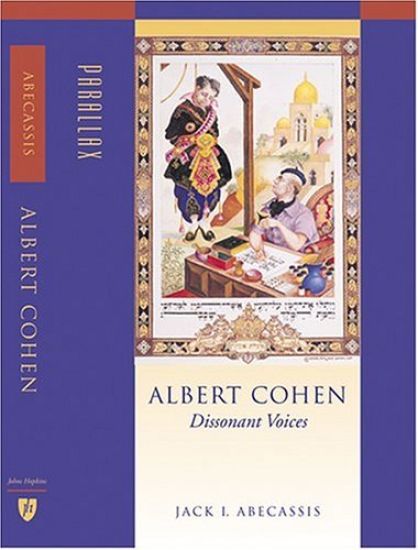
Albert Cohen

Albert Cohen

Jack I. Abecassis

Johns Hopkins University Press
2005
sidottu
A major figure in twentieth-century letters, Albert Cohen (1895-1981) left a paradoxical legacy. His heavily autobiographical, strikingly literary, and polyphonic novels and lyrical essays are widely read by a devout public in France, yet have been largely ignored by academia. A self-consciously Jewish writer and activist, Cohen remained nevertheless ambivalent about Judaism. His self-affirmation as a Jew in juxtaposition with his satirical use of anti-Semitic stereotypes still provokes unease in both republican France and institutional Judaism. In Albert Cohen: Dissonant Voices, the first English-language study of this profound and profoundly misunderstood writer, Jack I. Abecassis traces the recurrent themes of Cohen's works. He reveals the dissonant fractures marking Cohen as a modernist, and analyzes the resistance to his work as a symptom of the will not to understand Cohen's main theme-"the catastrophe of being Jewish."For Abecassis, Cohen's diverse oeuvre forms a single " roman fleuve" exploring this perturbing theme through fragmentation and grotesquerie, fantasies and nightmares, the veiling and unveiling of the unspeakable. Abecassis argues that Cohen should not be read exclusively through the prism of European literature (Stendhal, Tolstoy, Proust), but rather as the retelling-inverting and ultimately exhausting, in the form of submerged plots-of the Biblical romances of Joseph and Esther. The romance of the charismatic Court Jew and its performance correlative, the carnival of Purim, generate the logic of Cohen's acute psychological ambivalence, historical consciousness and carnal sensuality-themes which link this modernist author to Genesis as well as to the literary practices of Sephardic crypto-Jews. Abecassis argues that Cohen's best-known work, Belle du Seigneur (1968), besides being an obvious tale of obsessive love and dissolution, is foremost a tale of political intrigue involving Solal, the meteoric-rising Jew in the League of Nations during the period of Appeasement (1936), and his ultimate self-destruction. Providing close readings and imaginative analyses of the entire literary output of one of twentieth-century France's most important Jewish writers, Abecassis presents here a major work of literary scholarship, as well as a broader study of the reception and influence of Jewish thought in French literature and philosophy.
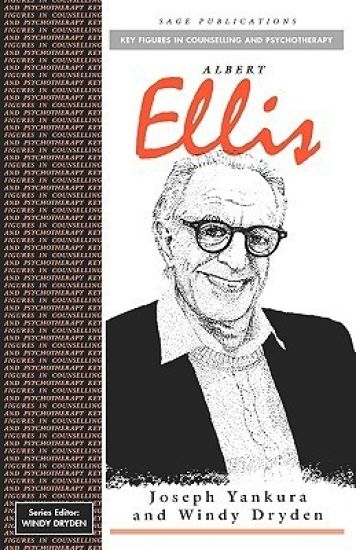
Albert Ellis

Albert Ellis

Joseph Yankura; Windy Dryden

SAGE Publications Ltd
1994
nidottu
Seminars by Professor Windy Dryden. See the man live and in action. To find out more and to book your place go to www.cityminds.com ________________________________________ Albert Ellis founded and has spent a lifetime practising and teaching rational emotive behaviour therapy. REBT (previously RET) is important not only in its own terms as an effective therapeutic approach to emotional disturbance, but also as the precursor of the cognitive-behavioural therapy movement which now exerts such an influence on the mental health field. Joseph Yankura and Windy Dryden present a lucid overview of the life and contributions of Albert Ellis. Using excerpts from Ellis's own writings to clarify the discussion, they look in particular at the famous ABC analysis which enables people to understand and deal with their problems, the key concepts of ego disturbance and discomfort disturbance, and Ellis's views on therapeutic efficiency.
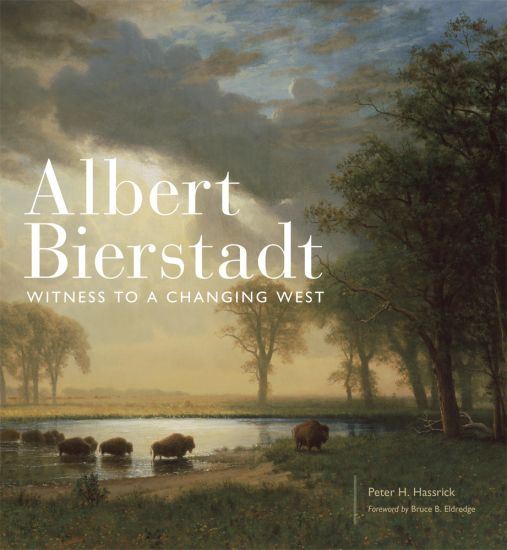
Albert Bierstadt

Albert Bierstadt

Bruce B. Eldredge

University of Oklahoma Press
2018
sidottu
As one of America's most prominent nineteenth-century painters, Albert Bierstadt (1830-1902) is justly renowned for his majestic paintings of the western landscape. Yet Bierstadt was also a painter of history, and his figural works, replete with images of Plains Indians and the American bison, are an important part of his legacy as well. This splendid full-color volume highlights his achievements in chronicling a rapidly changing American West. Born in Germany, Bierstadt rose to prominence as an American artist in the late 1850s and enjoyed nearly two decades of critical success. His paintings propelled him to the forefront of the American art scene, but they also met with reproach from his peers and critics in the press who viewed his painting style as outmoded. Bierstadt's star has both risen and fallen as modern art historians have reconsidered his complex oeuvre. This volume takes a major step in reappraising Bierstadt's contributions by reexamining the artist through a new lens. It shows how Bierstadt conveyed moral messages through his paintings, often to preserve the dignity of Native peoples and call attention to the tragic slaughter of the American bison. More broadly, the book reconsiders the artist's engagement with contemporary political and social debates surrounding wildlife conservation in America, the creation and perpetuation of national parks, and the prospects for the West's indigenous peoples. Bierstadt's final history paintings, including his dual masterworks titled The Last of the Buffalo - a special focus of this volume - stand out as elegiac odes to an earlier era, giving voice to concerns about the intertwined fates of Native peoples and endangered wildlife, especially bison. Along with its rich sampling of Bierstadt's diverse artwork, Albert Bierstadt: Witness to a Changing West features informative essays by noted curators, scholars of art history, and historians of the American West.
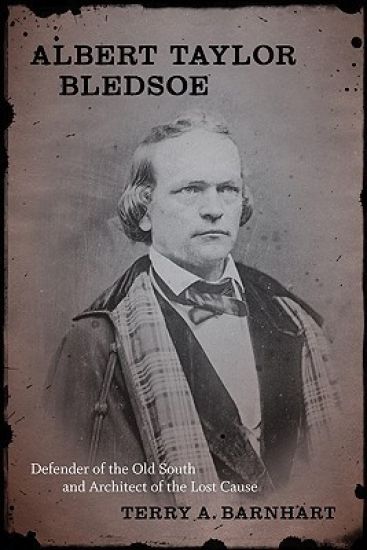
Albert Taylor Bledsoe

Albert Taylor Bledsoe

Terry A. Barnhart

Louisiana State University Press
2011
sidottu
Albert Taylor Bledsoe (1809-1877), a principal architect of the South's ""Lost Cause"" mythology, remains one of the Civil War generation's most controversial intellectuals. In Albert Taylor Bledsoe: Defender of the Old South and Architect of the Lost Cause, Terry A. Barnhart sheds new light on this provocative figure.Bledsoe gained a respectable reputation in the 1840s and 1850s as a metaphysician and speculative theologian. His two major works, An Examination of President Edwards' Inquiry into the Freedom of the Will (1845) and A Theodicy; Or, Vindication of the Divine Glory, As Manifested in the Constitution and Government of the Moral World (1853), grapple with perplexing problems connected with causality, Christian theology, and moral philosophy. His fervent defense of slavery and the constitutional right of secession, however, solidified Bledsoe as one of the chief proponents of the idea of the Old South. In An Essay on Liberty and Slavery (1856), he assailed egalitarianism and promoted the institution of slavery as a positive good. A decade later, he continued to devote himself to fashioning the ""Lost Cause"" narrative as the editor and proprietor of the Southern Review from 1867 until his death in 1877. He carried on a literary tradition aimed to reconcile white southerners to what he and they viewed as the indignity of their defeat by sanctifying their lost cause. Those who fought for the Confederacy, he argued, were not traitors but honorable men who sacrificed for noble reasons.This biography skillfully weaves Bledsoe's extraordinary life history into a narrative that illustrates the events that shaped his opinions and influenced his writings. Barnhart demonstrates how Bledsoe still speaks directly, and sometimes eloquently, to the core issues that divided the nation in the 1860s and continue to haunt it today.
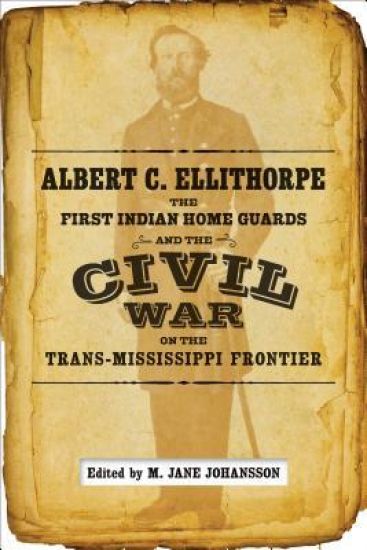
Albert C. Ellithorpe, the First Indian Home Guards, and the Civil War on the Trans-Mississippi Frontier
The Civil War experiences of Albert C. Ellithorpe, a Caucasian Union Army officer commanding the tri-racial First Indian Home Guards, illuminate remarkable and understudied facets of campaigning west of the Mississippi River. Major Ellithorpe's unit- comprised primarily of refugee Muscogee Creek and Seminole Indians and African Americans who served as interpreters- fought principally in Arkansas and Indian Territory, isolated from the larger currents of the Civil War. Using Ellithorpe's journal and his series of Chicago Evening Journal articles as her main sources, M. Jane Johansson unravels this exceptional account, providing one of the fullest examinations available on a mixed-race Union regiment serving in the border region of the West.Ellithorpe's insightful observations on Indians and civilians as well as the war in the trans-Mississippi theater provide a rare glimpse into a largely forgotten aspect of the conflict. He wrote extensively about the role of Indian troops, who served primarily as scouts and skirmishers, and on the nature of guerrilla warfare in the West. Ellithorpe also exposed internal problems in his regiment; some of his most dramatic entries concern his own charges against Caucasian officers, one of whom allegedly stole money from the unit's African American interpreters. Compiled here for the first time, Ellithorpe's commentary on the war adds a new chapter to our understanding of America's most complicated and tragic conflict.
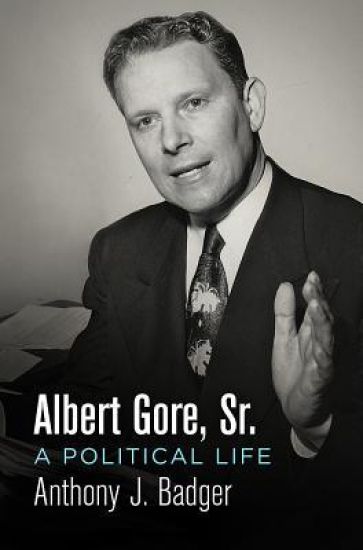
Albert Gore, Sr.

Albert Gore, Sr.

Anthony J. Badger

University of Pennsylvania Press
2018
sidottu
In chronicling the life and career of Albert Gore, Sr., historian Anthony J. Badger seeks not just to explore the successes and failures of an important political figure who spent more than three decades in the national eye-and whose son would become Vice President of the United States-but also to explain the dramatic changes in the South that led to national political realignment. Born on a small farm in the hills of Tennessee, Gore served in Congress from 1938 to 1970, first in the House of Representatives and then in the Senate. During that time, the United States became a global superpower and the South a two party desegregated region. Gore, whom Badger describes as a policy-oriented liberal, saw the federal government as the answer to the South's problems. He held a resilient faith, according to Badger, in the federal government to regulate wages and prices in World War II, to further social welfare through the New Deal and the Great Society, and to promote economic growth and transform the infrastructure of the South. Gore worked to make Tennessee the "atomic capital" of the nation and to protect the Tennessee Valley Authority, while at the same time cosponsoring legislation to create the national highway system. He was more cautious in his approach to civil rights; though bolder than his moderate Southern peers, he struggled to adjust to the shifting political ground of the 1960s. His career was defined by his relationship with Lyndon Johnson, whose Vietnam policies Gore bitterly opposed. The injection of Christian perspectives into the state's politics ultimately distanced Gore's worldview from that of his constituents. Altogether, Gore's political rise and fall, Badger argues, illuminates the significance of race, religion, and class in the creation of the modern South.
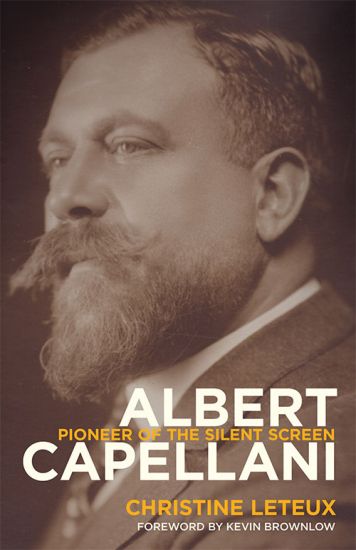
Albert Capellani

Albert Capellani

Christine Leteux; Kevin Brownlow

The University Press of Kentucky
2015
sidottu
In recent years, technology has given films of the silent era and their creators a second life as new processes have eased their restoration and distribution. Among the films benefitting from these developments are the works of director Albert Capellani (1874--1931), whose oeuvre was instrumental in the development of cinema in the early 1900s and whose contributions rival those of D. W. Griffith.For the first time in English, Christine Leteux's essential biography of Capellani offers a detailed assessment of the groundbreaking director. Capellani began his career in France at what was, at the time, the biggest film company in the world: Pathé. There, he directed the first multireel version of Les Miserables in 1912 as well as his masterpiece, Germinal (1913). After immigrating to the United States, Capellani worked at a number of production houses, including Metro Pictures Corporation, where he produced his two best-known films, The House of Mirth (1918) and The Red Lantern (1919). He was well known for making stage actors into movie stars, and Mistinguett, Stacia Napierkowska, and Alla Nazimova all rose to prominence under his direction.The ups and downs of Capellani's career paralleled the evolution of the film industry and demonstrated the fickle nature of success. His technical and aesthetic achievements, however, paved the way for future filmmakers. Featuring a foreword by Academy Award--winning film historian Kevin Brownlow, Leteux's intimate biography paints a fascinating portrait of one of the leading pioneers of early cinema and provides a new window into the origins of the moving picture.
Albert Kahn's Daylight

Albert Kahn's Daylight

Chris Meister

WAYNE STATE UNIVERSITY PRESS
2025
sidottu
The architectural legacy of Albert Kahn established on the global stage. In this new authoritative biography, author Chris Meister brings a fresh perspective to the legacy of internationally renowned Detroit architect Albert Kahn, utilizing a broad range of newly seen archival resources. In Detroit, Kahn's daylight factories and commercial designs have shaped the distinctive workplaces and streetscapes of the city. Placing Kahn's design and production of iconic architecture—like the Belle Isle Aquarium & Horticultural Building as well as the Fisher Building—alongside less-heralded projects, Meister outlines how Kahn's ingenuity and broad networks cultivated the spread of his influence through his advocacy of daylight in traditionally dark working environments. Beyond Detroit, Meister addresses the complicated global impact of Kahn's work by highlighting his pragmatic approach to architectural design and his involvement in fraught projects such as the plants designed for the USSR in Europe's interwar period. This exploration of Kahn's dynamic career establishes the architect as a vital figure for the global development of architectural modernism and to twentieth-century economic and political history.
Albert Schweitzer

Albert Schweitzer

James Brabazon

Syracuse University Press
2000
nidottu
The second edition of this biography of humanitarian Albert Schweitzer has been updated to include documents discovered since the work was originally written, including the letters between Schweitzer and Helene Bresslau written during the ten years before their marriage. This correspondence tells of a complicated love story and throws a completely new light on Schweitzer's personality and the genesis of his decision to go to Africa. The author's ongoing research has also included more recently released documents from the State Department regarding Schweitzer's battle with the United States Atomic Energy Commission to halt H-bomb tests.
Albert Schweitzer in Thought and Action
In the 1940s and 1950s, Albert Schweitzer was one of the best-known figures on the world stage. Courted by monarchs, world statesmen, and distinguished figures from the literary, musical, and scientific fields, Schweitzer was awarded the Nobel Peace Prize in 1952, cementing his place as one of the great intellectual leaders of his time. Schweitzer is less well known now but nonetheless a man of perennial fascination, and this volume seeks to bring his achievements across a variety of areas—philosophy, theology, and medicine—into sharper focus. To that end, international scholars from diverse disciplines offer a wideranging examination of Schweitzer’s life and thought over the course of forty years. Albert Schweitzer in Thought and Action gives readers a fuller, richer, and more nuanced picture of this controversial but monumental figure of twentieth-century life—and, in some measure, of that complex century itself.
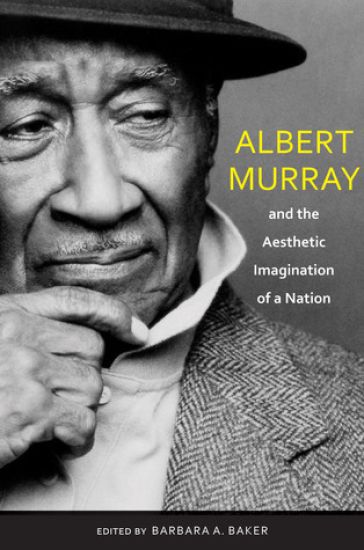
Albert Murray and the Aesthetic Imagination of a Nation

Albert Murray and the Aesthetic Imagination of a Nation

Barbara Baker

The University of Alabama Press
2010
nidottu
Sir John Cotesworth Slessor (1897-1979) was one of Great Britain's most influential airmen. He played a significant role in building the World War II Anglo-American air power partnership as an air planner on the Royal Air Force Staff, the British Chiefs of Staff, and the Combined Chiefs of Staff. He coordinated allied strategy in 1940-41, helped create an Anglo-American bomber alliance in 1942, and drafted the compromise at the Casablanca Conference that broke a deadlock in Anglo-American strategic debate. Also, Slessor was instrumental in defeating the U-boat menace as RAF Coastal Commander, and later shared responsibility for directing Allied air operations in the Mediterranean. Few aspects of the allied air effort escaped his influence: pilot training, aircraft procurement, and dissemination of operational intelligence and information all depended to a degree on Slessor. His influence on Anglo-American operational planning paved the way for a level of cooperation and combined action never before undertaken by the military forces of two great nations.
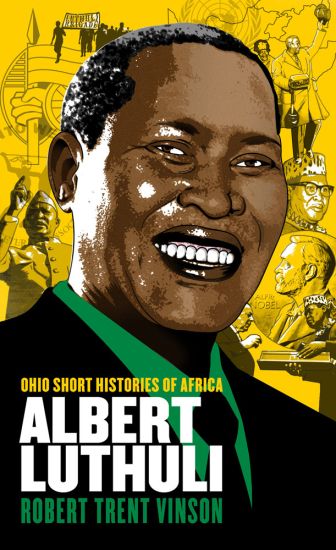
Albert Luthuli

Albert Luthuli

Robert Trent Vinson

Ohio University Press
2018
pokkari
In an excellent addition to the Ohio Short Histories of Africa series, Robert Trent Vinson recovers the important but largely forgotten story of Albert Luthuli, Africa's first Nobel Peace Prize winner and president of the African National Congress from 1952 to 1967. One of the most respected African leaders, Luthuli linked South African antiapartheid politics with other movements, becoming South Africa's leading advocate of Mahatma Gandhi's nonviolent civil disobedience techniques. He also framed apartheid as a crime against humanity and thus linked South African antiapartheid struggles with international human rights campaigns. Unlike previous studies, this book places Luthuli and the South African antiapartheid struggle in new global contexts, and aspects of Luthuli's leadership that were not previously publicly known: Vinson is the first to use new archival evidence, numerous oral interviews, and personal memoirs to reveal that Luthuli privately supported sabotage as an additional strategy to end apartheid. This multifaceted portrait will be indispensable to students of African history and politics and nonviolence movements worldwide.
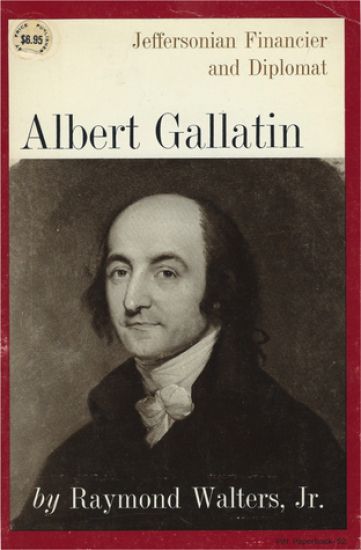
Albert Gallatin

Albert Gallatin

Walters Raymond

UNIVERSITY OF PITTSBURGH PRESS
1957
nidottu
Raymond Walters, Jr. presents the definitive biography of Albert Gallatin (1761-1849), recounting sixty years that the Swiss-born diplomat served his adopted country as a congressional leader, Secretary of the Treasury, financier, and ambassador. Gallatin was a founder of the House Committee on Finance (later the Ways and Means Committee), a member of the new Democratic-Republican Party, and an active politician who opposed the Federalist Party and its programs, while also helping to bring about the election of Thomas Jefferson.
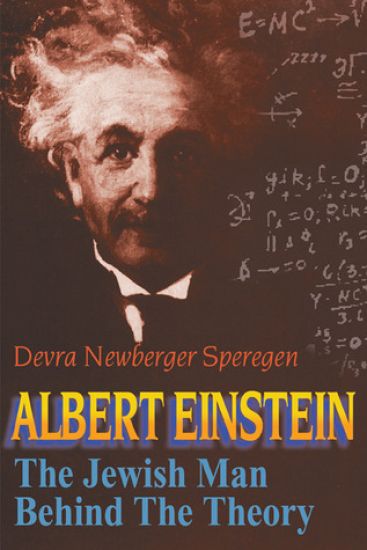
Albert Einstein

Albert Einstein

Devra Newberger Speregen

Jewish Publication Society
2006
pokkari
A young adult biography that focuses on Einstein as a great Jewish thinker and champion of Israel. In 2005, the world celebrated Albert Einstein's annus mirabile, the miraculous year. It was the 100th anniversary of the publication of his five pioneering papers that led to revolutionary changes in our understanding of the properties of space and time. The anniversary of the Einstein's theory of relativity and the publication of his famous formula, e=mc2, presents JPS with an opportunity to educate a new generation of young readers about Einstein's importance as a scientist and, more specifically, as a Jew. Speregen fully explores the fascinating story of Albert Einstein's connection to his Jewish roots and the growth of his commitment to the creation of the State of Israel. She describes Einstein's difficult early years as a student in Germany's repressive school system and details his struggle to respond to his stubborn questioning nature and personal search for answers to some of the great questions of the universe. The author discusses how Einstein's ties to his people grew as he witnessed the rise of anti-Semitism in the early 1900s and his relentless efforts to raise money and public awareness to promote the creation of the State of Israel. (In fact, he was even offered the presidency of Israel after the death of Chaim Weizman.)
Albert Oehlen

Albert Oehlen

Daniel Baumann; Albert Oehlen

Rizzoli International Publications
2015
sidottu
This book documents two new bodies of work; a series of large four-part aluminium panel paintings incorporating Oehlen's recurring motif of trees and a series titled Finger Paintings, in which colour-blocked advertisements are an extension of the canvas, providing fragmented, ready-made surfaces for Oehlen's visceral markings, made with his hands as well as with brushes, rags, and spray cans. Both series were exhibited at Gagosian Gallery, Los Angeles, in summer 2014.
Albert Duvall Quigley

Albert Duvall Quigley

Albert D. Quigley

Bauhan (William L.),U.S.
2017
nidottu
Albert Duvall Quigley spent most of his life painting the people and landscapes of the Monadnock region. A self-taught musician, he built and repaired fiddles, wrote dance tunes, and played at local dances. He also made frames known for their beautiful workmanship and originality, and prized by many Monadnock artists. This catalog has been compiled for an exhibition celebrating Quigley’s life and work that will open at the Historical Society of Cheshire County (NH) in May 2017, and for the 250th anniversary celebration of the town of Nelson, NH, where Quigley lived for many years.