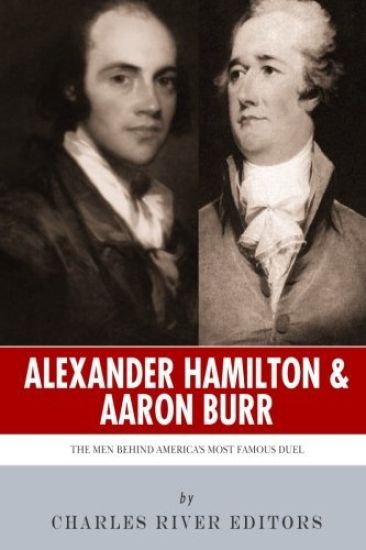
*Includes pictures of Burr, Hamilton, and important people and places. *Explains the origins of their duel and includes the correspondence between them leading up to the duel. *Includes accounts of the duel and explains the mysteries and controversies still surrounding what happened. *Includes a Bibliography for further reading. "General Hamilton and Judge Kent have declared in substance that they looked upon Mr. Burr to be a dangerous man, and one who ought not be trusted with the reins of government." The Founding Fathers have been revered by Americans for over 200 years, celebrated for creating a new nation founded upon the loftiest ideals of democracy and meritocracy. But if the American Dream has come to represent the ability to climb the social ladder with skill and hard work, no Founding Father represented the new America more than Alexander Hamilton. Unfortunately, one of the best known aspects of Hamilton's (1755-1804) life is the manner in which he died, shot and killed in a famous duel with Aaron Burr in 1804. But Hamilton started as an orphaned child in the West Indies before becoming one of the most instrumental Founding Fathers of the United States in that time, not only in helping draft and gain support for the U.S. Constitution but in also leading the Federalist party and building the institutions of the young federal government as Washington's Secretary of Treasury. Hamilton is also well remembered for his authorship, along with John Jay and James Madison, of the Federalist Papers. The Federalist Papers sought to rally support for the Constitution's approval when those three anonymously wrote them, but they demonstrate how men of vastly different political ideologies came to accept the same Constitution. Conversely, it is hard if not impossible to find a figure with a more controversial legacy than Aaron Burr, one of the most reviled yet mysterious characters of the last 200 years. Today Burr is remembered almost solely for participating in the duel with Hamilton, but it is often forgotten that Burr killed Hamilton while he was Thomas Jefferson's sitting Vice President. As if that wasn't incredible enough, Burr's path to the Vice Presidency sparked a Constitutional crisis after the Election of 1800, and in addition to leading to the establishment of the 12th Amendment, it was Hamilton's support of his principal political foe Jefferson over Burr that helped ignite the arguments that culminated with their duel. Burr was charged with murder for participating in the controversial and illegal duel, bringing his political career to an end, but he saved his most controversial act for last. After leaving politics, Burr headed west, where he engaged in a mysterious and convoluted scheme that eventually led to charges of treason for conspiring to create a new Western empire. Like the murder charges, he was never convicted of treason for the controversial and confusing conspiracy, but Burr had burned nearly every bridge by then. Having incurred massive debt, Burr took to practicing law and staying out of the public eye for the rest of his life. Alexander Hamilton & Aaron Burr: The Men Behind America's Most Famous Duel chronicles the lives and legacies of both men and their notorious duel, but it also humanizes them and provides contemporary accounts that offer conflicting opinions of them. Along with pictures and a bibliography, you will learn about Hamilton, Burr and their duel like you never have before.
The US in 1913 was one of the last major economies to establish an institution of a central bank. The book examines, however, the history and evolution of central banking in the US from the perspective of central banking functions—i.e. aggregator of private lending to the federal government, fiscal agent for the government, regulator of money supply, monopoly over currency issuance, banking system supervision, and lender of last resort. The evolution of central banking functions is traced from earliest pre-1987 proposals, through the Constitutional Convention and Congressional debates on Hamilton’s 1st Report on Credit, the rise and fall of the 1st and 2nd Banks of the United States, through the long period of the National Banking System, 1862-1913. The book describes how US federal governments—often in cooperation with the largest US private banks in New York, Philadelphia, and elsewhere in the northeast—attempted to expand and develop those functions, sometimes successfully sometimes not, from 1781 through the creation of the Federal Reserve Act of 1913. Other themes include how rapid US economic growth, and an expanding, geographically dispersed private banking system, created formidable resistance by banks at the state and local level to the evolution and consolidation of central banking functions at the national level. Whenever central banking functions were dismantled (1810s, 1830s) or were weakened (after 1860s), the consequences were financial instability and severe economic depressions. The book concludes with a detailed narrative on how, from 1903 to 1913, big eastern banks—leveraging the Panic of 1907, weak economic recovery of 1909-13, and need to expand internationally—allied with Congressional supporters to prevail over state and local banking interests and created the Fed; how the structure of the 1913 Fed clearly favored New York banks while granting concessions to state and local banks to win Congressional approval; and how that compromise central bank structure doomed US monetary policy to fail after 1929.
The US in 1913 was one of the last major economies to establish an institution of a central bank. The book examines, however, the history and evolution of central banking in the US from the perspective of central banking functions—i.e. aggregator of private lending to the federal government, fiscal agent for the government, regulator of money supply, monopoly over currency issuance, banking system supervision, and lender of last resort. The evolution of central banking functions is traced from earliest pre-1987 proposals, through the Constitutional Convention and Congressional debates on Hamilton’s 1st Report on Credit, the rise and fall of the 1st and 2nd Banks of the United States, through the long period of the National Banking System, 1862-1913. The book describes how US federal governments—often in cooperation with the largest US private banks in New York, Philadelphia, and elsewhere in the northeast—attempted to expand and develop those functions, sometimes successfully sometimes not, from 1781 through the creation of the Federal Reserve Act of 1913. Other themes include how rapid US economic growth, and an expanding, geographically dispersed private banking system, created formidable resistance by banks at the state and local level to the evolution and consolidation of central banking functions at the national level. Whenever central banking functions were dismantled (1810s, 1830s) or were weakened (after 1860s), the consequences were financial instability and severe economic depressions. The book concludes with a detailed narrative on how, from 1903 to 1913, big eastern banks—leveraging the Panic of 1907, weak economic recovery of 1909-13, and need to expand internationally—allied with Congressional supporters to prevail over state and local banking interests and created the Fed; how the structure of the 1913 Fed clearly favored New York banks while granting concessions to state and local banks to win Congressional approval; and how that compromise central bank structure doomed US monetary policy to fail after 1929.
Discover the little-known role Alexander Hamilton played in the decisive battle of the American Revolution: Yorktown.Alexander Hamilton and the Battle of Yorktown, October 1781 is the first book in nearly two and a half centuries that has ever been devoted to the story of Alexander Hamilton’s key contributions in winning the most decisive victory the of the American Revolutionary war at Yorktown. Past biographies of Hamilton, including the most respected ones, have minimized the overall importance of the young lieutenant colonel’s role and battlefield performance at Yorktown, which was key to forcing the surrender of Lord Cornwallis’s army. Hamilton led the assault on strategic Redoubt Number Ten, located on the left flank of the British defensive line, and captured the defensive bastion—an accomplishment that ensured the defeat and surrender of Cornwallis’s army that won the American Revolution and changed the course of world history. You thought you knew the full story of the founding father of the American financial system from Lin Manual Miranda's Broadway smash hit Hamilton, but Alexander Hamilton and the Battle of Yorktown, October 1781 brings into sharp relief the vital role he played in the most important battle of the American Revolution, as told by renowned historian Phillip Thomas Ticker, PhD.
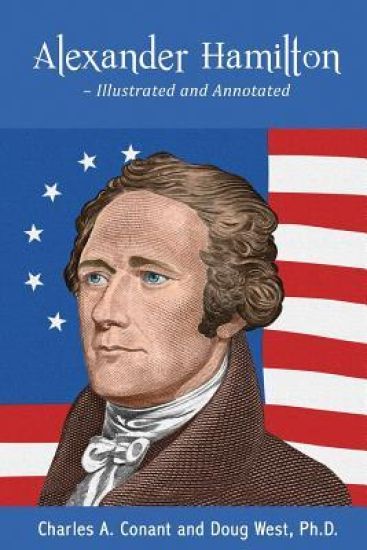
The book Alexander Hamilton by Charles A. Conant was originally published in 1901. The annotated and illustrated version contains in addition to the original work: -An Introduction to the book.-Numerous illustrations and maps to help tell the story of Alexander Hamilton.-A brief biography of the author Charles A. Conant.Alexander Hamilton was truly an amazing man. He started from humble beginnings on a tiny island in the Caribbean Sea. He was orphaned at thirteen, became an apprentice at a counting house, and found his way to the English colony of America for formal education. From these humble beginnings, he would rise to be the top aid of General Washington during the Revolutionary War, represent the state of New York as a delegate at the Constitutional Convention, and become the first Secretary of the Treasury for the fledgling United States of America. His untimely and violent death would draw his life to a close, but his legacy lives on.Come and be a part of the life and times of this accomplished American.
A quick reference guide to the sins of Alexander Hamilton as a 'founding father.' Every book on him lists these, even those like the Ron Chernow book which absolutely gush his praises... but they are all buried within thousands of pages and are not readily accessible for review, and study. This book aims to list his 'high crimes and misdemeanors' in a more orderly fashion, for quick review..A DVD from Amazon Createspace by this same name will be forthcoming in the future.This book will be updated as more of his 'inventive genius-es' are uncovered.
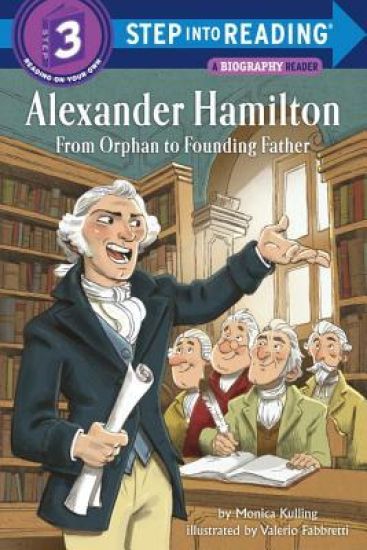
Fans of the Broadway musical Hamilton and American history lovers will want to share this illustrated biography of Alexander Hamilton with their young readers. Did you know that one of our Founding Fathers was not born in America? An orphan from the West Indies, Alexander Hamilton came to the colonies and played an important role in the Revolutionary War, rising to become General George Washington's right-hand man. But his accomplishments don't stop there He helped obtain the ratification of the Constitution; he was America's first secretary of the treasury; and he established the first national bank and the U.S. Mint. A man of ambition, loyalty, and principle, he is now being celebrated as the prominent patriot he was. Step 3 Readers feature engaging characters in easy-to-follow plots about popular topics--for children who are ready to read on their own.
THE FIRST BIOGRAPHY OF ALEXANDER HAMILTON, THE FATHER OF AMERICAN BANKING.Also includes:The Federalist PapersConjectures About the New ConstitutionThe Biography of Alexander Hamilton: with Conjectures About the New Constitution, The Federalist Papers and Other Writings from The Father of American Banking is part of the U.S. Heritage series and is a collection of the key writing from and about Alexander Hamilton that helped establish and form the United States of America. The revolutionary ideas and inspirational writings are included in this book for everyone, for students of all ages, to people who are actively involved in politics and their community and anyone interested in the amazing birth and history of America.LEARN WHAT IT MEANS TO BE AN AMERICAN!HUMANIX BOOKS U.S. Heritage series is the definitive collection of political writings and history of the Founding Fathers that paved the way for the United States of America to become the indispensable nation and THE example of Democracy, Liberty and Freedom in the world.