Kirjojen hintavertailu. Mukana 11 717 486 kirjaa ja 12 kauppaa.

Kirjahaku

Etsi kirjoja tekijän nimen, kirjan nimen tai ISBN:n perusteella.

923 tulosta hakusanalla Ally Malinenko

America's Geisha Ally

America's Geisha Ally

Naoko Shibusawa

Harvard University Press
2010
nidottu
During World War II, Japan was vilified by America as our hated enemy in the East. Though we distinguished "good Germans" from the Nazis, we condemned all Japanese indiscriminately as fanatics and savages. As the Cold War heated up, however, the U.S. government decided to make Japan its bulwark against communism in Asia.But how was the American public made to accept an alliance with Japan so soon after the "Japs" had been demonized as subhuman, bucktoothed apes with Coke-bottle glasses? In this revelatory work, Naoko Shibusawa charts the remarkable reversal from hated enemy to valuable ally that occurred in the two decades after the war. While General MacArthur's Occupation Forces pursued our nation's strategic goals in Japan, liberal American politicians, journalists, and filmmakers pursued an equally essential, though long-unrecognized, goal: the dissemination of a new and palatable image of the Japanese among the American public. With extensive research, from Occupation memoirs to military records, from court documents to Hollywood films, and from charity initiatives to newspaper and magazine articles, Shibusawa demonstrates how the evil enemy was rendered as a feminized, submissive nation, as an immature youth that needed America's benevolent hand to guide it toward democracy. Interestingly, Shibusawa reveals how this obsession with race, gender, and maturity reflected America's own anxieties about race relations and equity between the sexes in the postwar world. America's Geisha Ally is an exploration of how belligerents reconcile themselves in the wake of war, but also offers insight into how a new superpower adjusts to its role as the world's preeminent force.
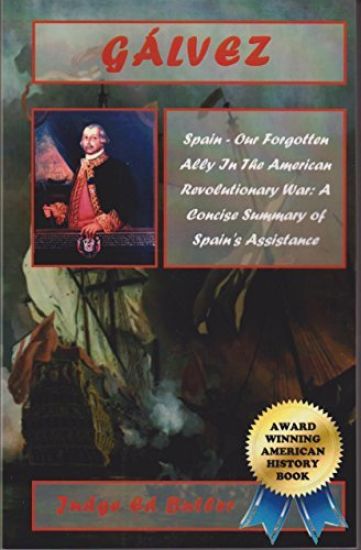
Gálvez: Spain -- Our Forgotten Ally in the American Revolutionary War: A Concise Summary of Spain's Assistance
Felipe VI de Borbon, King of Spain asked the author to write this book in May 2010. This book details the May 1776 agreement between Spain and France to support the American Colonists in their battle for independence from Britain. In addition to the battles in North America it points to the fact that our American Revolutionary War was only a small part is a greater world war among England, Spain and France. The "Donativo" lists show which Spanish soldiers and colonists donated to the war effort. It reflects details of the "Texas Connection to the American Revolution. Louisiana Spanish Governor Bernardo de Galvez, transhipped military supplies up the Mississippi and Ohio Rivers to the troops of both George Washington through Fort Pitt and General George Rogers Clark at Ft. Nelson starting in 1776. The Spanish navy captured 55 British ships, which today is still the largest capture of enemy vessels on the high seas ever recorded.
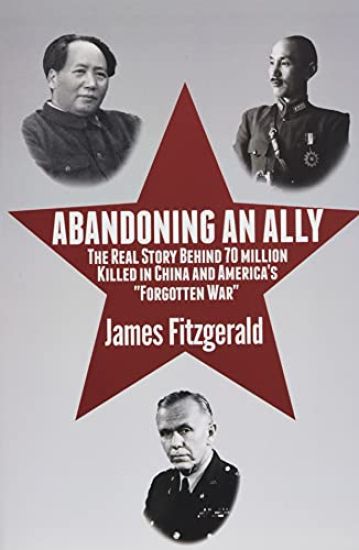
Abandoning an Ally: The Real Story Behind 70 Million Killed in China and America's "Forgotten War"
As World War Two ended, President Truman recognized "...that Chiang's (China's) government fought side by side with us against our common enemy..." Washington records attest that both FDR and HST pledged vast aid to restore and rearm a devastated China and when Communist insurrection erupted, China urgently requested that promised aid. It was not to be. Two years later, U.S. Ambassador Stuart in China described the situation "America still delays the long promised aid on which survival of democratic institutions depends." And "The Chinese people do not want to become communists, yet they see the tide of communism running irresistibly forward." Ambassador Stuart's reports and other revealing documents have been ignored in material published over the past half-century. There was no vast aid. There was no popular revolt. There was only betrayal. Washington records, incriminating personal papers, archived news reports and Communist records provide the backbone for Abandoning an Ally, its exposure of the China betrayal and the price paid by young Americans. It was Stalin's second attempt to enslave 20% of the world's population. China was first targeted by Soviet Premier Lenin in 1922 and by 1926 Stalin had Russian advisers imbedded in Sun Yat-sen's (Sun Yixian's) fledging Chinese government. When the Soviets incited their Red Chinese comrades to revolt, a young disciple of Sun moved decisively. Chiang Kai-shek (Jiang Jieshi) stifled the uprisings, deported the Russians and outlawed the Chinese Communist party. China's great economic progress through the early 1930s made her less vulnerable to Stalin's plots but threatened Japan's dominance in Asia. Japan attacked, expecting a quick victory but China would not surrender. Chiang's Army tied down and bled the Japanese Army for three long years before America entered WW2. Meanwhile, Stalin's Asian plotting was interrupted when ally Hitler turned on his Soviet partner. Suddenly, Russia fought for survival and Moscow had no resources for the subversion of China. However, International Communism was thriving. This was an era President Dwight Eisenhower defined as "harrowing decades that partly poisoned our national life." Disciples in the west eagerly took on the Red mission. Their obstacle: full support of China by emerging world super power U.S. would render China invulnerable to Communist overthrow. The only tactic available was the "Big Lie." Propaganda poured forth sanctifying the avowed terrorist who would soon enslave hundreds of millions. Despite his early advocating and use of terror, Mao Tse-tung (Mao Zedong) was acclaimed the "Enlightened leader of agrarian reformers," "The Great Teacher," "The most selfless man ever encountered." Conversely, his opponent, the head of China's government, who rose from defeat and founded a thriving democratic nation, was demonized as a cruel, corrupt despot. A 180 degree character reversal, but the enablers were skilled communicators unhampered by ethics, and their anointed one, Mao, was a master propagandist. The key American in Communism's China strategy was a desk soldier with a talent for impressing politicians and collecting unearned accolades. A peculiar, aloof individual who exhibited less than full commitment to the war effort and consequently lost authority as WW2 progressed. At wars end, a new U.S President awarded him authority over U.S. - China relations. The indifferent conference room warrior of WW2 found new levels of commitment and sacrificed all ethics in order to seal China's fate. Dwight Eisenhower said we will never forget the "Harrowing decades that partly poisoned our national life." But until now, a half century later, the betrayers responsible for the death of tens of thousands of Americans and tens of millions of Chinese have been protected by a pervasive, drastic distortion of documented history. The victims of history's deadliest betrayal deserve a tru
A Witch's Ally

A Witch's Ally

Dodie Graham McKay

LLEWELLYN PUBLICATIONS,U.S.
2024
nidottu
From the earliest grimoires, animals have been associated with witches. This book covers all aspects of working magic with familiars and how to create profound relationships with your own pets. Dodie Graham McKay shares folklore and historical information as well as practical exercises and spells. Featuring a cover illustration by Laura Tempest Zakroff and deep insight on how to witches relate to their familiars and companions, this book helps you work with animal energy through dozens of charms, recipes, rituals, and more. Dodie takes you back in time to explore supernatural entities and long-ago symbolism. Then she delves into modern ways to understand animals and partner with them including stories about her relationship with animals. From making pumpkin oat dog biscuits to shapeshifting via dance, this book will enrich your experiences with the animals in your life.
'More than an Ally'?

'More than an Ally'?

Maryanne Kelton

Ashgate Publishing Limited
2008
sidottu
With the ascendancy of the Coalition government in 1996 there was a marked shift of emphasis directed to deepening Australia's relations with America. The Coalition government strategically linked security and economic well-being and this linking was contextualized by threats both internal and external. By deepening the relationship of the US alliance in foreign, trade and defence policies, the Australian government sought to resonate on inherited and conservative perceptions of threat in the domestic environment. Maryanne Kelton introduces specific cases to demonstrate both the intensity and complexity of dealing with the US. Through these empirical studies the government's approach is examined across trade, security and industry sectors. The book adds to the current debate as it provides an explanatory framework for understanding the Australian government's choices in its relations with the USA across the broader spectrum of security issues.
Germany's First Ally

Germany's First Ally

Charles K. Kliment

Schiffer Publishing Ltd
1998
sidottu
Slovakia split from Czechoslovakia and formed its own state on March 14, 1939. The Slovak State was born under the auspices of Hitler’s Third Reich and became its first ally on September 1, 1939, when it took part in the invasion of Poland. The Slovak army inherited its weapons, equipment, training manuals and its doctrine from the defunct Czechoslovak Army. Though hampered by a shortage of specialists in its air force, armored units and artillery, it managed to field several division-sized units and sustain them during the initial three years of combat on the Eastern front. Its Mobile division fought its way all the way from the Carpathian Mountains to the Caucasus. In the last years of the war, the Slovak people became more and more disillusioned with the war and with their own semi-fascist government. These feelings led to mounting desertions in the fighting units, and culminated in the Slovak National Uprising in August 1944. Though the uprising was liquidated after two months of bitter fighting, it gave the Slovak nation the right to join the victorious allies and be accepted back into the restored Czechoslovakia. Though the Slovak army was by far the smallest of the armies of Germany’s allies on the Eastern front, it was part of this grandiose “clash of titans” and deserves thus a place in the history of the Second World War. This book describes in detail the composition, dislocation and equipment of all branches of the Slovak army (infantry, artillery, armored and air force) and its operational history through the war years.
Searching the Soul of Ally McBeal
Ally McBeal, the popular Fox television series (1997-2002), was both groundbreaking and controversial. With its challenging presentation of gender roles and gender politics, the show provided fuel for an ever-expanding international debate over feminism and the roles of women in modern society. In 1998, Time Magazine ran a cover story featuring a photo of the Ally McBeal character alongside three of the feminist movement's most memorable figures. The article was suggestively entitled, "Is Feminism Dead?" This collection of essays addresses that important question as it relates to the presentation of women's behaviors, desires and images in Ally McBeal. It considers the challenges that women's sexuality presents to feminism and looks at feminist thought regarding female professionalism and contemporary marriage. Also discussed is the struggle for an understanding of masculinity in light of feminism's growing challenge to patriarchy. Other topics include the series' groundbreaking narrative structure, its critique of society and the law in the early 21st century, and its treatment of minority characters. Contrary to the implications of Time Magazine's coverage, this book argues that Ally McBeal is a positive feminist text from the perspective of post-feminist theory.
Competitor or Ally?

Competitor or Ally?

CRC Press Inc
1999
sidottu
In this book the authors systematically address the most common stereotypes or myths about Japanese education that are currently being circulated in the popular press, teaching magazines and educational research journals. The authors show how arguments about Japan are used to further political ends within the American educational debate. Some of the myths that the book debunks are Japan's high adolescent suicide rate. LeTendre and Zeng show that adolescent suicide among males is now twice as high in the U.S. as in Japan. Tsuchida and Lewis take on the myth of Japanese classrooms as crowded places centered on rote-learning--providing detailed evidence as to why Japanese students may indeed have an "edge" in math. McConnell uses Japan's highly successful foreign language program to deconstruct images of "Japan Inc."--showing the highly fractious and bitter political debates that occur in Japan. Yang provides data on differences in Japanese and American teachers' work roles--showing that differences in the two educational systems are not simply due to "cultural" differences, but have a basis in educational policy and school organization. Shimizu offers an alternative view of achievement motivation among Japanese students based on in-depth interviews with Japanese teens.
From Enemy to Ally

From Enemy to Ally

James F. Hilgenberg

University Press of America
1993
sidottu
This work examines the critical postwar period of 1945-1952, during which years two formidable and recent Pacific enemiesóthe victorious U.S. and the vanquished Japanóworked out the parameters of their postwar relationship. The author here focuses on one of the most articulate and insightful (yet overlooked) segments of American media: the business press. This well researched and readable volume discusses the important international relationship as it evolved during a crucial period in recent world history.
From Enemy to Ally

From Enemy to Ally

James F. Hilgenberg

University Press of America
1993
nidottu
This work examines the critical postwar period of 1945-1952, during which years two formidable and recent Pacific enemies-the victorious U.S. and the vanquished Japan-worked out the parameters of their postwar relationship. The author here focuses on one of the most articulate and insightful (yet overlooked) segments of American media: the business press. This well researched and readable volume discusses the important international relationship as it evolved during a crucial period in recent world history.
Truth Needs No Ally

Truth Needs No Ally

Howard Chapnick

University of Missouri Press
1994
nidottu
The man called "Mr. Photojournalism" by the Washington Post here offers the most comprehensive book available on documentary photography, covering the history and ethics of the craft as well as practical issues for anyone with a serious interest in photography.
Tyranny's Ally

Tyranny's Ally

David Wurmser

AEI Press
1999
pokkari
The 1991 Persian Gulf War was the greatest direct military investment the United States has ever made in the Middle East. The objective was to remove Saddam Hussein as a threat to the region. Seven years after the war, Saddam's regime remains in place, his power is rising, his diplomatic situation is steadily improving. And the coalition to contain Saddam is rickety and in danger of scattering. In "Tyranny's Ally", David Wurmser argues that current policy, even if invigorated by more aggressive military efforts, will not bring the United States victory over Saddam and his regime. All previous efforts have failed because they have targetted only the tyrant, not the institution of tyranny in Iraq and the region. The Iraq crisis is only the latest chapter in a broad upheaval that has gripped the region for 80 years. By tolerating centralized, statist tyranny, the United States has assisted its enemies -totalitarian despots - and encouraged the violent politics and shattering of societies attending such predatory regimes. Wurmser offers historical and contemporary analysis of the Iraqi morass and outlines credible and effective strategies for US policy to adopt.