Kirjahaku
Etsi kirjoja tekijän nimen, kirjan nimen tai ISBN:n perusteella.
1000 tulosta hakusanalla Ambrose Edson

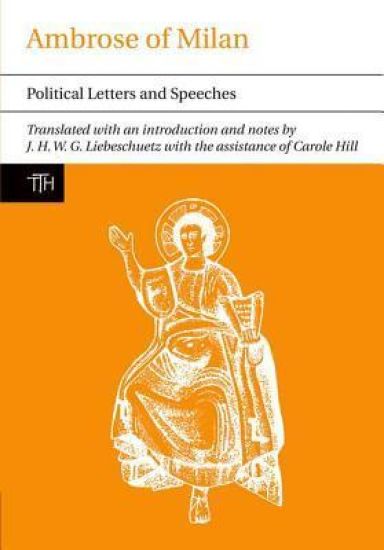
The episcopate of Ambrose of Milan (374-97) is pivotal to understanding the developing relationship between the Christian Church and the Roman Empire in late antiquity. As bishop of Milan, Ambrose came into frequent contact with the highest levels of the imperial administration, including the emperors Gratian, Valentinian II, and Theodosius I themselves. He also exerted a degree of leadership in doctrinal matters over the bishops of northern Italy and adjacent regions. Any consideration of Ambrose’s career must begin with his own writings. This volume presents some of his most important works: the tenth book of his collection of letters; the letters that are preserved outside his published collection (Epistulae extra collectionem); and his funeral speeches for Valentinian II and Theodosius I. They document not only his influence over the bishops of neighbouring cities, but also his celebrated conflicts with the imperial court over the altar of Victory at Rome, the imperial siege of churches in Milan, the affair of the synagogue at Callinicum, and the massacre of civilians at Thessalonica. In these texts Ambrose sets forth his views about his rights as bishop to govern his church without imperial interference, and to condemn any emperor whose actions were deemed to be sinful. This volume will be of value to students and scholars of the history of the Church and the Roman Empire in late antiquity, and to anyone interested in the passage from pagan antiquity to the Christian Middle Ages.
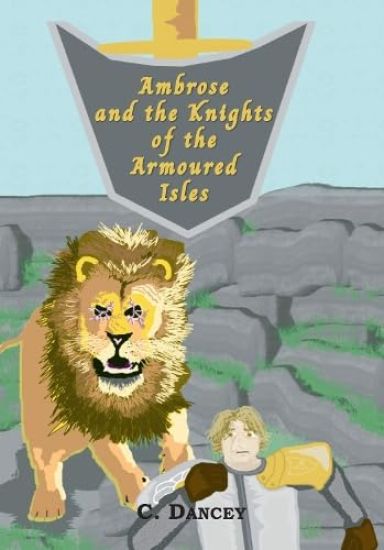
Ambrose, already established as the ‘Flower Knight’ throughout the magical Armoured Isles, accepts an invitation to a tournament hosted by the queen to form her elite knight squad.The tournament unfolds through a set of challenges, and as the knight squad forms, a dark and ancient danger from the isles’ past begins to grow again.Ambrose is forced to consider: what if winning tears apart everything that he has ever known?Ambrose finds himself at the heart of this mystery and he shows that in a magical world, sometimes it is not the biggest or loudest hero that stands tallest, but the one who does not back down.
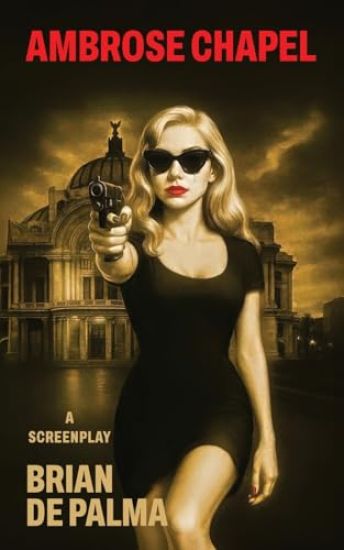
Buried for decades. Now, Brian De Palma's wildest vision comes to life.Written in the 1990s between Carlito's Way and Mission: Impossible, visionary filmmaker Brian De Palma's Ambrose Chapel is his most overtly comic thriller-a wild, unproduced "screwball noir" that spins through kidnapping, virtual reality, mind control, murder, terrorists, romance, dream sequences and dueling memories. Set in a vividly imagined Mexico City, the story centers on Christe Rivera, a woman entangled in a shadowy conspiracy and haunted by a memory-or is it a dream? a lie?-that may be the key to everything. Along the way, Christe is drawn into the orbit of a billionaire with presidential ambitions and a plan to wall off Mexico from the U.S., while a half-forgotten Hitchcock film may hold the answer-if she can survive long enough to remember what's real and who she is.A kinetic blend of playful intrigue, romantic chaos and signature De Palma paranoia, Ambrose Chapel is a revelatory window into one of cinema's most iconoclastic auteurs, offering a vision both prescient and laced with volatile invention, and a thrilling glimpse of the film De Palma never got to make.
Buried for decades. Now, Brian De Palma's wildest vision comes to life.Written in the 1990s between Carlito's Way and Mission: Impossible, visionary filmmaker Brian De Palma's Ambrose Chapel is his most overtly comic thriller-a wild, unproduced "screwball noir" that spins through kidnapping, virtual reality, mind control, murder, terrorists, romance, dream sequences and dueling memories. Set in a vividly imagined Mexico City, the story centers on Christe Rivera, a woman entangled in a shadowy conspiracy and haunted by a memory-or is it a dream? a lie?-that may be the key to everything. Along the way, Christe is drawn into the orbit of a billionaire with presidential ambitions and a plan to wall off Mexico from the U.S., while a half-forgotten Hitchcock film may hold the answer-if she can survive long enough to remember what's real and who she is.A kinetic blend of playful intrigue, romantic chaos and signature De Palma paranoia, Ambrose Chapel is a revelatory window into one of cinema's most iconoclastic auteurs, offering a vision both prescient and laced with volatile invention, and a thrilling glimpse of the film De Palma never got to make.
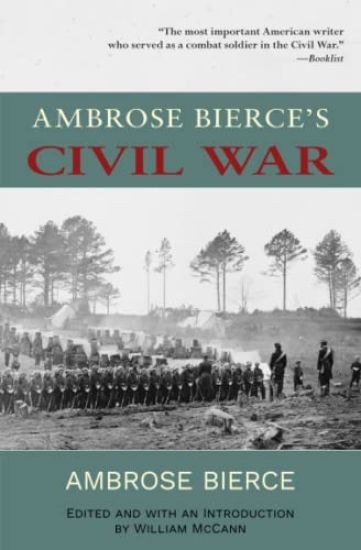
Ambrose Bierce's Civil War (Warbler Classics Annotated Edition)
Ambrose Bierce
Warbler Classics
2019
pokkari
Ambrose Bierce, best stories
Ambrose Bierce
Createspace Independent Publishing Platform
2017
nidottu

Ambrose Little Ant's Awesome Action ABCs
Mary A. Dall
Createspace Independent Publishing Platform
2017
nidottu
In Ambrose Little Ant's Awesome, Action ABCs Ambrose discovers the ABCs and puts them in action with his crazy antics. This series of books, written by a former elementary school teacher, delights, entertains and educates young children.
Can Such Things Be?: Ambrose Bierce
Ambrose Bierce
Createspace Independent Publishing Platform
2017
nidottu
Can Such Things Be? By Ambrose Bierce. Ambrose Gwinnett Bierce was an American Civil War soldier, wit, and writer. Bierce's book The Devil's Dictionary was named as one of "The 100 Greatest Masterpieces of American Literature" by the American Revolution Bicentennial Administration. His story An Occurrence at Owl Creek Bridge has been described as "one of the most famous and frequently anthologized stories in American literature"; and his book Tales of Soldiers and Civilians (also published as In the Midst of Life) was named by the Grolier Club as one of the 100 most influential American books printed before 1900. A prolific and versatile writer, Bierce was regarded as one of the most influential journalists in the United States, and as a pioneering writer of realist fiction. For his horror writing, Michael Dirda ranked him alongside Edgar Allan Poe and H.P. Lovecraft. His war stories influenced Stephen Crane, Ernest Hemingway, and others, and he was considered an influential and feared literary critic. In recent decades Bierce has gained wider respect as a fabulist and for his poetry.
An Occurrence at Owl Creek Bridge: Ambrose Bierce
Ambrose Bierce
Createspace Independent Publishing Platform
2017
nidottu
An Occurrence at Owl Creek Bridge by Ambrose Bierce. Peyton Farquhar, a plantation owner in his mid-thirties, is being prepared for execution by hanging from an Alabama railroad bridge during the American Civil War. Six military men and a company of infantrymen are present, guarding the bridge and carrying out the sentence. Farquhar thinks of his wife and children and is then distracted by a noise that, to him, sounds like an unbearably loud clanging; it is actually the ticking of his watch. He considers the possibility of jumping off the bridge and swimming to safety if he can free his tied hands, but the soldiers drop him from the bridge before he can act on the idea. In a flashback, Farquhar and his wife are relaxing at home one evening when a soldier rides up to the gate. Farquhar, a supporter of the Confederacy, learns from him that Union troops have seized the Owl Creek railroad bridge and repaired it. The soldier suggests that Farquhar might be able to burn the bridge down if he can slip past its guards. He then leaves, but doubles back after nightfall to return north the way he came. The soldier is actually a disguised Union scout who has lured Farquhar into a trap, as any civilian caught interfering with the railroads will be hanged.
The Devil's Dictionary. By: Ambrose Bierce: Novel (World's classic's)
Ambrose Bierce
Createspace Independent Publishing Platform
2018
nidottu
The Devil's Dictionary is a satirical dictionary written by American Civil War soldier, wit, and writer Ambrose Bierce consisting of common words followed by humorous and satirical definitions. The lexicon was written over three decades as a series of installments for magazines and newspapers. Bierce's witty definitions were imitated and plagiarized for years before he gathered them into books, first as The Cynic's Word Book in 1906 and then in a more complete version as The Devil's Dictionary in 1911. Initial reception of the book versions was mixed. In the decades following, however, the stature of The Devil's Dictionary grew. It has been widely quoted, frequently translated, and often imitated, earning a global reputation. In the 1970s, The Devil's Dictionary was named as one of "The 100 Greatest Masterpieces of American Literature" by the American Revolution Bicentennial Administration. It has been called "howlingly funny", and Wall Street Journal columnist Jason Zweig wrote that The Devil's Dictionary is "probably the most brilliant work of satire written in America. And maybe one of the greatest in all of world literature." Ambrose Gwinnett Bierce (June 24, 1842 - circa 1914) was an American short story writer, journalist, poet, and Civil War veteran.Bierce's book The Devil's Dictionary was named as one of "The 100 Greatest Masterpieces of American Literature" by the American Revolution Bicentennial Administration. His story An Occurrence at Owl Creek Bridge has been described as "one of the most famous and frequently anthologized stories in American literature";and his book Tales of Soldiers and Civilians (also published as In the Midst of Life) was named by the Grolier Club as one of the 100 most influential American books printed before 1900. A prolific and versatile writer, Bierce was regarded as one of the most influential journalists in the United States, and as a pioneering writer of realist fiction. For his horror writing, Michael Dirda ranked him alongside Edgar Allan Poe and H.P. Lovecraft. His war stories influenced Stephen Crane, Ernest Hemingway, and others, and he was considered an influential and feared literary critic. In recent decades Bierce has gained wider respect as a fabulist and for his poetry.In December 1913, Bierce traveled to Chihuahua, Mexico, to gain first-hand experience of the Mexican Revolution. He disappeared, and was rumored to be traveling with rebel troops. He was never seen again. Early life: Bierce was born in a log cabin at Horse Cave Creek in Meigs County, Ohio, on June 24, 1842, to Marcus Aurelius Bierce (1799-1876) and Laura Sherwood Bierce. He was of entirely English ancestry, all of which came to North America between 1620 and 1640 as part of the Great Puritan Migration. He often wrote critically of both "Puritan values" and people who "made a fuss" about genealogy. He was the tenth of thirteen children, whose father gave all names beginning with the letter "A" in order of birth, the Bierce siblings were Abigail, Amelia, Ann, Addison, Aurelius, Augustus, Almeda, Andrew, Albert, and Ambrose. His mother was a descendant of William Bradford.His parents were a poor but literary couple who instilled in him a deep love for books and writing.Bierce grew up in Kosciusko County, Indiana, attending high school at the county seat, Warsaw.He left home at 15 to become a printer's devil at a small abolitionist Ohio newspaper, the Northern Indiana..................
Can such things be? Fiction: stories.: By: Ambrose Bierce (June 24, 1842 - circa 1914).
Ambrose Bierce
Createspace Independent Publishing Platform
2018
nidottu
Ambrose Bierce never owned a horse, a carriage, or a car; he was a renter who never owned his own home. He was a man on the move, a man who traveled light: and in the end he rode, with all of his possessions, on a rented horse into the Mexican desert to join Pancho Villa -- never to return. Can Such Things Be? Once William Randolph Hearst -- Bierce's employer, who was bragging about his own endless collections of statuary, art, books, tapestries, and, of course real estate like Hearst Castle -- once William Randolph Hearst asked Bierce what he collected. Bierce responded, smugly: "I collect words. And ideas. Like you, I also store them. But in the reservoir of my mind. I can take them out and display them at a moment's notice. Eminently portable, Mr. Hearst. And I don't find it necessary to show them all at the same time." Such things can be................... Ambrose Gwinnett Bierce (June 24, 1842 - circa 1914) was an American short story writer, journalist, poet, and Civil War veteran. Bierce's book The Devil's Dictionary was named as one of "The 100 Greatest Masterpieces of American Literature" by the American Revolution Bicentennial Administration. His story An Occurrence at Owl Creek Bridge has been described as "one of the most famous and frequently anthologized stories in American literature"; and his book Tales of Soldiers and Civilians (also published as In the Midst of Life) was named by the Grolier Club as one of the 100 most influential American books printed before 1900. A prolific and versatile writer, Bierce was regarded as one of the most influential journalists in the United States, and as a pioneering writer of realist fiction. For his horror writing, Michael Dirda ranked him alongside Edgar Allan Poe and H.P. Lovecraft. His war stories influenced Stephen Crane, Ernest Hemingway, and others, and he was considered an influential and feared literary critic. In recent decades Bierce has gained wider respect as a fabulist and for his poetry. In December 1913, Bierce traveled to Chihuahua, Mexico, to gain first-hand experience of the Mexican Revolution. He disappeared, and was rumored to be traveling with rebel troops. He was never seen again. Early life: Bierce was born in a log cabin at Horse Cave Creek in Meigs County, Ohio, on June 24, 1842, to Marcus Aurelius Bierce (1799-1876) and Laura Sherwood Bierce. He was of entirely English ancestry, all of which came to North America between 1620 and 1640 as part of the Great Puritan Migration.He often wrote critically of both "Puritan values" and people who "made a fuss" about genealogy.He was the tenth of thirteen children, whose father gave all names beginning with the letter "A" in order of birth, the Bierce siblings were Abigail, Amelia, Ann, Addison, Aurelius, Augustus, Almeda, Andrew, Albert, and Ambrose. His mother was a descendant of William Bradford. His parents were a poor but literary couple who instilled in him a deep love for books and writing. Bierce grew up in Kosciusko County, Indiana, attending high school at the county seat, Warsaw. He left home at 15 to become a printer's devil at a small abolitionist Ohio newspaper, the Northern Indianan.......................
Shapes of clay (1903). By: Ambrose Bierce: Poetry (Original Classics)
Ambrose Bierce
Createspace Independent Publishing Platform
2018
nidottu
Ambrose Gwinnett Bierce (June 24, 1842 - circa 1914) was an American short story writer, journalist, poet, and Civil War veteran. Bierce's book The Devil's Dictionary was named as one of "The 100 Greatest Masterpieces of American Literature" by the American Revolution Bicentennial Administration. His story An Occurrence at Owl Creek Bridge has been described as "one of the most famous and frequently anthologized stories in American literature"; and his book Tales of Soldiers and Civilians (also published as In the Midst of Life) was named by the Grolier Club as one of the 100 most influential American books printed before 1900. A prolific and versatile writer, Bierce was regarded as one of the most influential journalists in the United States, and as a pioneering writer of realist fiction. For his horror writing, Michael Dirda ranked him alongside Edgar Allan Poe and H.P. Lovecraft. His war stories influenced Stephen Crane, Ernest Hemingway, and others, and he was considered an influential and feared literary critic. In recent decades Bierce has gained wider respect as a fabulist and for his poetry. In December 1913, Bierce traveled to Chihuahua, Mexico, to gain first-hand experience of the Mexican Revolution. He disappeared, and was rumored to be traveling with rebel troops. He was never seen again. Early life: Bierce was born in a log cabin at Horse Cave Creek in Meigs County, Ohio, on June 24, 1842, to Marcus Aurelius Bierce (1799-1876) and Laura Sherwood Bierce. He was of entirely English ancestry, all of which came to North America between 1620 and 1640 as part of the Great Puritan Migration.He often wrote critically of both "Puritan values" and people who "made a fuss" about genealogy.He was the tenth of thirteen children, whose father gave all names beginning with the letter "A" in order of birth, the Bierce siblings were Abigail, Amelia, Ann, Addison, Aurelius, Augustus, Almeda, Andrew, Albert, and Ambrose. His mother was a descendant of William Bradford. His parents were a poor but literary couple who instilled in him a deep love for books and writing. Bierce grew up in Kosciusko County, Indiana, attending high school at the county seat, Warsaw. He left home at 15 to become a printer's devil at a small abolitionist Ohio newspaper, the Northern Indianan.
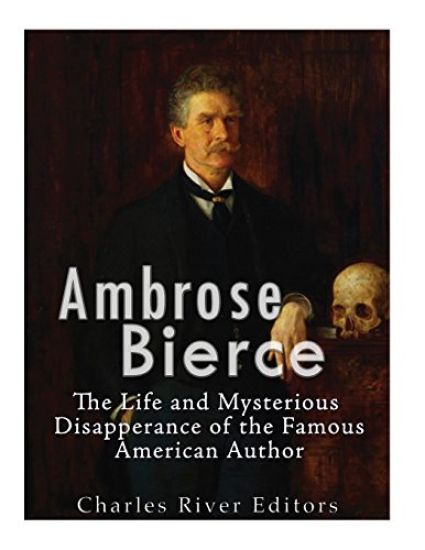
Ambrose Bierce: The Life and Mysterious Disappearance of the Famous American Author
Charles River
Createspace Independent Publishing Platform
2018
nidottu
*Includes pictures *Includes Bierce's quotes about his own life and career *Includes footnotes, online resources and a bibliography for further reading "History is an account, mostly false, of events, mostly unimportant, which are brought about by rulers, mostly knaves, and soldiers, mostly fools." - Ambrose Bierce Satirical commentary, memoirs from the agony of war, and horror stories of the supernatural have existed in literature since the beginning of the written word, and in virtually all global societies. The most lauded and familiar examples known to 21st century readers are emblematic of vast literary industries in comparison to previous eras. With an astonishing number of authors at liberty to self-publish and the rapid expansion of the relatively recent film industry, the world has never before seen such a vast expression of such genres. However, as epic film music can often trace its roots back to the Romantic movement of the 1800s, so can the written word. Mark Twain, a preeminent, globally-admired satirist, shared the stage with such wits as Britain's Oscar Wilde, delivering barb after barb laced with the two-edged charm of the old American South. Nearer the end of the 19th century, Stephen Crane penned Red Badge of Courage, considered the definitive novel on the American Civil War. These, and the ironically inventive horror stories penned by Edgar Allen Poe and the next century's H.P. Lovecraft, remain popular in the West's canon. Examples of these early authors are taught in the American school curriculum, having acquired distinction by the passing of time, often serving as plot and stylistic foundations for new works. One author who is less frequently mentioned among these iconic literary figures of war, horror, acidic poetry, and social satire, is Ambrose Gwinnet Bierce, a journalist, poet, short-story writer, novelist, fabulist, and writing master who embodied the literary affections of all three. As a satirist, Bierce was famously dubbed the "Mark Twain of the North." Inclusion of the "North," however, embodies several points of dissimilarity from the wit of Twain; sharp and lightning-clever like his counterpart from Missouri, Bierce the Ohioan made no pretense to Southern charm or allowed any room for a nuanced interpretation of his remarks. Once atop his profession, Bierce's venom was spewed at virtually everyone, in almost every walk of life. Any figure of public note in San Francisco came to know him as "Bitter Bierce," or by his initials, which in public life were often translated as "Almighty God Bierce." As a war author, Bierce is the only one of the great literary figures who actually served as a front-line soldier in the American Civil War. Walt Whitman and Twain were somewhat removed from the conflict by comparison. Twain, in fact, "dabbled" at being a soldier before deserting his Confederate unit. Bierce's often metaphysical and supernatural-tinged memoirs of his war service served as the ideal backdrop for the Poe-like "attraction to death in its most bizarre forms" and an affection for the ghost story as a "campfire tale." A master of the "ironic style of the grotesque," he outstripped even Poe in the minds of many readers as "the blackest of black humorists." H.P. Lovecraft, the most prominent author of the macabre in the early part of the following century, described Bierce's work as "grim and savage," but other critics disagree, citing the "detached, oddly companionable" personality of the storytelling that made the horror all the more penetrating. Indeed, many 20th and 21st century novels, short stories, films, and television serials have drawn their success, squarely from Bierce's models. In the end, Ambrose Bierce wrote the most interesting story of all by disappearing from the world in a final late-life Mexican adventure, amidst that country's revolution. A new theory of his demise emerges with each passing year.