This book was designed as a textbook for students who need to fill their science requirement. The Quantum Revolution discusses how quantum theory overthrew the objective, materialist and determinist worldviews of classical physics. The text emphasizes how quantum physics may reestablish consciousness as a causal agent in science by delving into quantum non-locality and its implications to society.
This is a fun and fresh book that features projects that incorporate favourite images, along with photography advice. It features 50 fun DIY photo projects, from a photo snow globe to a wall-sized mural. It includes projects that are suitable for all levels of ability; some only require cutting and gluing! "Photojojo!" is the ultimate DIY photography book for the digital generation. Accessible, full of hints, tips, tricks and techniques and with an emphasis on creative thinking, it asserts that photography is an art that's fun for everyone. Two key sections focus on firstly: DIY and craft projects for showing and displaying photographs and secondly: on using inspiration, ideas and new perspectives to have more fun with the camera and create unique photographs. It includes 50 projects that tackle home decor, personal accessories and gifts - such as a DIY Snow Globe - and all feature colour photographs to guide and inspire.
In 1980s Bombay, a highly regarded voice teacher and his affluent sixteen-year-old student enter into a relationship that will have unexpected and lasting consequences in their lives, and the lives of their families. With exquisitely sensuous detail, quiet humor, and unsentimental poignancy, Amit Chaudhuri paints a luminous portrait of the spiritual and emotional force behind a revered Indian tradition; of two fundamentally different but intricately intertwined families; and of a society choosing between the old and the new.
In this vividly drawn and deeply personal portrait, acclaimed novelist Amit Chaudhuri chronicles the two years he spent revisiting Calcutta, the city of his birth. A mesmerizing narrative, the book takes readers into the heart of a metropolis relatively resistant to the currents of globalization. Moving through the city's vibrant avenues and derelict alleyways, Chaudhuri introduces us to the homeless and the high society, describes its architecture and food, its sounds and smells, and its past and present politics. With rare candor and clarity, he combines memoir, reportage, and history to evoke all that is most particular and extraordinary about the city--and to explain his own passionate attachment to the place and its people.
This new volume in the Global Security Watch series examines the contemporary foreign, military, and security policies of India as it moves towards becoming a formidable global power in the coming decades.India is poised to join the major nations of the world as one of the next superpowers in the multi-polar, 21st-century world. At the same time, it still faces significant domestic problems such as widespread poverty and public health issues, and faces considerable security threats posed by China and Pakistan.Author Amit Gupta, PhD, an esteemed scholar and expert on foreign policy and weapons proliferation in South Asia, argues that India's quest to attain a superpower status will depend on how it develops its relationships with the other leading nations. Another determining factor for India's success lies in its ability to create a more advantageous security environment in the immediate Indian Ocean region. Global Security Watch—India tackles complex topics such as future Indian foreign and security policy options and the corresponding implications for U.S. policy, how the India–China relationship affects relations among other Asian countries, and the capabilities of the Indian military-industrial complex.
This issues provides a comprehensive description of standard and alternative exposures of shoulder, arm, elbow, forearm and hand along with the relevant anatomy, and pearls and pitfalls of the described exposures and case examples illustrating the relevant points. The focus of the second section is on soft tissue coverage of the upper extremity.
Amit Chaudhuri’s stories range across the astonishing face of the modern Indian subcontinent. From a divorcé about to enter into an arranged marriage to a teenaged poet who develops a relationship with a lonely widower, from singing teachers to housewives to white-collar businessmen, Chaudhuri deftly explores the juxtaposition of the old and new worlds in his native India. Here are stories as sweet and humane as they are incisive and revealing. ‘Brilliant . . . Here, as with Chekhov or Hemingway, the reader not only accepts but relishes the economy, because he or she has already been won over by other deft and graceful aspects of the author’s style . . . Against these vivid backgrounds are placed an astonishingly varied galaxy of characters . . . A civilised, not to mention an immensely pleasurable read’ Ranjit Bolt, Guardian ‘Few write as delicately as Chaudhuri, whose characters intertwine their antennae and talk in elliptical low tones, displaying all the while their peculiarly Indian humanity’ Philip Glazebrook, Spectator ‘Mr Chaudhuri limns the trajectory of an entire life in a handful of pages . . . The stories in this volume combine the folk-art charm and easygoing improvisations of R. K. Narayan with the compassion and evocative atmosphere of Chekhov’ Michiko Kakutani, New York Times
We live in this universe. Hence, it is essential to understand the origin, evolution and ultimate fate of the universe. This can be, effectively, done by constructing mathematical models of the universe, using Einstein's theory of gravitation and other modified theories of gravitation. The models, thus, obtained can be compared with the present day observations, to decide about the shape, physics, and origin of the universe. With this motivation we have taken up the investigations in this book entitled "STUDIES ON GRAVITATIONAL FIELD EQUATIONS AND IMPORTANT RESULTS OF RELATIVISTIC COSMOLOGY". This book comprises of six chapters and deals with some spatially homogeneous isotropic and anisotropic cosmological models of the universe in some modified theories of gravitation.
Development performance is not merely economic growth and prosperity, but includes a multitude of goals. This monograph makes an attempt to conceptualize development, consisting of eight dimensions – material prosperity, education, health, economic security, personal security, environmental conditions, political voice and social connections. The authors implement this multidimensional concept to design not only an overall index of development (DI) for Indian states but also three sub indices, human development (HD), security (SEC) and voice and confidence (VC), that broadly represent three distinct aspects of development. The results clearly show that state level performances vary considerably across the various dimensions of development. No state does uniformly well or badly across all levels, thereby exposing the fallacy of branding the development experience of a particular state as ideal based on its achievement on some aspects of development. Since good performance in one dimension does not ensure doing well on other dimensions too, it would be inappropriate to ignore the performances on the three sub-indices and the eight dimensions. Recognition of such diversity of performance is particularly important in a federal structure, like India, where different states may have different development priorities. This study will enable states to reflect on whether they have been performing according to their priorities and if not, they may choose to tweak their policies or their development strategies.Please note: Taylor & Francis does not sell or distribute the Hardback in India, Pakistan, Nepal, Bhutan, Bangladesh and Sri Lanka
Postcolonial Legacies. Thenbspbook looks at key events in 1947 and explores the aftermath of the Partition and its continued impact in the present-day understanding of Indian nationhood and identity.
The Dancing God: Staging Hindu Dance in Australia charts the sensational and historic journey of de-provincialising and popularising Hindu dance in Australia. In the late nineteenth and early twentieth centuries, colonialism, orientalism and nationalism came together in various combinations to make traditional Hindu temple dance into a global art form. The intricately symbolic Hindu dance in its vital form was virtually unseen and unknown in Australia until an Australian impresario, Louise Lightfoot, brought it onto the stage. Her experimental changes, which modernised Kathakali dance through her pioneering collaboration with Indian dancer Ananda Shivaram, moved the Hindu dance from the sphere of ritualistic practice to formalised stage art. Amit Sarwal argues that this movement enabled both the authentic Hindu dance and dancer to gain recognition worldwide and created in his persona a cultural guru and ambassador on the global stage. Ideal for anyone with an interest in global dance, The Dancing God is an in-depth study of how a unique dance form evolved in the meeting of travellers and cultures.
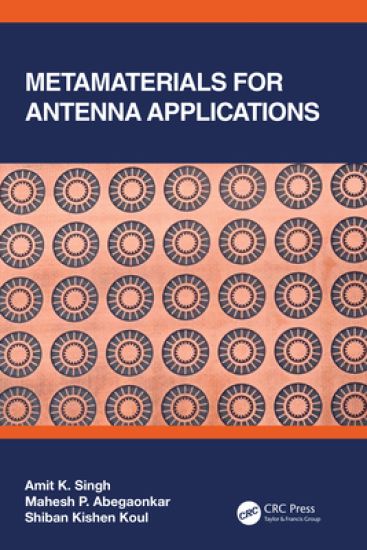
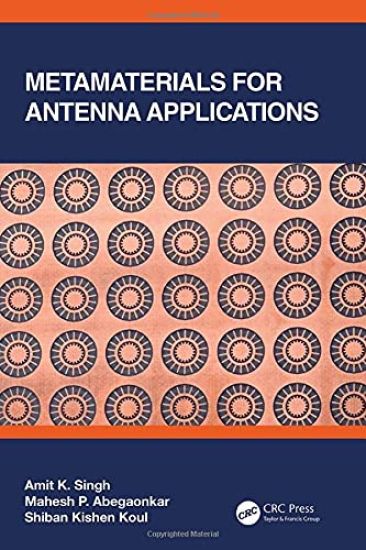
The book presents an engineering approach for the development of metamaterials and metasurfaces with emphasis on application in antennas. It offers an in-depth study, performance analysis and extensive characterization on different types of metamaterials and metasurfaces. Practical examples included in the book will help readers to enhance performance of antennas and also develop metamaterial-based absorbers for a variety of applications. Key Features Provides background for design and development of metamaterial structures using novel unit cells Gives in-depth performance study of miniaturization of microstrip antennas Discusses design and development of both transmission and reflection types, metasurfaces and their practical applications. Verifies a variety of Metamaterial structures and Metasurfaces experimentally The target audience of this book is postgraduate students and researchers involved in antenna designs. Researchers and engineers interested in enhancing the performance of the antennas using metamaterials will find this book extremely useful. The book will also serve as a good reference for developing artificial materials using metamaterials and their practical applications. Amit K. Singh is Assistant Professor in the Department of Electrical Engineering at the Indian Institute of Technology Jammu, India. He is a Member of the IEEE, USA.Mahesh P. Abegaonkar is Associate Professor at the Centre for Applied Research in Electronics at the Indian Institute of Technology Delhi. He is a Senior Member of the IEEE, USA.Shiban Kishen Koul is Emeritus Professor at the Centre for Applied Research in Electronics at the Indian Institute of Technology Delhi. He is a Life Fellow of the Institution of Electrical and Electronics Engineering (IEEE), USA, a Fellow of the Indian National Academy of Engineering (INAE), and a Fellow of the Institution of Electronics and Telecommunication Engineers (IETE).
The book presents an engineering approach for the development of metamaterials and metasurfaces with emphasis on application in antennas. It offers an in-depth study, performance analysis and extensive characterization on different types of metamaterials and metasurfaces. Practical examples included in the book will help readers to enhance performance of antennas and also develop metamaterial-based absorbers for a variety of applications. Key Features Provides background for design and development of metamaterial structures using novel unit cells Gives in-depth performance study of miniaturization of microstrip antennas Discusses design and development of both transmission and reflection types, metasurfaces and their practical applications. Verifies a variety of Metamaterial structures and Metasurfaces experimentally The target audience of this book is postgraduate students and researchers involved in antenna designs. Researchers and engineers interested in enhancing the performance of the antennas using metamaterials will find this book extremely useful. The book will also serve as a good reference for developing artificial materials using metamaterials and their practical applications. Amit K. Singh is Assistant Professor in the Department of Electrical Engineering at the Indian Institute of Technology Jammu, India. He is a Member of the IEEE, USA.Mahesh P. Abegaonkar is Associate Professor at the Centre for Applied Research in Electronics at the Indian Institute of Technology Delhi. He is a Senior Member of the IEEE, USA.Shiban Kishen Koul is Emeritus Professor at the Centre for Applied Research in Electronics at the Indian Institute of Technology Delhi. He is a Life Fellow of the Institution of Electrical and Electronics Engineering (IEEE), USA, a Fellow of the Indian National Academy of Engineering (INAE), and a Fellow of the Institution of Electronics and Telecommunication Engineers (IETE).
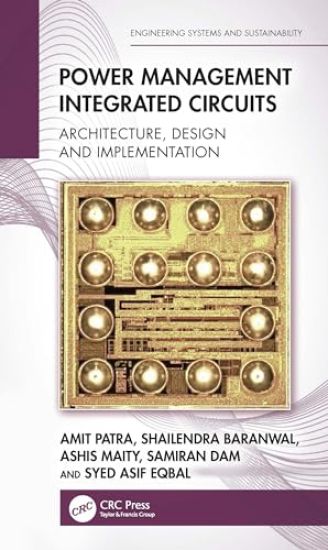
This book intends to be a comprehensive text on the topic of integrated circuits for power management, putting together both theoretical foundations and practical details, leading to successful design practices in research and industry. It covers all the three main categories of power management circuits, viz., linear regulators, inductor-based switchers and switched-capacitor circuits, and presents detailed discussion of their common topologies, operation and modeling.FeaturesIncludes underlying theory and design/implementation practical ingredients for power management integrated circuits (PMICs).Provides in-depth analysis of topologies and circuits related to linear regulators, switched-capacitor converters and inductor-based converters.Covers all the relevant topics at the intersection between power electronics and integrated circuit design areas.Provides guidelines for design of circuits and solutions for all the pertinent topologies.Indicates all important issues and the related trade-offs in the design of PMICs.The book will be a valuable resource for senior- and graduate-level students as well as industry professionals who have done university-level courses on analog circuit design, control systems and power electronics.
This book examines India’s transboundary river water disputes with its South Asian riparian neighbours — Pakistan, Bangladesh, Nepal and Bhutan. It explores the history of disputes and cooperation over the transboundary river water in this region as well as discusses current disputes and future concerns. It analyses how and why existing transboundary river water sharing treaties between India and its South Asian riparian neighbours are confronted with challenges. The book indicates that India’s transboundary river water disputes with its South Asian riparian neighbours are likely to escalate in coming years due to the widening of the demand¬–supply gap in the respective countries. It further shows the impact of bilateral relations on the resolution of transboundary river water disputes, even as cordial relationships do not always guarantee the absence of river water disputes between riparian states. The book looks at some key questions: How political are India’s transboundary rivers water disputes in South Asia? Why do the roots of India’s river water disputes with Bangladesh and Pakistan lie in the partition of the British India in 1947? Why are there reservations against India’s hydroelectricity projects or allegations of water theft? Is it possible to resolve transboundary river water disputes among these South Asian countries? This book will greatly interest scholars and researchers working in the areas of river management, environmental politics, transnationalism, water resources, politics and international relations, security studies, peace and conflict studies, geopolitics, development studies, governance and public administration, and South Asian studies in addition to policymakers and journalists.
This comprehensive reference text discusses advance concepts and applications in the field of nanotechnology. The text presents a detailed discussion of key important concepts including nanomaterials and nanodevices, nano-bio interface, nanoscale memories, and semiconductor nanotechnology. It discusses applications of nanotechnology in the fields of aerospace engineering, cosmetic industry, pharmaceutical science, food industry, and the textile industry. The text will be useful for senior undergraduate and graduate students in the field of electrical engineering, electronics engineering, nanotechnology, and pharmaceutical science. Discussing fundamental, advanced concepts and their applications in a single volume, this text will be useful as a reference text for senior undergraduate and graduate students in the field of electrical engineering, electronics engineering, nanotechnology, and pharmaceutical science. It comprehensively discusses important concepts such as nano-robotics, carbon-based nanomaterials, and nanoscale memories. The text discusses advanced concepts of nanotechnology and its applications in the fields of textile, pharmaceutical sciences, aerospace, and food industry. It will be an ideal reference text for senior undergraduate and graduate students in the field of electrical engineering, electronics engineering, nanotechnology, and nanoscience.
This comprehensive reference text discusses advance concepts and applications in the field of nanotechnology. The text presents a detailed discussion of key important concepts including nanomaterials and nanodevices, nano-bio interface, nanoscale memories, and semiconductor nanotechnology. It discusses applications of nanotechnology in the fields of aerospace engineering, cosmetic industry, pharmaceutical science, food industry, and the textile industry. The text will be useful for senior undergraduate and graduate students in the field of electrical engineering, electronics engineering, nanotechnology, and pharmaceutical science. Discussing fundamental, advanced concepts and their applications in a single volume, this text will be useful as a reference text for senior undergraduate and graduate students in the field of electrical engineering, electronics engineering, nanotechnology, and pharmaceutical science. It comprehensively discusses important concepts such as nano-robotics, carbon-based nanomaterials, and nanoscale memories. The text discusses advanced concepts of nanotechnology and its applications in the fields of textile, pharmaceutical sciences, aerospace, and food industry. It will be an ideal reference text for senior undergraduate and graduate students in the field of electrical engineering, electronics engineering, nanotechnology, and nanoscience.
The Northeast Indian borderlands, a cultural crossroads between South, Southeast and East Asia, constitute an important post-colonial exception to the narratives of nation, troubling the common perception of India as an ostensibly liberal regime. This book is the first to consider the representations of the effects of political terror and survival in contemporary literature from Northeast India. Fictions from this polyglot region offer alternative representations that show the post-colonial nation-state to engage in acts of aggression that parallel colonial regimes. The militarization of everyday life and the subsequent growth of cultures of impunity has left a lasting impact on ordinary existence in this border zone. Like in the much more widely discussed case of Kashmir, the governance of the Northeast region is not characterized so much by the management of life, the domain of what Michel Foucault calls biopolitics, but rather around the preponderance and distribution of death, what the postcolonial critic Achille Mbembe calls necropolitics. Not surprisingly, along with Mbembe’s theorizations, the influential works of the Italian philosopher, Giorgio Agamben, on 'bare life' have provided fruitful pathways to a study of the sovereign politics of death and political terror in this region. The author draws upon the conceptual literature on political terror and sovereign power through a reading of Anglophone fictions alongside Assamese fictional narratives (all published after 1990), but shifts the onus from the 'why' of violence to the 'how' of lived experience. An original study of contemporary survivalist fictions that explores survival under conditions of civil and military threat, this book is a valuable contribution to the field of contemporary global literature focusing on cartographies of death and sovereign terror and postcolonial literature.
This book is a comprehensive study of the development of China’s nuclear-powered ballistic missile submarines (SSBNs). It offers insights into the secretive world of nuclear submarines and ballistic missiles of the Chinese (PLA) Navy and studies how these are likely to grow in the next two decades.The volume examines the technological origins of the design and development of Chinese nuclear submarines, ballistic missiles, and their naval construction capabilities. It provides an analysis of the underlying Chinese nuclear doctrine, China’s maritime geographical constraints for submarine operations, and the credibility of its sea-based deterrence. It draws upon strategy, nuclear policy, technology, geography, and operational considerations to holistically predict the likely SSBN force levels of the PLA Navy for various scenarios. The book also assesses the spectrum of threats likely from the undersea domain for India and other nations in the Indo-Pacific region.A key text on an obscure but vital facet of Chinese defence studies, this book will be useful for scholars and researchers of strategic affairs, international relations and disarmament studies, peace and conflict studies, geopolitics, foreign policy, Indo-Pacific studies, and diplomacy.