Kirjojen hintavertailu. Mukana 12 459 402 kirjaa ja 12 kauppaa.

Kirjahaku

Etsi kirjoja tekijän nimen, kirjan nimen tai ISBN:n perusteella.

1000 tulosta hakusanalla Augustus Maverick

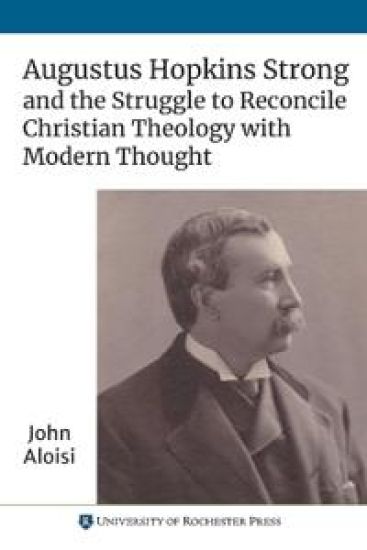
Augustus Hopkins Strong and the Struggle to Reconcile Christian Theology with Modern Thought
At the end of the nineteenth century Augustus Hopkins Strong worked to bring modernists and traditional Christians together but found the task more difficult than many imagined. In the wake of the publication of Darwin's Origin of Species in 1859, Christianity, or at least many people's understanding of Christianity, was evolving. The rising popularity of Darwinism combined with the pervasive influence of German idealism began forcing many professing Christians to rethink the faith they had long taken for granted. Among those who would be compelled to face the apparent conflicts between modern thought and traditional orthodoxy was Baptist theologian Augustus Hopkins Strong (1836-1921). As president and professor of systematic theology at Rochester Theological Seminary for forty years (1872-1912) Strong stood as the premier theologian of the Northern Baptists at the end of the nineteenth century. Yet, as author John Aloisi shows in this important study, he remains a puzzling figure. Strong considered himself a defender of orthodoxy even as the school he led transitioned to a more modern and arguably less orthodox understanding of the Christian faith. His Systematic Theology went through eight editions, and the later editions increasingly reflected a shift in his thinking. Strong wrestled with how to reconcile Christian theology with modern thought while also trying to solve tensions within his own theology. He hoped to be able to bring modernists and more traditional Christians together around a concept he labeled ethical monism. In the end, while his effort suggested the task was more difficult than many understood it to be, Strong's journey had a significant impact on the direction of Rochester Theological Seminary. This book is openly available in digital formats thanks to a generous grant from the Andrew W. Mellon Foundation.
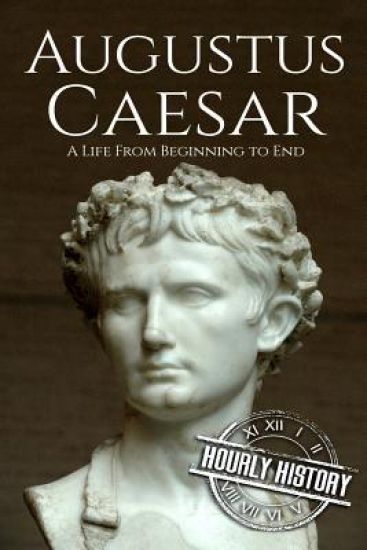
Augustus Caesar

Augustus Caesar

Hourly History

Createspace Independent Publishing Platform
2018
pokkari
AugustusHe was the first emperor of one of the greatest empires ever known to man. He commanded unmatched authority in the ancient world and was always one step ahead of his opponents. He had an intellect and a sharp wit that could cut down his foes just as easily as the steel of his sword. The life of Octavian-later known as Augustus-is so rich and full, it would take several volumes to cover all of his exploits. Although he lived and died over 2,000 years ago, this founder of the Roman Empire is as intriguing as ever. Inside you will read about...✓ The Adoptive Son of Julius Caesar✓ Defeating Mark Antony✓ The Second Triumvirate✓ The Suicide Pact✓ The First Roman EmperorAnd much more Learn the riveting history and the inspirational life of the most noble Roman of them all-Augustus.
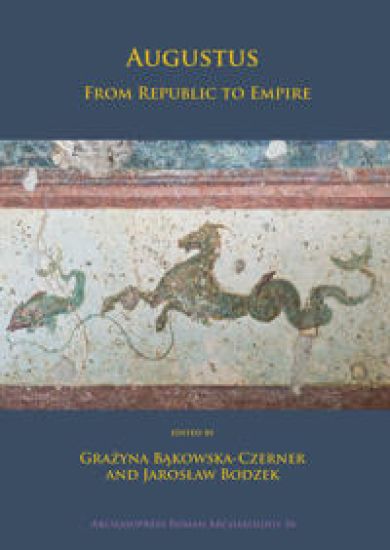
Augustus: From Republic to Empire
Augustus: From Republic to Empire is the product of a conference entitled AUGUSTUS. 23 September 63 BC – 19 August 14 AD – 2000 years of divinity organised on 12 December 2014 by the Institute of Archaeology of the Jagiellonian University, the Centre for Comparative Studies of Civilisations at the Jagiellonian University and the National Museum in Krakow. The conference was hosted by the Emeryk Hutten- Czapski Museum – a branch of the National Museum in Krakow – and commemorated the anniversary of Augustus’s death. The volume offers readers articles that deal with a variety of topics ranging from architecture, urban issues and painting to fine art represented by glyptics and numismatics. It includes papers devoted to the publication of previously unknown objects, articles presenting iconographic research, deliberations on propaganda, and analyses of the political situation and source texts. Chronologically, some of the papers go beyond the age of August, yet are relevant to the understanding of the transformations that took place in art and architecture during the reign of the first princeps, the widely-understood middle and late periods of the Republic, and the early Empire. The geographic scope of the articles covers the entire territory of the Empire. This diverse topic allows a variety of research themes on the epoch of August to be presented from a broad perspective.
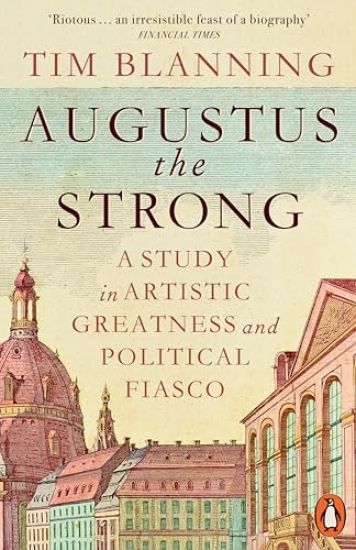
Augustus The Strong

Augustus The Strong

Tim Blanning

PENGUIN BOOKS LTD
2025
pokkari
From the acclaimed author of The Pursuit of Glory and Frederick the Great, a riotous biography of the charismatic ruler of 18th-century Poland and Saxony - and his catastrophic reign.'It's been a superb year for history but Augustus the Strong ranks up there with the very very best! I cant recommend it strongly enough' - Simon Sebag-Montefiore'The wonderful story of one of the worst monarchs in European history, told with enormous wit and scholarship by a supremely talented historian. If you have the slightest interest in Germans, Poles, porcelain, jewels, the Enlightenment, military disasters or the pleasures of fox-tossing, then this is the book for you' - Dominic Sandbrook*Shortlisted for the Elizabeth Longford Prize for Historical Biography 2025*Augustus is one of the great what-ifs of the 18th century. He could have turned the accident of ruling two major realms into the basis for a powerful European state – a bulwark against the Russians and a block on Prussian expansion. Alas, there was no opportunity Augustus did not waste and no decision he did not get wrong. By the time of his death Poland was fatally damaged and would subsequently disappear as an independent state until the 20th century.Tim Blanning’s wonderfully entertaining and original new book is a study in failed statecraft, showing how a ruler can shape history as much by incompetence as brilliance. Augustus’s posthumous sobriquet ‘The Strong’ referred not to any political accomplishment, but to his legendary physical strength and sexual athleticism.Yet he was also one of the great creative artists of the age, combining driving energy, exquisite taste and apparently boundless resources to master-mind the creation of peerless Dresden, the baroque jewel of jewels. Augustus the Strong brilliantly evokes this time of opulence and excess, decadence and folly.
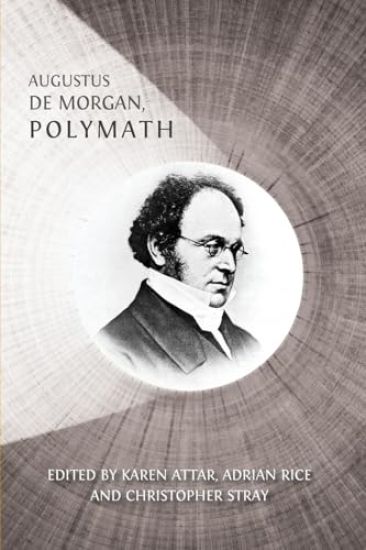
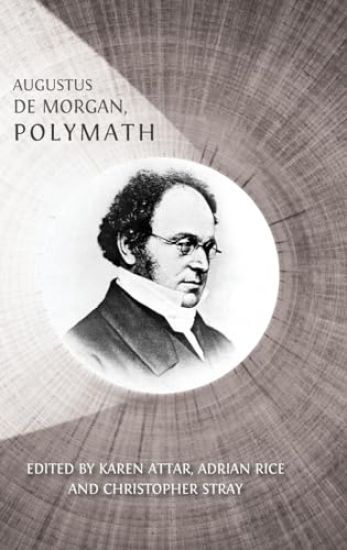
Augustus De Morgan, Polymath: New Perspectives on his Life and Legacy
When Augustus De Morgan died in 1871, he was described as 'one of the profoundest mathematicians in the United Kingdom' and even as 'the greatest of our mathematicians'. But he was far more than just a mathematician. Because much of his voluminous written output on various subjects was scattered throughout journals and encyclopaedias, the breadth of his interests and contributions has been underappreciated by historians. Now, renewed interest in De Morgan's life and work has coincided with the digitization of his extensive library, revealing the extent to which he pioneered and influenced the development of not merely mathematics but also logic, astronomy, the history of mathematics, education, and bibliography.This edited collection celebrates De Morgan as a polymath. Drawing together multiple elements of his activity from a range of publications and archives, its contributors re-assess his academic work, his place in his intellectual environment, and his legacy. The result offers new insight into De Morgan himself as well as the wider circles in which he moved, including his family life.
Augustus De Morgan, Polymath: New Perspectives on his Life and Legacy
When Augustus De Morgan died in 1871, he was described as 'one of the profoundest mathematicians in the United Kingdom' and even as 'the greatest of our mathematicians'. But he was far more than just a mathematician. Because much of his voluminous written output on various subjects was scattered throughout journals and encyclopaedias, the breadth of his interests and contributions has been underappreciated by historians. Now, renewed interest in De Morgan's life and work has coincided with the digitization of his extensive library, revealing the extent to which he pioneered and influenced the development of not merely mathematics but also logic, astronomy, the history of mathematics, education, and bibliography.This edited collection celebrates De Morgan as a polymath. Drawing together multiple elements of his activity from a range of publications and archives, its contributors re-assess his academic work, his place in his intellectual environment, and his legacy. The result offers new insight into De Morgan himself as well as the wider circles in which he moved, including his family life.
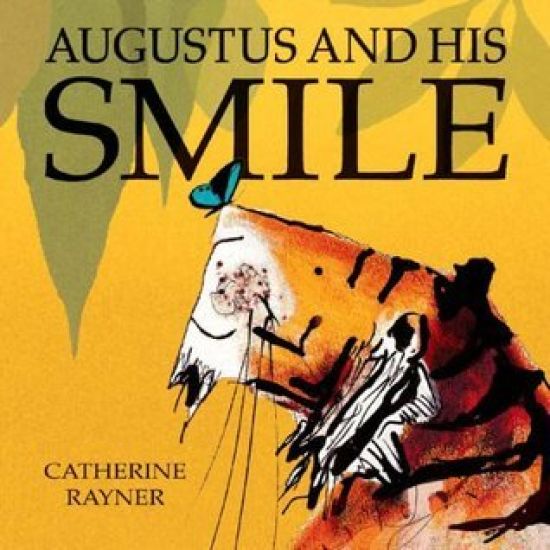
Augustus and His Smile

Augustus and His Smile

Catherine Rayner

Little Tiger Press
2006
sidottu
Augustus the tiger was sad. He had lost his smile. So he did a huge tigery stretch, and set off to find it. In this book, the author and illustrator Catherine Rayner celebrates the beauty of the world and the simple happiness it brings us when we open our eyes to it.
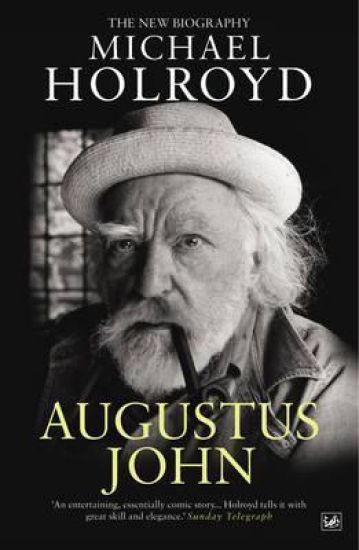
Augustus John

Augustus John

Michael Holroyd

Vintage
2011
pokkari
This 1997 revised and updated biography of the celebrated artist, using the mass of new material which has come to light since Holroyd's two-volume first edition in the mid 1970s, reveals the complete story of John and his circle, from one of our great biographers.
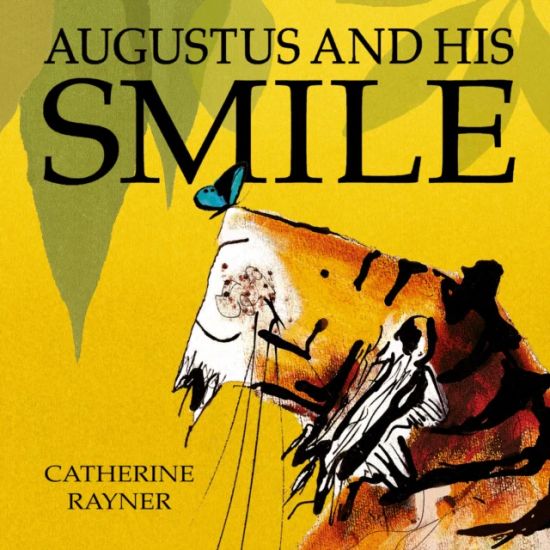
Augustus and His Smile

Augustus and His Smile

Catherine Rayner

Little Tiger Press
2016
sidottu
Augustus the tiger is sad. He has lost his smile. So he does a HUGE tigery stretch and sets off to find it. As he climbs mountain crests patterned with frost and swims to the bottom of inky blue oceans, Augustus soon realises that his smile will be there whenever he is happy. He just needs to open his eyes to the beauty of the natural world around him. Rediscover the magic of Catherine Rayner’s illustrations with this stunning 10th anniversary edition. With a gorgeous jacketed cover with gold foiling, this picture book would make a perfect gift for a baby shower, christening or birthday. Augustus and his Smile was Catherine Rayner’s first book. It was nominated for the Kate Greenaway Award and won the 2006 Booktrust Early Years Award.