Kirjahaku
Etsi kirjoja tekijän nimen, kirjan nimen tai ISBN:n perusteella.
1000 tulosta hakusanalla Baron Watson
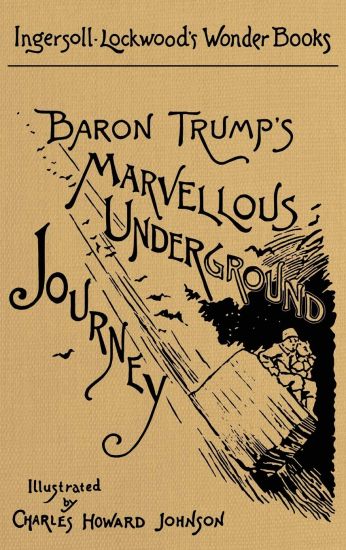
More than 100 years ago, Ingersoll Lockwood told the tale of young Baron Trump's quest to find a 'world within a world.' According to the 'biographical notice' at the beginning of the book, The "Little Baron Trump" or, is it the "Little Barron Trump"?] "was a real baron, and not a mere baron of the mind." Whether this is the truth or not, readers will enjoy this story of fantasy (and prophecy?) by the same author who wrote 1900 or The Last President in 1896 (ISBN: 978-1-64594-047-0). This is a facsimile of the original Baron Trump's Marvellous Underground Journey as published in 1893. Therefore, it has all of the idiosyncrasies of a very old book, and also, all of its charm. For those searching for the deepest meaning possible, you can't find a better source than an exact replica of one of the first copies printed.
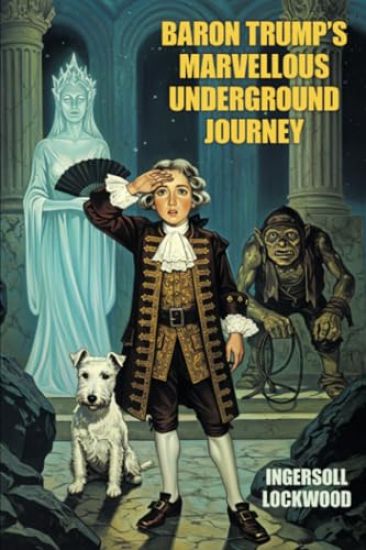
In this surreal 19th-century fantasy, a young aristocrat sets out on a Hollow Earth voyage guided by the writings of a long-dead mystic. With only his loyal dog and a cryptic manuscript, Baron Trump descends into a bizarre subterranean realm where reality bends and satire meets metaphysics. Packed with eccentric peoples, whimsical customs, and speculative science, Baron Trump's Marvellous Underground Journey is a strange, proto-science fiction odyssey that blends Jules Verne-style adventure with allegorical commentary.

The Baron Trump novels are two children's novels written in 1889 and 1893 by the American author and lawyer Ingersoll Lockwood. They remained obscure until 2017, when they received media attention for perceived similarities between their protagonist and U.S. President Donald Trump. Ingersoll published the first novel, Travels and adventures of Little Baron Trump and his wonderful dog Bulger, in 1889, and its sequel, Baron Trump's Marvelous Underground Journey, in 1893. The novels recount the adventures of the German boy Wilhelm Heinrich Sebastian Von Troomp, who goes by "Baron Trump," as he discovers weird underground civilizations, offends the natives, flees from his entanglements with local women, and repeats this pattern until arriving back home at Castle Trump. The novels were part of a trend in American children's literature that responded to the demand for fantastic adventure stories triggered by Lewis Carroll's Alice in Wonderland (1865). In July 2017, the books were rediscovered by Internet forum users, and then the media, who amused themselves by highlighting perceived similarities between the protagonist and U.S. President Donald Trump, whose son is named Barron Trump. Jaime Fuller wrote in Politico that Baron Trump is "precocious, restless, and prone to get in trouble," often mentions his massive brain, and has a personalized insult for most people he meets. Chris Riotta noted in Newsweek that Baron Trump's adventures begin in Russia, and also mentioned another book of Ingersoll's, The Last President, in which the president's home city of New York is riven by protests against a rigged presidential election.

The Baron Trump novels are two children's novels written in 1889 and 1893 by the American author and lawyer Ingersoll Lockwood. They remained obscure until 2017, when they received media attention for perceived similarities between their protagonist and U.S. President Donald Trump. Ingersoll published the first novel, Travels and adventures of Little Baron Trump and his wonderful dog Bulger, in 1889, and its sequel, Baron Trump's Marvelous Underground Journey, in 1893. The novels recount the adventures of the German boy Wilhelm Heinrich Sebastian Von Troomp, who goes by "Baron Trump," as he discovers weird underground civilizations, offends the natives, flees from his entanglements with local women, and repeats this pattern until arriving back home at Castle Trump. The novels were part of a trend in American children's literature that responded to the demand for fantastic adventure stories triggered by Lewis Carroll's Alice in Wonderland (1865). In July 2017, the books were rediscovered by Internet forum users, and then the media, who amused themselves by highlighting perceived similarities between the protagonist and U.S. President Donald Trump, whose son is named Barron Trump. Jaime Fuller wrote in Politico that Baron Trump is "precocious, restless, and prone to get in trouble," often mentions his massive brain, and has a personalized insult for most people he meets. Chris Riotta noted in Newsweek that Baron Trump's adventures begin in Russia, and also mentioned another book of Ingersoll's, The Last President, in which the president's home city of New York is riven by protests against a rigged presidential election.

When Baron and Octopus were having a good day watching movies and playing, their tentacles got tangled. They traveled through the Atlantic, the Pacific, the Indian, and the Arctic Ocean looking for help to get out of the mess. They met king barracuda, a mermaid, a lobster wizard, and their new friend Resry. Every time they got separated, they were so excited that they got tangled again. Just when Resry was leaving, an epic tornado swept over their city. The bros got swept different ways and came face to face with deadly creatures after finding a spooky letter. How could they survive this terrible disaster?
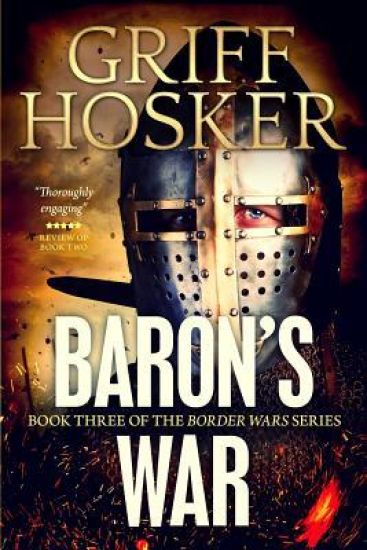
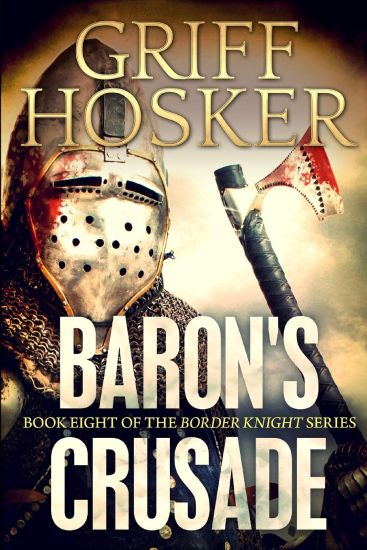
When Prince Arthur is murdered and the French begin to take Normandy, Sir Thomas finds himself isolated and alone. The Norman barons conspire against King John and the English knight has a dilemma. Does he join the rebels or stay true to his beliefs? Undefeated he and one of his knights leave Anjou and sail to a new life in England but it is not a life without trouble and death. He finds himself, in the midst of conspiracies and plots, forced to defend his land against bandits, brigands and the Scots. A fast-moving novel based on actual events at the start of the thirteenth century.
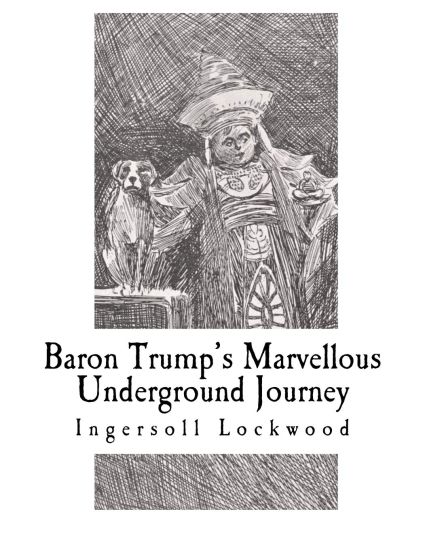
Baron Trump's Marvellous Underground Journey
Ingersoll Lockwood
Createspace Independent Publishing Platform
2018
nidottu
Baron Trump's Marvellous Underground Journey by Ingersoll Lockwood. The Baron Trump novels are two children's novels written in 1889 and 1893 by the American author and lawyer Ingersoll Lockwood. Lockwood published the first novel, Travels and adventures of Little Baron Trump and his wonderful dog Bulger, in 1889, and its sequel, Baron Trump's Marvelous Underground Journey, in 1893. In July 2017, the books were rediscovered by Internet forum users, and then the media, who pointed out similarities between the protagonist and U.S. President Donald Trump, whose son is named Barron Trump. Jaime Fuller wrote in Politico that Baron Trump is "precocious, restless, and prone to get in trouble", often mentions his massive brain, and has a personalized insult for most people he meets. Chris Riotta noted in Newsweek that Baron Trump's adventures begin in Russia. Riotta also mentioned another book of Ingersoll's, 1900; or, The Last President, in which New York City is riven by protests following the shock victory of a populist candidate in the 1896 presidential election who brings on the downfall of the American republic. The novels recount the adventures of the German boy Wilhelm Heinrich Sebastian Von Troomp, who goes by "Baron Trump", as he discovers weird underground civilizations, offends the natives, flees from his entanglements with local women, and repeats this pattern until arriving back home at Castle Trump. The novels were part of a trend in American children's literature that responded to the demand for fantastic adventure stories triggered by Lewis Carroll's Alice in Wonderland (1865). They were however indifferently received and did not enter the canon of children's literature. An 1891 reviewer wrote about one of Lockwood's novels: "The author labors through three hundred pages of fantastic and grotesque narrative, now and then striking a spark of wit; but the sparks emit little light and no warmth, and one has to fumble for the story."
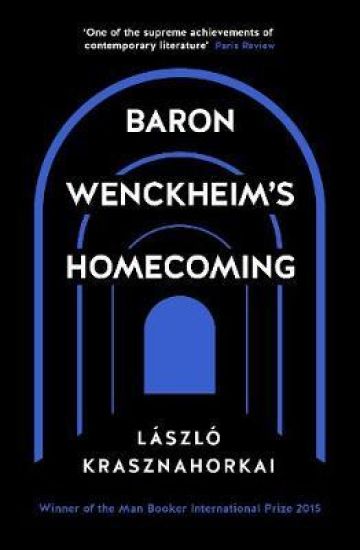
'Baron Wenkcheim's Homecoming is a fitting capstone to Krasznahorkai's tetralogy, one of the supreme achievements of contemporary literature. Now seems as good a time as any to name him among our greatest living novelists.' Paris Review Hailed internationally as perhaps the most important novel of the young twenty-first century, Baron Wenckheim's Homecoming is the culmination of László Krasznahorkai's remarkable and singular career. Nearing the end of his life, Baron Bela Wenckheim decides to return to the provincial Hungarian town of his birth. Having escaped from his many casino debts in Buenos Aires, where he was living in exile, he wishes to be reunited with his high-school sweetheart Marika. What follows is an endless storm of gossip, con men and local politicians, vividly evoking the small town's alternately drab and absurd existence. Spectacular actions are staged, death and the abyss loom, until finally doom is brought down on the unsuspecting residents of the town. 'I've said a thousand times that I always wanted to write just one book. Now, with this novel, I can prove that I really wrote just one book in my life. This is the book - Satantango, Melancholy, War & War, and Baron. This is my one book.' László Krasnahorkai


This collection unites Ingersoll Lockwood's classic Baron Trump adventure stories in one volume.Filled with exotic flights of fancy, the Baron Trump tales feature the titular character - a wealthy boy who lives in Trump Castle. His actual name is Wilhelm Heinrich Sebastian Von Troomp, but for the sake of simplicity he chooses to go by his title of Baron Trump.The young fellow embarks on time travelling adventures through human history. Through his travels, he meets societies of people and tribes from long ago, picking up aspects of their language and social customs. Accompanied by his faithful and protective companion hound Bulger, the young Baron navigates a variety of adventures and surmounts many obstacles.The final book in this volume discusses the rise of a US President and has been variously described as either coincidental or prescient of aspects of the 21st century political climate. Set in an America torn by division and dissent, there are references to a hotel on Fifth Avenue in New York, and an election of an outsider candidate ensuing in a chaotic atmosphere.Ingersoll Lockwood was an author of many children's books and short stories. A veteran of the U.S. consular service, he began writing in the 1870s and attained fame and appreciation for his efforts.

Baron Johann de Kalb: The Life and Legacy of the German Major General Who Fought in the American Revolution
Charles River
Independently Published
2018
nidottu
*Includes pictures*Includes contemporary accounts*Includes online resources and a bibliography for further reading"So, there lies the brave de Kalb. The generous stranger, who came from a distant land to fight our battles and to water with his blood the tree of liberty. Would to God he had lived to share its fruits " - George Washington By the time the Revolutionary War started, military confrontations between the world powers had become so common that combat was raised to the status of a fine art, consuming a large portion of time for adolescent males in training and comprising a sizeable component of the economy. Weaponry was developed to a degree of quality not accessible to most North Americans, and European aristocrats were reared in the mastery of swordsmanship with an emphasis on the saber for military use. Likewise, the cavalry, buoyed by a tradition of expert horsemanship and saddle-based combat, was a fighting force largely beyond reach for colonists, which meant that fighting on horses was an undeveloped practice in the fledgling Continental Army, and the American military did not yet fully comprehend the value of cavalry units. Few sword masters were to find their way to North America in time for the war, and the typical American musket was a fair hunting weapon rather than a military one. Even the foot soldier knew little of European military discipline. German participation is historically noted for the Hessians, mercenary soldiers recruited in whole companies by Britain, whose standing army featured relatively low numbers when the American Revolution began. However, other Germans noted for their mastery of the science of war sided with the colonies, and one of them was Baron Johann von de Kalb, a mentor and elder colleague of the legendary Marquis de Lafayette. Considered by some to be far too old for one attempting to rejuvenate the career of a soldier, de Kalb was a keen student of war with a steady mind and hand. Once able to prove his worth to the Continental Congress, he rose immediately to the rank of Brigadier General under George Washington, served with distinction, and died heroically in the Battle of Camden, a battle in the South that foretold the eventual surrender of Lord Cornwallis at Yorktown. For professionals of a European country to graft themselves to the culture of another was not so unusual in the 18th century, whether in the arts, government, or the military, but de Kalb was distinctly unique from a young age as a German with a strong Francophile bent. As a youth, he served in a German infantry division training and fighting for the French king, and after two grisly wars that left no nation in Europe untouched, he threw off his anticipated retirement and turned toward the American Revolution against Britain. By the time of his participation in the American theater, de Kalb was in his 50s, but given that he was still physically strong and well-trained in combat, he took up the fight against Britain as a matter of personal rejuvenation, on both a political and emotional level. In his efforts on behalf of the colonies, he proved himself to possess extraordinary vitality, regardless of age, and his legacy, much like that of his prot ge, remains a strong one. To this day, he is commemorated by numerous communities and counties across the present-day U.S.Baron Johann de Kalb: The Life and Legacy of the German Major General Who Fought in the American Revolution profiles one of the Revolutionary War's most famous soldiers. Along with pictures of important people, places, and events, you will learn about de Kalb like never before.

Baron Johann de Kalb: The Life and Legacy of the German Major General Who Fought in the American Revolution
Charles River
Independently Published
2018
nidottu
*Includes pictures*Includes contemporary accounts*Includes online resources and a bibliography for further reading"So, there lies the brave de Kalb. The generous stranger, who came from a distant land to fight our battles and to water with his blood the tree of liberty. Would to God he had lived to share its fruits " - George Washington By the time the Revolutionary War started, military confrontations between the world powers had become so common that combat was raised to the status of a fine art, consuming a large portion of time for adolescent males in training and comprising a sizeable component of the economy. Weaponry was developed to a degree of quality not accessible to most North Americans, and European aristocrats were reared in the mastery of swordsmanship with an emphasis on the saber for military use. Likewise, the cavalry, buoyed by a tradition of expert horsemanship and saddle-based combat, was a fighting force largely beyond reach for colonists, which meant that fighting on horses was an undeveloped practice in the fledgling Continental Army, and the American military did not yet fully comprehend the value of cavalry units. Few sword masters were to find their way to North America in time for the war, and the typical American musket was a fair hunting weapon rather than a military one. Even the foot soldier knew little of European military discipline. German participation is historically noted for the Hessians, mercenary soldiers recruited in whole companies by Britain, whose standing army featured relatively low numbers when the American Revolution began. However, other Germans noted for their mastery of the science of war sided with the colonies, and one of them was Baron Johann von de Kalb, a mentor and elder colleague of the legendary Marquis de Lafayette. Considered by some to be far too old for one attempting to rejuvenate the career of a soldier, de Kalb was a keen student of war with a steady mind and hand. Once able to prove his worth to the Continental Congress, he rose immediately to the rank of Brigadier General under George Washington, served with distinction, and died heroically in the Battle of Camden, a battle in the South that foretold the eventual surrender of Lord Cornwallis at Yorktown. For professionals of a European country to graft themselves to the culture of another was not so unusual in the 18th century, whether in the arts, government, or the military, but de Kalb was distinctly unique from a young age as a German with a strong Francophile bent. As a youth, he served in a German infantry division training and fighting for the French king, and after two grisly wars that left no nation in Europe untouched, he threw off his anticipated retirement and turned toward the American Revolution against Britain. By the time of his participation in the American theater, de Kalb was in his 50s, but given that he was still physically strong and well-trained in combat, he took up the fight against Britain as a matter of personal rejuvenation, on both a political and emotional level. In his efforts on behalf of the colonies, he proved himself to possess extraordinary vitality, regardless of age, and his legacy, much like that of his prot ge, remains a strong one. To this day, he is commemorated by numerous communities and counties across the present-day U.S.Baron Johann de Kalb: The Life and Legacy of the German Major General Who Fought in the American Revolution profiles one of the Revolutionary War's most famous soldiers. Along with pictures of important people, places, and events, you will learn about de Kalb like never before.

Baron de Kalb and Baron von Steuben: The Lives and Legacies of the Legendary German Generals Who Joined the Continental Army
Charles River
Independently Published
2019
nidottu
*Includes pictures*Includes contemporary accounts*Includes online resources and a bibliography for further readingBy the time the Revolutionary War started, military confrontations between the world powers had become so common that combat was raised to the status of a fine art, consuming a large portion of time for adolescent males in training and comprising a sizeable component of the economy. Weaponry was developed to a degree of quality not accessible to most North Americans, and European aristocrats were reared in the mastery of swordsmanship with an emphasis on the saber for military use. Likewise, the cavalry, buoyed by a tradition of expert horsemanship and saddle-based combat, was a fighting force largely beyond reach for colonists, which meant that fighting on horses was an undeveloped practice in the fledgling Continental Army, and the American military did not yet fully comprehend the value of cavalry units. Few sword masters were to find their way to North America in time for the war, and the typical American musket was a fair hunting weapon rather than a military one. Even the foot soldier knew little of European military discipline. German participation is historically noted for the Hessians, mercenary soldiers recruited in whole companies by Britain, whose standing army featured relatively low numbers when the American Revolution began. However, other Germans noted for their mastery of the science of war sided with the colonies, and one of them was Baron Johann von de Kalb, a mentor and elder colleague of the legendary Marquis de Lafayette. Considered by some to be far too old for one attempting to rejuvenate the career of a soldier, de Kalb was a keen student of war with a steady mind and hand. Once able to prove his worth to the Continental Congress, he rose immediately to the rank of Brigadier General under George Washington, served with distinction, and died heroically in the Battle of Camden, a battle in the South that foretold the eventual surrender of Lord Cornwallis at Yorktown. For professionals of a European country to graft themselves to the culture of another was not so unusual in the 18th century, whether in the arts, government, or the military, but de Kalb was distinctly unique from a young age as a German with a strong Francophile bent. As a youth, he served in a German infantry division training and fighting for the French king, and after two grisly wars that left no nation in Europe untouched, he threw off his anticipated retirement and turned toward the American Revolution against Britain. By the time of his participation in the American theater, de Kalb was in his 50s, but given that he was still physically strong and well-trained in combat, he took up the fight against Britain as a matter of personal rejuvenation, on both a political and emotional level. In his efforts on behalf of the colonies, he proved himself to possess extraordinary vitality, regardless of age, and his legacy, much like that of his prot ge, remains a strong one. To this day, he is commemorated by numerous communities and counties across the present-day U.S.Though he hailed from dubious lineage, Baron von Steuben enjoyed the full title of Baron Friedrich Wilhelm Rudolf Gerhard Augustin von Steuben, and when he came to fight in the Revolution, his purportedly lustrous military credentials could not be accurately verified by the American liaisons who were in contact with him. Like the Marquis de Lafayette and Baron de Kalb before him, von Steuben came to Washington's army via the recommendation of Benjamin Franklin, who hoped to use their appointments to curry political favor internationally. Furthermore, the letters sent with von Steuben to America underwent such upgrades of prestige and glamorization that his introduction was essentially an intentional deceit on the parts of the Americans in France.

Baron de Kalb and Baron von Steuben: The Lives and Legacies of the Legendary German Generals Who Joined the Continental Army
Charles River
Independently Published
2019
nidottu
*Includes pictures*Includes contemporary accounts*Includes online resources and a bibliography for further readingBy the time the Revolutionary War started, military confrontations between the world powers had become so common that combat was raised to the status of a fine art, consuming a large portion of time for adolescent males in training and comprising a sizeable component of the economy. Weaponry was developed to a degree of quality not accessible to most North Americans, and European aristocrats were reared in the mastery of swordsmanship with an emphasis on the saber for military use. Likewise, the cavalry, buoyed by a tradition of expert horsemanship and saddle-based combat, was a fighting force largely beyond reach for colonists, which meant that fighting on horses was an undeveloped practice in the fledgling Continental Army, and the American military did not yet fully comprehend the value of cavalry units. Few sword masters were to find their way to North America in time for the war, and the typical American musket was a fair hunting weapon rather than a military one. Even the foot soldier knew little of European military discipline. German participation is historically noted for the Hessians, mercenary soldiers recruited in whole companies by Britain, whose standing army featured relatively low numbers when the American Revolution began. However, other Germans noted for their mastery of the science of war sided with the colonies, and one of them was Baron Johann von de Kalb, a mentor and elder colleague of the legendary Marquis de Lafayette. Considered by some to be far too old for one attempting to rejuvenate the career of a soldier, de Kalb was a keen student of war with a steady mind and hand. Once able to prove his worth to the Continental Congress, he rose immediately to the rank of Brigadier General under George Washington, served with distinction, and died heroically in the Battle of Camden, a battle in the South that foretold the eventual surrender of Lord Cornwallis at Yorktown. For professionals of a European country to graft themselves to the culture of another was not so unusual in the 18th century, whether in the arts, government, or the military, but de Kalb was distinctly unique from a young age as a German with a strong Francophile bent. As a youth, he served in a German infantry division training and fighting for the French king, and after two grisly wars that left no nation in Europe untouched, he threw off his anticipated retirement and turned toward the American Revolution against Britain. By the time of his participation in the American theater, de Kalb was in his 50s, but given that he was still physically strong and well-trained in combat, he took up the fight against Britain as a matter of personal rejuvenation, on both a political and emotional level. In his efforts on behalf of the colonies, he proved himself to possess extraordinary vitality, regardless of age, and his legacy, much like that of his prot ge, remains a strong one. To this day, he is commemorated by numerous communities and counties across the present-day U.S.Though he hailed from dubious lineage, Baron von Steuben enjoyed the full title of Baron Friedrich Wilhelm Rudolf Gerhard Augustin von Steuben, and when he came to fight in the Revolution, his purportedly lustrous military credentials could not be accurately verified by the American liaisons who were in contact with him. Like the Marquis de Lafayette and Baron de Kalb before him, von Steuben came to Washington's army via the recommendation of Benjamin Franklin, who hoped to use their appointments to curry political favor internationally. Furthermore, the letters sent with von Steuben to America underwent such upgrades of prestige and glamorization that his introduction was essentially an intentional deceit on the parts of the Americans in France.
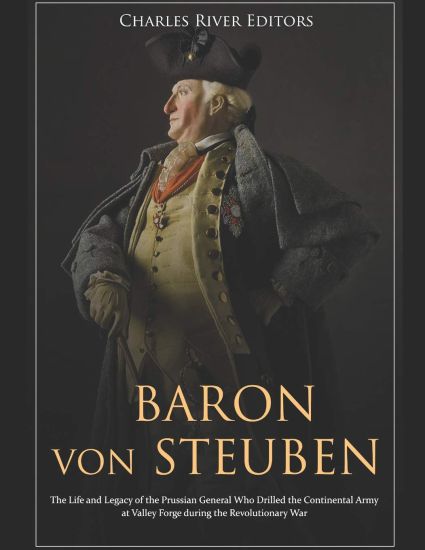
Baron von Steuben: The Life and Legacy of the Prussian General Who Drilled the Continental Army at Valley Forge during the Revolutionary War
Charles River
Independently Published
2019
nidottu
*Includes pictures*Includes contemporary accounts*Includes online resources and a bibliography for further reading"You say to your soldier, 'Do this' and he does it. But I am obliged to say to the American, 'This is why you ought to do this' and then he does it." - attributed to Baron von Steuben By the time the Revolutionary War started, military confrontations between the world powers had become so common that combat was raised to the status of a fine art, consuming a large portion of time for adolescent males in training and comprising a sizeable component of the economy. Weaponry was developed to a degree of quality not accessible to most North Americans, and European aristocrats were reared in the mastery of swordsmanship with an emphasis on the saber for military use. Likewise, the cavalry, buoyed by a tradition of expert horsemanship and saddle-based combat, was a fighting force largely beyond reach for colonists, which meant that fighting on horses was an undeveloped practice in the fledgling Continental Army, and the American military did not yet fully comprehend the value of cavalry units. Few sword masters were to find their way to North America in time for the war, and the typical American musket was a fair hunting weapon rather than a military one. Even the foot soldier knew little of European military discipline. German participation is historically noted for the Hessians, mercenary soldiers recruited in whole companies by Britain, whose standing army featured relatively low numbers when the American Revolution began. However, other Germans noted for their mastery of the science of war sided with the colonies, and among the most essential European contributors to the American cause turned out to be a Prussian officer of German descent. Though he hailed from dubious lineage, he enjoyed the full title of Baron Friedrich Wilhelm Rudolf Gerhard Augustin von Steuben, and when he came to fight in the Revolution, his purportedly lustrous military credentials could not be accurately verified by the American liaisons who were in contact with him. Like the Marquis de Lafayette before him, von Steuben came to Washington's army via the recommendation of Benjamin Franklin, who hoped to use their appointments to curry political favor internationally. Furthermore, the letters sent with von Steuben to America underwent such upgrades of prestige and glamorization as to frame his introduction as a national deceit. Despite the wavering attention paid by the colonial representatives to his biography, von Steuben may well have contributed more to the rebel victory than any other single presence on the American continent. After another disappointing year of defeats in 1777, Washington's 11,000 men entered winter quarters at Valley Forge in Pennsylvania, about 20 miles outside of occupied Philadelphia. His army had repeatedly faced a lack of discipline and chronic disorganization, and Congress began to consider replacing Washington, who was understandably devastated. Making matters worse, the winter was unusually harsh, leading to an estimated 2,000 or so deaths in camp from diseases. Gouverneur Morris would later call the soldiers at Valley Forge a "skeleton of an army...in a naked, starving condition, out of health, out of spirits."However, it was at Valley Forge that Washington truly forged his army, most notably by implementing a more rigorous training program for his troops that was led by von Steuben, who had fought with Frederick the Great. Despite speaking little English, von Steuben went about drafting a drill manual in French, and he personally presided over training drills and military parades. With the help of von Steuben, the Continental Army left Valley Forge in the spring of 1778 a more disciplined army than ever before, and the worst of Washington's failures were behind him. Von Steuben would continue to serve with the Continental Army through the end of the war.

Baron von Steuben: The Life and Legacy of the Prussian General Who Drilled the Continental Army at Valley Forge during the Revolutionary War
Charles River
Independently Published
2019
nidottu
*Includes pictures*Includes contemporary accounts*Includes online resources and a bibliography for further reading"You say to your soldier, 'Do this' and he does it. But I am obliged to say to the American, 'This is why you ought to do this' and then he does it." - attributed to Baron von Steuben By the time the Revolutionary War started, military confrontations between the world powers had become so common that combat was raised to the status of a fine art, consuming a large portion of time for adolescent males in training and comprising a sizeable component of the economy. Weaponry was developed to a degree of quality not accessible to most North Americans, and European aristocrats were reared in the mastery of swordsmanship with an emphasis on the saber for military use. Likewise, the cavalry, buoyed by a tradition of expert horsemanship and saddle-based combat, was a fighting force largely beyond reach for colonists, which meant that fighting on horses was an undeveloped practice in the fledgling Continental Army, and the American military did not yet fully comprehend the value of cavalry units. Few sword masters were to find their way to North America in time for the war, and the typical American musket was a fair hunting weapon rather than a military one. Even the foot soldier knew little of European military discipline. German participation is historically noted for the Hessians, mercenary soldiers recruited in whole companies by Britain, whose standing army featured relatively low numbers when the American Revolution began. However, other Germans noted for their mastery of the science of war sided with the colonies, and among the most essential European contributors to the American cause turned out to be a Prussian officer of German descent. Though he hailed from dubious lineage, he enjoyed the full title of Baron Friedrich Wilhelm Rudolf Gerhard Augustin von Steuben, and when he came to fight in the Revolution, his purportedly lustrous military credentials could not be accurately verified by the American liaisons who were in contact with him. Like the Marquis de Lafayette before him, von Steuben came to Washington's army via the recommendation of Benjamin Franklin, who hoped to use their appointments to curry political favor internationally. Furthermore, the letters sent with von Steuben to America underwent such upgrades of prestige and glamorization as to frame his introduction as a national deceit. Despite the wavering attention paid by the colonial representatives to his biography, von Steuben may well have contributed more to the rebel victory than any other single presence on the American continent. After another disappointing year of defeats in 1777, Washington's 11,000 men entered winter quarters at Valley Forge in Pennsylvania, about 20 miles outside of occupied Philadelphia. His army had repeatedly faced a lack of discipline and chronic disorganization, and Congress began to consider replacing Washington, who was understandably devastated. Making matters worse, the winter was unusually harsh, leading to an estimated 2,000 or so deaths in camp from diseases. Gouverneur Morris would later call the soldiers at Valley Forge a "skeleton of an army...in a naked, starving condition, out of health, out of spirits."However, it was at Valley Forge that Washington truly forged his army, most notably by implementing a more rigorous training program for his troops that was led by von Steuben, who had fought with Frederick the Great. Despite speaking little English, von Steuben went about drafting a drill manual in French, and he personally presided over training drills and military parades. With the help of von Steuben, the Continental Army left Valley Forge in the spring of 1778 a more disciplined army than ever before, and the worst of Washington's failures were behind him. Von Steuben would continue to serve with the Continental Army through the end of the war.