Kirjojen hintavertailu. Mukana 11 342 296 kirjaa ja 12 kauppaa.

Kirjahaku

Etsi kirjoja tekijän nimen, kirjan nimen tai ISBN:n perusteella.

1000 tulosta hakusanalla Ben Counter

Ben Cao Gang Mu, Volume V

Ben Cao Gang Mu, Volume V

Li Shizhen

University of California Press
2022
sidottu
Volume V in the Ben cao gang mu series offers a complete translation of chapters 18 through 25, devoted to creeping herbs, water herbs, herbs growing on stones, mosses, and cereals. The Ben cao gang mu is a sixteenth-century Chinese encyclopedia of medical matter and natural history by Li Shizhen (1518–1593). The culmination of a sixteen-hundred-year history of Chinese medical and pharmaceutical literature, it is considered the most important and comprehensive book ever written in the history of Chinese medicine and remains an invaluable resource for researchers and practitioners. This nine-volume series reveals an almost two-millennia-long panorama of wide-ranging observations and sophisticated interpretations, ingenious manipulations, and practical applications of natural substances for the benefit of human health. Paul U. Unschuld's annotated translation of the Ben cao gang mu, presented here with the original Chinese text, opens a rare window into viewing the people and culture of China's past.
Ben Cao Gang Mu, Volume I, Part A

Ben Cao Gang Mu, Volume I, Part A

Shizhen Li

University of California Press
2024
sidottu
Volume I is divided into two parts. Part A of volume 1 in the Ben cao gang mu series offers a translation of chapters 1 and 2 and portions of chapter 3. Chapters 1 and 2 are devoted to introducing the history of materia medica. Chapter 3 is devoted to pharmaceutical drugs for diseases. Chapter 3 is continued, along with chapter 4, in part B of volume I. The Ben cao gang mu is a sixteenth-century Chinese encyclopedia of medical matter and natural history by Li Shizhen (1518–1593). The culmination of a sixteen-hundred-year history of Chinese medical and pharmaceutical literature, it is considered the most important and comprehensive book ever written in the history of Chinese medicine and remains an invaluable resource for researchers and practitioners. This nine-volume series reveals an almost two-millennia-long panorama of wide-ranging observations and sophisticated interpretations, ingenious manipulations, and practical applications of natural substances for the benefit of human health. Paul U. Unschuld's annotated translation of the Ben cao gang mu, presented here with the original Chinese text, opens a rare window into viewing the people and culture of China's past.
Ben Cao Gang Mu, Volume VI

Ben Cao Gang Mu, Volume VI

Shizhen Li

University of California Press
2024
sidottu
Volume VI in the Ben cao gang mu series offers a complete translation of chapters 26 through 33, devoted to vegetables and fruits. The Ben cao gang mu is a sixteenth-century Chinese encyclopedia of medical matter and natural history by Li Shizhen (1518–1593). The culmination of a sixteen-hundred-year history of Chinese medical and pharmaceutical literature, it is considered the most important and comprehensive book ever written in the history of Chinese medicine and remains an invaluable resource for researchers and practitioners. This nine-volume series reveals an almost two-millennia-long panorama of wide-ranging observations and sophisticated interpretations, ingenious manipulations, and practical applications of natural substances for the benefit of human health. Paul U. Unschuld's annotated translation of the Ben cao gang mu, presented here with the original Chinese text, opens a rare window into viewing the people and culture of China's past.
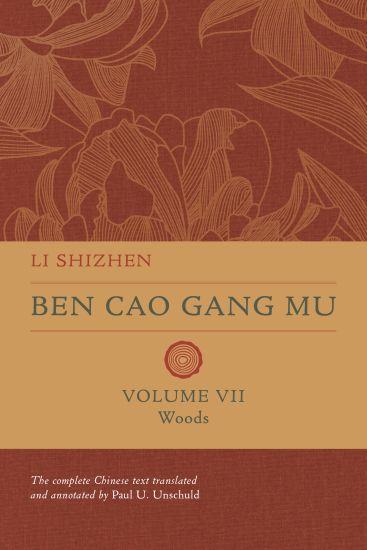
Ben Cao Gang Mu, Volume VII

Ben Cao Gang Mu, Volume VII

Shizhen Li

University of California Press
2024
sidottu
Volume VII in the Ben cao gang mu series offers a complete translation of chapters 34 through 37, devoted to woods. The Ben cao gang mu is a sixteenth-century Chinese encyclopedia of medical matter and natural history by Li Shizhen (1518–1593). The culmination of a sixteen-hundred-year history of Chinese medical and pharmaceutical literature, it is considered the most important and comprehensive book ever written in the history of Chinese medicine and remains an invaluable resource for researchers and practitioners. This nine-volume series reveals an almost two-millennia-long panorama of wide-ranging observations and sophisticated interpretations, ingenious manipulations, and practical applications of natural substances for the benefit of human health. Paul U. Unschuld's annotated translation of the Ben cao gang mu, presented here with the original Chinese text, opens a rare window into viewing the people and culture of China's past.
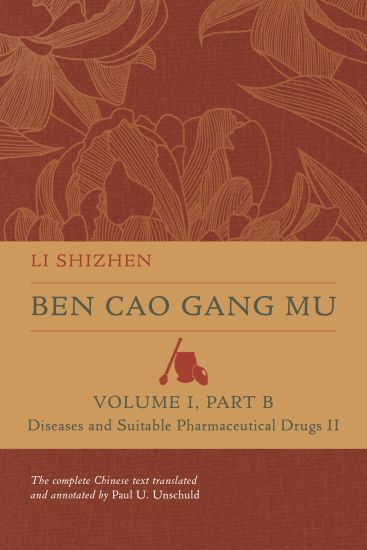
Ben Cao Gang Mu, Volume I, Part B

Ben Cao Gang Mu, Volume I, Part B

Shizhen Li

University of California Press
2024
sidottu
Volume I is divided into two parts. Part B of volume I in the Ben cao gang mu series offers a translation of portions of chapter 3 and the complete chapter 4, devoted to pharmaceutical drugs for diseases. This volume is a continuation of volume I, part A. The first portion of chapter 3 is found in part A. The Ben cao gang mu is a sixteenth-century Chinese encyclopedia of medical matter and natural history by Li Shizhen (1518–1593). The culmination of a sixteen-hundred-year history of Chinese medical and pharmaceutical literature, it is considered the most important and comprehensive book ever written in the history of Chinese medicine and remains an invaluable resource for researchers and practitioners. This nine-volume series reveals an almost two-millennia-long panorama of wide-ranging observations and sophisticated interpretations, ingenious manipulations, and practical applications of natural substances for the benefit of human health. Paul U. Unschuld's annotated translation of the Ben cao gang mu, presented here with the original Chinese text, opens a rare window into viewing the people and culture of China's past.
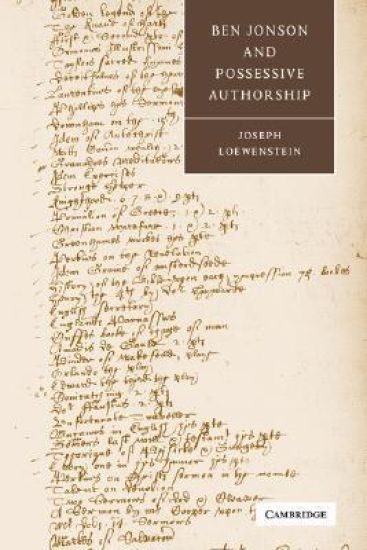
Ben Jonson and Possessive Authorship

Ben Jonson and Possessive Authorship

Joseph Loewenstein

Cambridge University Press
2007
pokkari
What is the history of authorship, of invention, of intellectual property? Joseph Loewenstein describes the fragmentary and eruptive emergence of a key phase of the bibliographical ego, a specifically Early Modern form of authorial identification with printed writing. In the work of many playwrights and non-dramatic writers - and especially that of Ben Jonson - that identification is tinged, remarkably, with possessiveness. This 2002 book examines the emergence of possessive authorship within a complex industrial and cultural field. It traces the prehistory of modern copyright both within the monopolistic practices of London's acting troupes and its Stationers' Company and within a Renaissance cultural heritage. Under the pressures of modern competition, a tradition of literary, artistic and technological imitation began to fissure, unleashing jealous accusations of plagiarism and ingenious new fantasies of intellectual privacy. Perhaps no-one was more creatively attuned to this momentous transformation in Early Modern intellectual life than Ben Jonson.
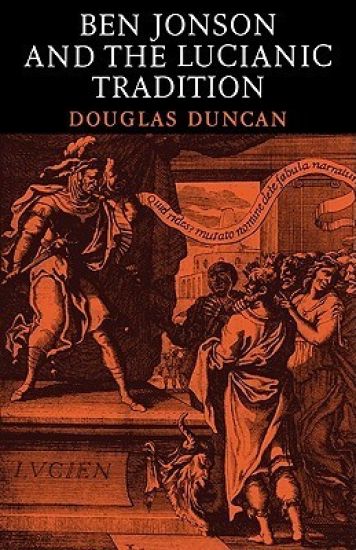
Ben Jonson and the Lucianic Tradition

Ben Jonson and the Lucianic Tradition

Duncan Douglas

Cambridge University Press
2010
pokkari
The challenge to the audience in Jonson's major comedies is usually seen as an extension of the provocative techniques of English Morality drama. In this lucid and penetrating study, Professor Duncan aims to supplement that view by suggesting a more sophisticated precedent for Jonson's methods in the practice of 'oblique teaching', which Erasmus and More developed out of their admiration for the Greek author Lucian. Jonson shows that stage-comedy is not as incompatible with the techniques of 'Menippean' non-dramatic satire as has often been thought. More generally, what is called here his 'art of teasing' places him in the centre of a long line of Christian humanist writers - stretching from Erasmus and More to Milton and Swift - who used fiction to educate their public through devious processes of moral and intellectual testing.
Ben Jonson and the Lucianic Tradition

Ben Jonson and the Lucianic Tradition

Duncan Douglas

Cambridge University Press
1979
sidottu
The challenge to the audience in Jonson's major comedies is usually seen as an extension of the provocative techniques of English Morality drama. In this lucid and penetrating study, Professor Duncan aims to supplement that view by suggesting a more sophisticated precedent for Jonson's methods in the practice of 'oblique teaching', which Erasmus and More developed out of their admiration for the Greek author Lucian. Jonson shows that stage-comedy is not as incompatible with the techniques of 'Menippean' non-dramatic satire as has often been thought. More generally, what is called here his 'art of teasing' places him in the centre of a long line of Christian humanist writers - stretching from Erasmus and More to Milton and Swift - who used fiction to educate their public through devious processes of moral and intellectual testing.
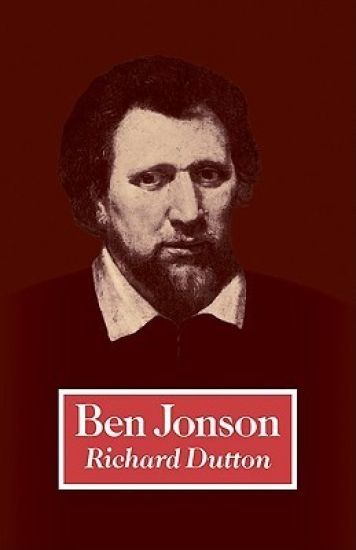
Ben Jonson

Ben Jonson

Richard Dutton

Cambridge University Press
1983
sidottu
This book offers a critical assessment of the career of one of the most formidable figures of English literature, the most influential poet and dramatist of the early seventeenth century. Richard Dutton focuses on the greatest landmark of Jonson's career, the 1616 folio collection of his works with which he crowned his growing reputation as a man of letters, collecting together the majority of his most enduring works - including Every Man in his Humour, Volpone, The Alchemist; the tragedies Sejanus and Catiline; and the major masques and poems. The book relates these works (and another masterpiece, Bartholomew Fair, which belongs to the same period) to Jonson's tempestuous life and times, touching on such issues as his involvement with the Gunpowder Plot, his frequent confrontations with the political authorities, his emergence as Poet Laureate at Court and his often touchy relations with fellow authors like Shakespeare and Donne. But the principal aim throughout is to offer detailed critical analyses of Jonson's major works showing how, for all that they are rooted in the concerns of his own age, they are far more accessible and relevant to modern readers than is often assumed.
Ben Jonson

Ben Jonson

Barton Anne

Cambridge University Press
1984
pokkari
Since the Romantic period, Jonson has been an author more respected than read. Frequently compared with Shakespeare, he usually suffers unfairly from the comparison. In this book Anne Barton gives a reading of the plays which completely re-evaluates Jonson as a dramatist. Describing in detail his experimentation with different comic styles and his changing relationship to other Elizabethan and Jacobean poets, particularly Shakespeare, she brings us closer than ever before to Jonson as a man, and as a great artist in comedy. The book proceeds chronologically, play by play, examining such important topics as Jonson's treatment of women, trust among individuals, father and son relationships, and proper names. Anne Barton argues that, despite his espousal of classical principles of decorum and restraint, Jonson was always drawn temperamentally towards the irregular, romantic Elizabethan tradition.
Ben Jonson

Ben Jonson

Richard Dutton

Cambridge University Press
1983
pokkari
This book offers a critical assessment of the career of one of the most formidable figures of English literature, the most influential poet and dramatist of the early seventeenth century. Richard Dutton focuses on the greatest landmark of Jonson's career, the 1616 folio collection of his works with which he crowned his growing reputation as a man of letters, collecting together the majority of his most enduring works - including Every Man in his Humour, Volpone, The Alchemist; the tragedies Sejanus and Catiline; and the major masques and poems. The book relates these works (and another masterpiece, Bartholomew Fair, which belongs to the same period) to Jonson's tempestuous life and times, touching on such issues as his involvement with the Gunpowder Plot, his frequent confrontations with the political authorities, his emergence as Poet Laureate at Court and his often touchy relations with fellow authors like Shakespeare and Donne. But the principal aim throughout is to offer detailed critical analyses of Jonson's major works showing how, for all that they are rooted in the concerns of his own age, they are far more accessible and relevant to modern readers than is often assumed.
The Selected Plays of Ben Jonson: Volume 2

The Selected Plays of Ben Jonson: Volume 2

Ben Jonson

Cambridge University Press
1989
pokkari
This volume brings together four of Ben Jonson's plays, two of his major works - The Alchemist (1610) and Bartholomew Fair (1614) and two from his later oeuvre: The New Inn (1629) and A Tale of a Tub (1633). The Alchemist is a major satire on folly and greed, brilliantly plotted and dazzling in its use of language. Bartholomew Fair, possibly Jonson's greatest achievement, reveals a panoramic depiction of London society. The New Inn and A Tale of a Tub suggest a different Jonson, exploring new forms and writing from a profoundly modified perspective. In The New Inn, a romantic comedy overlaid with an atmospheric melancholy and an ethical urgency, Jonson engages seriously for the first time with the conventions of non-satiric comedy. A Tale of a Tub, a riotous farce set in the early years of the reign of Queen Elizabeth, is now widely regarded as a nostalgic Jonsonian pastiche of Elizabethan popular drama. In recent criticism, Jonson's later career has been undergoing considerable reassessment, and this edition is the first that attempts to take this new view of Jonson into account. Dr Butler's edition is full and informative in its annotations and survey of criticisms to date, and cautiously respectful of Jonsonian punctuation.
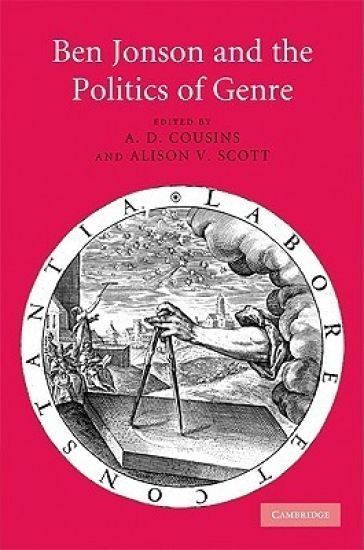
Ben Jonson and the Politics of Genre

Ben Jonson and the Politics of Genre

Cambridge University Press
2009
sidottu
While Ben Jonson's political visions have been well documented, this study was the first to consider how he threaded his views into the various literary genres in which he wrote. For Jonson, these genres were interactive and mutually affirming, necessary for negotiating the tempestuous politics of early modern society, and here some of the most renowned Jonson scholars provide a collection of essays that discuss his use of genre. They present perspectives on many of Jonson's major works, from his epigrams and epistles, through to his Roman tragedies and satirical plays like Volpone. Other topics examined include Jonson's diverse representations of monarchy, his ambiguous celebrations of European commonwealths, his sexual politics, and his engagement with the issues of republicanism. These essays represent the forefront of critical thinking on Ben Jonson, and offer a reassessment of the author's political life in Jacobean and Caroline Britain.
Ben Jonson and Envy

Ben Jonson and Envy

Lynn S. Meskill

Cambridge University Press
2009
sidottu
In the early modern period, envy was often represented iconographically in the image of the Medusa, with snaky locks and a poisonous gaze. Ben Jonson and Envy investigates the importance of envy to Jonson's imagination, showing that he perceived spectators and readers as filled with envy, and created strategies to defend his work from their distorting and potentially 'deadly' gaze. Drawing on historical and anthropological studies of evil eye beliefs, this study focuses on the authorial imperative to charm and baffle ritualistically the eye of the implied spectator or reader, in order to protect his works from defacement. Comparing the exchange between authors and readers to social relations, the book illuminates the way in which the literary may be seen to be informed by popular culture. Ben Jonson and Envy tackles a previously overlooked, but vital, aspect of Jonson's poetics.
Ben Jonson and Possessive Authorship

Ben Jonson and Possessive Authorship

Joseph Loewenstein

Cambridge University Press
2002
sidottu
What is the history of authorship, of invention, of intellectual property? Joseph Loewenstein describes the fragmentary and eruptive emergence of a key phase of the bibliographical ego, a specifically Early Modern form of authorial identification with printed writing. In the work of many playwrights and non-dramatic writers - and especially that of Ben Jonson - that identification is tinged, remarkably, with possessiveness. This 2002 book examines the emergence of possessive authorship within a complex industrial and cultural field. It traces the prehistory of modern copyright both within the monopolistic practices of London's acting troupes and its Stationers' Company and within a Renaissance cultural heritage. Under the pressures of modern competition, a tradition of literary, artistic and technological imitation began to fissure, unleashing jealous accusations of plagiarism and ingenious new fantasies of intellectual privacy. Perhaps no-one was more creatively attuned to this momentous transformation in Early Modern intellectual life than Ben Jonson.
Ben Jonson, Volpone and the Gunpowder Plot

Ben Jonson, Volpone and the Gunpowder Plot

Richard Dutton

Cambridge University Press
2008
sidottu
Ben Jonson's Volpone is the most widely taught and commonly performed English Renaissance play outside of Shakespeare. However, the dramatic circumstances of its writing are little known. Jonson wrote the play very shortly after the Gunpowder Plot in 1605, an event in which he was personally involved. This book argues that the play alludes to the plot as openly as censorship will allow, using the traditional form of the beast fable. As a Roman Catholic himself, Jonson shared in the repression suffered by his co-religionists in the wake of the Plot, and the play fiercely satirizes the man they chiefly blamed for this, Robert Cecil. The elaborate format which Jonson devised for the 1607 edition of Volpone, with a dedication, Epistle and numerous commendatory poems, is reproduced here photographically, allowing the reader to appreciate Jonson's covert meanings and to approach the text as those in 1607 might have done.
Ben Jonson in Context

Ben Jonson in Context

Cambridge University Press
2010
sidottu
Bringing together a group of established and emergent Jonson scholars, this volume reacts to major advances in thinking about the writer and his canon of works. The study is divided into two distinct parts: the first considers the Jonsonian career and output from biographical, critical, and performance-based angles; the second looks at cultural and historical contexts building on rich interdisciplinary work. Social historians work alongside literary critics to provide a diverse and varied account of Jonson. These are less standard surveys of the field than vibrant interventions into current critical debates. The short-essay format of the collection seeks less to harmonize and homogenize than to raise awareness of new avenues of research on Jonson, including studies informed by book history, cultural geography, the law and legal discourse, the history of science and interests in material culture.