Kirjojen hintavertailu. Mukana 11 627 220 kirjaa ja 12 kauppaa.

Kirjahaku

Etsi kirjoja tekijän nimen, kirjan nimen tai ISBN:n perusteella.

1000 tulosta hakusanalla Benjamin Walters

Mikhail Bakhtin and Walter Benjamin

Mikhail Bakhtin and Walter Benjamin

T. Beasley-Murray

Palgrave Macmillan
2007
sidottu
This first comparative study of the philosophers and literary critics, Walter Benjamin and Mikhail Bakhtin, focuses on the two thinkers' conceptions of experience and form, investigating parallels between Bakhtin's theories of responsibility, dialogue, and the novel, and Benjamin's theories of translation, montage, allegory, and the aura.
The Actuality of Walter Benjamin

The Actuality of Walter Benjamin

Laura Marcus; Lynda Nead

Lawrence Wishart Ltd
1998
nidottu
This collection of essays concentrates on the work of Walter Benjamin. Topics covered include: the question of historical understanding versus historicism; Benjamin and the sources of Judaism; feminism and cultural analysis; and images in Benjamin's novels and other writings.
Mikhail Bakhtin and Walter Benjamin

Mikhail Bakhtin and Walter Benjamin

T. Beasley-Murray

Palgrave Macmillan
2007
nidottu
This first comparative study of the philosophers and literary critics, Walter Benjamin and Mikhail Bakhtin, focuses on the two thinkers' conceptions of experience and form, investigating parallels between Bakhtin's theories of responsibility, dialogue, and the novel, and Benjamin's theories of translation, montage, allegory, and the aura.
An Analysis of Walter Benjamin's The Work of Art in the Age of Mechanical Reproduction
The Work of Art in the Age of Mechanical Reproduction combats traditional art criticism’s treatment of artworks as fixed, unchanging mystical objects. For Walter Benjamin, the consequences of addressing a work of art in this manner have a wider resonance: closed off from any active visual or tactile engagement, the work of art becomes an object of passive contemplation and a potential tool of oppression.Benjamin argues that technology has fundamentally altered the way art is experienced. Potentially open to interpretation and accessible to many, art in the age of mechanical reproduction has the potential to be mobilized for radical purposes. While ostensibly addressing the artistic consequences of technical reproducibility on art, Benjamin also addresses the wider political consequences of this shift.
An Analysis of Walter Benjamin's The Work of Art in the Age of Mechanical Reproduction
The Work of Art in the Age of Mechanical Reproduction combats traditional art criticism’s treatment of artworks as fixed, unchanging mystical objects. For Walter Benjamin, the consequences of addressing a work of art in this manner have a wider resonance: closed off from any active visual or tactile engagement, the work of art becomes an object of passive contemplation and a potential tool of oppression.Benjamin argues that technology has fundamentally altered the way art is experienced. Potentially open to interpretation and accessible to many, art in the age of mechanical reproduction has the potential to be mobilized for radical purposes. While ostensibly addressing the artistic consequences of technical reproducibility on art, Benjamin also addresses the wider political consequences of this shift.
Das Denkbild Bei Walter Benjamin

Das Denkbild Bei Walter Benjamin

Britta Leifeld

Peter Lang AG
2000
nidottu
Benjamins Denkbild-Begriff ist nur im Wechselspiel eines historischen, philosophischen und gattungsgeschichtlichen Zugriffs darzulegen. Das Denkbild als literarischer Typus durchzieht sein Gesamtwerk und bietet dabei stets erkenntnistheoretische Qualitat. Die Texte veranschaulichen private, subjektive, zumeist triviale Ereignisse, die blitzartig, auratisch hervortreten und eine Bedeutung gegen die Konvention erhalten, die Benjamin glaubwurdig und zitierbar in einem Zeitalter macht, das alles, was nicht polysemantisch ist, von vornherein in Frage stellt. Paradoxal und dialektisch wie die Denkbilder sind, zugleich intuitiv und mystisch, werden ihnen rationale Einsichten gegenubergestellt, um sie derart erfahrbar zu machen. Ausgewahlte Beispiele werden analysiert, theoretische Konzepte an den Denkbildern literarisch erprobt und Form wird am Inhalt gemessen.
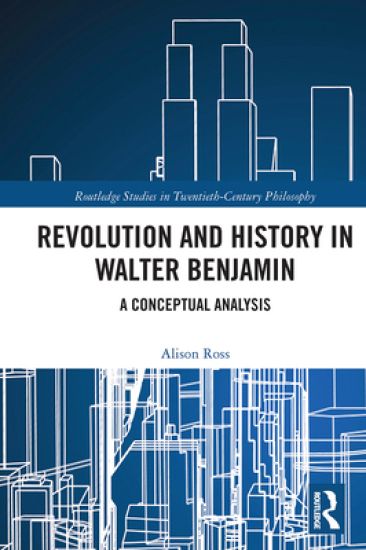
Revolution and History in Walter Benjamin
This book places Benjamin’s writing on revolution in the context of his conception of historical knowledge. The fundamental problem that faces any analysis of Benjamin’s approach to revolution is that he deploys notions that belong to the domain of individual experience. His theory of modernity with its emphasis on the disintegration of collective experience further aggravates the problem. Benjamin himself understood the problem of revolution to be primarily that of the conceptualization of collective experience (its possibility and sites) under the conditions of modern bourgeois society. The novelty of his approach to revolution lies in the fact that he directly connects it with historical experience. Benjamin’s conception of revolution thus constitutes an integral part of his distinctive theory of historical knowledge, which is also essentially a theory of experience. Through a detailed study of Benjamin’s writings on the topics of the child and the dream, and an analysis of his ideas of history, the fulfilled wish, similitude and communist society, this book shows how the conceptual analysis of his corpus can get to the heart of Benjamin’s conception of revolutionary experience and distil its difficulties and mechanisms.
Revolution and History in Walter Benjamin
This book places Benjamin’s writing on revolution in the context of his conception of historical knowledge. The fundamental problem that faces any analysis of Benjamin’s approach to revolution is that he deploys notions that belong to the domain of individual experience. His theory of modernity with its emphasis on the disintegration of collective experience further aggravates the problem. Benjamin himself understood the problem of revolution to be primarily that of the conceptualization of collective experience (its possibility and sites) under the conditions of modern bourgeois society. The novelty of his approach to revolution lies in the fact that he directly connects it with historical experience. Benjamin’s conception of revolution thus constitutes an integral part of his distinctive theory of historical knowledge, which is also essentially a theory of experience. Through a detailed study of Benjamin’s writings on the topics of the child and the dream, and an analysis of his ideas of history, the fulfilled wish, similitude and communist society, this book shows how the conceptual analysis of his corpus can get to the heart of Benjamin’s conception of revolutionary experience and distil its difficulties and mechanisms.
The Cambridge Introduction to Walter Benjamin

The Cambridge Introduction to Walter Benjamin

David S. Ferris

Cambridge University Press
2008
pokkari
For students of modern criticism and theory, Walter Benjamin's writings have become essential reading. His analyses of photography, film, language, history, allegory, material culture, the poet Charles Baudelaire, and his vast examination of the social, political and historical significance of the Arcades of nineteenth-century Paris have left an enduring and important critical legacy. This volume examines in detail a substantial selection of his important critical writings on these topics from 1916 to 1940 and outlines his life in pre-war Germany, his association with the Frankfurt School, and the dissemination of his ideas and methodologies into a variety of academic disciplines since his death. David Ferris traces the development of Benjamin's key critical concepts and provides students with an accessible overview of the life, work and thought of one of the twentieth-century's most important literary and cultural critics.
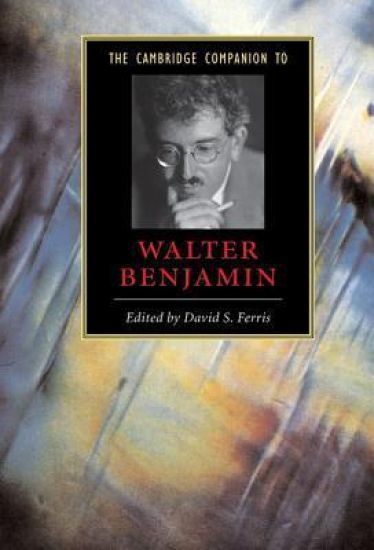
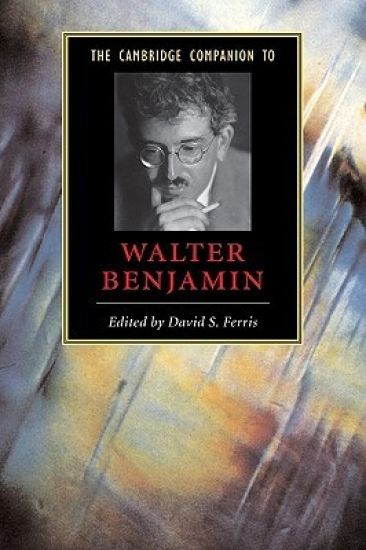
The Cambridge Companion to Walter Benjamin
This Companion offers a comprehensive introduction to the work and thought of the highly influential twentieth-century critic and theorist Walter Benjamin. The volume provides examinations of the different aspects of Benjamin's work that have had a significant effect on contemporary critical and historical thought. Topics discussed by experts in the field include Benjamin's relation to the avant-garde movements of his time, the form of the work of art, his theories on language and mimesis, modernity, his relation to Brecht and the Frankfurt School, his significance and relevance to modern cultural studies, his formative interpretation of Romanticism, and his autobiographical writings. The volume is aimed at readers who may be coming to Benjamin for the first time or who have some knowledge of Benjamin but would like to know more about the issues and concepts central to his work. Additional material includes a guide to further reading and a chronology.
The Cambridge Introduction to Walter Benjamin

The Cambridge Introduction to Walter Benjamin

David S. Ferris

Cambridge University Press
2008
sidottu
For students of modern criticism and theory, Walter Benjamin's writings have become essential reading. His analyses of photography, film, language, history, allegory, material culture, the poet Charles Baudelaire, and his vast examination of the social, political and historical significance of the Arcades of nineteenth-century Paris have left an enduring and important critical legacy. This volume examines in detail a substantial selection of his important critical writings on these topics from 1916 to 1940 and outlines his life in pre-war Germany, his association with the Frankfurt School, and the dissemination of his ideas and methodologies into a variety of academic disciplines since his death. David Ferris traces the development of Benjamin's key critical concepts and provides students with an accessible overview of the life, work and thought of one of the twentieth-century's most important literary and cultural critics.
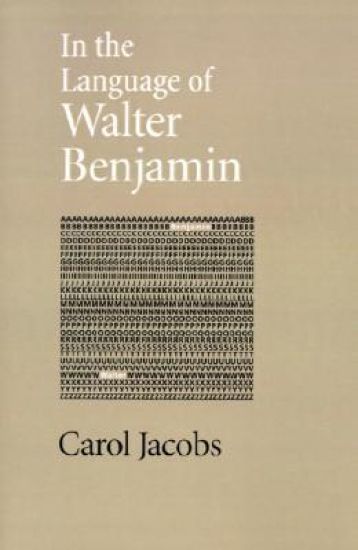
In the Language of Walter Benjamin

In the Language of Walter Benjamin

Carol Jacobs

Johns Hopkins University Press
2000
pokkari
If Walter Benjamin (with an irony that belies his seemingly tragic life) is now recognized as one of the century's most important writers, reading him is no easy matter. Benjamin opens one of his most notable essays, "The Task of the Translator", with the words "No poem is intended for the reader, no image for the beholder, no symphony for the listener". How does one read an author who tells us that writing does not communicate very much to the reader? How does one learn to regard what comes to us from Benjamin as something other than direct expression? Carol Jacobs' In the Language of Walter Benjamin is an attempt to come to terms with this predicament. It does so by teasing out such guidelines for criticism as Benjamin seems to offer in The Origin of German Tragic Drama. Jacobs reminds us of Benjamin's distinction between truth and knowledge. She above all insists on his method of philosophical contemplation as performance, on a performance that demands precise immersion in the minute details of subject matter.