Dieser Buchtitel ist Teil des Digitalisierungsprojekts Springer Book Archives mit Publikationen, die seit den Anfängen des Verlags von 1842 erschienen sind. Der Verlag stellt mit diesem Archiv Quellen für die historische wie auch die disziplingeschichtliche Forschung zur Verfügung, die jeweils im historischen Kontext betrachtet werden müssen. Dieser Titel erschien in der Zeit vor 1945 und wird daher in seiner zeittypischen politisch-ideologischen Ausrichtung vom Verlag nicht beworben.
Previous works on Confederate brigadier general Harry T. Hays's First Louisiana Brigade -- better known as the ""Louisiana Tigers"" -- have tended to focus on just one day of the Tigers' service -- their role in attacking East Cemetery Hill at Gettysburg on July 2, 1863 -- and have touched only lightly on the brigade's role at the Second Battle of Winchester, an important prelude to Gettysburg. In this commanding study, Scott L. Mingus, Sr., offers the first significant detailed exploration of the Louisiana Tigers during the entirety of the 1863 Gettysburg Campaign. Mingus begins by providing a sweeping history of the Louisiana Tigers; their predecessors, Wheat's Tigers; the organizational structure and leadership of the brigade in 1863; and the personnel that made up its ranks. Covering the Tigers' movements and battle actions in depth, he then turns to the brigade's march into the Shenandoah Valley and the Tigers' key role in defeating the Federal army at the Second Battle of Winchester. Combining soldiers' reminiscences with contemporary civilian accounts, Mingus breaks new ground by detailing the Tigers' march into Pennsylvania, their first trip to Gettysburg in the week before the battle, their two-day occupation of York, Pennsylvania -- the largest northern town to fall to the Confederate army -- and their march back to Gettysburg. He offers the first full-scale discussion of the Tigers' interaction with the local population during their invasion of Pennsylvania and includes detailed accounts of the citizens' reactions to the Tigers -- many not published since appearing in local newspapers over a century ago.Mingus explores the Tigers' actions on the first two days of the Battle of Gettysburg and meticulously recounts their famed assault on East Cemetery Hill, one of the pivotal moments of the battle. He closes with the Tigers' withdrawal from Gettysburg and their retreat into Virginia. Appendices include an order of battle for East Cemetery Hill, a recap of the weather during the entire Gettysburg Campaign, a day-by-day chronology of the Tigers' movements and campsites, and the text of the official reports from General Hays for Second Winchester and Gettysburg. Comprehensive and engaging, Mingus's exhaustive work constitutes the definitive account of General Hays's remarkable brigade during the critical summer of 1863.
Previous works on Confederate brigadier general Harry T. Hays's First Louisiana Brigade -- better known as the ""Louisiana Tigers"" -- have tended to focus on just one day of the Tigers' service -- their role in attacking East Cemetery Hill at Gettysburg on July 2, 1863 -- and have touched only lightly on the brigade's role at the Second Battle of Winchester, an important prelude to Gettysburg. In this commanding study, Scott L. Mingus, Sr., offers the first significant detailed exploration of the Louisiana Tigers during the entirety of the 1863 Gettysburg Campaign. Mingus begins by providing a sweeping history of the Louisiana Tigers; their predecessors, Wheat's Tigers; the organizational structure and leadership of the brigade in 1863; and the personnel that made up its ranks. Covering the Tigers' movements and battle actions in depth, he then turns to the brigade's march into the Shenandoah Valley and the Tigers' key role in defeating the Federal army at the Second Battle of Winchester. Combining soldiers' reminiscences with contemporary civilian accounts, Mingus breaks new ground by detailing the Tigers' march into Pennsylvania, their first trip to Gettysburg in the week before the battle, their two-day occupation of York, Pennsylvania -- the largest northern town to fall to the Confederate army -- and their march back to Gettysburg. He offers the first full-scale discussion of the Tigers' interaction with the local population during their invasion of Pennsylvania and includes detailed accounts of the citizens' reactions to the Tigers -- many not published since appearing in local newspapers over a century ago.Mingus explores the Tigers' actions on the first two days of the Battle of Gettysburg and meticulously recounts their famed assault on East Cemetery Hill, one of the pivotal moments of the battle. He closes with the Tigers' withdrawal from Gettysburg and their retreat into Virginia. Appendices include an order of battle for East Cemetery Hill, a recap of the weather during the entire Gettysburg Campaign, a day-by-day chronology of the Tigers' movements and campsites, and the text of the official reports from General Hays for Second Winchester and Gettysburg. Comprehensive and engaging, Mingus's exhaustive work constitutes the definitive account of General Hays's remarkable brigade during the critical summer of 1863.
Instituting policies to manage or reduce GHGs would likely impact different states differently. Understanding these differences may provide for a more informed debate regarding potential policy approaches. However, multiple factors play a role in determining impacts, including alternative design elements of a GHG emissions reduction program, the availability and relative cost of mitigation options, and the regulated entities' abilities to pass compliance costs on to consumers. Three primary variables drive a state's human-related greenhouse gas (GHG) emission levels: population, per capita income, and the GHG emissions intensity. GHG emissions intensity is a performance measure. In this book, GHG intensity is a measure of GHG emissions from sources within a state compared with a state's economic output (gross state product, GSP). The GHG emissions intensity driver stands apart as the main target for climate change mitigation policy, because public policy generally considers population and income growth to be socially positive. The intensity of carbon dioxide (CO2) emissions largely determines overall GHG intensity, because CO2 emissions account for 85% of the GHG emissions in the United States. As 98% of U.S. CO2 emissions are energy-related, the primary factors that shape CO2 emissions intensity are a state's energy intensity and the carbon content of its energy use. Energy intensity measures the amount of energy a state uses to generate its overall economic output (measured by its GSP). Several underlying factors may impact a state's energy intensity: a state's economic structure, personal transportation use in a state (measured in vehicle miles travelled per person), and public policies regarding energy efficiency. The carbon content of energy use in a state is determined by a state's portfolio of energy sources. States that utilise a high percentage of coal, for example, will have a relatively high carbon content of energy use, compared to states with a lower dependence on coal. An additional factor is whether a state is a net exporter or importer of electricity, because CO2 emissions are attributed to electricity-producing states, but the electricity is used (and counted) in the consuming state. Between 1990 and 2000, the United States reduced its GHG intensity by 1.6% annually. Assuming that population and per capita income continue to grow as expected, the United States would need to reduce its GHG intensity at the rate of 3% per year in order to halt the annual growth in GHG emissions. Therefore, achieving reductions (or negative growth) in GHG emissions would necessitate further declines in GHG intensity.
In Religion and the Struggle for European Union, Brent F. Nelsen and James L. Guth delve into the powerful role of religion in shaping European attitudes on politics, political integration, and the national and continental identities of its leaders and citizens. Nelsen and Guth contend that for centuries Catholicism promoted the universality of the Church and the essential unity of Christendom. Protestantism, by contrast, esteemed particularity and feared Catholic dominance. These differing visions of Europe have influenced the process of postwar integration in profound ways. Nelsen and Guth compare the Catholic view of Europe as a single cultural entity best governed as a unified polity against traditional Protestant estrangement from continental culture and its preference for pragmatic cooperation over the sacrifice of sovereignty. As the authors show, this deep cultural divide, rooted in the struggles of the Reformation, resists the ongoing secularization of the continent. Unless addressed, it threatens decades of hard-won gains in security and prosperity. Farsighted and rich with data, Religion and the Struggle for European Union offers a pragmatic way forward in the EU's attempts to solve its social, economic, and political crises.
In Religion and the Struggle for European Union, Brent F. Nelsen and James L. Guth delve into the powerful role of religion in shaping European attitudes on politics, political integration, and the national and continental identities of its leaders and citizens. Nelsen and Guth contend that for centuries Catholicism promoted the universality of the Church and the essential unity of Christendom. Protestantism, by contrast, esteemed particularity and feared Catholic dominance. These differing visions of Europe have influenced the process of postwar integration in profound ways. Nelsen and Guth compare the Catholic view of Europe as a single cultural entity best governed as a unified polity against traditional Protestant estrangement from continental culture and its preference for pragmatic cooperation over the sacrifice of sovereignty. As the authors show, this deep cultural divide, rooted in the struggles of the Reformation, resists the ongoing secularization of the continent. Unless addressed, it threatens decades of hard-won gains in security and prosperity. Farsighted and rich with data, Religion and the Struggle for European Union offers a pragmatic way forward in the EU's attempts to solve its social, economic, and political crises.
James L. Furrow; Susan M. Johnson; Brent Bradley; Lorrie Brubacher; T. Leanne Campbell; Veronica Kallos-Lilly; Gail Palmer; Kathryn Rheem; Scott Woolley
This second edition of Becoming an Emotionally Focused Therapist: The Workbook has been fully revised by expert therapists with advances in attachment science and emotionally focused therapy (EFT) practice, the integration of the "EFT Tango"—a guide to the EFT process—and new chapters on working with both individuals and families.Suitable as a companion volume to The Practice of Emotionally Focused Couple Therapy or as a standalone learning tool, it provides an easy road-map toward mastering the ins and outs of EFT with practice exercises, review questions, and compelling clinical examples.Invaluable for clinicians and students, this workbook takes the reader on an adventure: the quest to become a competent, confident, and passionate emotionally focused therapist.
James L. Furrow; Susan M. Johnson; Brent Bradley; Lorrie Brubacher; T. Leanne Campbell; Veronica Kallos-Lilly; Gail Palmer; Kathryn Rheem; Scott Woolley
This second edition of Becoming an Emotionally Focused Therapist: The Workbook has been fully revised by expert therapists with advances in attachment science and emotionally focused therapy (EFT) practice, the integration of the "EFT Tango"—a guide to the EFT process—and new chapters on working with both individuals and families.Suitable as a companion volume to The Practice of Emotionally Focused Couple Therapy or as a standalone learning tool, it provides an easy road-map toward mastering the ins and outs of EFT with practice exercises, review questions, and compelling clinical examples.Invaluable for clinicians and students, this workbook takes the reader on an adventure: the quest to become a competent, confident, and passionate emotionally focused therapist.
We developed the first edition of this book because we perceived a need for a compilation on study design with application to studies of the ecology, conser- tion, and management of wildlife. We felt that the need for coverage of study design in one source was strong, and although a few books and monographs existed on some of the topics that we covered, no single work attempted to synthesize the many facets of wildlife study design. We decided to develop this second edition because our original goal – synthesis of study design – remains strong, and because we each gathered a substantial body of new material with which we could update and expand each chapter. Several of us also used the first edition as the basis for workshops and graduate teaching, which provided us with many valuable suggestions from readers on how to improve the text. In particular, Morrison received a detailed review from the graduate s- dents in his “Wildlife Study Design” course at Texas A&M University. We also paid heed to the reviews of the first edition that appeared in the literature.
We developed the first edition of this book because we perceived a need for a compilation on study design with application to studies of the ecology, conser- tion, and management of wildlife. We felt that the need for coverage of study design in one source was strong, and although a few books and monographs existed on some of the topics that we covered, no single work attempted to synthesize the many facets of wildlife study design. We decided to develop this second edition because our original goal – synthesis of study design – remains strong, and because we each gathered a substantial body of new material with which we could update and expand each chapter. Several of us also used the first edition as the basis for workshops and graduate teaching, which provided us with many valuable suggestions from readers on how to improve the text. In particular, Morrison received a detailed review from the graduate s- dents in his “Wildlife Study Design” course at Texas A&M University. We also paid heed to the reviews of the first edition that appeared in the literature.
Christopher L. Bell; Andrew Davis; Duke K. McCall; Thomas Richichi; Daniel M. Steinway; Kevin A. Ewing; Jean Warshaw; Peggy Otum; Ann Navaro; Mark L. Manewitz; John Surma; Brent Rosser
The environmental field and its regulations have evolved significantly since Congress passed the first environmental law in 1970, and the Environmental Law Handbook, published just three years later, has been indispensable to students and professionals ever since. The authors provide clear and accessible explanations, expert legal insight into new and evolving regulations, and reliable compliance and management guidance.The Environmental Law Handbook continues to provide individuals across the country—professionals, professors, and students—with a comprehensive, up-to-date, and easy-to-read look at the major environmental, health, and safety laws affecting U.S. businesses and organizations. Because it is written by the country's leading environmental law firms, it provides the best, most reliable guidance anywhere. Both professional environmental managers and students aspiring to careers in environmental management should keep the Environmental Law Handbook within arm's reach for thoughtful answers to regulatory questions like:How do I ensure compliance with the regulations?How do the latest environmental developments impact my operations?How do we keep our operations efficient and our community safe?The Handbook begins with chapters on the fundamentals of environmental law and on issues of enforcement and liability. It then dives headfirst into the major laws, examining their history, scope, and requirements with a chapter devoted to each. The 25th edition of this well-known Handbook has been thoroughly updated, covering major changes to the law and enforcement in the areas of Clean Air, Clean Water, Climate Change, Oil Pollution, and Pollution Prevention. This is an essential reference for environmental students and professionals, and anyone who wants the most up-to-date information available on environmental laws.
Melissa L Finucane; Aaron Clark-Ginsberg; Andrew M Parker; Alejandro U Becerra-Ornelas; Noreen Clancy; Rajeev Ramchand; Tim Slack; Vanessa Parks; Lynsay Ayer; Amanda F Edelman; Elizabeth L Petrun Sayers; Shanthi Nataraj; Craig A Bond; Amy E Lesen; Regardt J Ferreira; Leah Drakeford; Jacqueline Fiore; Margaret M Weden; K Brent Venable; A Barrie Black
L. Ala-Ketola; G. Benz-Bohm; A. Breit; K. Fochem; M. Forss; P. Grotemeyer; A. Kauppila; K. Kiviniitty; A. Kratochwil; J. Lissner; T. Mattsson; W. Platzer; U. Rohde; U. Scherer; C.-E. Unnérus; P. Vuoria; E. Willich
Mit den von anerkannten Sachkennern der Radiologie und der Frauenheilkunde erarbei- teten Beitragen fUr den Band XIII/2 des Handbuches der medizinischen Radiologie konnten erstmals in der Weltliteratur umfassende Zusammenstellungen des gesamten Wissensstof- fes auf dem Gebiet der gynakologischen Radiologie und der radiologisch-geburtshilflichen Diagnostik vorgelegt werden. Die Methodik und den Informationswert der Hysterosalpingographie hat FOCHEM abgehandeIt und gestiitzt auf die fundierten Ergebnisse eigener Arbeit, in klar gegliederten Kapiteln die morphologischen Rontgenbefunde des gesunden und kranken Uterus und der Tuben erlautert. Mit dem Beitrag tiber die gynakologische Rontgendiagnostik in der Padiatrie haben BENZ und WILLICH eine vollstandige Ubersicht der Ergebnisse ihres noch wenig bekannten Forschungsgebietes gegeben, das fUr viele Fachgebiete der Medizin groBe praktische Bedeutung erlangt hat. Die methodischen Grundlagen und den Informationswert der radiologischen Spezial- diagnostik in der Gynakologie haben GROTEMEYER und BREIT zusammengestellt. Einen grundlegenden Beitrag zur Anatomie und Topographie der Organe des weiblichen Bek- kens im Hinblick auf die Rontgen-Ganzkorper-Computer-Tomographie verdanken wir PLATZER, der das Fundament fUr die Bildanalyse dieser neuartigen diagnostischen Me- thode erarbeitet hat. Die spezielle Rontgendiagnostik der gynakologischen Tumoren mit Hilfe der Angio- graphie und Rontgen-Ganzkorper-Computer-Tomographie haben BREIT und ROHDE ab- gehandelt. In besonderen Kapiteln ist die oft vernachlassigte Rezidivdiagnostik bei Ge- schwiilsten von BREIT sowie LISSNER und SCHERER bearbeitet worden. Gestiitzt auf eigene Forschungs- und Entwicklungsarbeit geben die Autoren eine umfassende Ubersicht und berticksichtigen die wertvollen diagnostischen Informationen, die heute mit Hilfe der Rontgen-Ganzkorper-Computer-Tomographie fUr die klinische Arbeit zur VerfUgung stehen.
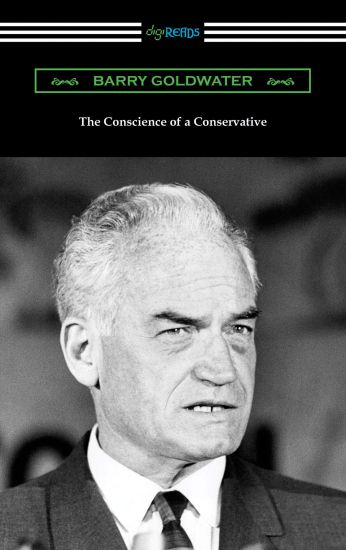
Published in 1960 under the name of Arizona Senator Barry Goldwater, "The Conscience of a Conservative" is a widely influential and important book on the American conservative political movement. While the book was published under Goldwater's name, it was ghostwritten by L. Brent Bozell Jr., the brother-in-law of William F. Buckley and Goldwater's speech writer in the 1950s. The book was instantly popular and catapulted Goldwater, a Senator from Arizona when the book was published, into the national spotlight and helped him became the Republican nominee for President in 1964. Bozell's concise and thorough work details the conservative social and political positions on topics including education, labor unions, taxation, farming and agriculture policies, and civil rights. The book reignited the conservative movement and led to the rise of Reagan-style Republicanism in the 1980s. "The Conscience of a Conservative" defines what it means to be a modern political conservative in a way that is very accessible and understandable and continues to influence American political writers to this day. It remains an essential read for any student of political science and post-war American political history. This edition is printed on premium acid-free paper.
Die Literatur über die pharmakologischen Wirkungen und klinische Anwendung der Amphetamine ist in den letzten zwei Jahrzehnten so reichhaltig geworden (und wächst immer weiter an), daß es für den von seiner Praxis in Anspruch genommenen Arzt schwierig geworden ist, über die wirklich wichtigen Entwicklungen auf dem laufenden zu bleiben. Dieses kleine Buch erhebt nicht den Anspruch, die Literatur bis zum heutigen Tage Juckenlos darzustellen. Es soll lediglich dem praktischen Arzt als Leitfaden dienen, wann und wann nicht und in welcher Dosierung er dieses wirklich wertvolle, aber häufig falsch verwendete Arzneimittel verordnen soll. Es beruht weitgehend auf persönlichen Erfahrungen, die durch entsprechende Mitteilungen aus neueren Publikationen ergänzt wurden. Die Autoren Dezember 1954 Inhaltsverzeichnis Seite Kapitel I Historische Einleitung 1 Kapitel II Pharmakologie 7 Kapitel III Fettleibigkeit 14 Kapitel IV Ermüdungszustände und Depressionen 30 Kapitel V Narkolepsie . 35 Kapitel VI Alkoholismus und Arzneimittelsucht 38 Kapitel VII Barbitursäure-Vergiftungen 44 Kapitel VIII Psychopathische Zustände 49 Kapitel IX Enuresis und andere Verhaltensstörungen im Kindesalter . 55 Autoren-und Sachverzeichnis 61 Kapitel I HISTORISCHE EINLEITUNG Von W. R. BETT Die Geschichte der Amphetamine beginnt im Jahre 1887, als L. EDELEANO zuerst das flüchtige Amino-ß-phenylisopropylamin 1 (Amphetamin) aus der Phenylmethylacrylsäure darstellte . Im Jahre 1910 beschrieben GEoRGE BARGER u. H. H. (jetzt Sir HENRY) 2 DALE , die in den physiologischen Forschungslaboratorien von Wellcome über aromatische Amine arbeiteten, eine Serie ähnlicher Stoffe, die sie "Sympathomimetika" nannten. In den nächsten 17 Jahren konzentrierte sich das Interesse der Forscher auf Ephe drin.
When technology has been applied in business environments, its justification has usually been cast in terms of saving time or saving money. In the social sciences, the justification must be different; the viability of sociology as a profession, for example, will not be enhanced by cost reductions. The focus in this volume is on a different bottom line: the quality and content of work.