Constructive Conflicts explains how large-scale conflicts—such as clashes between different ideological, religious, ethnic, and racial groups; civil wars; labor-management struggles; and public policy disputes—can be waged more constructively, with more positive consequences and fewer destructive consequences for those involved. Drawing on research from political science, sociology, social-psychology, neuroscience, cultural studies, and other disciplines, Dayton and Kriesberg follow the lifecycle of social and political conflicts as they emerge, escalate, de-escalate, become settled, and often emerge again in new forms. Throughout the book the authors present examples of conflict episodes that have avoided extreme coercion or violence and which have resulted in the advancement of the interests of most parties involved. The book gives policymakers, concerned citizens, and students a powerful analytical framework, supported by data, for understanding and constructively intervening in conflicts of different type and scale, offering a way out of the destructive cycles of conflict management which have come to characterize contemporary social and political relations.The sixth edition pays increased attention to changes in the social and political landscape including the rise of nationalism, the erosion of liberal internationalism, conflicts related to COVID response, political polarization, and the Black Lives Matter movement. Additionally, the growth of ‘bottom-up’ strategies for peace and conflict management, the rise of misinformation in a ‘post-truth’ era, and insights from neuroscience all inform this major revision. This edition is also supplemented with end-of-chapter critical reflections, updated cases and tools for conflict analysis, and ancillary teaching materials, including experiential exercises, simulations, and PowerPoints.
Constructive Conflicts explains how large-scale conflicts—such as clashes between different ideological, religious, ethnic, and racial groups; civil wars; labor-management struggles; and public policy disputes—can be waged more constructively, with more positive consequences and fewer destructive consequences for those involved. Drawing on research from political science, sociology, social-psychology, neuroscience, cultural studies, and other disciplines, Dayton and Kriesberg follow the lifecycle of social and political conflicts as they emerge, escalate, de-escalate, become settled, and often emerge again in new forms. Throughout the book the authors present examples of conflict episodes that have avoided extreme coercion or violence and which have resulted in the advancement of the interests of most parties involved. The book gives policymakers, concerned citizens, and students a powerful analytical framework, supported by data, for understanding and constructively intervening in conflicts of different type and scale, offering a way out of the destructive cycles of conflict management which have come to characterize contemporary social and political relations.The sixth edition pays increased attention to changes in the social and political landscape including the rise of nationalism, the erosion of liberal internationalism, conflicts related to COVID response, political polarization, and the Black Lives Matter movement. Additionally, the growth of ‘bottom-up’ strategies for peace and conflict management, the rise of misinformation in a ‘post-truth’ era, and insights from neuroscience all inform this major revision. This edition is also supplemented with end-of-chapter critical reflections, updated cases and tools for conflict analysis, and ancillary teaching materials, including experiential exercises, simulations, and PowerPoints.
This revised and updated family history traces certain paternal descendants of Caspar St hli, who was born in 1685 in Sigriswil, Switzerland. Members of this Amish-Mennonite family emigrated first to Germany and then to the United States. Hundreds of individuals are included in this history, which covers the years from 1685 to 1986. In its journey from Switzerland to the United States, the family name has been transformed from St hli to Stahly. Family charts, maps, and family photographs are included.
This beautifully designed, full-color textbook introduces the Roman background of the New Testament by immersing students in the life and culture of the thriving first-century towns of Pompeii and Herculaneum, which act as showpieces of the world into which the early Christian movement was spreading. Bruce Longenecker, a leading scholar of the ancient world of the New Testament, discusses first-century artifacts in relation to the life stories of people from the Roman world. The book includes discussion questions, maps, and 175 color photographs. Additional resources are available through Textbook eSources.
Carol and Bruce Hodgins began leading canoe trips in 1957 for Camp Wanapitei on Lake Temagami in Northern Ontario, initially to the great rivers of that region and on into Quebec. Their first venture north of 60 found them on the South Nahanni, soon to be followed by the Coppermine River, and by the 1990s their annual tripping took them to the Soper River on Baffin Island. included with their richly descriptive accounts of wilderness travel with groups of people, are kayak adventures in Baja California, Mexico, and the Queen Charlottes, paddling in and near the Everglades and explorations on Heritage rivers in the Maritimes and along the coast of Newfoundland. Few have personally experienced the breadth of wilderness travel in Canada as have the Hodgins husband-and-wife team. Their fifty years as "paddling partners," a legendary achievement, is a story of shared joys, challenges, triumphs and mishaps, delightfully told and augmented by excerpts from daily logs, historical insights and the tidbits of experience gleaned over the years.
Will Gorlitz: nowhere if not here examines the art, background, and theoretical concerns of contemporary Canadian artist Will Gorlitz. Appreciated especially for his painting and drawing, Gorlitz produces imaginative and highly visual artwork that is further distinguished by its fundamentally restructured and critically extended approach to representational painting. With differing emphases from several contributing writers, this book identifies the contexts, methodologies, and motivations that comprise the artist's practice over the past 25 years. The book is published in conjunction with a major circulating survey exhibition of Gorlitz's work organized by Allan MacKay for the Kitchener-Waterloo Art Gallery in partnership with the Macdonald Stewart Art Centre. Co-published with the Kitchener-Waterloo Art Gallery
Bruce Niedt is a maestro of exquisite imagery and his poems are replete with visual scintillae - "Police strobe lights pierce the haze" - but the moments I love best feature the other senses. Taste: "my mouth is a car wreck of mint." Smell: "coffee fumes climb the stairs." Feel: "arpeggios resonate in your chest." Hearing: a "Coltrane sax solo growling in your ear buds" ... even the lack of sound is memorable: "a broken wind chime." The Bungalow of Colorful Aging is a delicious feast for our senses to savor.-Vince Gotera, Former Editor, North American Review Bruce Niedt's first collection The Bungalow of Colorful Aging is comprised of relatable, well-crafted poems that will speak to the reader. Niedt has a dry wit he turns as often on himself as on things he finds ridiculous or deplorable. These poems are honest and appealing as he contemplates his life and aging.-Marge Piercy, author of On the Way Out, Turn Off the Light and 19 other collections of poetryBruce Niedt's The Bungalow of Colorful Aging fills me with hope and recognition. These poems are thoughtful, playful, but above all deeply human. They make for great reading in a challenging time.- Robert Lee Brewer, Poetry Editor, Writers Digest
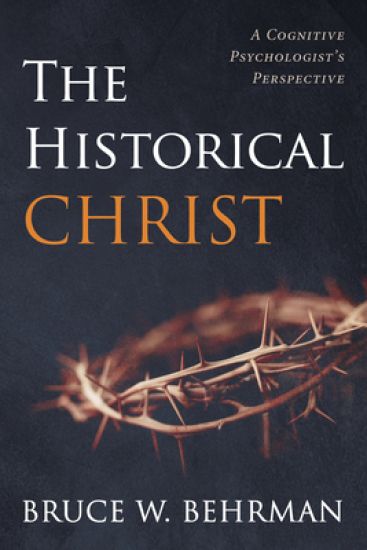
This book uses the recent findings of cognitive and clinical psychology to draw a picture of the historical Jesus. The author uses recent research on conversational memory and clinical psychology in order to shine a light on the way Jesus was. This book argues that Jesus suffered from manic-depressive illness. He identified with God. He suffered from extreme mood changes and felt great compassion towards people. All of these are mental states which may be triggered by manic depression. Manic depression is not a dementing illness. This author is not saying that Jesus suffered from a backward type of psychosis. But manic depression, when manifested in talented persons, acts as a catalyst to trigger artistic creativity. Many great artists and poets have suffered from manic depression: Byron, Schumann, Tennyson, van Gogh, Fitzgerald, and Lowell, to name a few. It is among great poets and artists such as these that the author place the historical Jesus. This book therefore argues that the writers of the Gospels, when they record Jesus as asserting his divinity, were conveying an accurate picture of him. His assertions of divinity were not fabrications of the early church.
This book uses the recent findings of cognitive and clinical psychology to draw a picture of the historical Jesus. The author uses recent research on conversational memory and clinical psychology in order to shine a light on the way Jesus was. This book argues that Jesus suffered from manic-depressive illness. He identified with God. He suffered from extreme mood changes and felt great compassion towards people. All of these are mental states which may be triggered by manic depression. Manic depression is not a dementing illness. This author is not saying that Jesus suffered from a backward type of psychosis. But manic depression, when manifested in talented persons, acts as a catalyst to trigger artistic creativity. Many great artists and poets have suffered from manic depression: Byron, Schumann, Tennyson, van Gogh, Fitzgerald, and Lowell, to name a few. It is among great poets and artists such as these that the author place the historical Jesus. This book therefore argues that the writers of the Gospels, when they record Jesus as asserting his divinity, were conveying an accurate picture of him. His assertions of divinity were not fabrications of the early church.
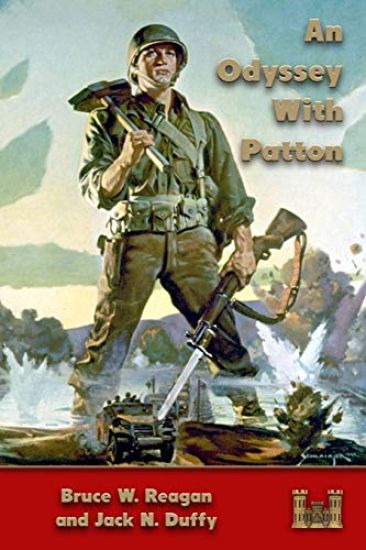
Merriam Press World War 2 History. A Revised History of the 150th Engineer (Combat) Battalion, XII Corps, Third Army, Europe, 1944-1945, by two of the unit's veterans (Reagan was Commanding Officer). Contents: (1) In the Beginning. (2) Joining the War. Appendices: Chronology; Bailey Bridge Across Sarre Was Built in Blood and Sweat; XII Corps and the 150th Engineer Combat Battalion; Bridging Data; The Bailey Bridge; The Crossing of the Rhine River; Annex to Narrative of Engineer Bridging Operations on the Rhine River; Commendations; After Action Reports; Presidential Unit Citation. 51 photos, 2 illustrations, 1 map.
The casebook was designed for four-hour, one-semester courses. It includes introductions that quickly orient students within unfamiliar territories. Cases present both the doctrine applied and, in some instances, the shortcomings of that doctrine. The authors express their disagreement about basic issues, so that students can experience the range of possible views in modern contract law. Contemporary subjects, such as form contracts, the modern concept of unconscionability, the rise of arbitration, and the increasing importance of computers in commercial transactions, are given considerable emphasis.
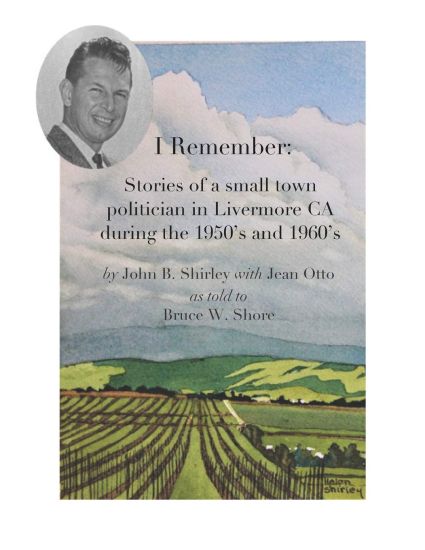
Like many small towns in California, Livermore underwent a rapid change during the last half of the 20th century. The establishment of a National Laboratory there in 1952 was but one part of the shift from a small community centered on ranches and vineyards. John Shirley played an important role in guiding those changes, serving in appointed and then elected offices of the city. Here he tells the story of his involvement with the planning of the community that is today Livermore: the sewers and streets, the Rodeo, the Civic Center, the start of redevelopment that made possible the present downtown.