Kirjojen hintavertailu. Mukana 11 446 929 kirjaa ja 12 kauppaa.

Kirjahaku

Etsi kirjoja tekijän nimen, kirjan nimen tai ISBN:n perusteella.

1000 tulosta hakusanalla Bryan R. Simms

Mid-Atlantic Trout Streams and Their Hatches

Mid-Atlantic Trout Streams and Their Hatches

D. Craig Josephson; Bryan C. Meck; Charles R. Meck

Countryman Press Inc.
1997
nidottu
Each description includes a rating, map, hatch chart, and more. Pennsylvania is world renowned for the quality of its fly-fishing&mdahs;but the state is in danger of being loved to death by its anglers. In this eagerly awaited companion volume to Pennsylvania Trout Streams, Charles Meck offers state anglers—along with those in neighboring New York and New Jersey—descriptions of 43 of his own secret streams. These are spots where you can still find blizzardlike insect hatches and catch wild and stream bred trout—in total solitude.

Current Therapy In Oral and Maxillofacial Surgery

Current Therapy In Oral and Maxillofacial Surgery

Shahrokh C. Bagheri; R. Bryan Bell; Husain Ali Khan

W B Saunders Co Ltd
2011
sidottu
Written by expert surgeons and educators, Current Therapy in Oral and Maxillofacial Surgery covers the latest treatment strategies, surgical techniques, and potential complications in OMS. Emphasizing an evidence-based approach, it covers all 12 subspecialties of OMS, addressing topics from surgical principles to oral surgery, anesthesia, cranio-maxillofacial trauma surgery, head and neck surgery, maxillofacial reconstructive surgery, orthognathic surgery, pediatric craniofacial surgery including cleft lip and palate, temporomandibular joint disorders, facial plastic surgery including rhinoplasty and facelifts, obstructive sleep apnea, and oral and maxillofacial infections. At the end of each chapter, Pearls and Pitfalls summarize the authors' insight, recommendations, and experience on that topic. Editor Dr. Shahrokh Bagheri is a noted professor, researcher, and speaker on OMS, and he leads an expert author team including Dr. R. Bryan Bell and Dr. Husain Ali Khan to help you master and apply the latest advances in OMS. More than 1,200 full-color photos and 200 color line drawings illustrate concepts and provide visual guidance in clinical areas. Comprehensive sections and chapters represent essential topics, the newest advances, and controversial topics. Clinical coverage brings together the latest knowledge in OMS in a concise, easy-to-apply way. Resident-specific coverage describes the wide array of subspecialties and treatments available in the armamentarium of the modern OMS. A focus on complications ensures that you are knowledgeable in this important part of any therapy or surgical discipline. Expert contributors include the "best of the best," featuring leading, well-established, and respected surgeons and educators writing on their areas of specialty and providing current treatment strategies.
Vertical Aid

Vertical Aid

Seth C. Hawkins; R. Bryan Simon; J. Pearce Beissinger; Deb Simon

Countryman Press Inc.
2017
nidottu
Climbing and mountaineering attracts millions of people around the world each year, but produces a unique set of challenges. The threat of danger is ever present, and professional medical help is often far away. Vertical Medicine Resources is a renowned climbing company providing medical training and consultation. In Vertical Aid, they have produced the most complete guide available for managing both emergencies and chronic injuries sustained during climbs. Researched and developed by professional healthcare providers and alpinists, the book includes helpful illustrations of common procedures and best practices, making it a practical and indispensable companion on any climbing, trekking, or alpine trip. It is replete with real-world-tested strategies, evidence-based medicine, and proven techniques. The diverse author team combines an EMS and emergency physician, a nurse, a physician assistant, and a nurse-trainer, who together have a profound depth of climbing, educational, and medical experience. With its unique combination of authoritative medical information and specific attention to the climbing environment, Vertical Aid is poised to become an authoritative resource for every climber, on every climb.
Instant Insights: Cultural and Physical Weed Control Methods

Instant Insights: Cultural and Physical Weed Control Methods

Various Authors; Francisco Skora Neto; Eric R Gallandt; Daniel Brainard; Bryan Brown; Stevan Z Knezevic; Bernhard Streit; Martin V Bauer; Bo Melander; Margaret R McCollough

Burleigh Dodds Science Publishing Limited
2026
nidottu
This book features five peer-reviewed reviews on the range of cultural and physical weed control methods. The first chapter summarises the range of cultural techniques used to control weeds in Conservation Agriculture systems. The chapter also discusses the effects of these practices on weed seedbanks, space occupation, competition for resources and weed population density. The second chapter provides an overview of physical weed control (PWC), focussing on its aims, principles and mechanisms of mortality. The chapter also highlights the influence of tool choice on the efficacy and selectivity of PWC practices. The third chapter reviews flame weeding requirements, the mechanism by which it reduces weeds and the potential uses of the technique. The chapter also considers the advantages and disadvantages of flame weeding, including its potential environmental impacts. The fourth chapter explores the variety of thermal weed control techniques, such as hot water/steam treatment and laser technology. The chapter also evaluates their efficacy, energy consumption and impact on soil health and crop safety. The final chapter highlights recent advancements in mechanical weed control technologies, focussing on novel inventions and the development of mechanical devices for full-width cultivation, inter-row cultivation and intra-row cultivation.
A Preliminary Assessment of the Regionally Aligned Forces (RAF) Concept's Implications for Army Personnel Management

A Preliminary Assessment of the Regionally Aligned Forces (RAF) Concept's Implications for Army Personnel Management

M. Wade Markel; Bryan W. Hallmark; Peter Schirmer; Louay Constant; Jaime L. Hastings; Henry A. Leonard; Kristin J. Leuschner; Lauren A. Mayer; Caolionn O'Connell; Christina Panis; Jose R. Rodriguez; Lisa Saum-Manning; Jonathan Welch

RAND
2015
pokkari
RAND Arroyo Center explored how the U.S. Army might need to adapt its personnel management policies and practices to support the Regionally Aligned Forces concept. Authors estimated the scope and scale of the requirement for regional expertise; modeled the Army s current ability to produce soldiers with the required expertise; and identified changes to the personnel management system to develop and match such soldiers with appropriate positions."
Success Mindsets

Success Mindsets

Alinka Rutkowska; Aaron Poynton; Ankit Andy Mehta; Anjali Sharma; Areva Martin; Arvind Sharma; Bryan Collins; Catherine Bassick; David Kissinger; Deepak Syal; Diana Loomans; Grace Buckler; Hans Keirstead; Jacklyn Ryan; Jermaine S N Tolbert; Jeroen Kraaijenbrink; Jody Steinhauer; J D R Hawkins; J J Herbert; Karl Shaikh; Kermit S Randa; Kirsten Stendevad; Kris Safarova; Lee Murray; Marie Wiese; Michael Oborn; Nedra J Barr; Paul O'Mahony; Raghavan V Venugopal; Randy Green; Rick Orford; Sara Connell; Scott Montgomery

Leaders Press SRL
2022
nidottu
For driven individuals searching for a more positive attitude, Success Mindsets is an anthology highlighting the thought process, attitude and approach to your professional life. The difference between success and failure is how you view a problem. WHAT'S THE NUMBER ONE DRIVER OF A SUCCESS MINDSET? FIND OUT NOW IN THE LATEST MIND-BOGGLING ANTHOLOGY FROM LEADERS PRESS The world prizes success. It rarely shows the effort people make to achieve it. We crave success, but it can seem so unattainable that we assume it's not for us. What if successful business people were to let us in on their secrets? That what separates the adored from the overlooked is mindset. You will come to understand this by reading the brilliant contributors of Success Mindsets. This anthology gathers advice from several dozen exceptional leaders, ranging from CEOs to champions to game-changers. Success Mindsets reveals that many roads lead to success and you must choose the one that suits your concept best. Each chapter in Success Mindsets will reveal methods for developing the right approach for navigating your journey to success. Dive in now to: Understand the mindset of being adaptable in your pursuit of success. Adopt a growth mindset, to value long-term growth over short-term revenue. Utilize your driven mindset to keep advancing your career even as the world turns completely upside down. Study areas of strength and bolster weaknesses through the mindset of lifelong learning. Embrace the mindset of self-compassion to look out for yourself while leading others. Minds are more effective when they are open. You can always adapt your mindset to the situation in pursuit of your goals. What mindset will shepherd you through your professional journey? Change your mind for the better. Order your copy of Success Mindsets today
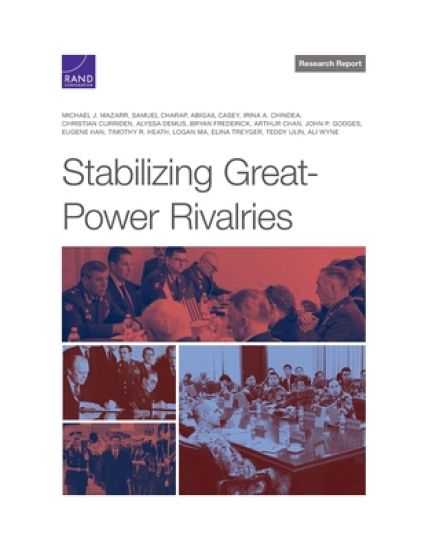
Stabilizing Great-Power Rivalries

Stabilizing Great-Power Rivalries

Michael J Mazarr; Samuel Charap; Abigail Casey; Irina a Chindea; Christian Curriden; Alyssa Demus; Bryan Frederick; Arthur Chan; John P Godges; Eugene Han; Timothy R Heath; Logan Ma; Elina Treyger; Teddy Ulin; Ali Wyne

RAND
2021
nidottu
The international system appears headed for a renewed era of intense competition among major powers. The authors sought to identify the factors that keep such rivalries stable and those that lead to conflictual outcomes. Leveraging theory and historical case studies, the authors created a framework for assessing the stability of a strategic rivalry, then applied it to the current U.S.-Russia and U.S.-China competitions.
Philosophy and the Human Condition: An Anthology

Philosophy and the Human Condition: An Anthology

Brian R. Clack; Tyler Hower

Oxford University Press
2017
nidottu
Philosophy and the Human Condition: An Anthology brings together a rich collection of historically arranged readings on the crucial philosophical problems related to the human condition and human nature. Its contents are drawn from a wide range of sources, including the traditional works of Western philosophers from Plato to the present day; relevant extracts from religious texts; and contributions by women, traditions outside of the western philosophical canon, and other disciplines. Each reading selection is accompanied by an introduction. An extended introduction to philosophy at the beginning of the text addresses each of six principal issues that will be prominent in the reading selections drawn from the history of philosophy--the relation of mind and body; personal immortality; freedom of the will; the question of whether humans are naturally benevolent or naturally brutal; the nature and possibility of human happiness; and philosophical issues relating to race and gender--making the text an ideal all-in-one resource for introductory courses in philosophy.
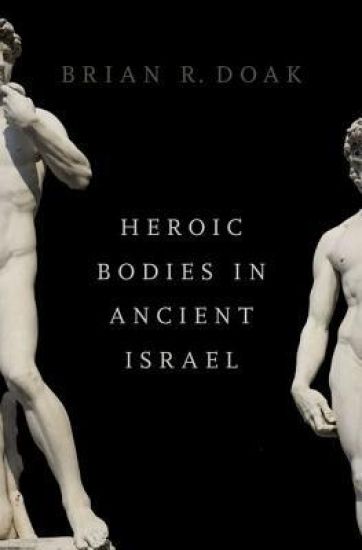
Heroic Bodies in Ancient Israel

Heroic Bodies in Ancient Israel

Brian R. Doak

Oxford University Press Inc
2019
sidottu
Authors from the ancient world rarely used great detail to describe the physical features of characters in their works. When they did mention bodies, they did so with very specific goals in mind. In particular, the bodies of "heroic" figures, such as warriors, kings, and other leaders became loaded sites of meaning for encoding cultural, religious, and political values on a number of fronts. Brian Doak analyzes the way biblical authors described the bodies of some of their most iconic male figures, such as Jacob, the Judges, Saul, and David. These bodies represent not mere individuals-they communicate as national bodies, signaling the ambiguity of Israel's murky pre-history, the division during the period of settlement in the land, and the contest of leading bodies fought between Saul and David. Heroic Bodies in Ancient Israel examines the heroic world of ancient Israel within the Hebrew Bible, and shows that ancient Israelite literature operated within and against a world of heroic ideals in its ancient context. The heroic body tells a story of Israel's remembered history in the eventual making of the monarchy, marking a new kind of individual power. Not merely a textual study of the Hebrew Bible in isolation, this book also considers iconography and compares Israelite literature with other ancient Mediterranean and Near Eastern materials, illustrating Israel's place among a wider construction of heroic bodies.
Ancient Israel's Neighbors

Ancient Israel's Neighbors

Brian R. Doak

Oxford University Press Inc
2020
sidottu
Whether on a national or a personal level, everyone has a complex relationship with their closest neighbors. Where are the borders? How much interaction should there be? How are conflicts solved? Ancient Israel was one of several small nations clustered in the eastern Mediterranean region between the large empires of Egypt and Mesopotamia in antiquity. Frequently mentioned in the Bible, these other small nations are seldom the focus of the narrative unless they interact with Israel. The ancient Israelites who produced the Hebrew Bible lived within a rich context of multiple neighbors, and this context profoundly shaped Israel. Indeed, it was through the influence of the neighboring people that Israel defined its own identity-in terms of geography, language, politics, religion, and culture. Ancient Israel's Neighbors explores both the biblical portrayal of the neighboring groups directly surrounding Israel-the Canaanites, Philistines, Phoenicians, Edomites, Moabites, Ammonites, and Arameans-and examines what we can know about these groups through their own literature, archaeology, and other sources. Through its analysis of these surrounding groups, this book will demonstrate in a direct and accessible manner the extent to which ancient Israelite identity was forged both within and against the identities of its close neighbors. Animated by the latest and best research, yet written for students, this book will invite readers into journey of scholarly discovery to explore the world of Israel's identity within its most immediate ancient Near Eastern context.
Ancient Israel's Neighbors

Ancient Israel's Neighbors

Brian R. Doak

Oxford University Press Inc
2020
nidottu
Whether on a national or a personal level, everyone has a complex relationship with their closest neighbors. Where are the borders? How much interaction should there be? How are conflicts solved? Ancient Israel was one of several small nations clustered in the eastern Mediterranean region between the large empires of Egypt and Mesopotamia in antiquity. Frequently mentioned in the Bible, these other small nations are seldom the focus of the narrative unless they interact with Israel. The ancient Israelites who produced the Hebrew Bible lived within a rich context of multiple neighbors, and this context profoundly shaped Israel. Indeed, it was through the influence of the neighboring people that Israel defined its own identity-in terms of geography, language, politics, religion, and culture. Ancient Israel's Neighbors explores both the biblical portrayal of the neighboring groups directly surrounding Israel-the Canaanites, Philistines, Phoenicians, Edomites, Moabites, Ammonites, and Arameans-and examines what we can know about these groups through their own literature, archaeology, and other sources. Through its analysis of these surrounding groups, this book will demonstrate in a direct and accessible manner the extent to which ancient Israelite identity was forged both within and against the identities of its close neighbors. Animated by the latest and best research, yet written for students, this book will invite readers into journey of scholarly discovery to explore the world of Israel's identity within its most immediate ancient Near Eastern context.
Company Law

Company Law

Brian R. Cheffins

Clarendon Press
1997
nidottu
Company Law: Theory, Structure and Operation is the first United Kingdom law text to use economic theory to provide insights into corporate law, an approach widely adopted in the United States. In this book, Brian Cheffins discusses the inner workings of companies, examines the impact of the legal system on corporate activities, and evaluates the merits of governmental regulatory strategies. The book covers core areas of the undergraduate company law syllabus in a stimulating and theoretically enlightening fashion and addresses important company law topics such as: * limited liability of shareholders * shareholders' remedies * corporate governance (including the Cadbury Report) * executive pay (including the Greenbury Report) * the role of self-regulation in United Kingdom securities markets * the impact of European Union Directives on company law in the UK Brian Cheffins also examines in detail a number of questions which have not been fully explored elsewhere. These include: * What are the justifications for legal regulation of company affairs? * What are the drawbacks associated with government intervention? * How can one ascertain the optimal format for company law rules?
Corporate Ownership and Control

Corporate Ownership and Control

Brian R. Cheffins

Oxford University Press
2008
sidottu
The typical British publicly traded company has widely dispersed share ownership and is run by professionally trained managers who collectively own an insufficiently large percentage of shares to dictate the outcome when shareholders vote. This separation of ownership and control has not only dictated the tenor of corporate governance debate in Britain but serves to distinguish the UK from most other countries. Existing theories fail to account adequately for arrangements in the UK. Corporate Ownership and Control accordingly seeks to explain why ownership became divorced from control in major British companies. The book is organized by reference to the 'sell side', which encompasses the factors that might prompt those owning large blocks of shares to exit or accept dilution of their stake, and the 'buy side', which involves factors that motivate investors to buy equities and deter the new shareholders from themselves exercising control. The book's approach is strongly historical in orientation, as it examines how matters evolved from the 17th century through to today. While a modern-style divorce of ownership and control can be traced back at least as far as mid-19th century railways, the 'outsider/arms-length' system of ownership and control that currently characterizes British corporate governance did not crystallize until the middle of the 20th century. The book brings the story right up to date by showing current arrangements are likely to be durable. Correspondingly, the insights the book offers should remain salient for some time to come.
Corporate Ownership and Control

Corporate Ownership and Control

Brian R. Cheffins

Oxford University Press
2010
nidottu
The typical British publicly traded company has widely dispersed share ownership and is run by professionally trained managers who collectively own an insufficiently large percentage of shares to dictate the outcome when shareholders vote. This separation of ownership and control has not only dictated the tenor of corporate governance debate in Britain but serves to distinguish the UK from most other countries. Existing theories fail to account adequately for arrangements in the UK. Corporate Ownership and Control accordingly seeks to explain why ownership became divorced from control in major British companies. The book is organized by reference to the 'sell side', which encompasses the factors that might prompt those owning large blocks of shares to exit or accept dilution of their stake, and the 'buy side', which involves factors that motivate investors to buy equities and deter the new shareholders from themselves exercising control. The book's approach is strongly historical in orientation, as it examines how matters evolved from the 17th century right through to today. While a modern-style divorce of ownership and control can be traced back at least as far as mid-19th century railways, the 'outsider/arms-length' system of ownership and control that currently characterizes British corporate governance did not crystallize until the middle of the 20th century. The book brings the story right up to date by showing current arrangements are likely to be durable. Correspondingly, the insights the book offers should remain salient for some time to come.
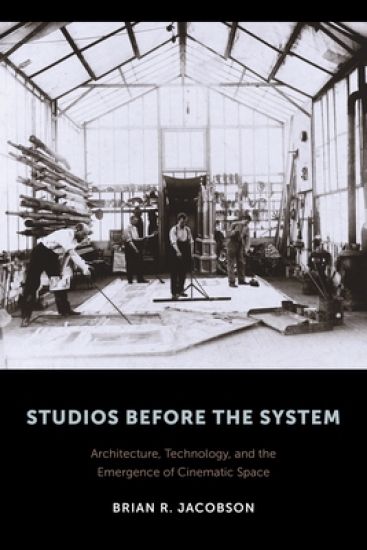
Studios Before the System

Studios Before the System

Brian R. Jacobson

Columbia University Press
2015
sidottu
By 1915, Hollywood had become the epicenter of American filmmaking, with studio "dream factories" structuring its vast production. Filmmakers designed Hollywood studios with a distinct artistic and industrial mission in mind, which in turn influenced the form, content, and business of the films that were made and the impressions of the people who viewed them. The first book to retell the history of film studio architecture, Studios Before the System expands the social and cultural footprint of cinema's virtual worlds and their contribution to wider developments in global technology and urban modernism. Focusing on six significant early film corporations in the United States and France-the Edison Manufacturing Company, American Mutoscope and Biograph, American Vitagraph, Georges Melies's Star Films, Gaumont, and Pathe Freres-as well as smaller producers and film companies, Studios Before the System describes how filmmakers first envisioned the space they needed and then sourced modern materials to create novel film worlds. Artificially reproducing the natural environment, film studios helped usher in the world's Second Industrial Revolution and what Lewis Mumford would later call the "specific art of the machine." From housing workshops for set, prop, and costume design to dressing rooms and writing departments, studio architecture was always present though rarely visible to the average spectator in the twentieth century, providing the scaffolding under which culture, film aesthetics, and our relation to lived space took shape.
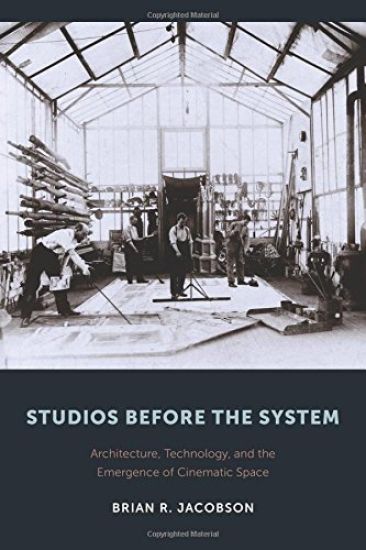
Studios Before the System

Studios Before the System

Brian R. Jacobson

Columbia University Press
2015
pokkari
By 1915, Hollywood had become the epicenter of American filmmaking, with studio "dream factories" structuring its vast production. Filmmakers designed Hollywood studios with a distinct artistic and industrial mission in mind, which in turn influenced the form, content, and business of the films that were made and the impressions of the people who viewed them. The first book to retell the history of film studio architecture, Studios Before the System expands the social and cultural footprint of cinema's virtual worlds and their contribution to wider developments in global technology and urban modernism. Focusing on six significant early film corporations in the United States and France-the Edison Manufacturing Company, American Mutoscope and Biograph, American Vitagraph, Georges Melies's Star Films, Gaumont, and Pathe Freres-as well as smaller producers and film companies, Studios Before the System describes how filmmakers first envisioned the space they needed and then sourced modern materials to create novel film worlds. Artificially reproducing the natural environment, film studios helped usher in the world's Second Industrial Revolution and what Lewis Mumford would later call the "specific art of the machine." From housing workshops for set, prop, and costume design to dressing rooms and writing departments, studio architecture was always present though rarely visible to the average spectator in the twentieth century, providing the scaffolding under which culture, film aesthetics, and our relation to lived space took shape.
The Chile Pepper in China

The Chile Pepper in China

Brian R. Dott

Columbia University Press
2020
sidottu
Chinese cuisine without chile peppers seems unimaginable. Entranced by the fiery taste, diners worldwide have fallen for Chinese cooking. In China, chiles are everywhere, from dried peppers hanging from eaves to Mao’s boast that revolution would be impossible without chiles, from the eighteenth-century novel Dream of the Red Chamber to contemporary music videos. Indeed, they are so common that many Chinese assume they are native. Yet there were no chiles anywhere in China prior to the 1570s, when they were introduced from the Americas.Brian R. Dott explores how the nonnative chile went from obscurity to ubiquity in China, influencing not just cuisine but also medicine, language, and cultural identity. He details how its versatility became essential to a variety of regional cuisines and swayed both elite and popular medical and healing practices. Dott tracks the cultural meaning of the chile across a wide swath of literary texts and artworks, revealing how the spread of chiles fundamentally altered the meaning of the term spicy. He emphasizes the intersection between food and gender, tracing the chile as a symbol for both male virility and female passion. Integrating food studies, the history of medicine, and Chinese cultural history, The Chile Pepper in China sheds new light on the piquant cultural impact of a potent plant and raises broader questions regarding notions of authenticity in cuisine.
The Chile Pepper in China

The Chile Pepper in China

Brian R. Dott

Columbia University Press
2024
pokkari
Chinese cuisine without chile peppers seems unimaginable. Entranced by the fiery taste, diners worldwide have fallen for Chinese cooking. In China, chiles are everywhere, from dried peppers hanging from eaves to Mao’s boast that revolution would be impossible without chiles, from the eighteenth-century novel Dream of the Red Chamber to contemporary music videos. Indeed, they are so common that many Chinese assume they are native. Yet there were no chiles anywhere in China prior to the 1570s, when they were introduced from the Americas.Brian R. Dott explores how the nonnative chile went from obscurity to ubiquity in China, influencing not just cuisine but also medicine, language, and cultural identity. He details how its versatility became essential to a variety of regional cuisines and swayed both elite and popular medical and healing practices. Dott tracks the cultural meaning of the chile across a wide swath of literary texts and artworks, revealing how the spread of chiles fundamentally altered the meaning of the term spicy. He emphasizes the intersection between food and gender, tracing the chile as a symbol for both male virility and female passion. Integrating food studies, the history of medicine, and Chinese cultural history, The Chile Pepper in China sheds new light on the piquant cultural impact of a potent plant and raises broader questions regarding notions of authenticity in cuisine.