Kirjojen hintavertailu. Mukana 11 244 527 kirjaa ja 12 kauppaa.

Kirjahaku

Etsi kirjoja tekijän nimen, kirjan nimen tai ISBN:n perusteella.

1000 tulosta hakusanalla C Altam

C++ Gems

C++ Gems

Stan Lippman

Prentice Hall
1996
nidottu
The support of the C++ Report by the pioneers of the language has always made it a popular magazine. Stan Lippman, former C++ Report Editor (and best-selling author), brings you pearls of wisdom for getting the most out of C++. This carefully selected collection covers the first seven years of the C++ Report, from January 1989 through December 1995. It presents the pinnacle of writing on C++ by renowned experts in the field, and is a must-read for today’s C++ programmer. It contains tips, tricks, proven strategies, easy-to-follow techniques, and usable source code. This collection includes the work of John J. Barton, Pete Becker, Bill Berg, Grady Booch, Tom Cargill, Steve Clamage, James Coplien, Steve Dewhurst, Richard Hickey, David Jordan, Michael Kim, Andy Koenig, Tasos Kontogiorgos, Josée Lajoie, Doug Lea, Nathan Myers, Lee Nackman, Ed Rowlance, Doug Schmidt, Jerry Schwarz, Bjarne Stroustrup, Steve Teale, Michael Stiemann, Todd Veldhuizen, Mike Vilot, John Vlissides, and Jim Waldo.
C++ Core Guidelines Explained

C++ Core Guidelines Explained

Rainer Grimm

Addison Wesley
2022
nidottu
Write More Elegant C++ Programs The official C++ Core Guidelines provide consistent best practices for writing outstanding modern C++ code and improving legacy code, but they're organized as a reference for looking up one specific point at a time, not as a tutorial for working developers. In C++ Core Guidelines Explained, expert C++ instructor Rainer Grimm has distilled them to their essence, removing esoterica, sharing new insights and context, and presenting well-tested examples from his own training courses. Grimm helps experienced C++ programmers use the Core Guidelines with any recent version of the language, from C++11 onward. Most of his code examples are written for C++17, with added coverage of newer versions and C++20 wherever appropriate, and references to the official C++ Core Guidelines online. Whether you're creating new software or improving legacy code, Grimm will help you get more value from the Core Guidelines' most useful rules, as you write code that's safer, clearer, more efficient, and easier to maintain. Apply the guidelines and underlying programming philosophyCorrectly use interfaces, functions, classes, enum, resources, expressions, and statementsOptimize performance, implement concurrency and parallelism, and handle errorsWork effectively with constants, immutability, templates, generics, and metaprogrammingImprove your C++ style, manage source files, and use the Standard Library "We are very pleased to see Rainer Grimm applying his teaching skills and industrial background to tackling the hard and necessary task of making the C++ Core Guidelines accessible to more people."--Bjarne Stroustrup and Herb Sutter, co-editors, C++ Core Guidelines Register your book for convenient access to downloads, updates, and/or corrections as they become available. See inside book for details.
C++20 for Programmers

C++20 for Programmers

Paul Deitel; Harvey Deitel

Addison Wesley
2022
nidottu
The professional programmer's Deitel® guide to C++20 Written for programmers with a background in another high-level language, in this book, you'll learn Modern C++ development hands on using C++20 and its "Big Four" features--Ranges, Concepts, Modules and Coroutines. (For more details, see the Preface, and the table of contents diagram inside the front cover.) In the context of 200+, hands-on, real-world code examples, you'll quickly master Modern C++ coding idioms using popular compilers--Visual C++®, GNU® g++, Apple® Xcode® and LLVM®/Clang. After the C++ fundamentals quick start, you'll move on to C++ standard library containers array and vector; functional-style programming with C++20 Ranges and Views; strings, files and regular expressions; object-oriented programming with classes, inheritance, runtime polymorphism and static polymorphism; operator overloading, copy/move semantics, RAII and smart pointers; exceptions and a look forward to C++23 Contracts; standard library containers, iterators and algorithms; templates, C++20 Concepts and metaprogramming; C++20 Modules and large-scale development; and concurrency, parallelism, the C++17 and C++20 parallel standard library algorithms and C++20 Coroutines. Features Rich coverage of C++20's "Big Four": Ranges, Concepts, Modules and CoroutinesObjects-Natural Approach: Use standard libraries and open-source libraries to build significant applications with minimal codeHundreds of real-world, live-code examplesModern C++: C++20, 17, 14, 11 and a look to C++23Compilers: Visual C++®, GNU® g++, Apple Xcode® Clang, LLVM®/ClangDocker: GNU® GCC, LLVM®/ClangFundamentals: Control statements, functions, strings, references, pointers, files, exceptionsObject-oriented programming: Classes, objects, inheritance, runtime and static polymorphism, operator overloading, copy/move semantics, RAII, smart pointersFunctional-style programming: C++20 Ranges and Views, lambda expressionsGeneric programming: Templates, C++20 Concepts and metaprogrammingC++20 Modules: Large-Scale DevelopmentConcurrent programming: Concurrency, multithreading, parallel algorithms, C++20 Coroutines, coroutines support libraries, C++23 executorsFuture: A look forward to Contracts, range-based parallel algorithms, standard library coroutine support and more "C++20 for Programmers builds up an intuition for modern C++ that every programmer should have in the current software engineering ecosystem. The unique and brilliant ordering in which the Deitels present the material jibes much more naturally with the demands of modern, production-grade programming environments. I strongly recommend this book for anyone who needs to get up to speed on C++, particularly in professional programming environments where the idioms and patterns of modern C++ can be indecipherable without the carefully crafted guidance that this book provides."--Dr. Daisy Hollman, ISO C++ Standards Committee Member "This is a fine book that covers a surprising amount of the very large language that is C++20. An in-depth treatment of C++ for a reader familiar with how things work in other programming languages."--Arthur O'Dwyer, C++ trainer, Chair of CppCon's Back to Basics track, author of several accepted C++17/20/23 proposals and the book Mastering the C++17 STL "Forget about callback functions, bare pointers and proprietary multithreading libraries--C++20 is about standard concurrency features, generic lambda expressions, metaprogramming, tighter type-safety and the long-awaited concepts, which are all demonstrated in this book. Functional programming is explained clearly with plenty of illustrative code listings. The excellent chapter, 'Parallel Algorithms and Concurrency: A High-Level View,' is a highlight of this book."--Danny Kalev, Ph.D. and Certified System Analyst and Software Engineer, Former ISO C++ Standards Committee Member Register your book for convenient access to downloads, updates, and/or corrections as they become available. See inside book for details. Note: eBooks are 4-color and print books are black and white.
C++ in One Hour a Day, Sams Teach Yourself

C++ in One Hour a Day, Sams Teach Yourself

Siddhartha Rao

Addison Wesley
2022
nidottu
Learn C++ programming at your own pace—Covers modern C++ 20 Starting with one hour a day, you can gain all the skills you need to begin programming in C++. This complete tutorial will help you quickly master the basics of object-oriented programming and teach you advanced C++ language features and concepts. Fully updated for the C++20 standard, this practical book is designed to help you write C++ code that's faster, simpler, and more reliable and master the fundamentals of C++ and object-oriented programming. No programming experience required: start writing well-organized, efficient C++ programs quickly!Apply proven Do's and Don'ts to leverage best practices and avoid pitfalls from day oneTest your knowledge and expertise with focused exercises after every lessonSimplify your code using automatic type deduction and other featuresAccelerate learning using nearly 300 code samples explained withinPreview improvements expected in C++23 Lessons Part I - The Basics: Using Variables, Declaring Constants; Arrays and Strings; Expressions, Statements, and Operators; Controlling Program Flow; Functions; Pointers and References Part II - Fundamentals of Object-Oriented C++ Programming: Classes and Objects; Implementing Inheritance; Polymorphism; Operator Types and Operator Overloading; Casting Operators; Macros and Templates PART III - Learning the Standard Template Library (STL): The STL String Class; STL Dynamic Array Classes; STL list and forward_list; STL set and multiset; STL map and multimap PART IV: Lambda Expressions and STL Algorithms: Function Objects; Lambda Expressions;
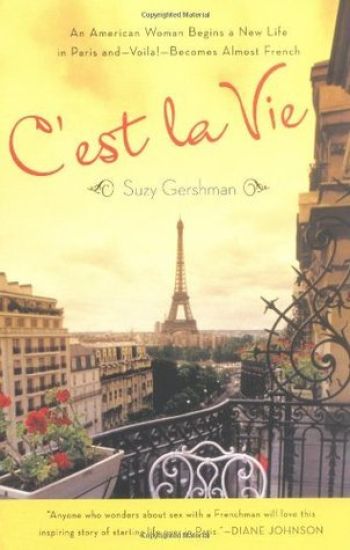
C'Est La Vie: An American Woman Begins a New Life in Paris And--Voila!--Becomes Almost French
Bestselling writer Suzy Gershman (dubbed "Super Shopper Suzy" by Oprah) is our answer to Peter Mayle in this heartfelt, breezy, and funny story of starting over in Paris. Suzy had always fantasized about moving to Paris with her husband, but when he dies unexpectedly, she decides to fulfill their dream alone. Here she gives a deliciously conversational chronicle of her first year in Paris and of the dizzying delights and maddening frustrations of learning to be a Parisian. Filled with Gershman's insider's tips on everything from cooking the perfect clafoutis to--naturally--shopping, C'est la Vie is delightfully entertaining and captures the exhilarating experience of beginning a new adventure.
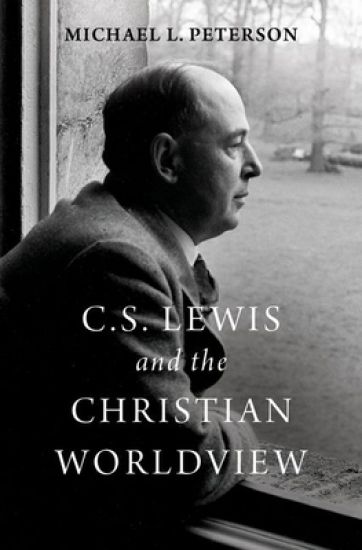
C. S. Lewis and the Christian Worldview

C. S. Lewis and the Christian Worldview

Michael L. Peterson

Oxford University Press Inc
2020
sidottu
C. S. Lewis is one of the most influential and beloved Christian writers of the past century, and interest in him continues to grow as books about his fantasy, fiction, and biography continue to appear. Although Lewis's personal journey was a deeply philosophical search for the most adequate worldview, the few extant books about his Christian philosophy focus on specific topics rather than his overall worldview. In this book, Michael Peterson develops a comprehensive framework for understanding Lewis's Christian worldview--from his arguments from reason, morality, and desire to his ideas about Incarnation, Trinity, and Atonement. All worldviews address fundamental questions about reality, knowledge, human nature, meaning, and so forth. Peterson therefore examines Lewis's Christian approach to these same questions in interaction with other worldviews. Accenting that the intellectual strength and existential relevance of Lewis's works rest on his philosophical acumen as well as his Christian orthodoxy--which he famously called "mere Christianity"--Peterson skillfully shows how Lewis's Christian thought engages a variety of important problems raised by believers and nonbelievers alike: the problem of evil and suffering, the problem of religious diversity, the problem of meaning, and others. Just as Lewis was gifted in communicating philosophical ideas and arguments in an accessible style, Peterson has crafted a major contribution to Lewis scholarship presented in a way that will interest scholars and benefit the general reader.
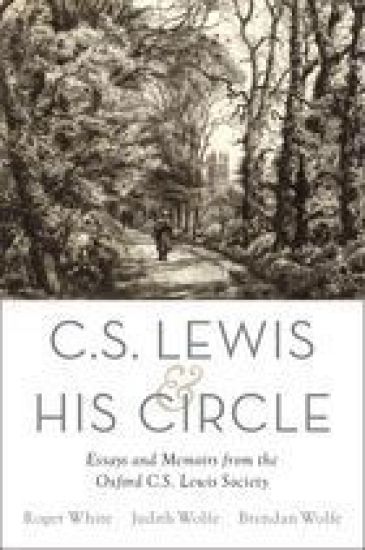
C. S. Lewis and His Circle

C. S. Lewis and His Circle

Oxford University Press Inc
2015
sidottu
For thirty years, the Oxford C.S. Lewis Society has met weekly in the medieval colleges of the University of Oxford. During that time, it has hosted as speakers nearly all those still living who were associated with the Inklings--the Oxford literary circle led by C.S. Lewis--, as well as authors and thinkers of a prominence that nears Lewis's own. C.S. Lewis and His Circle offers the reader a chance to join this unique group. Roger White has worked with Society past-presidents Brendan and Judith Wolfe to select the best unpublished talks, which are here made available to the public for the first time. They exemplify the best of traditional academic essays, thoughtful memoirs, and informal reminiscences about C.S. Lewis and his circle. The reader will re-imagine Lewis's Cosmic Trilogy with former Archbishop of Canterbury Rowan Williams; read philosopher Elizabeth Anscombe's final word on Lewis's arguments for Christianity; hear the Reverend Peter Bide's memories of marrying Lewis and Joy Davidman in an Oxford hospital; and learn about Lewis's Narnia Chronicles from his former secretary. Representing the finest of both personal and scholarly engagement with C.S. Lewis and the Inklings, the talks collected here set a new tone for engagement with this iconic Oxford literary circle--a tone close to Lewis's own Oxford-bred sharpness and wryness, seasoned with good humor and genuine affection for C.S. Lewis and his circle.
C. Miller Fisher

C. Miller Fisher

Louis R. Caplan

Oxford University Press Inc
2020
sidottu
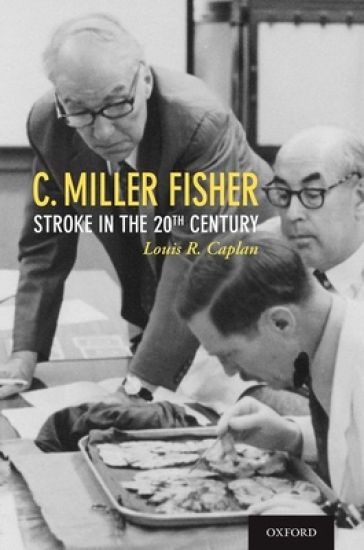
When Charles Miller Fisher was born in 1913 there was very little scientific knowledge about stroke. But thanks to him, our understanding of stroke and of other brain disorders are now well established in every neurology training program around the world. C. Miller Fisher is his story: his life, his method of study and of research, and his contributions. This work, reinforced with unequalled access to the CMF archives overseen by the Fisher estate and told in his own words (italicized in the text) from his memoirs, will shed light on one of the most important clinicians in North America and the world. He devoted his career and the great majority of every waking day to the study of stroke, both in the pathology laboratory and in people. Fisher's discoveries and contributions and those of the individuals that he trained changed the knowledge basis of stroke and vascular disease for everyone.
The Lost Lectures of C. Vann Woodward

The Lost Lectures of C. Vann Woodward

C. Vann Woodward; Edward L. Ayers

Oxford University Press Inc
2020
sidottu
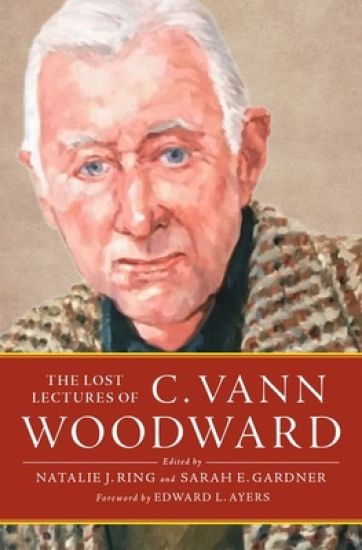
C. Vann Woodward is one of the most significant historians of the post-Reconstruction South. Over his career of nearly seven decades, he wrote nine books; won the Bancroft and Pulitzer Prizes; penned hundreds of book reviews, opinion pieces, and scholarly essays; and gained national and international recognition as a public intellectual. Even today historians must contend with Woodward's sweeping interpretations about southern history. What is less known about Woodward is his scholarly interest in the history of white antebellum southern dissenters, the immediate consequences of emancipation, and the history of Reconstruction in the years prior to the Compromise of 1877. Woodward addressed these topics in three mid-century lecture series that have never before been published. The Lost Lectures of C. Vann Woodward presents for the first time lectures that showcase his life-long interest in exploring the contours and limits of nineteenth-century liberalism during key moments of social upheaval in the South. Historians Natalie J. Ring and Sarah E. Gardner analyze these works, drawing on correspondence, published and unpublished material, and Woodward's personal notes. They also chronicle his failed attempts to finish a much-awaited comprehensive history of Reconstruction and reflect on the challenges of writing about the failures of post-Civil War American society during the civil rights era, dubbed the Second Reconstruction. With an insightful foreword by eminent Southern historian Edward L. Ayers, The Lost Lectures of C. Vann Woodward offers new perspectives on this towering authority on nineteenth- and twentieth-century southern history and his attempts to make sense of the past amidst the tumultuous times in which he lived.
C For Yourself

C For Yourself

Halpern

Oxford University Press Inc
1997
nidottu
This elementary level text on C targets first-time programmers and implements a subset approach, acknowledging that C encompasses much material and many pitfalls. This unusual text uses "experiments" to guide students to discover things for themselves and directs students in learning many of the subleties and intricacies of C through hands-on examples. The author's inviting writing style is especially appealing to novice programmers. C for Yourself is suitable as a supplement in an elementary computer science course for computer science majors as well as a course for non-majors or a community college C course.
C.S. Lewis Then and Now

C.S. Lewis Then and Now

Wesley A. Kort

Oxford University Press Inc
2004
nidottu
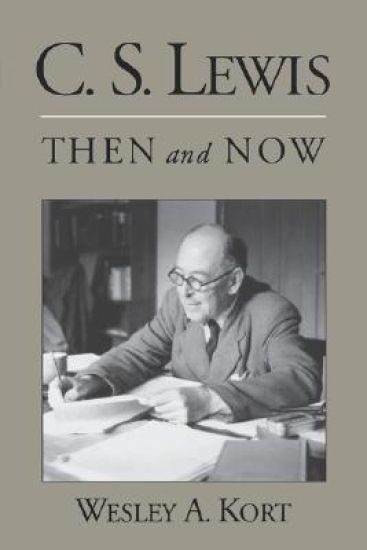
Clive Staples Lewis (1898-1963) was a distinguished scholar of medieval and Renaissance literature who taught at both Oxford University and Cambridge University. After his conversion to Christianity, Lewis began writing Christian apologetic works aimed at a popular audience. It is for these works that Lewis is now best remembered; especially in the U.S., where his books have sold in the millions and continue to be popular today. Perhaps because of this popularity, however, Lewis's Christian writings are generally dismissed by theologians as oversimplified and conceptually flawed. With this book, Wesley A. Kort hopes to rehabilitate Lewis and to demonstrate the value and continuing relevance of his work. Kort not only retrieves Lewis from the now-dated context of his writings, but also wrests him from the hands of evangelicals who have turned his word into gospel and mistaken his attacks on modernity for a retreat from the world. Kort addresses and refutes common prejudices about Lewis and shows that, although Lewis was sharply critical of the materialism and narcissism of modern culture, he nevertheless insisted that only through culture can Christian teachings effectively shape moral character. Lewis's desire for a fruitful, interactive relationship between Christianity and culture sharply distinguishes him from neo-orthodox theology and many contemporary Christian rejections of culture.
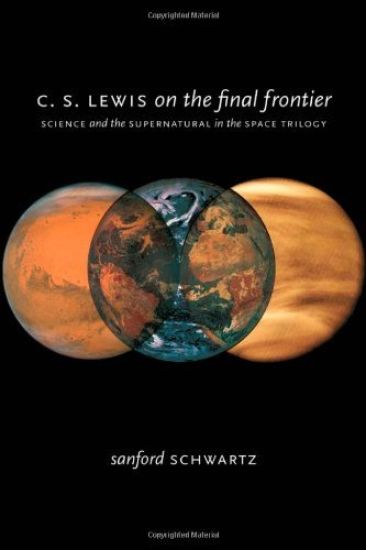
C. S. Lewis on the Final Frontier

C. S. Lewis on the Final Frontier

Sanford Schwartz

Oxford University Press Inc
2009
sidottu
C.S. Lewis's space trilogy - Out of the Silent Planet (1938), Perelandra (1943), That Hideous Strength (1945) - has been both admired and dismissed for its staging of a sharply defined struggle between religious and naturalistic points of view. Proceeding from Mars and Venus to a final showdown on our own planet, each installment takes up another facet of the seemingly impassable conflict between Christianity and the tendencies of modern thought that arose in the wake of the Darwinian revolution in biology. In Out of the Silent Planet, the target is evolutionary naturalism, primarily as it appears in the science fiction of H.G. Wells. In Perelandra, it is the alluring but perilous doctrine of "creative" evolution inaugurated by Henri Bergson. In That Hideous Strength, Lewis depicts an insidious organization - the National Institute of Coordinated Experiments - whose friendly acronym, NICE, belies its pursuit of a eugenically inspired program to assume control over the evolutionary process and thereby achieve everlasting dominion over the planet. Taken together, these seemingly clear-cut confrontations between Christian tradition and modern apostasy reinforce the image of Lewis as the voice of an endangered heritage, a self-styled "dinosaur" waging spiritual warfare against the corruption and confusions of his age. Sanford Schwartz here offers a new reading of the trilogy that challenges the prevailing view of Lewis, shared by advocates and adversaries alike, as champion of the "discarded image" of premodern cosmology. Through his close reading of Lewis's work, Schwartz is able to discern the outlines of a Lewis who is far more deeply engaged with modern developments in science and philosophy, and more prepared to explore the possibilities for transforming these developments in ways that are not only compatible with traditional Christian doctrine but also speak to the distinctive problems of the modern condition. Unlike the Chronicles of Narnia, the Trilogy has received little scholarly attention. Schwartz's study fills a major gap in the literature and will appeal to a wide range of scholars and students as well as to Lewis's many devoted fans.
C.S. Peirce and the Nested Continua Model of Religious Interpretation
This study develops resources in the work of Charles S. Peirce (1839-1914) for the purposes of contemporary philosophy. It contextualizes Peirce's prevailing influences and provides greater context in relation to the currents of nineteenth-century thought. Dr Gary Slater articulates 'a nested continua model' for theological interpretation, which is indebted to Peirce's creation of 'Existential Graphs', a system of diagrams designed to provide visual representation of the process of human reasoning. He investigates how the model can be applied by looking at recent debates in historiography. He deals respectively with Peter Ochs and Robert C. Neville as contemporary manifestations of Peircean philosophical theology. This work concludes with an assessment of the model's theological implications.
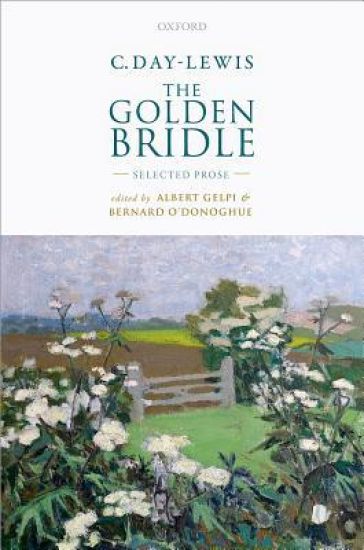
C. Day-Lewis: The Golden Bridle

C. Day-Lewis: The Golden Bridle

Oxford University Press
2017
sidottu
C. Day-Lewis was a major figure in British poetry and culture from the 1930s until his death in 1972. The Golden Bridle: Selected Prose takes its title from the myth of Bellerophon and the golden bridle of Pegasus, which Day-Lewis invoked on several occasions as a metaphor for the creative process. Day-Lewis as poet is, then, the organizing idea of this anthology, and the selections indicate the scope and range of his vital engagement with English life and letters. Organised into four parts, the volume illustrates Day-Lewis's reflections on the role and function of poetry in society and culture; the creative process and the workings of the imagination as well as the nature of poetic truth and its relation to science; poets who were of particular importance to Day-Lewis; and the poetic process in relation to the composition of several of his own poems. The notes indicate the particular source, circumstances, and central issues of each piece, to provide a brief intellectual biography and critical account of this eminent poet's development and standing.
C. S. Lewis

C. S. Lewis

James Como

Oxford University Press
2019
nidottu
Beloved by children and adults worldwide, the writings of C.S. Lewis have a broad and enduring appeal. Although he is best known for the iconic Chronicles of Narnia series, C. S. Lewis was actually a man of many literary parts. Already well-known as a scholar in the thirties, he became a famous broadcaster during World War Two and wrote in many genres, including satire (The Screwtape Letters), science fiction ( Perelandra), a novel (Till We Have Faces), and many other books on Christian belief, such as Mere Christianity and Miracles. His few sermons remain touchstones of their type. In addition to these, Lewis wrote hundreds of poems and articles on social and cultural issues, many books and articles in his field of literary criticism and history, and thousands of letters. At Oxford University he became a charismatic lecturer and conversationalist. Taken together his writings have engaged and influenced, often very deeply, millions of readers. Now Lewis societies, television documentaries, movies, radio plays, and theatrical treatments of his work and life have become common, and he is frequently quoted by journalists, critics, and public thinkers. This Very Short Introduciton delves into the vast corpus of C. S. Lewis' work, discussing its core themes and lasting appeal. As James Como shows, C. S. Lewis' life is just as interesting as his work. A complex man, he came to his knowledge, beliefs, and wisdom only after much tortuous soul-searching and many painful events. Moving chronologically through Lewis' life, Como provides throughout a picture of the whole man, his work, and his enduring legacy. ABOUT THE SERIES: The Very Short Introductions series from Oxford University Press contains hundreds of titles in almost every subject area. These pocket-sized books are the perfect way to get ahead in a new subject quickly. Our expert authors combine facts, analysis, perspective, new ideas, and enthusiasm to make interesting and challenging topics highly readable.
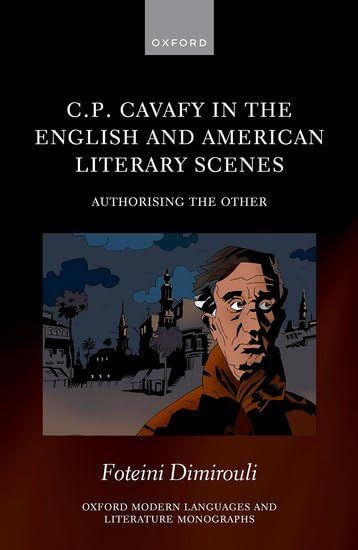
C.P. Cavafy in the English and American Literary Scenes

C.P. Cavafy in the English and American Literary Scenes

Foteini Dimirouli

Oxford University Press
2025
sidottu
C.P. Cavafy in the English and American Literary Scenes: Authorising the Other explores the global reputation of the Greek-Alexandrian poet C.P. Cavafy in relation to literary networks of the twentieth century. It examines how the writings of E.M. Forster, Lawrence Durrell, W.H. Auden, Stephen Spender, Joseph Brodsky, and James Merrill played a key role in establishing Cavafy's standing in world literature and shaping perceptions of his authorial identity. Moving beyond conventional studies of reception, the book argues that the poet's authorisation by his author-champions was inherently reciprocal: while these influential writers propelled the steady rise of Cavafy's fame in England and America, they simultaneously reinforced their own authority as cultural arbiters. The analysis of overlooked aspects of these authors' critical essays, translations, and fictionalised portrayals, reveals how their readings and presentation of Cavafy were shaped by their cultural preferences and ideological affiliations, ranging from British liberal humanism to Eurocentric exilic narratives, and from Cold War politics to queer poetics. By considering both published texts and unknown archival material about Cavafy, this book sheds light on the mobilisation of his poetry and persona to serve the artistic agendas of his authorisers. At once a history of literary mediation and a study of the dynamics that shape literary reputation, C.P. Cavafy in the English and American Literary Scenes rethinks the making of transnational cultural legitimacy and the mutual dependencies that sustain it.
C. elegans

C. elegans

Oxford University Press
1999
nidottu
Caenorhabditis Elegans has been a popular model organism for biological research for over thirty years and has been used to investigate many aspects of animal development, for example apoptosis, the Hox genes, signal transduction pathways, and the development of the nervous system. It has recently taken on new importance with the publication of the entire genome sequence in 1998. The first chapter gives all the basic information on C. elegans required to use it: it's natural history, anatomy, life cycle, development, and evolution. Information on how to obtain, grow, and maintain C. elegans for use as a model system is given in Chapter 4. Chapters 2 and 3 describe the genome project and show how to use genome sequence information by searching the database for homologues using different search methods and then how to analyse the search data. The next chapter gives the essential practical details of transformation and common uses for the technique. Chapter 6 covers reverse genetics and describes strategies for gene inactivation that are known to work in C elegans: epigenetic inactivation and mutational germ line inactivation. Chapter 7 is designed to help the user analyse phenotype by microscopy and includes Normaski, fluorescence, 4-dimensional, and electron microscopy. Techniques for studying the neurobiology of C. elegans are given in chapter 8. Chapter 9 describes the three commonly used approaches for studying gene expression and Chapter 10 deals with the common methods of molecular biology essential for gene characterization. C. elegans is not the ideal organism for biochemical studies, but chapter 11 describes several procedures for producing biochemically useful quantities of pure tissues. The final chapter is about conventional genetics and details the standard procedures for selfing and crossing; mutagenesis and mutant screening; characterization of mutants; gene mapping; temperature-shift experiments and mosaic analysis. Caenorhabditis Elegans: A Practical Approach will therefore provide all the background information necessary for use of C. elegans as a model system.
C Interfaces and Implementations

C Interfaces and Implementations

David Hanson

Addison Wesley
1997
nidottu
Every programmer and software project manager must master the art of creating reusable software modules; they are the building blocks of large, reliable applications. Unlike some modern object-oriented languages, C provides little linguistic support or motivation for creating reusable application programming interfaces (APIs). While most C programmers use APIs and the libraries that implement them in almost every application they write, relatively few programmers create and disseminate new, widely applicable APIs. C Interfaces and Implementations shows how to create reusable APIs using interface-based design, a language-independent methodology that separates interfaces from their implementations. This methodology is explained by example. The author describes in detail 24 interfaces and their implementations, providing the reader with a thorough understanding of this design approach. Features of C Interfaces and Implementations: *Concise interface descriptions that comprise a reference manual for programmers interested in using the interfaces.* A guided tour of the code that implements each chapter's interface tp help those modifying or extending an interface or designing related interfaces. *In-depth focus on "algorithm engineering:" how to package data structures and related algorithms into reusable modules. *Source code for 24 APIs and 8 sample applications is examined, with each presented as a "literate program" in which a thorough explanation is interleaved with the source code. *Rarely documented C programming tricks-of-the-trade. *Convenient access to all source code in the book via the World Wide Web at http://www.cs.princeton.edu/software/cii/ 0201498413B04062001
C Program Design for Engineers

C Program Design for Engineers

Jeri Hanly; Elliot Koffman

Pearson
2000
nidottu
This book presents introductory programming and software development concepts to engineers using a disciplined approach. It provides numerous case studies and programming projects based on real-world examples from a wide range of engineering disciplines, making the material relevant to what students will encounter in their careers. The authors introduce implementations of basic numerical and statistical methods commonly used by engineers. The book focuses on many aspects of software engineering, establishing early the connection between good problem-solving skills and effective software development. The five-phase software development method is presented in Chapter 1 and applied in every subsequent Case Study throughout. C Program Design for Engineers presents material in an order that meets the needs of a beginning programmer, rather than by the structure of the C programming language. For example, the coverage of pointers is simplified by discussing them over several chapters, thus allowing the student to absorb the intricacies of pointer usage a little at a time. This approach makes it possible to present fundamental concepts using traditional high-level terminology—outputparameter, array, array subscript, string—and makes it easier for students without prior assembly-language background to master the many facets of pointer usage.