This documented briefing discusses and illustrates the advantages of exploratory analysis over more traditional model-based analysis in the context of the weapon mix problem.
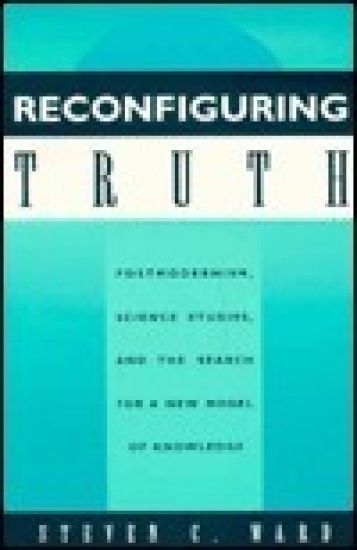
This refreshingly original book links the postmodern critique of notions such as "reality" and "truth" with approaches to knowledge found in science and technology studies (STS), a field also discontent with traditional epistemology. Exploring STS approaches to knowledge, such as actor-network theory, Ward forges a path through the impasse of the modernism vs. postmodernism debate. Reconfiguring Knowledge is an important work for social scientists and theorists, philosophers, historians, and scholars of science and technology.
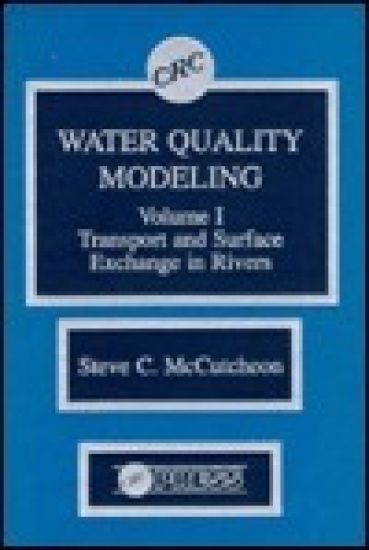
This fascinating work is divided into two main sections. Part I reviews the basic principles of water movement in channels and the mass balance approach common to most models. It also covers the practical usefulness, model peer review, and guidance on model selection and calibration. Part II discusses flow simulation and prediction of time of travel, dye tracing and mixing, heat balance and temperature modeling, and reaeration and volatilization. This interesting, easy-to-read volume includes comprehensive reviews for the use of fluorescent water tracing dyes, longitudinal dispersion, evaporation and wind speed functions, prediction of saturation concentrations of dissolved oxygen, and reaeration coefficients. This book furnishes the reader with appendices which provide a synopsis of available computer models and gives a comprehensive listing of methods used to measure flow rates in rivers, tributaries, and pipes and channels introducing wastewaters into streams. This volume is a valuable, indispensable reference for all researchers, instructors, students in advanced environmental modeling courses, and practicing engineers.
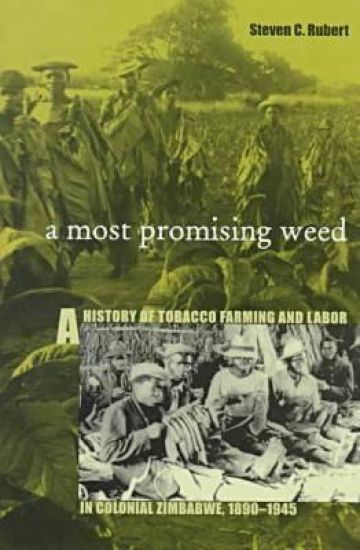
A Most Promising Weed examines the work experience, living conditions, and social relations of thousands of African men, women, and children on European-owned tobacco farms in colonial Zimbabwe from 1890 to 1945. Steven C. Rubert provides evidence that Africans were not passive in their responses to the penetration of European capitalism into Zimbabwe but, on the contrary, helped to shape both the work and living conditions they encountered as they entered wage employment. Beginning with a brief history of tobacco growing in Zimbabwe, this study focuses on the organization of workers' compounds and on the paid and unpaid labor performed by both women and children on those farms.
The only fitness book you may ever need Building a lean, strong, healthy body has never been this easy. This complete, easy-to-read, step-by-step manual will show you how to get in the best shape of your life using the latest, cutting-edge science and exercise techniques. It will show you: * How to use a little-known, natural sea-plant extract to "shut off" the enzymes in your cells that prevent muscles from growing larger.* How to use the simple but powerful technique known as "Progressive Negative Tension" for increased focus and exercise intensity, improved exercise form and enhanced muscle tone.* How to use the "30-minute window" - a natural, biological state that occurs after exercise - to your advantage.* How to design a routine around your unique "neurological efficiency". Neurological efficiency can vary greatly from individual to individual, and the wrong routine for your neurological make-up can actually make you look and feel worse * How to use the glycemic index to design the best diet for fat loss. Designing a nutrition plan around the glycemic index can be tedious and confusing, but this manual makes it simple, easy and fast And there is much, much more...
The Kwansaba is an African American verse form of praise created in 1995 by Eugene B. Redmond, East St. Louis Poet Laureate and professor of English at Southern Illinois-East St. Louis. The poems honor Kwanzaa, a celebration of family and African American culture, and praise writers such as Richard Wright and Sonia Sanchez. The poetic style of the Kwansaba utilizes the number seven, the numeric foundation of Kwanzaa. Thus, a Kwansaba is a heptastich, a poem of seven lines, with seven words in each line, and written with no word exceeding seven letters. Darline Roy talks about the strict rules of a Kwansaba. The idea was first used by Eugene B. Redmond and refined in the summer workshop of 2015. But there are exceptions to the rule of seven. He agrees that imposing some restriction makes you think about what you are writing. Another example of a kind of poem that has rules is a haiku, a very short form of Japanese poetry in which the first sentence has five syllables, the second line has seven syllables, and the last line has five syllables. In addition, the Kwansaba poetic form embraces its roots from the South African tradition of the praise poem, called the izibongo in Zulu. A praise poem offers veneration to a person, which was popular in the Middle Ages and continues to be embraced in African cultures today. However, the African praise poem is not restricted to this part of the continent and is not uniquely an African motif; it was used during the Renaissance in Europe. Moreover, the praise poem itself is the manifestation of the oral tradition of atavistic songs of the African ancestors. The "Other Poems" featured in the later part of the book are digressive; they may follow the rules of the Kwansaba but sometimes do not offer praise. The subjects of the poems range from relationships to community.Kwansabas and Other Poems represents my interpretation of the art form, and hopefully, I have contributed to this particular type of poem, expanding its purview.
The House of the Lord invites readers to participate in a unique journey: a deep exploration of the Old and New Testaments that searches out and contemplates the reality of God's presence with his people, with a particular focus on investigating God's self-revelation in and through the biblical temple. The journey represents a tour de force of biblical theology, guided by author Steven Smith, a Catholic biblical scholar, seminary professor, and expert on the temple and the Holy Land. In addition to the temple, Smith observes the centrality of priesthood in both the Old and New Testaments, exploring all four Gospels like never before, through a temple lens.From Genesis onward, Smith carefully traces the biblical mystery of the temple, including the Sanctuary of Mount Eden, the tabernacle of the wilderness, the rise and fall of Solomon's Temple, Herod's Temple in Jesus's day, and the heavenly sanctuary of Revelation. Supported by a massive array of evidence and details, from sources across two millennia of biblical theology, this book will be read and read again for its value as a reference work. The House of the Lord is for anyone who seeks to understand more deeply the message of the biblical story.
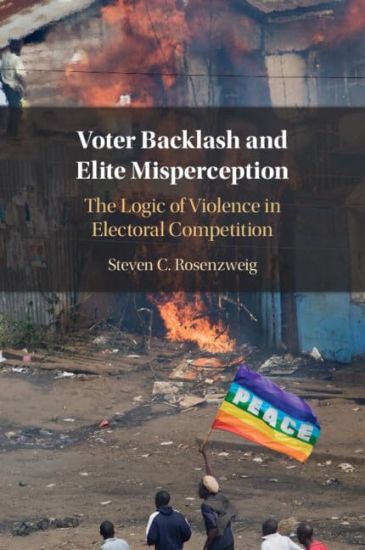
Existing theories of election-related violence often assume that if elites instigate violence, they must benefit electorally from doing so. With a focus on Kenya, this book employs a wide array of data and empirical methods to demonstrate that - contrary to conventional wisdom - violence can be a costly strategy resulting in significant voter backlash. The book argues that politicians often fail to perceive these costs and thus employ violence as an electoral tactic even when its efficacy is doubtful. Election-related violence can therefore be explained not solely by the electoral benefits it provides, but by politicians' misperceptions about its effectiveness as an electoral tactic. The book also shows that violence in founding elections - the first elections held under a new multiparty regime - has long-lasting effects on politicians (mis)perceptions about its usefulness, explaining why some countries' elections suffer from recurrent bouts of violence while others do not.
Existing theories of election-related violence often assume that if elites instigate violence, they must benefit electorally from doing so. With a focus on Kenya, this book employs a wide array of data and empirical methods to demonstrate that - contrary to conventional wisdom - violence can be a costly strategy resulting in significant voter backlash. The book argues that politicians often fail to perceive these costs and thus employ violence as an electoral tactic even when its efficacy is doubtful. Election-related violence can therefore be explained not solely by the electoral benefits it provides, but by politicians' misperceptions about its effectiveness as an electoral tactic. The book also shows that violence in founding elections - the first elections held under a new multiparty regime - has long-lasting effects on politicians (mis)perceptions about its usefulness, explaining why some countries' elections suffer from recurrent bouts of violence while others do not.
This open access book brings together works by specialists from different disciplines and continents to reflect on the nexus between leadership, spirituality and discernment, particularly with regard to a world that is increasingly volatile, uncertain, complex, and ambiguous (VUCA). The book spells out, first of all, what our VUCA world entails, and how it affects businesses, organizations, and societies as a whole. Secondly, the book develops new perspectives on the processes of leadership, spirituality, and discernment, particularly in this VUCA context. These perspectives are interdisciplinary in nature, and are informed by e.g. management studies, leadership theory, philosophy, and theology. This work was published by Saint Philip Street Press pursuant to a Creative Commons license permitting commercial use. All rights not granted by the work's license are retained by the author or authors.
This open access book brings together works by specialists from different disciplines and continents to reflect on the nexus between leadership, spirituality and discernment, particularly with regard to a world that is increasingly volatile, uncertain, complex, and ambiguous (VUCA). The book spells out, first of all, what our VUCA world entails, and how it affects businesses, organizations, and societies as a whole. Secondly, the book develops new perspectives on the processes of leadership, spirituality, and discernment, particularly in this VUCA context. These perspectives are interdisciplinary in nature, and are informed by e.g. management studies, leadership theory, philosophy, and theology. This work was published by Saint Philip Street Press pursuant to a Creative Commons license permitting commercial use. All rights not granted by the work's license are retained by the author or authors.
This work has been selected by scholars as being culturally important and is part of the knowledge base of civilization as we know it.This work is in the public domain in the United States of America, and possibly other nations. Within the United States, you may freely copy and distribute this work, as no entity (individual or corporate) has a copyright on the body of the work.Scholars believe, and we concur, that this work is important enough to be preserved, reproduced, and made generally available to the public. To ensure a quality reading experience, this work has been proofread and republished using a format that seamlessly blends the original graphical elements with text in an easy-to-read typeface.We appreciate your support of the preservation process, and thank you for being an important part of keeping this knowledge alive and relevant.
This work has been selected by scholars as being culturally important and is part of the knowledge base of civilization as we know it.This work is in the public domain in the United States of America, and possibly other nations. Within the United States, you may freely copy and distribute this work, as no entity (individual or corporate) has a copyright on the body of the work.Scholars believe, and we concur, that this work is important enough to be preserved, reproduced, and made generally available to the public. To ensure a quality reading experience, this work has been proofread and republished using a format that seamlessly blends the original graphical elements with text in an easy-to-read typeface.We appreciate your support of the preservation process, and thank you for being an important part of keeping this knowledge alive and relevant.