Kirjojen hintavertailu. Mukana 12 016 292 kirjaa ja 12 kauppaa.

Kirjahaku

Etsi kirjoja tekijän nimen, kirjan nimen tai ISBN:n perusteella.

1000 tulosta hakusanalla CHARLES WEST

Major Hook's Defence, to the Action for Criminal Conversation, Brought Against him by Capt. Charles Campbell, and Tried at Westminster, 26th February, 1793
The 18th century was a wealth of knowledge, exploration and rapidly growing technology and expanding record-keeping made possible by advances in the printing press. In its determination to preserve the century of revolution, Gale initiated a revolution of its own: digitization of epic proportions to preserve these invaluable works in the largest archive of its kind. Now for the first time these high-quality digital copies of original 18th century manuscripts are available in print, making them highly accessible to libraries, undergraduate students, and independent scholars.Delve into what it was like to live during the eighteenth century by reading the first-hand accounts of everyday people, including city dwellers and farmers, businessmen and bankers, artisans and merchants, artists and their patrons, politicians and their constituents. Original texts make the American, French, and Industrial revolutions vividly contemporary.++++The below data was compiled from various identification fields in the bibliographic record of this title. This data is provided as an additional tool in helping to insure edition identification: ++++British LibraryT064408With two duplicate errata leaves, one bound with the preliminaries, the other after the text.London: printed for J. Murray, 1793. lxv, 1],112, 2]p.; 8
The Whole Armour of God. A Discourse Delivered by the Late Mr. Walsh, in West-Street Chapel; With an Hymn on the Same Subject, by the Rev. Mr. Charles Wesley
The 18th century was a wealth of knowledge, exploration and rapidly growing technology and expanding record-keeping made possible by advances in the printing press. In its determination to preserve the century of revolution, Gale initiated a revolution of its own: digitization of epic proportions to preserve these invaluable works in the largest archive of its kind. Now for the first time these high-quality digital copies of original 18th century manuscripts are available in print, making them highly accessible to libraries, undergraduate students, and independent scholars.The Age of Enlightenment profoundly enriched religious and philosophical understanding and continues to influence present-day thinking. Works collected here include masterpieces by David Hume, Immanuel Kant, and Jean-Jacques Rousseau, as well as religious sermons and moral debates on the issues of the day, such as the slave trade. The Age of Reason saw conflict between Protestantism and Catholicism transformed into one between faith and logic -- a debate that continues in the twenty-first century.++++The below data was compiled from various identification fields in the bibliographic record of this title. This data is provided as an additional tool in helping to insure edition identification: ++++British LibraryT016239London: printed and sold by the Widow Englefield; J. Tennant, and A. Goldenarms, 1759. 35, 1]p.; 12
Charles Darwin

Charles Darwin

Geoffrey West

Routledge
2018
sidottu
This biography of Charles Darwin, first published in 1937, re-lives Darwin’s life year by year, allowing the reader to share his experiences. The book displays Darwin’s ideas and how they developed and grew over time. This title will be of great interest to students of the history of science and philosophy.
Charles Darwin

Charles Darwin

Geoffrey West

Routledge
2021
nidottu
This biography of Charles Darwin, first published in 1937, re-lives Darwin’s life year by year, allowing the reader to share his experiences. The book displays Darwin’s ideas and how they developed and grew over time. This title will be of great interest to students of the history of science and philosophy.
The West-American Scientist

The West-American Scientist

Charles Russell Orcutt

Palala Press
2018
pokkari
This work has been selected by scholars as being culturally important, and is part of the knowledge base of civilization as we know it. This work was reproduced from the original artifact, and remains as true to the original work as possible. Therefore, you will see the original copyright references, library stamps (as most of these works have been housed in our most important libraries around the world), and other notations in the work.This work is in the public domain in the United States of America, and possibly other nations. Within the United States, you may freely copy and distribute this work, as no entity (individual or corporate) has a copyright on the body of the work.As a reproduction of a historical artifact, this work may contain missing or blurred pages, poor pictures, errant marks, etc. Scholars believe, and we concur, that this work is important enough to be preserved, reproduced, and made generally available to the public. We appreciate your support of the preservation process, and thank you for being an important part of keeping this knowledge alive and relevant.
The West-American Scientist

The West-American Scientist

Charles Russell Orcutt

Palala Press
2018
pokkari
This work has been selected by scholars as being culturally important, and is part of the knowledge base of civilization as we know it. This work was reproduced from the original artifact, and remains as true to the original work as possible. Therefore, you will see the original copyright references, library stamps (as most of these works have been housed in our most important libraries around the world), and other notations in the work.This work is in the public domain in the United States of America, and possibly other nations. Within the United States, you may freely copy and distribute this work, as no entity (individual or corporate) has a copyright on the body of the work.As a reproduction of a historical artifact, this work may contain missing or blurred pages, poor pictures, errant marks, etc. Scholars believe, and we concur, that this work is important enough to be preserved, reproduced, and made generally available to the public. We appreciate your support of the preservation process, and thank you for being an important part of keeping this knowledge alive and relevant.
The West-American Scientist

The West-American Scientist

Charles Russell Orcutt

Palala Press
2018
pokkari
This work has been selected by scholars as being culturally important, and is part of the knowledge base of civilization as we know it. This work was reproduced from the original artifact, and remains as true to the original work as possible. Therefore, you will see the original copyright references, library stamps (as most of these works have been housed in our most important libraries around the world), and other notations in the work.This work is in the public domain in the United States of America, and possibly other nations. Within the United States, you may freely copy and distribute this work, as no entity (individual or corporate) has a copyright on the body of the work.As a reproduction of a historical artifact, this work may contain missing or blurred pages, poor pictures, errant marks, etc. Scholars believe, and we concur, that this work is important enough to be preserved, reproduced, and made generally available to the public. We appreciate your support of the preservation process, and thank you for being an important part of keeping this knowledge alive and relevant.
The West-American Scientist

The West-American Scientist

Charles Russell Orcutt

Palala Press
2018
pokkari
This work has been selected by scholars as being culturally important, and is part of the knowledge base of civilization as we know it. This work was reproduced from the original artifact, and remains as true to the original work as possible. Therefore, you will see the original copyright references, library stamps (as most of these works have been housed in our most important libraries around the world), and other notations in the work.This work is in the public domain in the United States of America, and possibly other nations. Within the United States, you may freely copy and distribute this work, as no entity (individual or corporate) has a copyright on the body of the work.As a reproduction of a historical artifact, this work may contain missing or blurred pages, poor pictures, errant marks, etc. Scholars believe, and we concur, that this work is important enough to be preserved, reproduced, and made generally available to the public. We appreciate your support of the preservation process, and thank you for being an important part of keeping this knowledge alive and relevant.
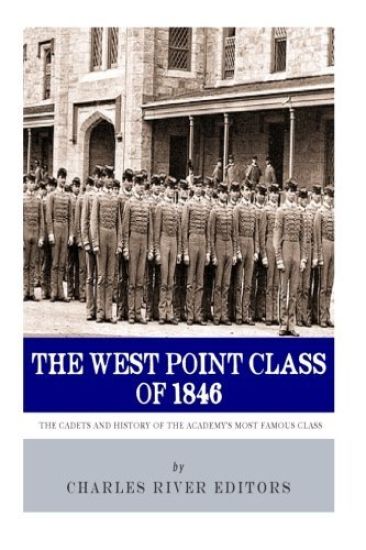
The West Point Class of 1846: The Cadets and History of the Academy's Most Famous Class
*Profiles the Class of 1846's most famous cadets, including George McClellan, Stonewall Jackson, George Pickett, A.P. Hill and others. *Discusses the relationships between the cadets and their lives during and after West Point. *Includes pictures of some of the cadets. *Includes a Bibliography for further reading. "Toiling up hill is not what it is cracked up to be " - Cadet George B. McClellan West Point has long been America's most famous military academy, but in the early 19th century, it was a highly unimpressive school consisting of a few ugly buildings facing a desolate, barren parade ground. Established with just five officers and ten cadets of the Corps of Engineers on March 16, 1802, the Academy was built on a spot just 50 miles north of New York City which had been a key Hudson River military fortress during the Revolutionary War. Cadets attending during the "Point's" first several decades were obliged to maintain their daily regimen knowing the school might shut down at any moment, as the U. S. government frequently questioned why it should provide free education. As it turned out, West Point would become the foremost military academy in the nation, and it would churn out the cadets who became the most important generals in the Civil War. With that, the future generals' years at West Point became a source of both camaraderie and colorful stories A clerical error by West Point administrators ensured that Hiram Ulysses Grant forever became known as Ulysses S. Grant, and years after Robert E. Lee met Albert Sidney Johnston and Jefferson Davis at West Point, George H. Thomas and William Tecumseh Sherman met each other and Richard S. Ewell. During the 1850s, classes included men like John Bell Hood, Union general Phil Sheridan and James Birdseye McPherson, who would become the only commanding general of a Union army to die in a Civil War battle when he fell in 1864 during Sherman's Atlanta Campaign. But none of the West Point classes became as famous as the Class of 1846, which boasted more than a dozen future Civil War generals. The Class of 1846 included a shy kid named Thomas Jonathan Jackson who made few friends and struggled with his studies, finishing 17th in his class 15 years before becoming Stonewall. Also in that class was A.P. Hill, who was already in love with the future wife of George McClellan, a young prodigy who finished second in the class of 1846. A popular and mischievous George Pickett would play hooky at the local bar and struggle just to finish last in the class, and the Class of 1846 also churned out critical Union generals like Jesse Reno, Darius Couch, and George Stoneman. Before these men opposed each other on Civil War battlefields, they forged their own friendships and charted their future paths together at West Point. The West Point Class of 1846 profiles the most famous cadets of the class, chronicles their time on campus together, and discusses their careers after the Academy. Along with pictures of important people and places, you will learn about the Class of 1846 like you never have before, in no time at all.
The Western Theater of the Civil War: The History and Legacy of the Most Important Battles Fought across the West
*Includes pictures*Includes excerpts of soldiers' accounts*Includes a bibliography for further readingWhile the Lincoln Administration and most Northerners were preoccupied with trying to capture Richmond in the summer of 1861, it would be the little known Ulysses S. Grant who delivered the Union's first major victories, over a thousand miles away from Washington. In January of 1862, Grant persuaded General Henry "Old Brains" Halleck to allow his men to launch a campaign on the Tennessee River. As soon as Halleck acquiesced, Grant moved against Fort Henry, in close coordination with the naval command of Flag Officer Andrew Hull Foote. The combination of infantry and naval bombardment helped force the capitulation of Fort Henry on February 6, 1862, and the surrender of Fort Henry was followed immediately by an attack on Fort Donelson on the Cumberland River, which earned Grant his famous nickname "Unconditional Surrender". The Battle of Shiloh lasted two days, but the battle over the battle had just begun. Grant's army had just won the biggest battle in the history of North America, with nearly 24,000 combined casualties among the Union and Confederate forces. As a result of the Battle of Shiloh, Grant was demoted to second-in-command of all armies in his department, an utterly powerless position. And when word of what many considered a "colossal blunder" reached Washington, several congressmen insisted that Lincoln replace Grant in the field. Lincoln famously defended Grant, telling critics, "I can't spare this man. He fights." Given its importance, it's somewhat surprising in retrospect that the Union managed to capture New Orleans in an easier manner than places like Vicksburg and Atlanta. Admiral David Farragut's naval forces battered their shaky Confederate counterparts and were able to get over a dozen ships upriver past a couple of crucial Confederate forts along the Mississippi. By May 1862, Union forces occupied the city and General Benjamin Butler became its military governor, leaving the last true bastion of Confederate defenses on the Mississippi at Vicksburg. When Grant captured that in July 1863, the Union controlled the entire river and essentially cut the Confederacy in two.Americans have long been fascinated by the Civil War and its biggest battles, particularly Gettysburg, Antietam, and Shiloh, all of which involved Robert E. Lee or Ulysses S. Grant. But one of the 6 biggest battles of the war, and the one that took the heaviest toll by % on both armies was fought at the end of 1862 in Tennessee, and it involved neither of those generals. At the start of 1863, Robert E. Lee's Army of Northern Virginia had been frustrating the Union in the Eastern theater for several months, but the situation in the West was completely different. The Confederates had lost control of several important states throughout 1862, and after New Orleans was taken by the Union, the North controlled almost all of the Mississippi River, which Confederate general James Longstreet called "the lungs of the Confederacy". By taking control of that vital river, the North would virtually cut the Confederacy in two, putting the South in a dire situation. The only domino left to fall was the stronghold of Vicksburg, and both sides knew it. In the aftermath of the Battle of Chickamauga, several Confederate generals blamed the number of men lost during what would be the bloodiest battle of the Western Theater on Bragg's incompetence, also criticizing him for refusing to pursue the escaping Union army. General Longstreet later stated to Jefferson Davis, "Nothing but the hand of God can help as long as we have our present commander." Although the Chattanooga Campaign was months long and involved several battles, it has become mostly remembered for the Battle of Missionary Ridge, one of the most remarkable and successful charges of the war.
The Western Theater of the Civil War: The History and Legacy of the Most Important Battles Fought across the West
*Includes pictures*Includes excerpts of soldiers' accounts*Includes a bibliography for further readingWhile the Lincoln Administration and most Northerners were preoccupied with trying to capture Richmond in the summer of 1861, it would be the little known Ulysses S. Grant who delivered the Union's first major victories, over a thousand miles away from Washington. In January of 1862, Grant persuaded General Henry "Old Brains" Halleck to allow his men to launch a campaign on the Tennessee River. As soon as Halleck acquiesced, Grant moved against Fort Henry, in close coordination with the naval command of Flag Officer Andrew Hull Foote. The combination of infantry and naval bombardment helped force the capitulation of Fort Henry on February 6, 1862, and the surrender of Fort Henry was followed immediately by an attack on Fort Donelson on the Cumberland River, which earned Grant his famous nickname "Unconditional Surrender". The Battle of Shiloh lasted two days, but the battle over the battle had just begun. Grant's army had just won the biggest battle in the history of North America, with nearly 24,000 combined casualties among the Union and Confederate forces. As a result of the Battle of Shiloh, Grant was demoted to second-in-command of all armies in his department, an utterly powerless position. And when word of what many considered a "colossal blunder" reached Washington, several congressmen insisted that Lincoln replace Grant in the field. Lincoln famously defended Grant, telling critics, "I can't spare this man. He fights." Given its importance, it's somewhat surprising in retrospect that the Union managed to capture New Orleans in an easier manner than places like Vicksburg and Atlanta. Admiral David Farragut's naval forces battered their shaky Confederate counterparts and were able to get over a dozen ships upriver past a couple of crucial Confederate forts along the Mississippi. By May 1862, Union forces occupied the city and General Benjamin Butler became its military governor, leaving the last true bastion of Confederate defenses on the Mississippi at Vicksburg. When Grant captured that in July 1863, the Union controlled the entire river and essentially cut the Confederacy in two.Americans have long been fascinated by the Civil War and its biggest battles, particularly Gettysburg, Antietam, and Shiloh, all of which involved Robert E. Lee or Ulysses S. Grant. But one of the 6 biggest battles of the war, and the one that took the heaviest toll by % on both armies was fought at the end of 1862 in Tennessee, and it involved neither of those generals. At the start of 1863, Robert E. Lee's Army of Northern Virginia had been frustrating the Union in the Eastern theater for several months, but the situation in the West was completely different. The Confederates had lost control of several important states throughout 1862, and after New Orleans was taken by the Union, the North controlled almost all of the Mississippi River, which Confederate general James Longstreet called "the lungs of the Confederacy". By taking control of that vital river, the North would virtually cut the Confederacy in two, putting the South in a dire situation. The only domino left to fall was the stronghold of Vicksburg, and both sides knew it. In the aftermath of the Battle of Chickamauga, several Confederate generals blamed the number of men lost during what would be the bloodiest battle of the Western Theater on Bragg's incompetence, also criticizing him for refusing to pursue the escaping Union army. General Longstreet later stated to Jefferson Davis, "Nothing but the hand of God can help as long as we have our present commander." Although the Chattanooga Campaign was months long and involved several battles, it has become mostly remembered for the Battle of Missionary Ridge, one of the most remarkable and successful charges of the war.