

Kirjahaku
Etsi kirjoja tekijän nimen, kirjan nimen tai ISBN:n perusteella.
1000 tulosta hakusanalla Cecelia Ahern


Meet Cecelia, ...sweet, slow-moving sloth.Hear her story of how her beautiful world is in trouble.You can help her by getting to know her and her friends, before their paradise home is gone forever.

Happy Birthday Cecelia - The Big Birthday Activity Book: Personalized Children's Activity Book
Birthdaydr
Createspace Independent Publishing Platform
2018
nidottu
Happy Birthday Cecelia is a personalized kids activity book, it includes personalized crosswords, word searches, number puzzles, jokes, drawing and coloring >It is suitable for children between 6-11 years old It is the perfect birthday present for Cecelia, and is a great keepsake for parents to remember their child's early years and birthdays This personalized book is available for other names also This is a great gift for children and an amazing keepsake for parents Happy Birthday Cecelia


The Life And Sufferings Of Cecelia Mayo
M. Aurelius Publisher
KESSINGER PUBLISHING, LLC
2010
nidottu

The Life And Sufferings Of Cecelia Mayo
M. Aurelius Publisher
KESSINGER PUBLISHING, LLC
2010
sidottu

Boom! Comics by Cecelia: A What Happens Next Comic Book for Budding Illustrators and Story Tellers
Bokkaku Dojinshi
Createspace Independent Publishing Platform
2018
nidottu
Grab This Deal For The Comics Artist In Your Life For Less Than $10See that girl always doodling and dreaming up stories and plots? She's gonna LOVE the What Happens Next Comic Book For Budding Artists edition, created especially for young artists between 9 and 14 years of age.Bokkaku Dojinshi has created this book as a 6 by 9 inch, perfect pocket book form. Plenty of different templates to explore as well as loads of room to keep track of plot ideas.There is even space for special expression studies of the main characters so the budding artist hits the right emotion in her images every single time.This book is perfect for: mangagraphic novelsSunday funniesanimefan fictionParents and teachers love What Happens Next Comics series for these reasons: helps speech developmentincreases literacydevelops a sense of sequencecreates confidencedevelops an appreciation for artboots creativityOnce you get this book, notice how handy it is - perfect pocket book size means no bulky bags on summer trips or lazy afternoons under a willow tree. All you need is your pencil and ink pen Can't wait to see what you make of your And then... comic book

Bird Songs of North Dakota: Poem-Songs by Cecelia Doyle Langstaff (Wiger)
Blake Birchand
Independently Published
2019
nidottu
This is a collection of 320+ poem-songs written by Cecelia Doyle Langstaff (Wiger). The words were documented in the 1930s and 1940s.

Peter Wright and Mary Anderson: a Family Record: Genealogy of Their Descendants and of Those of Cecelia Anderson, Who Married Daniel Neall
Ernest Neall 1920- Wright
Hassell Street Press
2021
nidottu


â??Fascinatingâ?¦ I loved this book; I really didâ?? David Crystal, Spectator A biography of a much misunderstood punctuation mark and a call to arms in favour of clear expression and against stifling grammar rules.
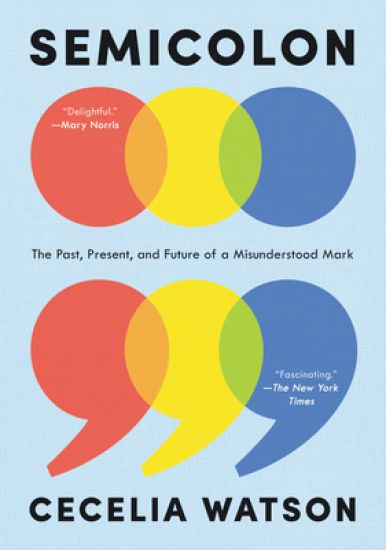
Semicolon: The Past, Present, and Future of a Misunderstood Mark
Cecelia Watson
Ecco Press
2022
nidottu
"Delightful." --Mary Norris, The New YorkerA page-turning, existential romp through the life and times of the world's most polarizing punctuation markThe semicolon. Stephen King, Hemingway, Vonnegut, and Orwell detest it. Herman Melville, Henry James, and Rebecca Solnit love it. But why? When is it effective? Have we been misusing it? Should we even care?In Semicolon, Cecelia Watson charts the rise and fall of this infamous punctuation mark, which for years was the trendiest one in the world of letters. But in the nineteenth century, as grammar books became all the rage, the rules of how we use language became both stricter and more confusing, with the semicolon a prime victim. Taking us on a breezy journey through a range of examples--from Milton's manuscripts to Martin Luther King Jr.'s "Letters from Birmingham Jail" to Raymond Chandler's The Big Sleep--Watson reveals how traditional grammar rules make us less successful at communicating with each other than we'd think. Even the most die-hard grammar fanatics would be better served by tossing the rule books and learning a better way to engage with language.Through her rollicking biography of the semicolon, Watson writes a guide to grammar that explains why we don't need guides at all, and refocuses our attention on the deepest, most primary value of language: true communication.
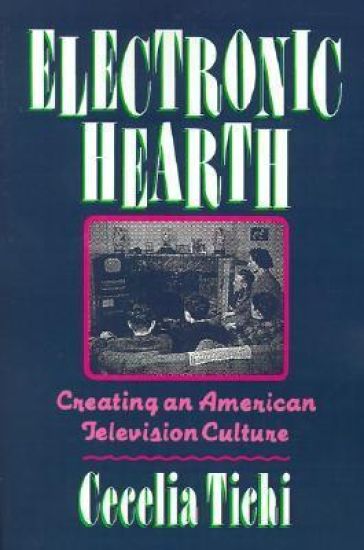
We all talk about the "tube" or "box," as if television were simply another appliance like the refrigerator or toaster oven. But Cecilia Tichi argues that TV is actually an environment--a pervasive screen-world that saturates almost every aspect of modern life. In Electronic Hearth, she looks at how that environment evolved, and how it, in turn, has shaped the American experience. Tichi explores almost fifty years of writing about television--in novels, cartoons, journalism, advertising, and critical books and articles--to define the role of television in the American consciousness. She examines early TV advertising to show how the industry tried to position the new device as not just a gadget but a prestigious new piece of furniture, a highly prized addition to the home. The television set, she writes, has emerged as a new electronic hearth--the center of family activity. John Updike described this "primitive appeal of the hearth" in Roger's Version: "Television is--its irresistable charm--a fire. Entering an empty room, we turn it on, and a talking face flares into being." Sitting in front of the TV, Americans exist in a safety zone, free from the hostility and violence of the outside world. She also discusses long-standing suspicions of TV viewing: its often solitary, almost autoerotic character, its supposed numbing of the minds and imagination of children, and assertions that watching television drugs the minds of Americans. Television has been seen as treacherous territory for public figures, from generals to presidents, where satire and broadcast journalism often deflate their authority. And the print culture of journalism and book publishing has waged a decades-long war of survival against it--only to see new TV generations embrace both the box and the book as a part of their cultural world. In today's culture, she writes, we have become "teleconscious"--seeing, for example, real life being certified through television ("as seen on TV"), and television constantly ratified through its universal presence in art, movies, music, comic strips, fabric prints, and even references to TV on TV. Ranging far beyond the bounds of the broadcast industry, Tichi provides a history of contemporary American culture, a culture defined by the television environment. Intensively researched and insightfully written, The Electronic Hearth offers a new understanding of a critical, but much-maligned, aspect of modern life.

Representing a historical cross-section of performance and training in Western music since the seventeenth century, Five Lives in Music brings to light the private and performance lives of five remarkable women musicians and composers. Elegantly guiding readers through the Thirty Years War in central Europe, elite courts in Germany, urban salons in Paris, Nazi control of Germany and Austria, and American musical life today, as well as personal experiences of marriage, motherhood, and widowhood, Cecelia Hopkins Porter provides valuable insights into the culture in which each woman was active. Porter begins with the Duchess Sophie-Elisabeth of Braunschweig-Lueneberg, a harpsichordist who also presided over seventeenth-century North German court music as an impresario. At the forefront of French Baroque composition, composer Elisabeth-Claude Jacquet de La Guerre bridged a widening cultural gap between the Versailles nobility and the urban bourgeoisie of Paris. A century later, Josephine Lang, a prodigiously talented pianist and dedicated composer, participated at various times in the German Romantic world of lieder through her important arts salon. Lastly, the twentieth century brought forth two exceptional women: Baroness Maria Bach, a composer and pianist of twentieth-century Vienna's upper bourgeoisie and its brilliant musical milieu in the era of Gustav Mahler, Richard Strauss, Arnold Schoenberg, and Erich Korngold; and Ann Schein, a brilliant and dauntless American piano prodigy whose career, ongoing today though only partially recognized, led her to study with the legendary virtuosos Arthur Rubinstein and Myra Hess. Mining musical autographs, unpublished letters and press reviews, interviews, and music archives in the United States and Europe, Porter probes each musician's social and economic status, her education and musical training, the cultural expectations within the traditions and restrictions of each woman's society, and other factors. Throughout the lively and focused portraits of these five women, Porter finds common threads, both personal and contextual, that extend to a larger discussion of the lives and careers of female composers and performers throughout centuries of music history.

In November 1933, the Socialist Party of Bridgeport, Connecticut put slate roofer Jasper McLevy in the mayor's seat and nearly won control of the city council. Cecelia Bucki explores how labor gained first a foothold and then a stronghold in local politics as broad debates pitted previously unengaged working-class citizens against local business leaders and traditional party elites. In the heat of the Great Depression, the skilled union craftsmen who made up the bulk of the city's Socialist Party filled a political void created by the crumbling of mainstream parties, the disintegration of traditional modes of ethnic politics, and the city's acute fiscal crisis. In time, however, legislative measures and compromise politics blunted the progressive agenda. The local party split from the Socialist Party of America and became narrowly focused and reformist while still serving as the voice of the working class. A portrait of a stunning moment in American politics, Bridgeport's Socialist New Deal, 1915-36 offers a fascinating look at the volatility of politics in the early years of the Great Depression.

Representing a historical cross-section of performance and training in Western music since the seventeenth century, Five Lives in Music brings to light the private and performance lives of five remarkable women musicians and composers. Elegantly guiding readers through the Thirty Years War in central Europe, elite courts in Germany, urban salons in Paris, Nazi control of Germany and Austria, and American musical life today, as well as personal experiences of marriage, motherhood, and widowhood, Cecelia Hopkins Porter provides valuable insights into the culture in which each woman was active. Porter begins with the Duchess Sophie-Elisabeth of Braunschweig-Lueneberg, a harpsichordist who also presided over seventeenth-century North German court music as an impresario. At the forefront of French Baroque composition, composer Elisabeth-Claude Jacquet de La Guerre bridged a widening cultural gap between the Versailles nobility and the urban bourgeoisie of Paris. A century later, Josephine Lang, a prodigiously talented pianist and dedicated composer, participated at various times in the German Romantic world of lieder through her important arts salon. Lastly, the twentieth century brought forth two exceptional women: Baroness Maria Bach, a composer and pianist of twentieth-century Vienna's upper bourgeoisie and its brilliant musical milieu in the era of Gustav Mahler, Richard Strauss, Arnold Schoenberg, and Erich Korngold; and Ann Schein, a brilliant and dauntless American piano prodigy whose career, ongoing today though only partially recognized, led her to study with the legendary virtuosos Arthur Rubinstein and Myra Hess. Mining musical autographs, unpublished letters and press reviews, interviews, and music archives in the United States and Europe, Porter probes each musician's social and economic status, her education and musical training, the cultural expectations within the traditions and restrictions of each woman's society, and other factors. Throughout the lively and focused portraits of these five women, Porter finds common threads, both personal and contextual, that extend to a larger discussion of the lives and careers of female composers and performers throughout centuries of music history.
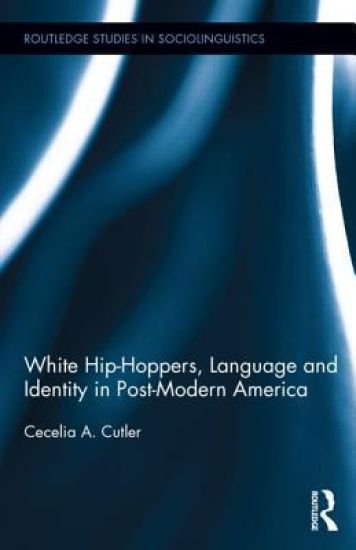
White Hip Hoppers, Language and Identity in Post-Modern America
Cecelia Cutler
Routledge
2014
sidottu
This book examines language and identity among White American middle and upper-middle class youth who affiliate with Hip Hop culture. Hip Hop youth engage in practices that range from the consumption of rap music and fashion to practices like MC-ing (writing and performing raps or "rhymes"), DJ-ing (mixing records to produce a beat for the MC), graffiti tagging, and break-dancing. Cutler explores the way in which these young people stylize their speech using linguistic resources drawn from African American English and Hip Hop slang terms. She also looks at the way they construct their identities in discussions with their friends, and how they talk about and use language to construct themselves as authentic within Hip Hop. Cutler considers the possibility that young people experimenting with AAVE-styled speech may improve the status of AAVE in the broader society. She also addresses the need for educators to be aware of the linguistic patterns found in AAVE and Hip Hop language, and ways to build on Hip Hop skills like rhyming and rapping in order to motivate students and promote literacy.

Interpreting International Politics addresses each of the major, "traditional" subfields in International Relations: International Law and Organization, International Security, and International Political Economy. But how are interpretivist methods and concerns brought to bear on these topics? In this slim volume Cecelia Lynch focuses on the philosophy of science and conceptual issues that make work in international relations distinctly interpretive. This work both legitimizes and demonstrates the necessity of post- and non-positivist scholarship.Interpretive approaches to the study of international relations span not only the traditional areas of security, international political economy, and international law and organizations, but also emerging and newer areas such as gender, race, religion, secularism, and continuing issues of globalization. By situating, describing, and analyzing major interpretive works in each of these fields, the book draws out the critical research challenges that are posed by and the progress that is made by interpretive work. Furthermore, the book also pushes forward interpretive insights to areas that have entered the IR radar screen more recently, including race and religion, demonstrating how work in these areas can inform all subfields of the discipline and suggesting paths for future research.