Kirjojen hintavertailu. Mukana 11 342 296 kirjaa ja 12 kauppaa.

Kirjahaku

Etsi kirjoja tekijän nimen, kirjan nimen tai ISBN:n perusteella.

1000 tulosta hakusanalla Charles E. Perry

The Economics of US Health Care Policy

The Economics of US Health Care Policy

Charles E. Phelps; Stephen T. Parente

Routledge
2017
nidottu
In this book, Phelps and Parente explore the US health care system and set out the case for its reform. They trace the foundations of today’s system, and show how distortions in the incentives facing participants in the health care market could be corrected in order to achieve lower costs, a higher quality of care, a higher level of patient safety, and a more efficient allocation of health care resources. Phelps and Parente propose novel yet economically robust changes to US tax law affecting health insurance coverage and related issues. They also discuss a series of specific improvements to Medicare and Medicaid, and assess potential innovations that affect all of health care, including chronic disease management, fraud and abuse detection, information technology, and other key issues.The Economics of US Health Care Policy will be illuminating reading for anyone with an interest in health policy, and will be a valuable supplementary text for courses in health economics and health policy, including for students without advanced training in economics.
Reinforced Concrete Designer's Handbook

Reinforced Concrete Designer's Handbook

Charles E. Reynolds; James C. Steedman; Anthony J. Threlfall

Taylor Francis Ltd
2007
sidottu
This classic and essential work has been thoroughly revised and updated in line with the requirements of new codes and standards which have been introduced in recent years, including the new Eurocode as well as up-to-date British Standards.It provides a general introduction along with details of analysis and design of a wide range of structures and examination of design according to British and then European Codes.Highly illustrated with numerous line diagrams, tables and worked examples, Reynolds's Reinforced Concrete Designer's Handbook is a unique resource providing comprehensive guidance that enables the engineer to analyze and design reinforced concrete buildings, bridges, retaining walls, and containment structures.Written for structural engineers, contractors, consulting engineers, local and health authorities, and utilities, this is also excellent for civil and architecture departments in universities and FE colleges.
Reinforced Concrete Designer's Handbook

Reinforced Concrete Designer's Handbook

Charles E. Reynolds; James C. Steedman; Anthony J. Threlfall

Taylor Francis Ltd
2007
nidottu
This classic and essential work has been thoroughly revised and updated in line with the requirements of new codes and standards which have been introduced in recent years, including the new Eurocode as well as up-to-date British Standards.It provides a general introduction along with details of analysis and design of a wide range of structures and examination of design according to British and then European Codes.Highly illustrated with numerous line diagrams, tables and worked examples, Reynolds's Reinforced Concrete Designer's Handbook is a unique resource providing comprehensive guidance that enables the engineer to analyze and design reinforced concrete buildings, bridges, retaining walls, and containment structures.Written for structural engineers, contractors, consulting engineers, local and health authorities, and utilities, this is also excellent for civil and architecture departments in universities and FE colleges.
Generalized, Linear, and Mixed Models

Generalized, Linear, and Mixed Models

Charles E. McCulloch; Shayle R. Searle; John M. Neuhaus

John Wiley Sons Inc
2008
sidottu
An accessible and self-contained introduction to statistical models-now in a modernized new edition Generalized, Linear, and Mixed Models, Second Edition provides an up-to-date treatment of the essential techniques for developing and applying a wide variety of statistical models. The book presents thorough and unified coverage of the theory behind generalized, linear, and mixed models and highlights their similarities and differences in various construction, application, and computational aspects. A clear introduction to the basic ideas of fixed effects models, random effects models, and mixed models is maintained throughout, and each chapter illustrates how these models are applicable in a wide array of contexts. In addition, a discussion of general methods for the analysis of such models is presented with an emphasis on the method of maximum likelihood for the estimation of parameters. The authors also provide comprehensive coverage of the latest statistical models for correlated, non-normally distributed data. Thoroughly updated to reflect the latest developments in the field, the Second Edition features: A new chapter that covers omitted covariates, incorrect random effects distribution, correlation of covariates and random effects, and robust variance estimationA new chapter that treats shared random effects models, latent class models, and properties of modelsA revised chapter on longitudinal data, which now includes a discussion of generalized linear models, modern advances in longitudinal data analysis, and the use between and within covariate decompositionsExpanded coverage of marginal versus conditional modelsNumerous new and updated examples With its accessible style and wealth of illustrative exercises, Generalized, Linear, and Mixed Models, Second Edition is an ideal book for courses on generalized linear and mixed models at the upper-undergraduate and beginning-graduate levels. It also serves as a valuable reference for applied statisticians, industrial practitioners, and researchers.
Giant Molecules

Giant Molecules

Charles E. Carraher

John Wiley Sons Inc
2003
sidottu
The Second Edition of Giant Molecules presents an introductory textbook on large molecules that exhibit specific physical and biological properties related to their size, orientation, and environment, making this subject accessible to students from high school to universities. Written by Charles Carraher, author of more than forty books on the subject, this up-to-date guide presents material in an integrated fashion, marrying fundamentals with illustrative applications. The text assumes no previous formal scientific training, and includes new and updated questions and answers, a glossary of relevant terms, bibliographies, visual aids, and related Web links in every chapter. Giant Molecules, Second Edition will appeal to individuals who have a personal or professional interest in polymers, as well as to college chemistry and materials science students who study polymers.
Ages and Stages

Ages and Stages

Charles E. Schaefer; Theresa Foy DiGeronimo

John Wiley Sons Inc
2000
nidottu
A comprehensive parent’s guide to your child’s psychological development from birth through age 10 Written in an engaging, practical style, Ages and Stages offers you the benefits of the most current research on child development, featuring helpful tips and techniques to foster your child’s maturation. Charles Schaefer and Theresa Foy DiGeronimo tell you what behaviors you can expect as your child grows and how you can help him or her to advance to the next level of development. They include numerous examples, stories, and activities you can use immediately to positively influence your child’s development. The book’s structure (divided into four stages of child development—birth to 18 months, 18 to 36 months, 36 months to age six, and six to ten years) allows you to monitor your child’s progress, identify the reasons for emotional and psychological differences in siblings, and even determine how your parenting strategies should change as your child grows.*Covers all five areas of psychological health—emotional, cognitive, friendship/relationships, personal growth, and morality*Filled with easy-to-follow Do’s and Don’ts, plus fun activities and exercises to encourage your child’s development*Helps you assess if and when your child may need professional intervention
Faith in Paper

Faith in Paper

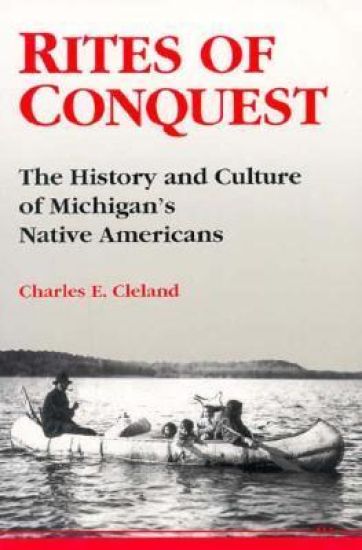
Charles E. Cleland

The University of Michigan Press
2011
sidottu
Examines the reinstitution of Indian treaty rights in the upper Great Lakes region during the last quarter of the twentieth century, focusing on the treaties and legal cases that together have awakened a new day in Native American sovereignty and established the place of Indian tribes in the modern political landscape.
Religious Life of Samuel Johnson

Religious Life of Samuel Johnson

Charles E. Pierce

Continuum International Publishing Group Ltd.
2000
pokkari
Samuel Johnson was a deeply religious man and he came to depend on his Christian faith as the principal means by which to endure the pain of existence. He sought throughout his life to render himself worthy of salvation, but the difficulties which he ecperienced in trying to maintain a high degree of reigious discipline - as well as his doubts about God's ultimate concern for man and his fears of his own spiritual unworthiness - led him in to periods of madness and a perpetual dread of damnation. Charles Pierce examines the effect of Johnson's religious concerns upon the formation of his complex character, and on the great moral writing that began with The Vanity of Human Wishes and ended with Rasselas. He explores the paradox of a life which was dedicated to the Christian ideal and tormented by that same ideal. Previous works on Johnson's religious beliefs have been concerned with ascertaining whether what those beliefs were, and not with their effect. The main theme of this study is the importance of Johnson's beleifs in the formation of his character and their effect on the moral values expressed in his greatest writing and on the conduct of his life.It will be essential to anyone interested in the life and thought of one of the greatest English literary figures. Charles E. Pierce, Jr., is Associate Professor of English at Vassar College, N.Y.
American-Spanish Semantics

American-Spanish Semantics

Charles E. Kany

University of California Press
2020
pokkari
American-Spanish Semantics examines how Spanish language in the New World evolved from its sixteenth-century roots in Spain, adapting to diverse social and environmental changes. Spanish conquerors and settlers came from varied regions of Spain, leading to a blend of regional dialects. They avoided regional expressions that could hinder mutual understanding, opting for universally known terms. Upon arriving in the Americas, they adapted familiar words for new landscapes, using terms like piña (pineapple), pavo (turkey), and león (puma). As contact with indigenous populations grew, Spanish speakers incorporated native terms into their vocabulary, leading to variations like cuy for conejillo de Indias and ají for pimienta. Each region developed unique linguistic traits, informed by the native languages—Nahuatl, Quechua, Mapuche—that contributed to the distinct vocabulary and expressions in various parts of Spanish-speaking America. The adaptation process extended beyond vocabulary to encompass the semantic shifts and unique connotations that formed American Spanish. While Spain maintained cultural influence over colonial centers like Mexico City and Lima, distant regions such as Argentina and Chile experienced more linguistic independence. Without Spain’s viceroy-led structure, local dialects, rural speech patterns, and immigrant influences—from Italians in Argentina to Basques in Venezuela—shaped the evolution of Spanish in different regions. Words changed in meaning, some acquiring regional specificity, and a balance between Spanish norms and American adaptations emerged, especially in regions with less direct oversight from Spain. American Spanish thus grew into a vibrant linguistic system, enriched by indigenous contributions, local dialects, and evolving cultural values. This resulted in five main linguistic zones across Latin America, each with its unique lexical features and regional expressions, reflecting the distinctive social, cultural, and economic dynamics of each area. The text underscores that American Spanish is a dynamic language shaped by its speakers, who constantly modify and adapt it to new realities, creating a language that is at once rooted in Spain but distinctively transformed by the New World. This title is part of UC Press's Voices Revived program, which commemorates University of California Press’s mission to seek out and cultivate the brightest minds and give them voice, reach, and impact. Drawing on a backlist dating to 1893, Voices Revived makes high-quality, peer-reviewed scholarship accessible once again using print-on-demand technology. This title was originally published in 1960.
American-Spanish Semantics

American-Spanish Semantics

Charles E. Kany

University of California Press
2021
sidottu
American-Spanish Semantics examines how Spanish language in the New World evolved from its sixteenth-century roots in Spain, adapting to diverse social and environmental changes. Spanish conquerors and settlers came from varied regions of Spain, leading to a blend of regional dialects. They avoided regional expressions that could hinder mutual understanding, opting for universally known terms. Upon arriving in the Americas, they adapted familiar words for new landscapes, using terms like piña (pineapple), pavo (turkey), and león (puma). As contact with indigenous populations grew, Spanish speakers incorporated native terms into their vocabulary, leading to variations like cuy for conejillo de Indias and ají for pimienta. Each region developed unique linguistic traits, informed by the native languages—Nahuatl, Quechua, Mapuche—that contributed to the distinct vocabulary and expressions in various parts of Spanish-speaking America. The adaptation process extended beyond vocabulary to encompass the semantic shifts and unique connotations that formed American Spanish. While Spain maintained cultural influence over colonial centers like Mexico City and Lima, distant regions such as Argentina and Chile experienced more linguistic independence. Without Spain’s viceroy-led structure, local dialects, rural speech patterns, and immigrant influences—from Italians in Argentina to Basques in Venezuela—shaped the evolution of Spanish in different regions. Words changed in meaning, some acquiring regional specificity, and a balance between Spanish norms and American adaptations emerged, especially in regions with less direct oversight from Spain. American Spanish thus grew into a vibrant linguistic system, enriched by indigenous contributions, local dialects, and evolving cultural values. This resulted in five main linguistic zones across Latin America, each with its unique lexical features and regional expressions, reflecting the distinctive social, cultural, and economic dynamics of each area. The text underscores that American Spanish is a dynamic language shaped by its speakers, who constantly modify and adapt it to new realities, creating a language that is at once rooted in Spain but distinctively transformed by the New World. This title is part of UC Press's Voices Revived program, which commemorates University of California Press’s mission to seek out and cultivate the brightest minds and give them voice, reach, and impact. Drawing on a backlist dating to 1893, Voices Revived makes high-quality, peer-reviewed scholarship accessible once again using print-on-demand technology. This title was originally published in 1960.
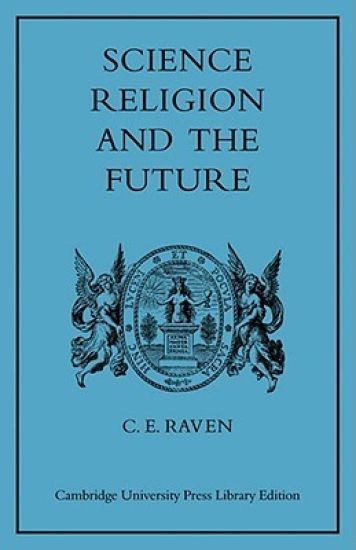
Science, Religion, and the Future

Science, Religion, and the Future

Charles E. Raven

Cambridge University Press
2008
pokkari
A course of eight lectures delivered at Cambridge in 1943. In his introduction Dr Raven suggests that science and religion, as the most formative influence in the educational and the intellectual life of the world, share responsibility for the outbreak of world-wide war: 'Somehow the people responsible for education, for shaping and propagating ideas and for developing civilisation have allowed science and religion to become antagonistic with results disastrous to them both and devastating to the life of men. It is the purpose of the first four of these lectures to indicate the history of that disaster; and of the second four to consider how, if at all, it may be retrieved.'
The German Historians and England

The German Historians and England

Charles E. McLelland

Cambridge University Press
2008
pokkari
Between the late eighteenth century and the eve of World War I, England assumed a special significance for the German intellectual elite. In the beginning, the preponderant admiration for England was intense enough to earn the name Anglomania, but by the turn of the twentieth century German intellectuals had developed an intensely hostile view of everything English, a view which required little exaggeration to provide distorted war propaganda in 1914. Dr McClelland describes and explains the great change in the German view of England in the period when she meant most to German thinkers. In particular he investigates one important group of German intellectuals - the historians and social scientists. These men provide a relatively continuous thread through the development of German thought. Furthermore, the German historians played an especially important role in the elaboration of German civic culture as a result of their great prestige within the universities, their political activism and their political journalism.
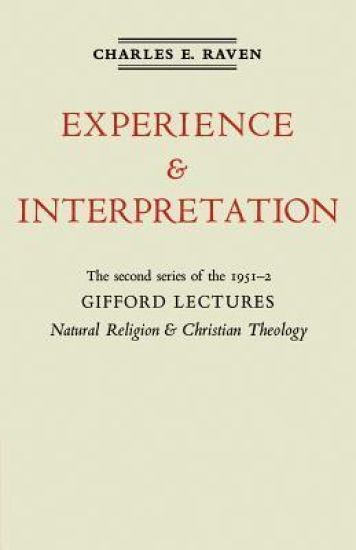
Natural Religion and Christian Theology

Natural Religion and Christian Theology

Charles E. Raven

Cambridge University Press
2012
pokkari
This second volume of the 1951–2 Gifford Lectures on Natural Religion and Christian Theology completes Canon Raven's version of a modern Religio Medici. If the Cartesian dualism of body and mind is challenged successfully by an integrative or holistic philosophy, the theological statements are also required, to express the Christian's interpretation of his experience. In this second set of lectures Canon Raven examines critically and constructively the scope and character of this restatement and interpretation. He claims that any adequate interpretation must be stated in fully personal categories; that the confession of Jesus as the image of the invisible can still be accepted, provided it be recognised that this involves a more radical restatement of the nature of God and of the quality of human solidarity than has been accepted by tradition; and that on these conditions it is still possible for man to 'live eternally'.
Natural Religion and Christian Theology: Volume 1, Science and Religion
This first volume of the 1951–2 Gifford Lectures on Natural Religion and Christian Theology was published in 1953 and followed shortly thereafter by the second volume, Experience and Interpretation. In this volume, Canon Raven presents a rewriting of the history of science in organic and holistic categories, as opposed to the conventional mechanism and determinism.
Patterns of Moral Complexity

Patterns of Moral Complexity

Charles E. Larmore

Cambridge University Press
1987
pokkari
Larmore aims to recover three forms of moral complexity that have often been neglected by moral and political philosophers. First, he argues that virtue is not simply the conscientious adherence to principle. Rather, the exercise of virtue apply. He argues - and this is the second pattern of complexity - that recognizing the value of constitutive ties with shared forms of life does not undermine the liberal ideal of political neutrality toward differing ideals of the good life. Finally Larmore agrues for what he calls the heterogeneity of morality. Moral thinking need not be exclusively deontological or consequentialist, and we should recognize that the ultimate sources of moral value are diverse. The arguments presented here do not attack the possibility of moral theory. But in addressing some of the central issues of moral and political thinking today thay attempt to restore to that thinking greater flexibility and a necessary sensitivity to our common experience.
Explaining Epidemics

Explaining Epidemics

Charles E. Rosenberg

Cambridge University Press
1992
sidottu
Medicine has always had its historians; but until recently it was a history written by and for practitioners. Charles Rosenberg has been one of the key figures in recent decades in opening up the history of medicine beyond parochial concerns and instead viewing medicine in the rich currents of intellectual and social change of the past two centuries. This book brings together for the first time in one place many of Professor Rosenberg's most important essays. The first two sections of essays, focusing on ideas and institutions, are meant at the same time to underline interactions between these realms. The essays treat such topics as therapeutics and its relationship to social change in the nineteenth century; the practice of medicine in New York a century ago; and the rise and fall of the dispensary. The third section of the book focuses on the attempt to use history as a resource for discussion of a medical world that often seems out of control and in a semi-permanent crisis, economic, organizational, and humane. The essays discuss themes that have become visible to the public – deinstitutionalization of the mentally ill and the status of psychiatry; the hospital as a social and economic problem; and the social negotiations surrounding AIDS.
The German Experience of Professionalization

The German Experience of Professionalization

Charles E. McClelland

Cambridge University Press
1991
sidottu
Modern learned professions (medicine, law, teaching, engineering, and others) developed in central Europe just as vigorously as in England or America. Yet their close relationship with state power - more typical of the world development of professions than the Anglo-American model - led to a different historical experience of professionalization. This work is the first to explore that experience in a comprehensive way from the time when modern learned professions arose until the eve of World War II. Based on the history and surviving records of German professional organizations, it shows how the learned professions emerged gradually in the nineteenth century from the shadow of strong state regulation to achieve a high degree of autonomy and control over professional standards by the First World War. By studying professional groups collectively, it gives a more contoured picture of their fate under National Socialism than works dedicated primarily to the phenomenon of fascism itself.