Kirjojen hintavertailu. Mukana 11 342 296 kirjaa ja 12 kauppaa.

Kirjahaku

Etsi kirjoja tekijän nimen, kirjan nimen tai ISBN:n perusteella.

1000 tulosta hakusanalla Charles Laborde

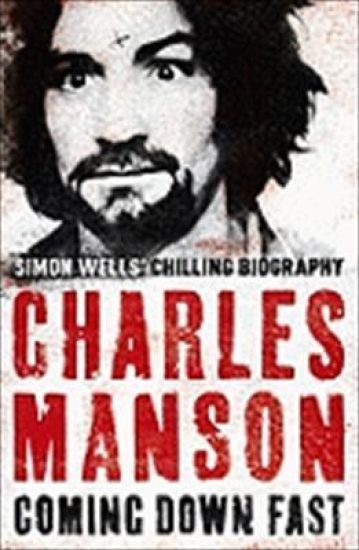
Charles Manson: Coming Down Fast

Charles Manson: Coming Down Fast

Simon Wells

Hodder Paperback
2010
pokkari
*The definitive and bestselling account of Charles Manson*'A sprawling, fast-paced account of Manson's life' The Times'Fascinating' Daily Mail __________Los Angeles, California. 1969. Seven people are found shot, stabbed and beaten to death in Beverley Hills. Among them is actress Sharon Tate, the beautiful young wife of Roman Polanski.It soon became apparent that a happyish cult known as 'The Family' was responsible. Their charismatic and manipulative leader, Charles Manson, took the public's imagination. As the world watched in morbid fascination, the sensational and horrifying details of the case slowly emerged.Coming Down Fast is the definitive and most revealing account of one of the most notorious criminals in history, charting Manson's terrifying rise from petty-criminal to one of the most recognisable icons in criminal history. Including never-before-published photographs, this is the definitive book about Charles Manson.
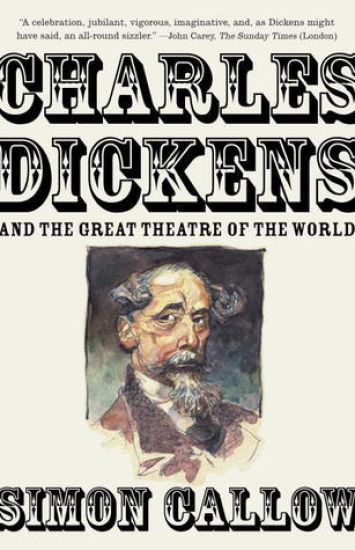
Charles Dickens and the Great Theatre of the World
A short biography of Charles Dickens by acclaimed actor and writer Simon Callow that offers a fresh perspective on one of the greatest novelists in the English language in a lively, highly readable account. "It has all the gusto that a popular biography of Dickens--a man who "could do nothing by halves"--should possess. . . . The best biography for Dickens newcomers and a wonderful read for all."--Library Journal Dickens was one of the first true celebrity authors. Thousands of fans in Britain and America eagerly awaited each new installment of his stories and flocked to see him on his legendary speaking tours. Not only did he create an incredible cast of characters on the page, but he was also a dazzling mimic and storyteller, and he wrote, stage-managed, and acted in plays for the public. Throughout his life, from his childhood performances in pubs to his legendarily powerful reading tours, Dickens was fanatical about the stage. Callow reveals Dickens's genius on and off the page and offers a compelling insight into a life that was driven as much by performance and showmanship as by literature.
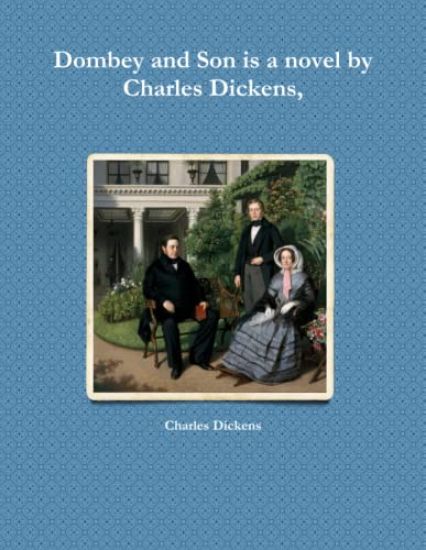
Dombey and Son is a novel by Charles Dickens,
Dombey and Son is a novel by Charles Dickens, published in monthly parts from 1 October 1846 to 1 April 1848 and in one volume in 1848. Its full title is Dealings with the Firm of Dombey and Son: Wholesale, Retail and for Exportation. Dickens started writing the book in Lausanne, Switzerland, before returning to England, via Paris, to complete it.
Little Dorrit is a novel by Charles Dickens.ILLUSTRATED
Little Dorrit is a novel by Charles Dickens, originally published in serial form between 1855 and 1857. The story features Amy Dorrit, youngest child of her family, born and raised in the Marshalsea prison for debtors in London. Arthur Clennam encounters her after returning home from a 20-year absence, ready to begin his life anew. The novel satirises the shortcomings of both government and society, including the institution of debtors' prisons, where debtors were imprisoned, unable to work, until they repaid their debts. The prison in this case is the Marshalsea, where Dickens's own father had been imprisoned. Dickens is also critical of the lack of a social safety net, the treatment and safety of industrial workers, as well the bureaucracy of the British Treasury, in the form of his fictional "Circumlocution Office". In addition he satirises the stratification of society that results from the British class system.
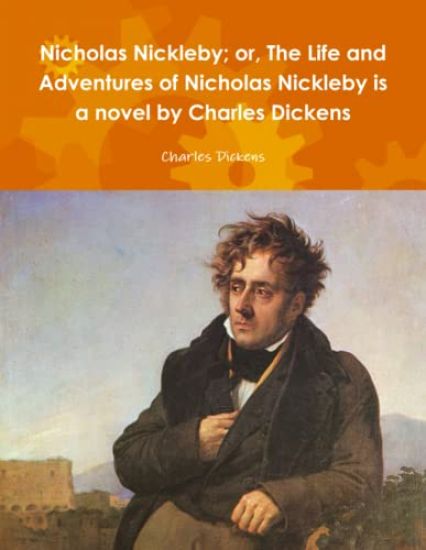
Nicholas Nickleby; or, The Life and Adventures of Nicholas Nickleby is a novel by Charles Dickens
Nicholas Nickleby; or, The Life and Adventures of Nicholas Nickleby is a novel by Charles Dickens. Originally published as a serial from 1838 to 1839, it was Dickens's third novel. The novel centres on the life and adventures of Nicholas Nickleby, a young man who must support his mother and sister after his father dies. Nicholas Nickleby is Charles Dickens's third published novel. He returned to his favourite publishers and to the format that was considered so successful with The Pickwick Papers. The story first appeared in monthly parts, after which it was issued in one volume. The style is considered to be episodic and humorous, though the second half of the novel becomes more serious and tightly plotted. Dickens began writing Nickleby while still working on Oliver Twist and while the mood is considerably lighter, his depiction of the Yorkshire school run by Wackford Squeers is as moving and influential as those of the workhouse and criminal underclass in Twist.
Westward Ho! is an 1855 British historical novel by Charles Kingsley.
Westward Ho is an 1855 British historical novel by Charles Kingsley. The novel was based on the adventures of Elizabethan corsair Amyas Preston (Amyas Leigh in the novel), who sets sail with Sir Francis Drake, Sir Walter Raleigh and other privateers to the New World, where they battle with the Spanish. Set initially in Bideford in North Devon during the reign of Elizabeth I, Westward Ho follows the adventures of Amyas Leigh (Amyas Preston), an unruly child who as a young man follows Francis Drake to sea. Amyas loves local beauty Rose Salterne, as does nearly everyone else; much of the novel involves the kidnap of Rose by a Spaniard.
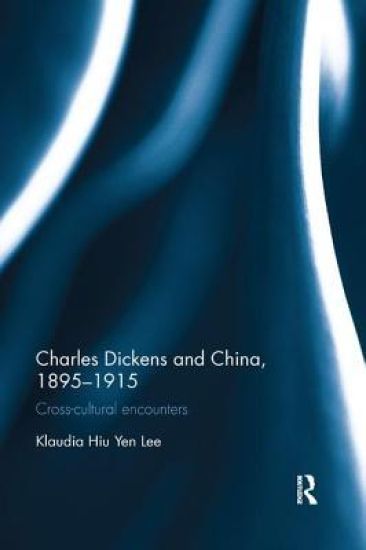
Charles Dickens and China, 1895-1915

Charles Dickens and China, 1895-1915

Klaudia Hiu Yen Lee

Routledge
2019
nidottu
From 1895 to 1915, Chinese translations of Dickens's fiction first appeared as part of a growing interest in Western literature and culture among Chinese intellectuals. Klaudia Hiu Yen investigates the multifarious ways in which Dickens’s works were adapted, reconfigured, and transformed for the Chinese readership against the turbulent political and social conditions in the last stages of the Qing dynasty (1644-1912) and the early Republic (1912-1949). Moving beyond the 'Response to the West’ model which often characterises East-West interactions, Lee explores how Chinese intellectuals viewed Dickens’s novels as performing a particular social function; on occasion, they were used to advance the country’s social and political causes. Translation and adaptation became a means through which the politics and social values of the original Dickens texts were undermined or even subverted. Situating the early introduction of Dickens to China within the broader field of Victorian studies, Lee challenges some of the theoretical and conceptual underpinnings of the ’global’ turn, both in Dickens scholarship and in Victorian studies in general.
Charles Kingsley
Novelist, poet, Anglican priest, and controversialist, Charles Kingsley (1819–75) epitomizes the bustling Victorian man of faith and letters, a prolific polymath as ready to break a lance with John Henry Newman over Christian doctrine as he was to preach to schoolchildren on the virtues of manly, physical struggle. Kingsley’s The Water-Babies and Westward Ho! were best-sellers which became classics of children’s literature. Kingsley has come to epitomize the Victorian age.On closer inspection, Kingsley is harder to categorize: a socialist who was also an imperialist, a Chartist revolutionary who was Queen Victoria’s favourite novelist, a natural theologian who popularized Darwin, a priest who celebrated sex as sacrament. Kingsley only appears straightforward if you consider him one piece at a time. The debates he shaped remain with us today: faith and sexuality, economics and exploitation, race and identity. The aim of this book is to present the whole man: to consider the public crusades for public health alongside the most private fantasies of sexual intercourse; to consider the ardent imperialist alongside the Darwinist. It will be of interest to all students of Victorian studies, as well as of British/Imperial history, church history, and especially the history of science.
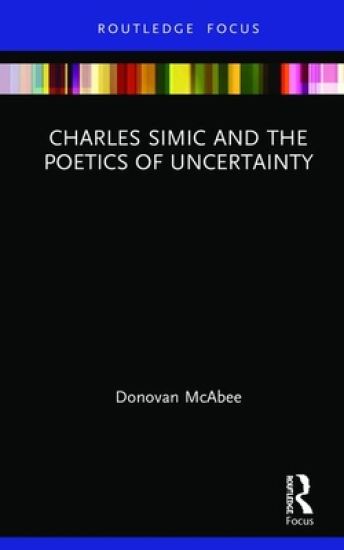
Charles Simic and the Poetics of Uncertainty
Charles Simic and the Poetics of Uncertainty provides the first full account of the poetics of the former US Poet Laureate, who is one of the most popular and critically acclaimed English-language poets writing today. The book argues for uncertainty as the center of Simic’s poetics and addresses the ways that his poetry grows from and navigates various forms of uncertainty. Donovan McAbee addresses uncertainty regarding the national character of Simic’s poetry and how this is complicated by Simic’s identity as a Yugoslavian refugee to the United States. The book assesses the theological and linguistic uncertainties of Simic’s poetry and explores the ways that Simic articulates the aesthetic space created by poems, as a safe place of encounter for the reader. The book argues for the role of humor as a primary mode that holds together the uncertainties of Simic’s poetry, and finally, it articulates the way that within these uncertainties, Simic develops a deeply humane political poetry of survival. Along the way, Simic’s work is placed in conversation with key influences and other important American and international poets and writers, including James Tate, Mark Strand, Charles Wright, Nicanor Parra, Vasko Popa, and others.
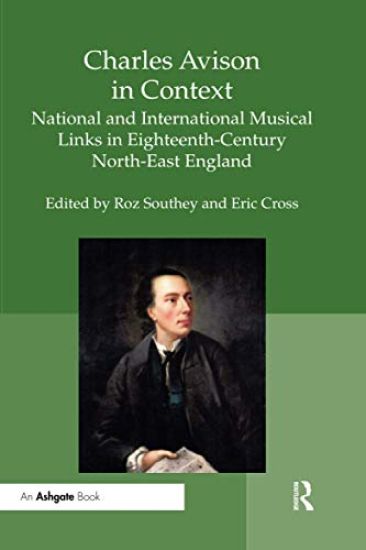
Charles Avison in Context
Despite recent interest in music-making in the so-called ’provinces’, the idea still lingers that music-making outside London was small in scale, second-rate and behind the times. However, in Newcastle upon Tyne, the presence of a nationally known musician, Charles Avison (1709-1770), prompts a reassessment of how far this idea is still tenable. Avison’s life and work illuminates many wider trends. His relationships with his patrons, the commercial imperatives which shaped his activities, the historical and social milieu in which he lived and worked, were influenced by and reflected many contemporary movements: Latitudinarianism, Methodism, the improvement of church music, the aesthetics of the day including new ideas circulating in Europe, discussions of issues such as gentility, and the new commercialism of leisure. He can be considered as the notional centre of a web of connections, both musical and non-musical, extending through every part of Britain and into both Europe and America. This book looks at these connections, exploring the ways in which the musical culture in the north-east region interacted with, and influenced, musical culture elsewhere, and the non-musical influences with which it was involved, including contemporary religious, philosophical and commercial developments, establishing that regional centres such as Newcastle could be as well-informed, influential and vibrant as London.
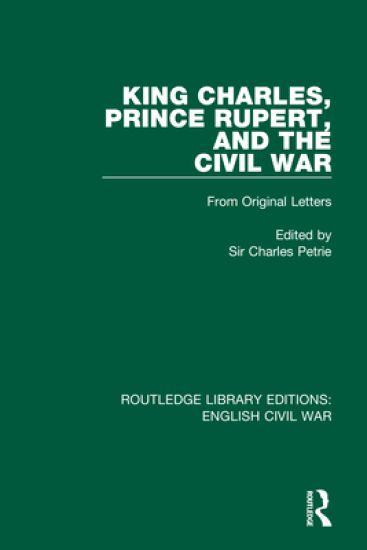
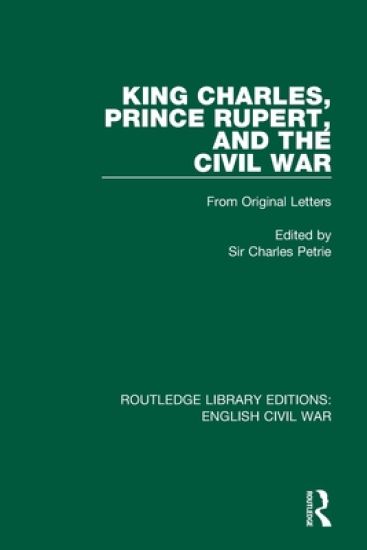
King Charles, Prince Rupert and the Civil War
Until this book was published in 1974, many of the letters in this book between Charles I Prince Rupert his nephew and the leading Royalist commander had never been published. From a mainly private collection, the letters give a fascinating insight into the stormy relationship between the monarch and his nephew. Also included are letters from the Royalist exiles, including the future King Charles II and letters to and from other notable figures of the time including Queen Henrietta Maria, Montrose and Oliver Cromwell. The period covered by the letters is the turning point of the Civil War and enables the reader to see the War through the eyes of those who participated in it. The letters have been edited in such a way as to illuminate to the full the personalities of their writers and the appropriate historical and personal context to the letters.
King Charles, Prince Rupert and the Civil War

King Charles, Prince Rupert and the Civil War

Charles Petrie

TAYLOR FRANCIS LTD
2022
nidottu
Until this book was published in 1974, many of the letters in this book between Charles I Prince Rupert his nephew and the leading Royalist commander had never been published. From a mainly private collection, the letters give a fascinating insight into the stormy relationship between the monarch and his nephew. Also included are letters from the Royalist exiles, including the future King Charles II and letters to and from other notable figures of the time including Queen Henrietta Maria, Montrose and Oliver Cromwell. The period covered by the letters is the turning point of the Civil War and enables the reader to see the War through the eyes of those who participated in it. The letters have been edited in such a way as to illuminate to the full the personalities of their writers and the appropriate historical and personal context to the letters.
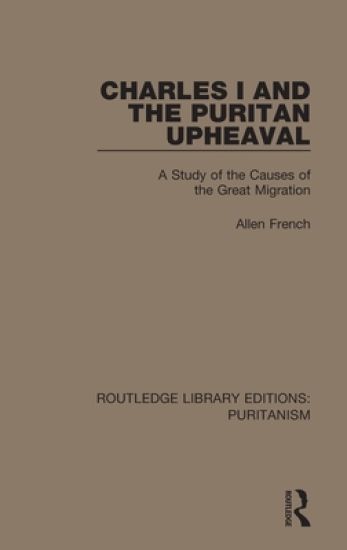
Charles I and the Puritan Upheaval
Originally published in 1955 and based on research of public records and other contemporary sources, this book builds up an excellent picture of England before the Civil War. Through a series of case studies, it examines the type of person who emigrated to New England and their motivation for doing so. The wealth of evidence from original documents is clearly arranged and provides a refreshing reassessment of the period, showing that although religious conviction was a clear motive for emigration, the Puritan were also seeking security from hardships of other kinds.
Charles I and the Puritan Upheaval

Charles I and the Puritan Upheaval

Allen French

TAYLOR FRANCIS LTD
2022
nidottu
Originally published in 1955 and based on research of public records and other contemporary sources, this book builds up an excellent picture of England before the Civil War. Through a series of case studies, it examines the type of person who emigrated to New England and their motivation for doing so. The wealth of evidence from original documents is clearly arranged and provides a refreshing reassessment of the period, showing that although religious conviction was a clear motive for emigration, the Puritan were also seeking security from hardships of other kinds.
Charles Kingsley

Charles Kingsley

TAYLOR FRANCIS LTD
2022
nidottu
Novelist, poet, Anglican priest, and controversialist, Charles Kingsley (1819–75) epitomizes the bustling Victorian man of faith and letters, a prolific polymath as ready to break a lance with John Henry Newman over Christian doctrine as he was to preach to schoolchildren on the virtues of manly, physical struggle. Kingsley’s The Water-Babies and Westward Ho! were best-sellers which became classics of children’s literature. Kingsley has come to epitomize the Victorian age.On closer inspection, Kingsley is harder to categorize: a socialist who was also an imperialist, a Chartist revolutionary who was Queen Victoria’s favourite novelist, a natural theologian who popularized Darwin, a priest who celebrated sex as sacrament. Kingsley only appears straightforward if you consider him one piece at a time. The debates he shaped remain with us today: faith and sexuality, economics and exploitation, race and identity. The aim of this book is to present the whole man: to consider the public crusades for public health alongside the most private fantasies of sexual intercourse; to consider the ardent imperialist alongside the Darwinist. It will be of interest to all students of Victorian studies, as well as of British/Imperial history, church history, and especially the history of science.
Charles Robert Cockerell, Architect in Time
Speed, acceleration and rapid change characterize our world, and as we design and construct buildings that are to last at least a few decades and sometimes even centuries, how can architecture continue to act as an important cultural signifier? Focusing on how an important nineteenth-century architect addressed the already shifting relation between architecture, time and history, this book offers insights on issues still relevant today-the struggle between imitation and innovation, the definition (or rejection) of aesthetic experience, the grounds of architectural judgment (who decides and how), or fundamentally, how to act (i.e. build) when there is no longer a single grand narrative but a plurality of possible histories. Six drawings provide the foundation of an itinerary through Charles Robert Cockerell’s conception of architecture, and into the depths of drawings and buildings. Born in England in 1788, Cockerell sketched as a Grand Tourist, he charted architectural history as Royal Academy Professor, he drew to build, to exhibit, to understand the past and to learn from it, publishing his last work in 1860, three years before his death. Under our scrutiny, his drawings become thresholds into the nineteenth century, windows into the architect’s conception of architecture and time, complex documents of past and projected constructions, great examples that reveal a kinetic approach to ornamentation, and the depth of architectural representation.
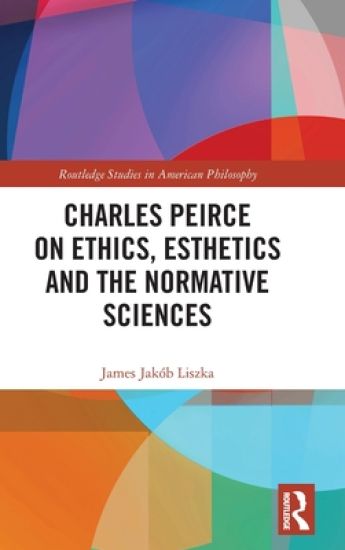
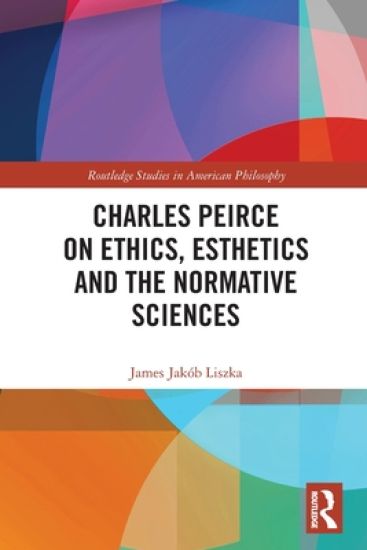
Charles Peirce on Ethics, Esthetics and the Normative Sciences
This book presents a comprehensive and systematic picture of Charles Peirce’s ethics and aesthetics, arguing that Peirce established a normative framework for the study of right conduct and good ends. It also connects Peirce’s normative thought to contemporary debates in ethical theory.Peirce sought to articulate the relation among logic as right thinking, ethics as good conduct and, in an unorthodox sense of aesthetics, the pursuit of ends that are fine and worthy. Each plays an important role in ethical life. Once aesthetics has determined what makes an end worthy and admirable, and ethics determines which are good and right to pursue, logical and scientific reasoning is employed to figure the most likely means to attain those ends. Ethics does the additional duty of ensuring that the means conform to ideals of conduct. In the process, Peirce develops an interesting theory of moral motivation, an account of moral reasoning, moral truth, and a picture of what constitutes a moral community.Charles Peirce on Ethics, Esthetics and the Normative Sciences will be of interest to scholars and students working on Peirce, American philosophy, and metaethics.
Charles Peirce on Ethics, Esthetics and the Normative Sciences
This book presents a comprehensive and systematic picture of Charles Peirce’s ethics and aesthetics, arguing that Peirce established a normative framework for the study of right conduct and good ends. It also connects Peirce’s normative thought to contemporary debates in ethical theory.Peirce sought to articulate the relation among logic as right thinking, ethics as good conduct and, in an unorthodox sense of aesthetics, the pursuit of ends that are fine and worthy. Each plays an important role in ethical life. Once aesthetics has determined what makes an end worthy and admirable, and ethics determines which are good and right to pursue, logical and scientific reasoning is employed to figure the most likely means to attain those ends. Ethics does the additional duty of ensuring that the means conform to ideals of conduct. In the process, Peirce develops an interesting theory of moral motivation, an account of moral reasoning, moral truth, and a picture of what constitutes a moral community.Charles Peirce on Ethics, Esthetics and the Normative Sciences will be of interest to scholars and students working on Peirce, American philosophy, and metaethics.