Kirjojen hintavertailu. Mukana 11 348 963 kirjaa ja 12 kauppaa.

Kirjahaku

Etsi kirjoja tekijän nimen, kirjan nimen tai ISBN:n perusteella.

747 tulosta hakusanalla Cherokee Randolph

Cherokee Citizenship Commission Dockets Volume IV
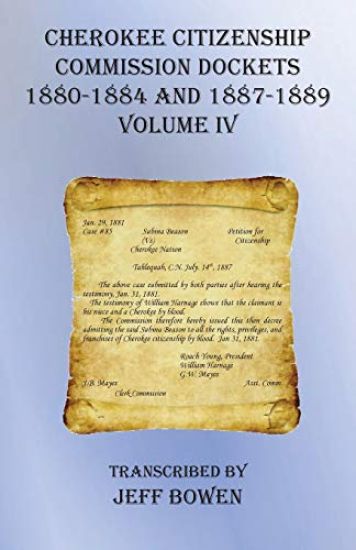
The Cherokee relied upon their leaders to guide them but they ended up hanging in the balance after the Civil War. Fathers and brothers were off fighting a war that didn't even concern them. The men fighting the war came back to the same old political hatreds and in-fighting. The Nation was being overrun with many that claimed they were Cherokee, hoping to benefit from false claims of citizenship. These people, known as intruders, did nothing but make it more difficult for the Cherokees because of the pressures from the Government to control their boundaries. Intruder after intruder was encroaching on Cherokee land. Many Cherokee citizens had lost their rights while intruders that didn't belong stayed using up what little resources there were. The government was telling the Cherokee leaders to settle their own intruder problems or else they would have to intercede. There were part-bloods, full-bloods, and no bloods along with mass confusion, prejudice, vendettas, and deceptions. The intruders wanted a free ride and were willing to use the confusion as a camouflage to achieve their purpose and greed. This was a situation where the government was threatening to come in and turn the Cherokee Nation into a Federal Territory. Ever since 1872, federal agents had refused to expel from the Nation those former slaves whom the Nation considered 'aliens' and since 1874, federal agents had been under instructions from the Bureau of Indian Affairs to compile their own list of persons in their opinion, had some claim to citizenship despite previous rulings of the Cherokee Courts on their claims. The Cherokee Chief Oochalata claiming that a government agent was meddling in Cherokee affairs and wrote to the Bureau of Indian Affairs to complain. Writing a letter to President Grant and sending a petition from one of the Cherokee districts he complained that the agent had not removed thousands of intruders. By the end of 1878, Oochalata struggling to solve the problem gain went over the head of the Bureau of Indian Affairs and wrote to President Rutherford B. Hayes forwarding a complete account of all cases adjudicated by the Citizenship Court. Finally, presenting three questions to the Attorney General at the time, Charles Devens, to answer were: Did the Cherokee Nation have the right to determine its own citizenship? Did the former slaves who were citizens have any share in the use of Cherokee land or in the money derived from the sale of Cherokee land? Was it, or was it not, the duty of the Federal Government to remove intruders under treaty stipulations? Devens' opinion was clearly in the negative as far as the Cherokee Nation's sovereignty and decision processes were concerned. Since the days of Andrew Jackson refusal to honor the requirement of removing intruders was to be the means of forcing the Indian nations to do what they did not want to do. This series contains documentation from the rulings of the Cherokee Citizenship Commission dockets. Besides the names of the applicant and the presiding commissioners and the date of the determination, the transcriptions mostly identify the names of family members and their relationship to the person(s) filing the application. In all, researchers will find references to approximately 20,000 Cherokee claimants in this series.
Cherokee Citizenship Commission Dockets Volume V
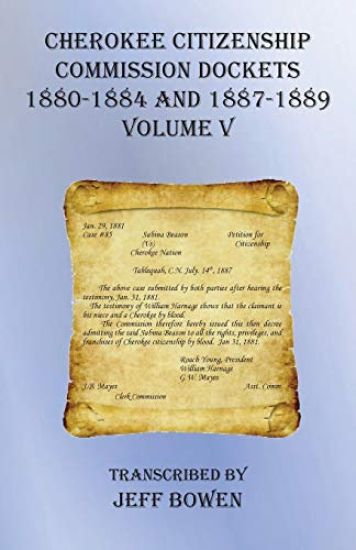
The Cherokee relied upon their leaders to guide them but they ended up hanging in the balance after the Civil War. Fathers and brothers were off fighting a war that didn't even concern them. The men fighting the war came back to the same old political hatreds and in-fighting. The Nation was being overrun with many that claimed they were Cherokee, hoping to benefit from false claims of citizenship. These people, known as intruders, did nothing but make it more difficult for the Cherokees because of the pressures from the Government to control their boundaries. Intruder after intruder was encroaching on Cherokee land. Many Cherokee citizens had lost their rights while intruders that didn't belong stayed using up what little resources there were. The government was telling the Cherokee leaders to settle their own intruder problems or else they would have to intercede. There were part-bloods, full-bloods, and no bloods along with mass confusion, prejudice, vendettas, and deceptions. The intruders wanted a free ride and were willing to use the confusion as a camouflage to achieve their purpose and greed. This was a situation where the government was threatening to come in and turn the Cherokee Nation into a Federal Territory. Ever since 1872, federal agents had refused to expel from the Nation those former slaves whom the Nation considered 'aliens' and since 1874, federal agents had been under instructions from the Bureau of Indian Affairs to compile their own list of persons in their opinion, had some claim to citizenship despite previous rulings of the Cherokee Courts on their claims. The Cherokee Chief Oochalata claiming that a government agent was meddling in Cherokee affairs and wrote to the Bureau of Indian Affairs to complain. Writing a letter to President Grant and sending a petition from one of the Cherokee districts he complained that the agent had not removed thousands of intruders. By the end of 1878, Oochalata struggling to solve the problem gain went over the head of the Bureau of Indian Affairs and wrote to President Rutherford B. Hayes forwarding a complete account of all cases adjudicated by the Citizenship Court. Finally, presenting three questions to the Attorney General at the time, Charles Devens, to answer were: Did the Cherokee Nation have the right to determine its own citizenship? Did the former slaves who were citizens have any share in the use of Cherokee land or in the money derived from the sale of Cherokee land? Was it, or was it not, the duty of the Federal Government to remove intruders under treaty stipulations? Devens' opinion was clearly in the negative as far as the Cherokee Nation's sovereignty and decision processes were concerned. Since the days of Andrew Jackson refusal to honor the requirement of removing intruders was to be the means of forcing the Indian nations to do what they did not want to do. This series contains documentation from the rulings of the Cherokee Citizenship Commission dockets. Besides the names of the applicant and the presiding commissioners and the date of the determination, the transcriptions mostly identify the names of family members and their relationship to the person(s) filing the application. In all, researchers will find references to approximately 20,000 Cherokee claimants in this series.
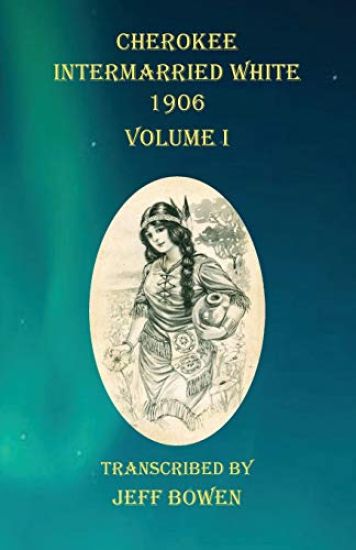
Cherokee Intermarried White 1906 Volume I
This series of transcriptions from the records of the Dawes Commission concerns files of persons claiming entitlement to a portion of the Cherokee tribal lands (under the Dawes Act) in 1906, based on the intermarriage of a Cherokee and a white person. In all, nearly 4,000 individuals made application on this basis; however, the Commission of the Five Civilized Tribes affirmed a mere 286 as entitled Intermarried Whites, far fewer than the numbers of Intermarried appearing on the rolls of the Choctaw and Chickasaw. The reason for the disparity rested with the strictness of Cherokee tribal laws governing citizenship, established in 1877 and upheld by the U.S. Supreme Court in November 1906. Moreover, the Cherokee were also particularly mindful of the importance of protecting their tribal allotment within the Oklahoma Territory from unscrupulous individuals who might claim acreage under false pretenses. This series will appeal to both the historically and genealogically minded. Mr. Bowen begins with a helpful introduction that explains the evolution of Cherokee tribal laws and the litigation that culminated with the Supreme Court decision. The bulk of the volume consists of verbatim transcriptions of the successful applications themselves. Here researchers will learn the names and ages of all parties involved in the claims, with dates of marriage, names and ages of children, places of birth and residence, and more. Assertions of Native American ancestry are the stuff of American family lore and legend; however, thanks to Jeff Bowen we now have proof of Cherokee-White bloodlines going back to the 19th century
Cherokee Intermarried White 1906 Volume II
This series of transcriptions from the records of the Dawes Commission concerns files of persons claiming entitlement to a portion of the Cherokee tribal lands (under the Dawes Act) in 1906, based on the intermarriage of a Cherokee and a white person. In all, nearly 4,000 individuals made application on this basis; however, the Commission of the Five Civilized Tribes affirmed a mere 286 as entitled Intermarried Whites, far fewer than the numbers of Intermarried appearing on the rolls of the Choctaw and Chickasaw. The reason for the disparity rested with the strictness of Cherokee tribal laws governing citizenship, established in 1877 and upheld by the U.S. Supreme Court in November 1906. Moreover, the Cherokee were also particularly mindful of the importance of protecting their tribal allotment within the Oklahoma Territory from unscrupulous individuals who might claim acreage under false pretenses. This series will appeal to both the historically and genealogically minded. Mr. Bowen begins with a helpful introduction that explains the evolution of Cherokee tribal laws and the litigation that culminated with the Supreme Court decision. The bulk of the volume consists of verbatim transcriptions of the successful applications themselves. Here researchers will learn the names and ages of all parties involved in the claims, with dates of marriage, names and ages of children, places of birth and residence, and more. Assertions of Native American ancestry are the stuff of American family lore and legend; however, thanks to Jeff Bowen we now have proof of Cherokee-White bloodlines going back to the 19th century
Cherokee Intermarried White 1906 Volume III
This series of transcriptions from the records of the Dawes Commission concerns files of persons claiming entitlement to a portion of the Cherokee tribal lands (under the Dawes Act) in 1906, based on the intermarriage of a Cherokee and a white person. In all, nearly 4,000 individuals made application on this basis; however, the Commission of the Five Civilized Tribes affirmed a mere 286 as entitled Intermarried Whites, far fewer than the numbers of Intermarried appearing on the rolls of the Choctaw and Chickasaw. The reason for the disparity rested with the strictness of Cherokee tribal laws governing citizenship, established in 1877 and upheld by the U.S. Supreme Court in November 1906. Moreover, the Cherokee were also particularly mindful of the importance of protecting their tribal allotment within the Oklahoma Territory from unscrupulous individuals who might claim acreage under false pretenses. This series will appeal to both the historically and genealogically minded. Mr. Bowen begins with a helpful introduction that explains the evolution of Cherokee tribal laws and the litigation that culminated with the Supreme Court decision. The bulk of the volume consists of verbatim transcriptions of the successful applications themselves. Here researchers will learn the names and ages of all parties involved in the claims, with dates of marriage, names and ages of children, places of birth and residence, and more. Assertions of Native American ancestry are the stuff of American family lore and legend; however, thanks to Jeff Bowen we now have proof of Cherokee-White bloodlines going back to the 19th century
Cherokee Intermarried White 1906 Volume IV
This series of transcriptions from the records of the Dawes Commission concerns files of persons claiming entitlement to a portion of the Cherokee tribal lands (under the Dawes Act) in 1906, based on the intermarriage of a Cherokee and a white person. In all, nearly 4,000 individuals made application on this basis; however, the Commission of the Five Civilized Tribes affirmed a mere 286 as entitled Intermarried Whites, far fewer than the numbers of Intermarried appearing on the rolls of the Choctaw and Chickasaw. The reason for the disparity rested with the strictness of Cherokee tribal laws governing citizenship, established in 1877 and upheld by the U.S. Supreme Court in November 1906. Moreover, the Cherokee were also particularly mindful of the importance of protecting their tribal allotment within the Oklahoma Territory from unscrupulous individuals who might claim acreage under false pretenses. This series will appeal to both the historically and genealogically minded. Mr. Bowen begins with a helpful introduction that explains the evolution of Cherokee tribal laws and the litigation that culminated with the Supreme Court decision. The bulk of the volume consists of verbatim transcriptions of the successful applications themselves. Here researchers will learn the names and ages of all parties involved in the claims, with dates of marriage, names and ages of children, places of birth and residence, and more. Assertions of Native American ancestry are the stuff of American family lore and legend; however, thanks to Jeff Bowen we now have proof of Cherokee-White bloodlines going back to the 19th century
Cherokee Intermarried White 1906 Volume V
This series of transcriptions from the records of the Dawes Commission concerns files of persons claiming entitlement to a portion of the Cherokee tribal lands (under the Dawes Act) in 1906, based on the intermarriage of a Cherokee and a white person. In all, nearly 4,000 individuals made application on this basis; however, the Commission of the Five Civilized Tribes affirmed a mere 286 as entitled Intermarried Whites, far fewer than the numbers of Intermarried appearing on the rolls of the Choctaw and Chickasaw. The reason for the disparity rested with the strictness of Cherokee tribal laws governing citizenship, established in 1877 and upheld by the U.S. Supreme Court in November 1906. Moreover, the Cherokee were also particularly mindful of the importance of protecting their tribal allotment within the Oklahoma Territory from unscrupulous individuals who might claim acreage under false pretenses. This series will appeal to both the historically and genealogically minded. Mr. Bowen begins with a helpful introduction that explains the evolution of Cherokee tribal laws and the litigation that culminated with the Supreme Court decision. The bulk of the volume consists of verbatim transcriptions of the successful applications themselves. Here researchers will learn the names and ages of all parties involved in the claims, with dates of marriage, names and ages of children, places of birth and residence, and more. Assertions of Native American ancestry are the stuff of American family lore and legend; however, thanks to Jeff Bowen we now have proof of Cherokee-White bloodlines going back to the 19th century
Cherokee Intermarried White 1906 Volume VI
This series of transcriptions from the records of the Dawes Commission concerns files of persons claiming entitlement to a portion of the Cherokee tribal lands (under the Dawes Act) in 1906, based on the intermarriage of a Cherokee and a white person. In all, nearly 4,000 individuals made application on this basis; however, the Commission of the Five Civilized Tribes affirmed a mere 286 as entitled Intermarried Whites, far fewer than the numbers of Intermarried appearing on the rolls of the Choctaw and Chickasaw. The reason for the disparity rested with the strictness of Cherokee tribal laws governing citizenship, established in 1877 and upheld by the U.S. Supreme Court in November 1906. Moreover, the Cherokee were also particularly mindful of the importance of protecting their tribal allotment within the Oklahoma Territory from unscrupulous individuals who might claim acreage under false pretenses. This series will appeal to both the historically and genealogically minded. Mr. Bowen begins with a helpful introduction that explains the evolution of Cherokee tribal laws and the litigation that culminated with the Supreme Court decision. The bulk of the volume consists of verbatim transcriptions of the successful applications themselves. Here researchers will learn the names and ages of all parties involved in the claims, with dates of marriage, names and ages of children, places of birth and residence, and more. Assertions of Native American ancestry are the stuff of American family lore and legend; however, thanks to Jeff Bowen we now have proof of Cherokee-White bloodlines going back to the 19th century
Cherokee Intermarried White 1906 Volume VII
This series of transcriptions from the records of the Dawes Commission concerns files of persons claiming entitlement to a portion of the Cherokee tribal lands (under the Dawes Act) in 1906, based on the intermarriage of a Cherokee and a white person. In all, nearly 4,000 individuals made application on this basis; however, the Commission of the Five Civilized Tribes affirmed a mere 286 as entitled Intermarried Whites, far fewer than the numbers of Intermarried appearing on the rolls of the Choctaw and Chickasaw. The reason for the disparity rested with the strictness of Cherokee tribal laws governing citizenship, established in 1877 and upheld by the U.S. Supreme Court in November 1906. Moreover, the Cherokee were also particularly mindful of the importance of protecting their tribal allotment within the Oklahoma Territory from unscrupulous individuals who might claim acreage under false pretenses. This series will appeal to both the historically and genealogically minded. Mr. Bowen begins with a helpful introduction that explains the evolution of Cherokee tribal laws and the litigation that culminated with the Supreme Court decision. The bulk of the volume consists of verbatim transcriptions of the successful applications themselves. Here researchers will learn the names and ages of all parties involved in the claims, with dates of marriage, names and ages of children, places of birth and residence, and more. Assertions of Native American ancestry are the stuff of American family lore and legend; however, thanks to Jeff Bowen we now have proof of Cherokee-White bloodlines going back to the 19th century
Cherokee Intermarried White 1906 Volume VIII
This series of transcriptions from the records of the Dawes Commission concerns files of persons claiming entitlement to a portion of the Cherokee tribal lands (under the Dawes Act) in 1906, based on the intermarriage of a Cherokee and a white person. In all, nearly 4,000 individuals made application on this basis; however, the Commission of the Five Civilized Tribes affirmed a mere 286 as entitled Intermarried Whites, far fewer than the numbers of Intermarried appearing on the rolls of the Choctaw and Chickasaw. The reason for the disparity rested with the strictness of Cherokee tribal laws governing citizenship, established in 1877 and upheld by the U.S. Supreme Court in November 1906. Moreover, the Cherokee were also particularly mindful of the importance of protecting their tribal allotment within the Oklahoma Territory from unscrupulous individuals who might claim acreage under false pretenses. This series will appeal to both the historically and genealogically minded. Mr. Bowen begins with a helpful introduction that explains the evolution of Cherokee tribal laws and the litigation that culminated with the Supreme Court decision. The bulk of the volume consists of verbatim transcriptions of the successful applications themselves. Here researchers will learn the names and ages of all parties involved in the claims, with dates of marriage, names and ages of children, places of birth and residence, and more. Assertions of Native American ancestry are the stuff of American family lore and legend; however, thanks to Jeff Bowen we now have proof of Cherokee-White bloodlines going back to the 19th century
Cherokee Intermarried White 1906 Volume IX
This series of transcriptions from the records of the Dawes Commission concerns files of persons claiming entitlement to a portion of the Cherokee tribal lands (under the Dawes Act) in 1906, based on the intermarriage of a Cherokee and a white person. In all, nearly 4,000 individuals made application on this basis; however, the Commission of the Five Civilized Tribes affirmed a mere 286 as entitled Intermarried Whites, far fewer than the numbers of Intermarried appearing on the rolls of the Choctaw and Chickasaw. The reason for the disparity rested with the strictness of Cherokee tribal laws governing citizenship, established in 1877 and upheld by the U.S. Supreme Court in November 1906. Moreover, the Cherokee were also particularly mindful of the importance of protecting their tribal allotment within the Oklahoma Territory from unscrupulous individuals who might claim acreage under false pretenses. This series will appeal to both the historically and genealogically minded. Mr. Bowen begins with a helpful introduction that explains the evolution of Cherokee tribal laws and the litigation that culminated with the Supreme Court decision. The bulk of the volume consists of verbatim transcriptions of the successful applications themselves. Here researchers will learn the names and ages of all parties involved in the claims, with dates of marriage, names and ages of children, places of birth and residence, and more. Assertions of Native American ancestry are the stuff of American family lore and legend; however, thanks to Jeff Bowen we now have proof of Cherokee-White bloodlines going back to the 19th century
Cherokee Intermarried White 1906 Volume X
This series of transcriptions from the records of the Dawes Commission concerns files of persons claiming entitlement to a portion of the Cherokee tribal lands (under the Dawes Act) in 1906, based on the intermarriage of a Cherokee and a white person. In all, nearly 4,000 individuals made application on this basis; however, the Commission of the Five Civilized Tribes affirmed a mere 286 as entitled Intermarried Whites, far fewer than the numbers of Intermarried appearing on the rolls of the Choctaw and Chickasaw. The reason for the disparity rested with the strictness of Cherokee tribal laws governing citizenship, established in 1877 and upheld by the U.S. Supreme Court in November 1906. Moreover, the Cherokee were also particularly mindful of the importance of protecting their tribal allotment within the Oklahoma Territory from unscrupulous individuals who might claim acreage under false pretenses. This series will appeal to both the historically and genealogically minded. Mr. Bowen begins with a helpful introduction that explains the evolution of Cherokee tribal laws and the litigation that culminated with the Supreme Court decision. The bulk of the volume consists of verbatim transcriptions of the successful applications themselves. Here researchers will learn the names and ages of all parties involved in the claims, with dates of marriage, names and ages of children, places of birth and residence, and more. Assertions of Native American ancestry are the stuff of American family lore and legend; however, thanks to Jeff Bowen we now have proof of Cherokee-White bloodlines going back to the 19th century
Cherokee Granted Enrollment Cards & Dawes Packets 1900 - 1907
Within these pages the theme throughout every Cherokee case came down to one final conclusion; a stamp, applied to every citizenship or enrollment card, "Granted." The whole thing was mass hysteria. The Cherokee were being flooded with non-citizens for decades, it had to stop. They wanted their own government run by their own laws, their own courts. Many rightful citizens were being doubted as to being Cherokee themselves. The Cherokee packets transcribed in this series prove they were up to the task of showing who they were. Their testimony often intriguing, frustrating, yet never showing weakness or defeat. Time and again the Cherokee stood their ground showing their ability to be warriors, man or woman. Their words were for their descendants, they fought to save their heritage while encasing it in integrity for the future, no matter who asked the questions. Inside these pages you will find not only testimony but copies of the actual "Doubtful" cards and in most cases a copy of the Cherokee by blood enrollment card for each individual defending their heritage.
Cherokee Granted Enrollment Cards & Dawes Packets 1900 - 1907
Within these pages the theme throughout every Cherokee case came down to one final conclusion; a stamp, applied to every citizenship or enrollment card, "Granted." The whole thing was mass hysteria. The Cherokee were being flooded with non-citizens for decades, it had to stop. They wanted their own government run by their own laws, their own courts. Many rightful citizens were being doubted as to being Cherokee themselves. The Cherokee packets transcribed in this series prove they were up to the task of showing who they were. Their testimony often intriguing, frustrating, yet never showing weakness or defeat. Time and again the Cherokee stood their ground showing their ability to be warriors, man or woman. Their words were for their descendants, they fought to save their heritage while encasing it in integrity for the future, no matter who asked the questions. Inside these pages you will find not only testimony but copies of the actual "Doubtful" cards and in most cases a copy of the Cherokee by blood enrollment card for each individual defending their heritage.
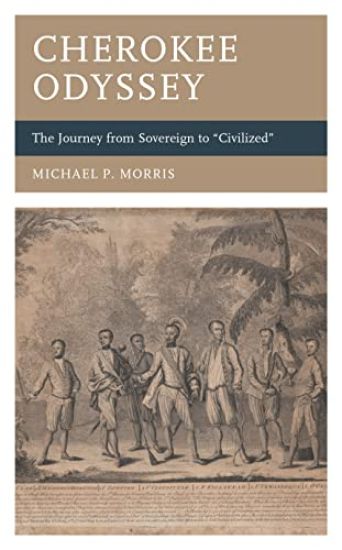
Cherokee Odyssey

Cherokee Odyssey

Michael P. Morris

BLOOMSBURY PUBLISHING PLC
2022
sidottu
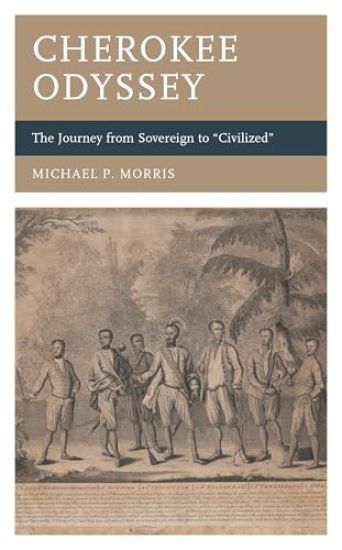
This study examines the period between 1730 to 1790, which saw the Cherokee people travel the path from a sovereign people allied with the British to a dependent nation signed by treaty to the American Civilization program with US government. The author analyzes how, in between, the Cherokees fought two wars—one with the British military and one with the Continental Army. A group of Cherokee peace and military chiefs navigated the journey for the Cherokees in trying to handle both wars. Ultimately, a break-away group of young Cherokees, led by Dragging Canoe, led his Chickamauga Cherokees away from their traditional leaders and into the battlefield with the Americans. Sadly, all Cherokees paid the price for the actions of these young warriors. The Cherokees survived these ordeals and continue on as a people today just like the rivers that continue to flow through their lands.
Cherokee Odyssey

Cherokee Odyssey

Michael P. Morris

BLOOMSBURY PUBLISHING PLC
2025
nidottu
This study examines the period between 1730 to 1790, which saw the Cherokee people travel the path from a sovereign people allied with the British to a dependent nation signed by treaty to the American Civilization program with US government. The author analyzes how, in between, the Cherokees fought two wars—one with the British military and one with the Continental Army. A group of Cherokee peace and military chiefs navigated the journey for the Cherokees in trying to handle both wars. Ultimately, a break-away group of young Cherokees, led by Dragging Canoe, led his Chickamauga Cherokees away from their traditional leaders and into the battlefield with the Americans. Sadly, all Cherokees paid the price for the actions of these young warriors. The Cherokees survived these ordeals and continue on as a people today just like the rivers that continue to flow through their lands.
Cherokee Bill

Cherokee Bill

Arthur T Burton

Eakin Press
2020
pokkari
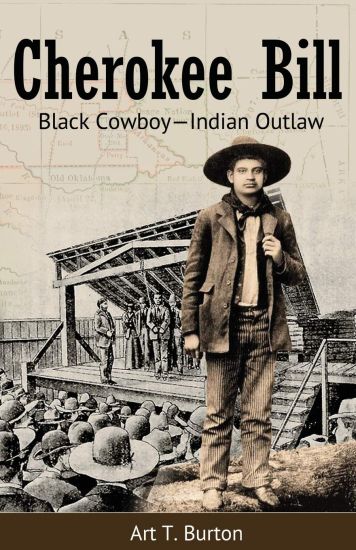
Once upon a time in the late nineteenth century, there was an outlaw that captured the imagination of the American public like no other. He can be compared to John Dillinger or Pretty Boy Floyd of the 1930s. Like both of these men, he garnered national press for his exploits; the well-known New York Times had a running commentary on his actions and deeds. This outlaw's name was Crawford Goldsby, better known as Cherokee Bill.Cherokee Bill was every bit as colorful and outrageous as any criminal of the western frontier, perhaps even more so. There were a few things about him that made him truly unique for a famous desperado of the purple sage. First and foremost, he was an African American living in the Indian Territory. He was also Native American, Bill was a citizen of the Cherokee Nation, as a freedman, from his mother's lineage.Compare Cherokee Bill to Billy the Kid, (Billy Antrim), of New Mexico Territory fame. Although both outlaws received national media attention for their crimes while they were living, Billy the Kid was remembered and immortalized in books and films in the twentieth century; this did not occur for Cherokee Bill. Art Burton's newest book will help change that.
Cherokee Tears

Cherokee Tears

Janet Sawyer Peck

Lulu.com
2021
pokkari
Cherokee Tears is a uniquely American story that spans two generations of time. A young Cherokee mother dies of pneumonia and her bereft husband abandons their four young daughters in the care of the state adoption agencies that places each child in a non Native home. As these children grow they adapt to their diverse environment and the ever changing society in America. This is a story of the human spirits ability to overcome adversity and find love, happiness and success. This tale is not about an ethnic culture. It it's about being part of the human culture. That lives, loves. laughs and cries and dreams of a beautiful future. This book will appeal to every gender, ethnic and age group.