

Kirjahaku
Etsi kirjoja tekijän nimen, kirjan nimen tai ISBN:n perusteella.
1000 tulosta hakusanalla Clarence L. Partee


Clarence Monster's Monster Christmas Story: (Picture Book, Rhyming Bedtime Story)
John E. Dorey
Createspace Independent Publishing Platform
2015
nidottu
Clarence: His Dementia, Madness and Levitations
Gene Thomas Colwell
Createspace Independent Publishing Platform
2015
nidottu

Clarence Saunders & the Founding of Piggly Wiggly: The Rise & Fall of a Memphis Maverick
Mike Freeman
History Press Library Editions
2011
sidottu

Is Clarence confused and will he create chaos on Shabbat? His special Shabbat challah recipe calls for flour, oil, honey, yeast and water, and his neighbors eagerly await their loaves. But instead he gathers a silly assortment of things. How will he bake his challah?

Join Clarence as he meets new friends and learns about accepting everyone regardless of shape, size, color and culture.

Join Clarence as he meets new friends and learns about accepting everyone regardless of shape, size, color and culture.
The Flirt (1913). By: Booth Tarkington, illustrated By: Clarence F. Underwood (1871-1929), American illustrator.: Booth Tarkington (1869-194
Clarence F. Underwood; Booth Tarkington
Createspace Independent Publishing Platform
2017
nidottu

The physical examination of the foot and ankle can be a complex topic for professionals with all levels of clinical experience. How can advance concepts be taught in a user-friendly, clear format, while still providing necessary information for effective diagnosis and treatment of the foot and ankle? Musculoskeletal Examination of the Foot and Ankle: Making the Complex Simple by Drs. Shepard Hurwitz and Selene Parekh answers these questions. Written by experts, this easy-to-carry book provides a quick and thorough review of the most common pathologic foot and ankle conditions, techniques for diagnosis, as well as the appropriate treatment for each condition. Musculoskeletal Examination of the Foot and Ankle: Making the Complex Simple contains clear photographic demonstrations, tables, sidebars, and charts throughout its pages, allowing a thorough and concise examination of the foot and ankle.
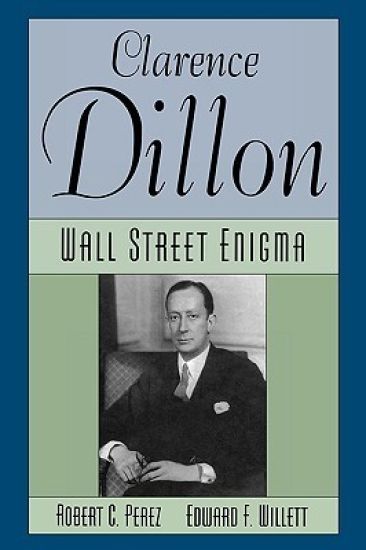
Traces Dillon's life from his Polish immigrant origins through his career on Wall Street to his mysterious withdrawal from the business scene prior to the stockmarket crash in 1929, and his subsequent role in high finance and culture. Includes b&w photos. Annotation copyright Book News, Inc. Portlan

Although born into a devout Christian family, Clarence Jones wasn't interested in religion. It was this Midwesterner's ear for music that led him to play trombone at Chicago's Moody Church, where he gave his life to Christ and volunteered for mission work. Clarence's work began in Chicago, where he helped pioneer something unheard of-Christian radio broadcasts. Soon God called Clarence to "go south with radio." Led to Ecuador, Clarence worked unswervingly to co-found Radio HCJB and the World Radio Missionary Fellowship. His legacy of broadcasting the gospel to the ends of the earth soars on the airwaves today.
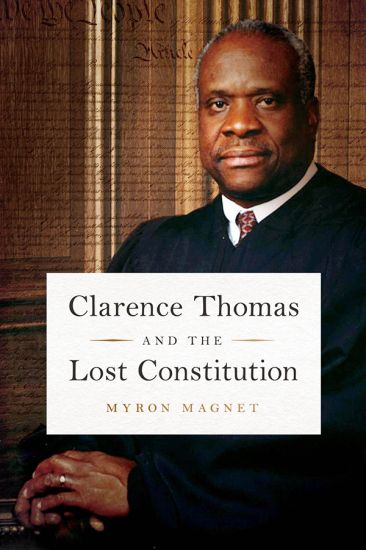
When Clarence Thomas joined the Supreme Court in 1991, he found with dismay that it was interpreting a very different Constitution from the one the framers had written—the one that had established a federal government manned by the people’s own elected representatives, charged with protecting citizens’ inborn rights while leaving them free to work out their individual happiness themselves, in their families, communities, and states. He found that his predecessors on the Court were complicit in the first step of this transformation, when in the 1870s they defanged the Civil War amendments intended to give full citizenship to his fellow black Americans. In the next generation, Woodrow Wilson, dismissing the framers and their work as obsolete, set out to replace laws made by the people’s representatives with rules made by highly educated, modern, supposedly nonpartisan “experts,” an idea Franklin Roosevelt supersized in the New Deal agencies that he acknowledged had no constitutional warrant. Then, under Chief Justice Earl Warren in the 1950s and 1960s, the Nine set about realizing Wilson’s dream of a Supreme Court sitting as a permanent constitutional convention, conjuring up laws out of smoke and mirrors and justifying them as expressions of the spirit of the age. But Thomas, who joined the Court after eight years running one of the myriad administrative agencies that the Great Society had piled on top of FDR’s batch, had deep misgivings about the new governmental order. He shared the framers’ vision of free, self-governing citizens forging their own fate. And from his own experience growing up in segregated Savannah, flirting with and rejecting black radicalism at college, and running an agency that supposedly advanced equality, he doubted that unelected experts and justices really did understand the moral arc of the universe better than the people themselves, or that the rules and rulings they issued made lives better rather than worse. So in the hundreds of opinions he has written in more than a quarter century on the Court—the most important of them explained in these pages in clear, non-lawyerly language—he has questioned the constitutional underpinnings of the new order and tried to restore the limited, self-governing original one, as more legitimate, more just, and more free than the one that grew up in its stead. The Court now seems set to move down the trail he blazed. A free, self-governing nation needs independent-minded, self-reliant citizens, and Thomas’s biography, vividly recounted here, produced just the kind of character that the founders assumed would always mark Americans. America’s future depends on the power of its culture and institutions to form ever more citizens of this stamp.
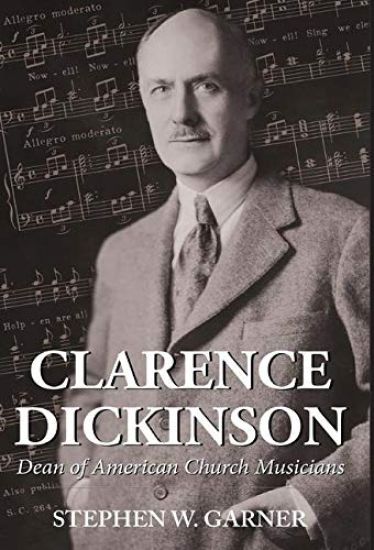
This is a biography of one of the America's greatest figures in the world of sacred music. Born in 1873 to a long line of great theologians and educators, he excelled as a church musician, organist, teacher, minister, educator, author, performer, conductor, and composer. Known for playing from memory at an early age, he received much attention from organists in Chicago and New York, and was invited to become a founding member of the American Guild of Organists in 1896. After studies at Northwestern University, he went to Europe, where he studied in Berlin with Heinrich Reimann and in Paris with Alexander Guilmant and Louis Vierne. He returned to Chicago, teaching organ, serving as organist for St. James Episcopal Church, founding and directing several choral groups. In 1909 he moved to New York City. There he became Organist-Director of the Brick Presbyterian Church and began teaching sacred music at Union Theological Seminary. In 1928, realizing a great need for a graduate school in sacred music, he worked with the administration to found the School of Sacred Music at Union, where he served as Dean until 1945. It was the first graduate school in Sacred Music in the United States; it was the first to grant seminary masters degrees to both men and women; it was interdenominational, teaching courses to prepare students to serve all major faith traditions. From his posts at the Brick Church and Union Seminary, he propelled the importance of quality church music in the early twentieth century. He and his faculty taught and served as mentors to hundreds of the first full-time church musicians with graduate degrees in the United States. These came from all denominations and served both in the U.S. and overseas. Although there were many fine composers in his day, most were not composing for the church. Dickinson composed quality music for the churches of his day, publishing some 500 compositions which were performed throughout the United States and in many foreign countries. He was revered as a true American composer and honored in many ways. Large choral festivals of his compositions were held throughout his professional career, with up to 1200 singers. Few composers have been accorded such honor. In a 1958 festival, he was given the title, Dean of American Church Musicians. In addition to these accomplishments, he was a legendary concert artist at the organ. The text describes the wonderful romantic and working relationship he had with his wife Helen, a brilliant teacher, author, scholar, and linguist who was the first woman to receive a PHD in philosophy from Heidelberg University in Germany. Every organist, church musician, and music lover should read his biography
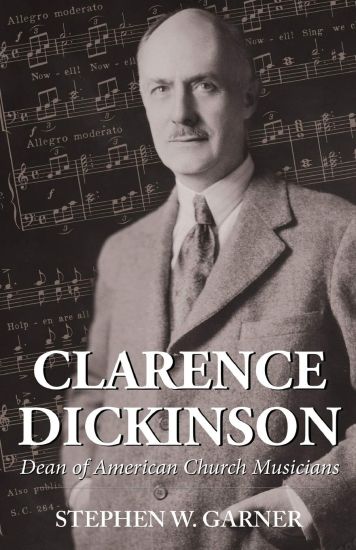
This is a biography of one of the America's greatest figures in the world of sacred music. Born in 1873 to a long line of great theologians and educators, he excelled as a church musician, organist, teacher, minister, educator, author, performer, conductor, and composer. Known for playing from memory at an early age, he received much attention from organists in Chicago and New York, and was invited to become a founding member of the American Guild of Organists in 1896. After studies at Northwestern University, he went to Europe, where he studied in Berlin with Heinrich Reimann and in Paris with Alexander Guilmant and Louis Vierne. He returned to Chicago, teaching organ, serving as organist for St. James Episcopal Church, founding and directing several choral groups. In 1909 he moved to New York City. There he became Organist-Director of the Brick Presbyterian Church and began teaching sacred music at Union Theological Seminary. In 1928, realizing a great need for a graduate school in sacred music, he worked with the administration to found the School of Sacred Music at Union, where he served as Dean until 1945. It was the first graduate school in Sacred Music in the United States; it was the first to grant seminary masters degrees to both men and women; it was interdenominational, teaching courses to prepare students to serve all major faith traditions.From his posts at the Brick Church and Union Seminary, he propelled the importance of quality church music in the early twentieth century. He and his faculty taught and served as mentors to hundreds of the first full-time church musicians with graduate degrees in the United States. These came from all denominations and served both in the U.S. and overseas.Although there were many fine composers in his day, most were not composing for the church. Dickinson composed quality music for the churches of his day, publishing some 500 compositions which were performed throughout the United States and in many foreign countries. He was revered as a true American composer and honored in many ways. Large choral festivals of his compositions were held throughout his professional career, with up to 1200 singers. Few composers have been accorded such honor. In a 1958 festival, he was given the title, Dean of American Church Musicians. In addition to these accomplishments, he was a legendary concert artist at the organ.The text describes the wonderful romantic and working relationship he had with his wife Helen, a brilliant teacher, author, scholar, and linguist who was the first woman to receive a PHD in philosophy from Heidelberg University in Germany.Every organist, church musician, and music lover should read his biography