Kirjahaku
Etsi kirjoja tekijän nimen, kirjan nimen tai ISBN:n perusteella.
1000 tulosta hakusanalla Claude Matoux
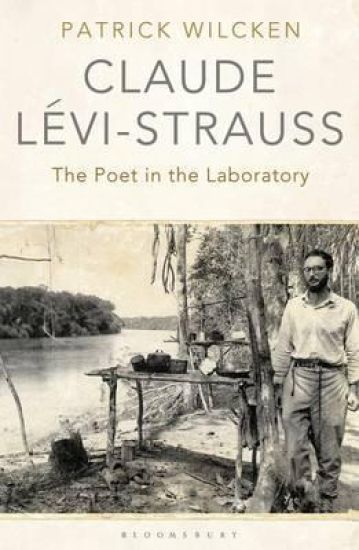
The first comprehensive biography of ‘the father of modern anthropology'‘An intellectual biography that briskly and brilliantly assesses the great, original, creative ideas and their origins in the context of Lévi-Strauss's life from the 1930s to the 1960s in Brazil, New York and Paris' The Times, Biographies of the Year‘Lays out the life with clarity, efficiency, readability and occasionally dissent ... A superbly thrilling life' GuardianClaude Lévi-Strauss, the ‘father of modern anthropology' and author of the classic Tristes tropiques, was one of the most influential intellectuals of the second half of the twentieth century. Dislodging Sartre, Camus and de Beauvoir from the pinnacle of French intellectual life in the 1950s, he brought about a sea change in Western thought and inspired a generation of thinkers and writers, including Michel Foucault, Roland Barthes and Jacques Lacan with his structuralist theories.Lévi-Strauss's bohemian childhood and later studies of the emerging discipline of anthropology in the field and the university led him to mix with intellectuals, artists and poets from all over Europe. Tracing the evolution of his ideas through interviews with the man himself, research into his archives and conversations with contemporary anthropologists, Wilcken explores and explains Lévi-Strauss's theories, revealing an artiste manqué who infused his academic writing with an artistic and poetic sensibility.
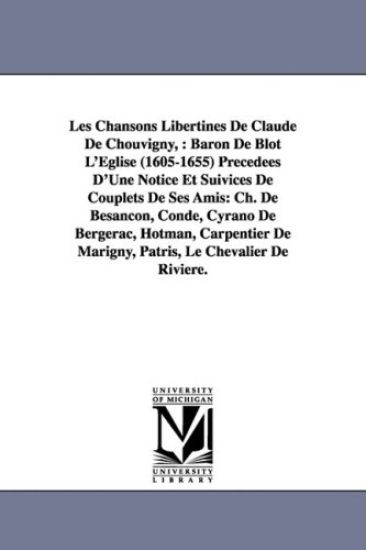
Les Chansons Libertines de Claude de Chouvigny,
Claude De Chouvigny Baro Blot-L'Eglise
University of Michigan Library
2006
pokkari

Claude McKay's Liberating Narrative
Tatiana A. Tagirova-Daley
Peter Lang Publishing Inc
2012
sidottu
Claude McKay’s Liberating Narrative: Russian and Anglophone Caribbean Literary Connections examines McKay’s search for an original form of literary expression that started in Jamaica and continued in his subsequent travels abroad. Newly found research pertaining to his presence in several Russian periodicals, magazines, and literary diaries brings new light to the writer’s contribution to the Soviet understanding of African American and Caribbean issues and his possible influence on Yevgeny Zamyatin, the writer he met during his 1922 - 1923 visit to Russia. The primary focus of this book is Claude McKay and his positive reception of Alexander Pushkin, Feodor Dostoyevsky, and Leo Tolstoy, the nineteenth-century Russian writers who influenced his literary career and enabled him to find a solution to his dilemma of a dual Caribbean identity. The secondary focus of this book is the analysis of McKay’s affinity with his Russian literary predecessors and with C.L.R. James and Ralph de Boissière, his Trinidadian contemporaries, who also acknowledged the importance of Russian writers in their artistic development. The book discusses McKay as a precursor of Russian and Anglophone Caribbean links and presents a comparative analysis of cross-racial, cross-national, and cross-cultural alliances between these two distinct yet similar types of literature. Claude McKay’s Liberating Narrative is highly recommended for undergraduate and graduate courses in Caribbean and comparative literature at North American, European, Caribbean, and African universities.
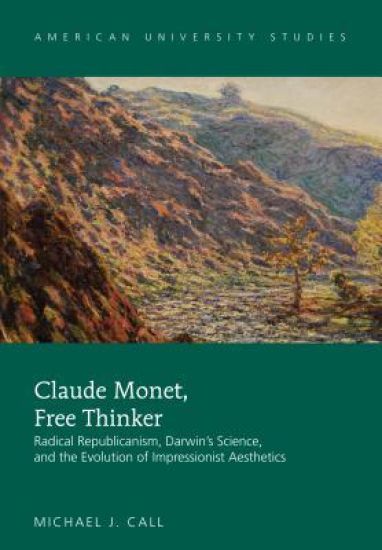
This revolutionary interdisciplinary study argues that Monet’s artistic practices and choices were the direct result of his political stance as a nineteenth-century libre penseur, a position characterized by radical republicanism, a progressive social agenda, and fierce anticlericalism. His efforts to create a style reflecting his personal political code led him to produce paintings proclaimed by like-minded free thinkers as «a science being constantly perfected» (Gustave Geffroy), that is, emphasizing only observable phenomena in the immediate present through scrupulous, insistent on-site observation, capturing the raw data of sensations and sensory experience, and purporting to record a world free of embedded meaning. Darwin’s world similarly comes with no prepackaged reassurance of humankind’s privileged place in it; it is instead a space in which all varieties of organisms and species compete for limited resources in a struggle for survival. The Darwinian model of nature appears to have influenced Monet’s artistic production increasingly as his style evolved over several decades. In opposition to post-Renaissance art that privileged the human presence in both representation and the viewing act, Monet’s later paintings create a sense of virtual and visual equality among all observable phenomena. The human – and the viewer, by extension – is thus represented as neither separate from nature as a disengaged observer nor superior to it but rather co-equal with all other organic life forms surrounding it. This approach, while echoing Darwin’s admiration of nature and its laws, also reminds humankind of its own fragility and the hard choices it must make to avoid extinction.