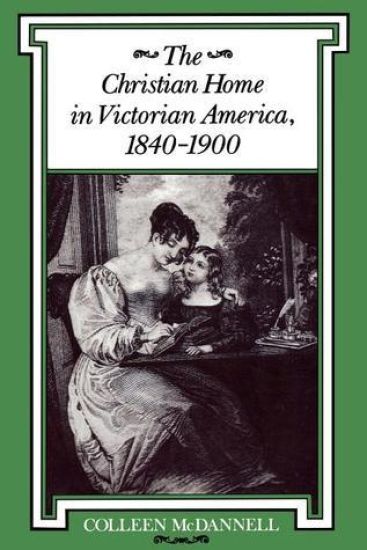
" . . . wonderfully imaginative and provocative in its interdisciplinary approach to the study of nineteenth-century American religion and women's role within it." —Choice " . . . an important addition to the fields of religious studies, women's history, and American cultural history." —Journal of the American Academy of Religion " . . . a complete and complex portrait of the Christian home." —The Journal of American History
Kelley provides an examination of Hillary Rodham Clinton's rhetorical responses to mediated versions of crises in the Clinton Administration. She begins by examining the historical First Lady, and then looks at mediated political realities in general as well as those of the Clinton presidency. Kelley also examines the rhetorical management of political crises and the crises management style of First Ladies, including Florence Harding and Eleanor Roosevelt.The book focuses on the analysis of Hillary Rodham Clinton's rhetorical management of crises in her husband's Administration, including health care, Travelgate, Whitewater, and allegations of sexual misconduct. Kelley's approach is grounded in Kenneth Burke's framework of language as a symbolic means of inducing cooperation through rhetorical identification. She concludes with speculation regarding both the degree of success of Hillary Clinton's efforts as well as the implications of those efforts to rhetorical and political communication and feminist theory. This book will be of particular interest to scholars and researchers of the presidency and the role of the First Lady, political communication, and feminist studies.
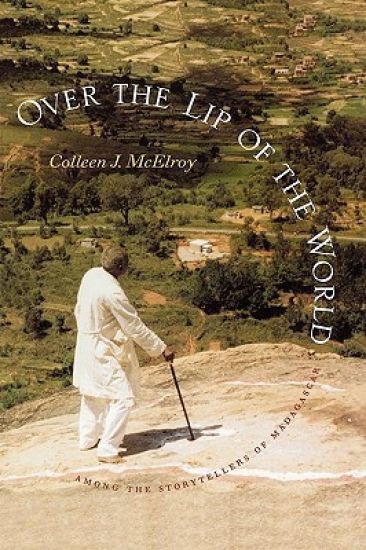
Gifted travel writer, poet, professor of English, and insightful observer of human nature, Colleen McElroy journeyed to Madagascar to undertake a Fulbright research project exploring Malagasy oral traditions and myths. In Over the Lip of the World she depicts with equal verve the various storytelling traditions of the island and her own adventures in trying to find and record them.McElroy's tale of an African American woman's travels among the people of Madagascar is told with wit, insight, and humor. Throughout it she interweaves English translations of Malagasy stories of heroism and morality, royalty and commoners, love and revenge, and the magic of tricksters and shapechangers.
Gifted travel writer, poet, professor of English, and insightful observer of human nature, Colleen McElroy journeyed to Madagascar to undertake a Fulbright research project exploring Malagasy oral traditions and myths. In Over the Lip of the World she depicts with equal verve the various storytelling traditions of the island and her own adventures in trying to find and record them.McElroy's tale of an African American woman's travels among the people of Madagascar is told with wit, insight, and humor. Throughout it she interweaves English translations of Malagasy stories of heroism and morality, royalty and commoners, love and revenge, and the magic of tricksters and shapechangers.
The Sensual Philosophy offers a richly illuminating reading of James Joyce's canon, placing his texts in the context of the medieval mystical tradition that had influenced and interested Joyce since his school days. In exploring Joyce's indebtedness to the artistic and theological culture of the Middle Ages, Colleen Jaurretche also identifies the origins of modernist aesthetics in medieval forms of representation. Jaurretche follows the imprint of the "negative" mystical tradition—which seeks to surmount all human categories and sensations so as to encounter the divine—from its beginnings in the writings of Dionysius the Areopagite through its culmination in the sixteenth-century writings of St. John of the Cross. Joyce sees these ideas, she notes, in the intellectual tradition of late Victorian and early Modern writers, such as William Blake, Walter Pater, Francis Thompson, Gerard Manley Hopkins, Oscar Wilde, and W. B. Yeats. She traces the development of Joyce's mystical aesthetic through a critical examination of his novels, culminating in the supreme negative mystical aestheticism of Finnegans Wake.
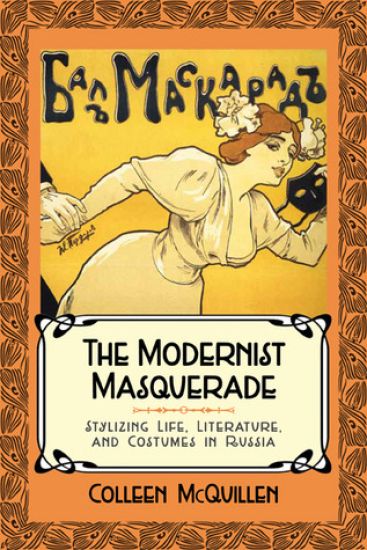
Masked and costume balls thrived in Russia in the late nineteenth and early twentieth centuries during a period of rich literary and theatrical experimentation. The first study of its kind, The Modernist Masquerade examines the cultural history of masquerades in Russia and their representations in influential literary works.The masquerade's widespread appearance as a literary motif in works by such writers as Anna Akhmatova, Leonid Andreev, Andrei Bely, Aleksandr Blok, and Fyodor Sologub mirrored its popularity as a leisure-time activity and illuminated its integral role in the Russian modernist creative consciousness. Colleen McQuillen charts how the political, cultural, and personal significance of lavish costumes and other forms of self-stylising evolved in Russia over time. She shows how their representations in literature engaged in dialog with the diverse aesthetic trends of Decadence, Symbolism, and Futurism and with the era's artistic philosophies.
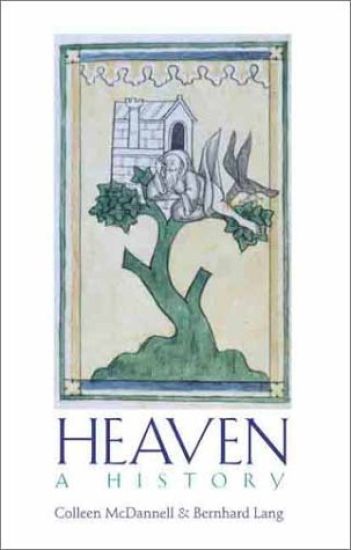
What do Christians believe they will experience after a virtuous life? What will an eternity in the hereafter be like? In this copiously illustrated, lively book, Colleen McDannell and Bernhard Lang describe and interpret the ways in which believers—from biblical authors to medieval mystics, from Jesus to present-day religious thinkers—have pictured Heaven, not just in doctrine but also in poetry, art, literature, and popular culture. In so doing, they shed new light on both the private and public dimensions of western culture. This second edition includes a substantial new preface relating the book to changing views of life after death in the new century.Praise for the earlier edition:“[A] fascinating new study. . . . It is a rich and provocative subject and the authors use it as a springboard from which to examine shifting attitudes toward man and God, within the Judeo-Christian tradition.”—Michiko Kakutani, New York Times“The next best thing to going.”—Carlin Romano, Philadelphia Inquirer“Heaven: A History offers a whistlestop tour, thoroughly researched and engagingly written, of the extraordinary things Christians and others have believed about life after death. . . . A compendium of fascinating finds from the past.”—John Barton, London Review of Books“A fascinating survey of Western culture and a delightful tour of the histories of art, literature and theology.”—Christian Century“Heaven: A History provides a rich opportunity for theological reflection. This book can help in constructing a language for the hereafter that will encourage the best hopes of the living and, heaven knows, perhaps guide the reader to a vision of eternal bliss.”—St. Anthony Messenger
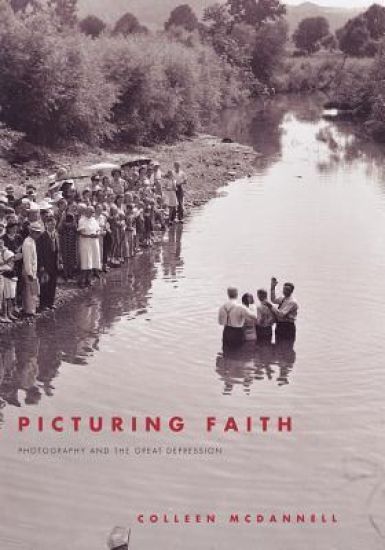
In the midst of the Great Depression, the American government initiated one of the most ambitious national photographic projects ever undertaken. Such photographers as Dorothea Lange, Walker Evans, and Gordon Parks—all then virtually unknown—were commissioned to chronicle in pictures the economic struggle and social dislocation of the Depression era. They explored every facet of rural life in an effort to document the troubles, as well as the spirit, of the nation. Fanning out across the country, these photographers captured a nation alive with religious faith—from Dust Bowl migrants singing hymns to orthodox Jews praying in rural Connecticut. In Picturing Faith, the preeminent historian of religion Colleen McDannell recounts the history of this extraordinary project, telling the stories of the men and women who participated in it and exploring these little-known images of America.Lavishly illustrated, Picturing Faith teases out the various and conflicting ways that these photographers portrayed American religion and enhances our understanding of how religion was practiced during this critical period of American history.
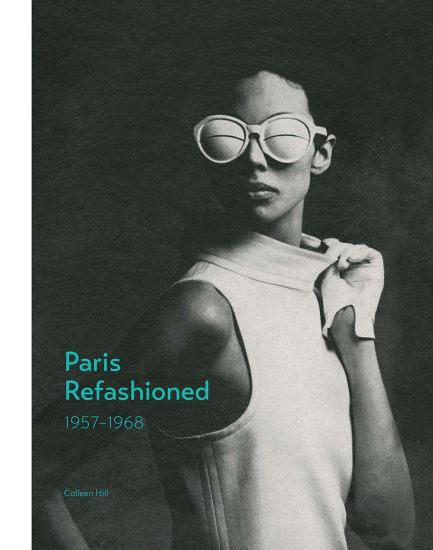
A captivating look at Parisian fashions of the 1960s and how the ready-to-wear revolution influenced haute couture The 1960s was one of the most exciting periods in fashion history, as shifting cultural paradigms were embraced by a generation of designers that challenged conventions and reinvented the fashion industry. This compelling volume focuses on the important but too often dismissed fashions that were created in Paris during this time. From the early couture designs of Yves Saint Laurent that initiated a trend toward a more relaxed and youthful style, to the popularity of ready-to-wear fashions by Emmanuelle Khanh – part of a new group known as the stylists – this book traces the development of Parisian fashion during the 1960s and its continuing legacy. Colleen Hill features eye-catching images from Elle and Vogue, as well as stunning examples of fashion from The Museum at FIT’s world-class collection. She provides an in-depth look at the combined influences of French haute couture, ready-to-wear, and popular culture during this era. In doing so, she describes how the dominance of haute couture was challenged by the ready-to-wear movement, resulting in the rise of a vibrant, youthful, and modern aesthetic in Parisian fashion. Published in association with The Fashion Institute of Technology, New YorkExhibition Schedule:The Museum at the Fashion Institute of Technology, New York (February–April 2017)
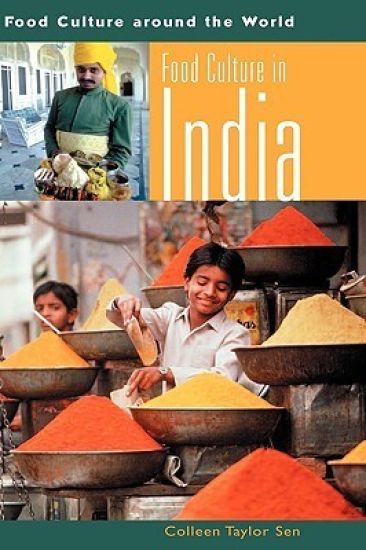
The extreme diversity of Indian food culture—including the dizzying array of ingredients and dishes—is made manageable in this groundbreaking reference. India has no national dish or cuisine; however, certain ingredients, dishes, and cooking styles are typical of much of the subcontinent's foodways. There are also common ways of thinking about food. The balanced coverage found herein covers many states ignored by previous food writers. Students will find much of cultural interest here to complement country studies and foodies will discover fresh perspectives.From prehistoric times there has been considerable mixing of cultures and cuisines within India. Today, the endless variations in cuisine reflect religious, community, regional, and economic differences and histories. Sen, a noted author on Indian cuisine, consummately encapsulates the foodways in historical context, including the influence of the British period (the Raj). Among the topics covered are the restrictions of various religions and castes and the northern wheat-based vs. the southern rice-based cuisine, with an extensive review of each regional cuisine with typical meals. She characterizes the only-recent restaurant culture, with mention of Indian fare offered abroad. In addition, the Indian sweet tooth so apparent in the dishes made for many festivals and celebrations is highlighted. The roles of diet and health are also explained, with an emphasis on Ayruveda, which is gaining support in Western countries. A plethora of recipes for different regions and occasions complements the text.
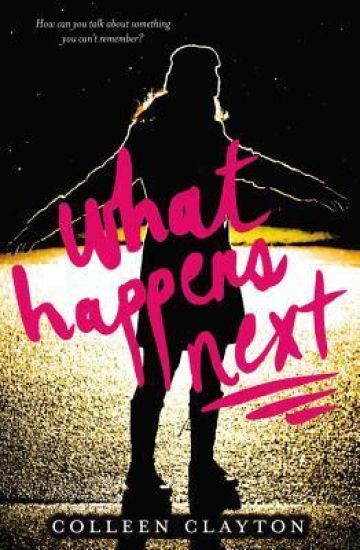
Before the ski trip, Cassidy "Sid" Murphy was a cheerleader (on the bottom of the pyramid, but still...), a straight-A student and a member of a solid trio of best friends. After the ski trip, she is an insomniac, an obsessive late-night runner and her best friends haven't talked to her in months. Taller and more developed than your average sixteen-year-old, Sid's never really been the object of affection for boys her own age, so when she's thrown on a ski lift with hunky local college boy, Dax Windsor, she's smitten. "Come to a party with me tonight," he tells her but Dax isn't what he seems. He takes everything from Sid - including a lock of her perfect red curls - and she can't remember any of it.Back home, Sid drops her college prep classes and takes up residence in the A/V room with only Corey "The Living Stoner" Livingston for company but as she gets to know Corey (slacker, baker, total dreamboat), Sid finds someone who truly makes her happy and she can almost forget what happened. Now, if only she can shake the nightmares and reach her goal weight, everything will be perfect... or so Sid thinks.What Happens Next is a natural and approachable, pitch-perfect portrayal of the aftermath of date rape.
Guest Edited by Drs. Colleen Duncan and Bruce Wobeser, this issue focuses on Equine Pathology and Laboratory Diagnostics. Articles include: Field Necropsy of the horse, Skin disease, Enteric diseases, Neurologic diseases, Musculoskeletal diseases, Reproductive disorders, Toxicology, Diseases of the urinary system, and more!
Date night goes off the rails when one unhappy couple find themselves taken hostage by a climate activist group'The true definition of unputdownable... A must-read!' LIBBY PAGE, author of The Lido'My favourite book of the year' SHELBY VAN PELT, author of Remarkably Bright Creatures'This sharply original romp is entirely too much fun' People---------------------------------------Jane and Dan have been married for nineteen years, but Jane isn't sure they're going to make it to twenty. She feels unneeded by her teenagers, her one published novel has sold under five hundred copies, and she's pretty sure Dan is cheating on her. Arriving at renowned restaurant La Fin du Monde to celebrate their anniversary, Jane thinks it's time to ask for a divorce.But before they even get to the second course, a climate activist group bursts into the room. Jane is shocked - and not just because she's in a movie-style hostage situation. Nearly everything the disorganized activists say and do is right out of the pages of her failed book. Which means Jane and Dan are the only ones who know what's going to happen next. And they're the only ones who can stop it. If they can survive this, maybe they can survive anything - even marriage.---------------------------------------READERS LOVE JANE AND DAN!'The plot was plotting!''Oakley had me laughing OUT LOUD''A five-star must read''I couldn't put it down''Pure joy wrapped up in 370 pages'
Date night goes off the rails when one unhappy couple find themselves taken hostage by a climate activist group'Marital discord meets mortal danger in this high-stakes tongue-in-cheek romp' Good Housekeeping'The true definition of unputdownable... A must-read!' LIBBY PAGE, author of The Lido'My favourite book of the year' SHELBY VAN PELT, author of Remarkably Bright Creatures'This sharply original romp is entirely too much fun' People---------------------------------------Jane and Dan have been married for nineteen years, but Jane isn't sure they're going to make it to twenty. She feels unneeded by her teenagers, her one published novel has sold under five hundred copies, and she's pretty sure Dan is cheating on her. Arriving at renowned restaurant La Fin du Monde to celebrate their anniversary, Jane thinks it's time to ask for a divorce.But before they even get to the second course, a climate activist group bursts into the room. Jane is shocked - and not just because she's in a movie-style hostage situation. Nearly everything the disorganized activists say and do is right out of the pages of her failed book. Which means Jane and Dan are the only ones who know what's going to happen next. And they're the only ones who can stop it. If they can survive this, maybe they can survive anything - even marriage.---------------------------------------READERS LOVE JANE AND DAN!'The plot was plotting!''Oakley had me laughing OUT LOUD''A five-star must read''I couldn't put it down''Pure joy wrapped up in 370 pages'
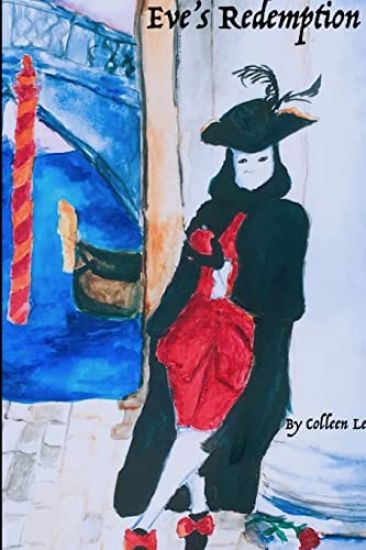
In a brief allusion to Lewis's The screw tape Letters, one Demon Rimmon is out to destroy his charge, she is seductively annoying. Eva is everything he hates human and free. He gets his chance to possess her soul forever, but time is running out on the cobblestone streets, and watery canals of the mysteriously, doomed city of Venice.
The Operatic Archive: American Opera as History extends the growing interdisciplinary conversation in opera studies by drawing on new research in performance studies and the philosophy of history. Moving beyond traditional aesthetic conceptions of opera, this book argues for opera’s powerful potential for historical impact and engagement in late twentieth- and twenty-first-century works by American composers. Considering opera’s ability to serve as a vehicle for memory, historical experience, affect, presence, and the historical sublime, this volume demonstrates how opera’s ability to represent and evoke historical events and historical experience differs fundamentally from the representations and recreations of other modes (specifically, literary and dramatic representations). Building on the work of performance scholars such as Joseph Roach, Rebecca Schneider, and Diana Taylor, and in consultation with recent debates in the philosophy of history, the book will be of interest to a wide range of scholars and researchers, particularly those working in the areas of opera studies and performance studies.
As your school district undertakes the process of evaluating its K–12 reading program, literacy curriculum, or literacy instructional practices, this book will be your go-to resource. Pennell offers a step-by-step guide for educators, school leaders, or professional learning communities to evaluate high-quality instructional materials and standards-aligned literacy practices. It includes a wealth of tools such as timelines, full meeting agendas, stakeholder surveys, and evaluation rubrics. Chapters cover key topics, including: Literacy leadership team meetings Reviewing foundational skills Comprehension and vocabulary Evaluating writing Selecting new materials Implementing new literacy materials Supporting educators through instructional coaching and professional learningPennell provides a straightforward framework for how educators can work together collaboratively to analyze, reflect, and ultimately evaluate their school district’s literacy program. Each chapter is grounded in salient research on the why of literacy teaching and learning and helps you understand how instruction can be meaningfully aligned with current standards. The research and theory that support effective literacy instruction—including culturally responsive practices—are explained in an accessible and pragmatic manner.The practical tools in this book are essential for administrators and educators tasked with evaluating literacy programs and practices, as well as graduate students who must learn how to audit a literacy curriculum. Whether you’re a school administrator, teacher, or reading specialist, this book will ensure all your students can reach success in literacy.
As your school district undertakes the process of evaluating its K–12 reading program, literacy curriculum, or literacy instructional practices, this book will be your go-to resource. Pennell offers a step-by-step guide for educators, school leaders, or professional learning communities to evaluate high-quality instructional materials and standards-aligned literacy practices. It includes a wealth of tools such as timelines, full meeting agendas, stakeholder surveys, and evaluation rubrics. Chapters cover key topics, including: Literacy leadership team meetings Reviewing foundational skills Comprehension and vocabulary Evaluating writing Selecting new materials Implementing new literacy materials Supporting educators through instructional coaching and professional learningPennell provides a straightforward framework for how educators can work together collaboratively to analyze, reflect, and ultimately evaluate their school district’s literacy program. Each chapter is grounded in salient research on the why of literacy teaching and learning and helps you understand how instruction can be meaningfully aligned with current standards. The research and theory that support effective literacy instruction—including culturally responsive practices—are explained in an accessible and pragmatic manner.The practical tools in this book are essential for administrators and educators tasked with evaluating literacy programs and practices, as well as graduate students who must learn how to audit a literacy curriculum. Whether you’re a school administrator, teacher, or reading specialist, this book will ensure all your students can reach success in literacy.
Become a better advocate—for your students, for your coworkers, and for yourself—with the valuable strategies in this accessible guidebook. Written with a candid and humorous style, this tool kit reinforces why effective early childhood education matters and the positive impact an effective advocate can have on a child’s classroom experience.Chapters explore how to explain and support best practices, build relationships with students and families, speak up for English language learners and students with exceptionalities, reduce coworker conflict and negativity, and reach out for the help you need.Equipping readers with practical takeaways and everyday examples of what advocacy in early childhood education actually looks like, Advocacy for Early Childhood Educators is perfect for teachers, coaches, and anyone seeking effective strategies to become a relentless advocate for their students, for each other, and for themselves.
Become a better advocate—for your students, for your coworkers, and for yourself—with the valuable strategies in this accessible guidebook. Written with a candid and humorous style, this tool kit reinforces why effective early childhood education matters and the positive impact an effective advocate can have on a child’s classroom experience.Chapters explore how to explain and support best practices, build relationships with students and families, speak up for English language learners and students with exceptionalities, reduce coworker conflict and negativity, and reach out for the help you need.Equipping readers with practical takeaways and everyday examples of what advocacy in early childhood education actually looks like, Advocacy for Early Childhood Educators is perfect for teachers, coaches, and anyone seeking effective strategies to become a relentless advocate for their students, for each other, and for themselves.