
Kirjahaku
Etsi kirjoja tekijän nimen, kirjan nimen tai ISBN:n perusteella.
1000 tulosta hakusanalla Corey Harton
“Storytelling at its most brilliant—and whimsical.” —Kirkus Reviews (starred review)Everything is on the line for crabby, cranky Crow. But why, exactly, is Crow so moody? The reason will delight readers in three-time Geisel Medal and Caldecott Honor winner Corey R. Tabor’s funny and surprising twist on friendship, science, and saving the world.Cranky, crabby Crow does not want to play with Squirrel or do loop-de-loops with Hummingbird. He doesn’t have time for Rat or Bat. From high atop a telephone pole, Cat warns Crow that he will soon be all alone if he turns his friends away with his very cranky “kaw!” one more time. But, unbeknownst to all, Crow has bigger, world-saving fish to fry—he must protect planet Earth from an asteroid headed our way!With playful illustrations and a classic “Tabor twist,” Cranky, Crabby Crow is an excellent choice for readers who love Mo Willems and Jon Klassen. Kirkus Reviews calls Corey R. Tabor “a master of the early reader” with good reason, and here he once again proves himself an innovative and unforgettable storyteller. Cranky, Crabby Crow explores perennial, age-appropriate social and emotional themes through Corey R. Tabor’s signature subtlety and silliness. Includes a secret code.

Assignment: Imagine yourself as a bear for the day. What would you do? Caldecott Honor and three-time Geisel Award-winning author and illustrator Corey R. Tabor offers an inspiring--and surprising--answer in this funny picture book for fans of Mo Willems, David Shannon, and Peter Brown. If you were a bear for a day, what would you do? Probably wake up, eat breakfast, go for a motorcycle ride, and rescue your best friend from a rogue hot air balloon. . . . You know, normal bear stuff You certainly wouldn't stand in front of the whole class and give a boring, detailed, and informational report about bears. Dynamically illustrated from the bear's perspective, the Caldecott Honor and three-time Geisel Award-winning Corey R. Tabor delivers an innovative and crowd-pleasing picture book. This funny, mischievous, and surprising picture book about creativity, friendship, where ideas come from, and the fun of using your imagination, will be a hit at home, at story times, and in classrooms.

Three adventures starring clever, playful Fox in one big book! This trio of tales—Fox the Tiger, Fox Is Late, and Fox Has a Problem—from Corey R. Tabor’s acclaimed, Geisel Award–winning series are together in picture-book format for the first time ever. Get ready for Fox, Fox, and more Fox! The three funny stories in this picture book star Corey R. Tabor’s award-winning Fox along with his steadfast friends. Fox wishes he were a tiger! Tigers are big and fast and sneaky. So, Fox decides to become one. Fox is late! Follow him for a big surprise as he zooms along on his skateboard. Fox has a problem! Now all of Fox’s friends have problems, too. Can they work together to fix things before it’s too late? With engaging full-color art throughout, this is a terrific title for bedtime and story-time sharing.
Wolf wants to win the sled race. He loves winning. Otto wants to win, too. Wally Mammoth is . . . not so sure. A giggle-inducing story about friendship and cupcakes that is perfect for emerging readers by multiple Geisel Award winner Corey R. Tabor and illustrator Dalton Webb. For fans of Elephant and Piggie and Narwhal and Jelly.Wally Mammoth lives in the Ice Age, where his huge heart warms even the coldest of days. And it has to be cold to have a sled race! Wally and his friends Otto the great auk and Wolf the (you guessed it!) gray wolf are all hot cocoa'd up and ready to compete. Otto and Wolf both really want to win, but sweet Wally is happy as long as everyone has fun.Naturally, the competition goes downhill quickly. If the three friends careen toward the finish line in a giant snowball, how will they determine first, second, and third place? It doesn’t matter—there will be cupcakes for everyone regardless.Wally Mammoth and the Sled Race is the first installment in a vibrant, laugh-out-loud, comic-inspired series about a group of unforgettable friends—created by friends themselves, illustrator Dalton Webb and Geisel Award–winning author Corey R. Tabor. These unjacketed, lower-priced picture books make reading fun and are a perfect choice for emerging readers, for developing visual literacy, and for sharing together.



Information Assurance Handbook: Effective Computer Security and Risk Management Strategies
Corey Schou; Steven Hernandez
McGraw-Hill Professional
2014
nidottu
Publisher's Note: Products purchased from Third Party sellers are not guaranteed by the publisher for quality, authenticity, or access to any online entitlements included with the product.Best practices for protecting critical data and systemsInformation Assurance Handbook: Effective Computer Security and Risk Management Strategies discusses the tools and techniques required to prevent, detect, contain, correct, and recover from security breaches and other information assurance failures. This practical resource explains how to integrate information assurance into your enterprise planning in a non-technical manner. It leads you through building an IT strategy and offers anorganizational approach to identifying, implementing, and controlling information assurance initiatives for small businesses and global enterprises alike.Common threats and vulnerabilities are described and applicable controls based on risk profiles are provided. Practical information assurance application examples are presented for select industries, including healthcare, retail, and industrial control systems. Chapter-endingcritical thinking exercises reinforce the material covered. An extensive list of scholarly works and international government standards is also provided in this detailed guide.Comprehensive coverage includes:Basic information assurance principles and conceptsInformation assurance management systemCurrent practices, regulations, and plansImpact of organizational structureAsset managementRisk management and mitigationHuman resource assuranceAdvantages of certification, accreditation, and assuranceInformation assurance in system development and acquisitionPhysical and environmental security controlsInformation assurance awareness, training, and educationAccess controlInformation security monitoring tools and methodsInformation assurance measurements and metricsIncident handling and computer forensicsBusiness continuity managementBackup and restorationCloud computing and outsourcing strategiesInformation assurance big data concerns
Lessons in Library Leadership: A Primer for Library Managers and Unit Leaders takes on the topic of management positions within libraries and how many of them are filled by candidates with no formalized training. This lack of preparation often leads to added stress as they scramble to learn how to lead, to formulate departmental goals, to conduct effective assessment, to think and plan strategically, to counsel employees, and much more. This book will serve equally as a primer for librarians new to management and those needing a refresher in basic management concepts. Seasoned managers may also look to this guide as a quick reference resource covering multiple management subjects. The contents of the monograph include basic concepts, real word examples/case studies, and bibliographic information for further management skill development.

Licensing Electronic Resources in Academic Libraries
Corey S. Halaychik; Blake Reagan
Chandos Publishing (Oxford) Ltd
2018
nidottu
Licensing Electronic Resources in Academic Libraries: A Practical Handbook provides librarians charged with reviewing, negotiating, and processing licenses with fundamental information that will ensure they not only understand the contents of a license, but are also able to successfully complete the licensing life cycle from start to finish. The contents of the monograph includes basic concepts, real word examples, and tips for negotiation.
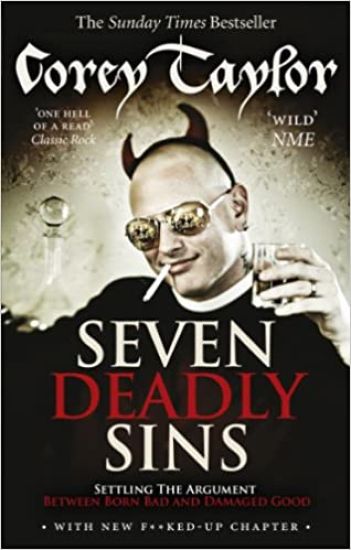
'I was 22 years old, a hard-on with a pulse: wretched, vice-ridden, too much to burn and not enough minutes in a hour to do so'The action begins in West Des Moines, Iowa, where Corey Taylor, frontman of heavy metal bands Slipknot and Stone Sour, systematically set about committing each of the Seven Deadly Sins.
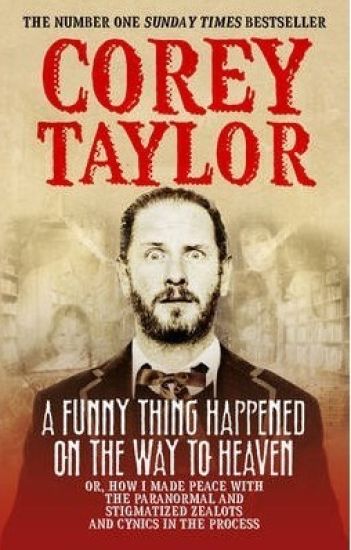
As a result, heâ??s seen ghosts up close and personal, whether it be while combing through an abandoned house in his native Iowa as a child or recording an album in the fabled Houdini Hollywood Hills mansion. Simply put, heâ??s seen ghosts, but he hasnâ??t seen Jesus.

From bad music, fame and infomercials to raising kids, sex and airport security, this book is the result of a one-man mission to demonstrate the alarming rise in worldwide idiocy, buffoonery and out-and-out disregard for intelligent thought.
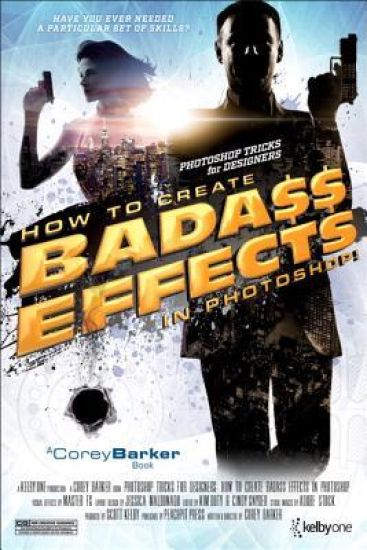
Perhaps you are working on a new project and need a little inspiration , or even a quick reference to show you how to do that one cool effect that will be the finishing touch on your latest creation. Whatever you need, this book can help you in so many ways. One of the toughest things about being a designer is getting a good idea. The next challenge is realizing that idea. This book will not only be a source of ideas , but will also show you how to create them step by step. You can even combine multiple effects to create other cool results–the book’s cover was designed by combining at least half a dozen techniques found within. Corey wrote this book for working designers, or anyone who just wants to add some “cool factor” to their projects. Each tutorial is a stand-alone technique or mini-project, so you do not have to follow the book in sequence. Just find what you like and have at it. And, as an added bonus, you can download all of t he images used in the book to follow along with. It’s everything you loved about the Down & Dirty books, now in a small handbook size you can use as a quick reference to a variety of effects.


Late in life, William F. Buckley made a confession to Corey Robin. Capitalism is "boring," said the founding father of the American right. "Devoting your life to it," as conservatives do, "is horrifying if only because it's so repetitious. It's like sex." With this unlikely conversation began Robin's decade-long foray into the conservative mind. What is conservatism, and what's truly at stake for its proponents? If capitalism bores them, what excites them? Tracing conservatism back to its roots in the reaction against the French Revolution, Robin argues that the right is fundamentally inspired by a hostility to emancipating the lower orders. Some conservatives endorse the free market, others oppose it. Some criticize the state, others celebrate it. Underlying these differences is the impulse to defend power and privilege against movements demanding freedom and equality. Despite their opposition to these movements, conservatives favor a dynamic conception of politics and society--one that involves self-transformation, violence, and war. They are also highly adaptive to new challenges and circumstances. This partiality to violence and capacity for reinvention has been critical to their success. Written by a keen, highly regarded observer of the contemporary political scene, The Reactionary Mind ranges widely, from Edmund Burke to Antonin Scalia to Donald Trump, from John C. Calhoun to Ayn Rand. It advances the notion that all right-wing ideologies, from the eighteenth century through today, are historical improvisations on a theme: the felt experience of having power, seeing it threatened, and trying to win it back. When its first edition appeared in fall 2011, The Reactionary Mind set off a fierce debate, in the New York Review of Books, on academic blogs, and throughout the internet. So intense was the controversy that it became the subject of a profile in the New York Times. Now updated to include Trump's election and the rise of global populism, The Reactionary Mind is more relevant than ever.

Late in life, William F. Buckley made a confession to Corey Robin. Capitalism is "boring," said the founding father of the American right. "Devoting your life to it," as conservatives do, "is horrifying if only because it's so repetitious. It's like sex." With this unlikely conversation began Robin's decade-long foray into the conservative mind. What is conservatism, and what's truly at stake for its proponents? If capitalism bores them, what excites them? Tracing conservatism back to its roots in the reaction against the French Revolution, Robin argues that the right is fundamentally inspired by a hostility to emancipating the lower orders. Some conservatives endorse the free market, others oppose it. Some criticize the state, others celebrate it. Underlying these differences is the impulse to defend power and privilege against movements demanding freedom and equality. Despite their opposition to these movements, conservatives favor a dynamic conception of politics and society--one that involves self-transformation, violence, and war. They are also highly adaptive to new challenges and circumstances. This partiality to violence and capacity for reinvention has been critical to their success. Written by a keen, highly regarded observer of the contemporary political scene, The Reactionary Mind ranges widely, from Edmund Burke to Antonin Scalia to Donald Trump, from John C. Calhoun to Ayn Rand. It advances the notion that all right-wing ideologies, from the eighteenth century through today, are historical improvisations on a theme: the felt experience of having power, seeing it threatened, and trying to win it back. When its first edition appeared in fall 2011, The Reactionary Mind set off a fierce debate, in the New York Review of Books, on academic blogs, and throughout the internet. So intense was the controversy that it became the subject of a profile in the New York Times. Now updated to include Trump's election and the rise of global populism, The Reactionary Mind is more relevant than ever.

Wolff and the First Fifty Years of German Metaphysics
Corey W. Dyck
Oxford University Press
2024
sidottu
Wolff and the First Fifty Years of German Metaphysics offers a fresh account of philosophical developments in German philosophy in the first half of the 18th century. At the centre of this book is Wolff's seminal text on metaphysics, the Deutsche Metaphysik of 1719, a text that modernized and advanced German philosophy but also provoked a vigorous intellectual controversy which informed and animated German thought through the decades until Kant's later philosophical revolution. Corey W. Dyck draws extensively on the wider intellectual context and Wolff's own early philosophical and scientific writings to provide a new and comprehensive account of Wolff's metaphysics, with particular emphasis on Wolff's views on the human soul and God. Dyck explores the impact of Wolff's text, beginning with a widely-neglected aspect of Wolff's reception in Germany, namely, the striking uptake of his philosophy among women intellectuals and Wolff's hostile reception by his Pietist colleagues. In the concluding chapters, a number of key metaphysical debates in the aftermath of the controversy between Wolff and the Pietists are considered. The reader is shown how these two opposed intellectual systems served as the indispensable frame for metaphysical inquiry-inspiring and shaping discussion among German thinkers-in the first half of the 18th century. In the end, this all points to the rich philosophical vein exposed through the opening of the fracture between Wolffianism and Pietism, and takes a step towards giving Wolff-but also his Pietist critics and the philosophers who took up positions between them-their rightful place at the beginning of the history of classical German metaphysics.

The Free Port of Livorno and the Transformation of the Mediterranean World
Corey Tazzara
Oxford University Press
2017
sidottu
In the twilight of the Renaissance, the grand duke of Tuscany-a scion of the fabled Medici family of bankers-invited foreign merchants, artisans, and ship captains to settle in his port city of Livorno. The town quickly became one of the most bustling port cities in the Mediterranean, presenting a rich tableau of officials, merchants, mariners, and slaves. Nobody could have predicted in 1600 that their activities would contribute a chapter in the history of free trade. Yet by the late seventeenth century, the grand duke's invitation had evolved into a general program of hospitality towards foreign visitors, the liberal treatment of goods, and a model for the elimination of customs duties. Livorno was the earliest and most successful example of a free port in Europe. The story of Livorno shows the seeds of liberalism emerging, not from the studies of philosophers such as Adam Smith, but out of the nexus between commerce, politics, and identity in the early modern Mediterranean.

Early Modern German Philosophy (1690-1750) makes some of the key texts of early German thought available in English, in most cases for the first time. The translations range from texts by the most important figures of the period, including Christian Thomasius, Christian Wolff, Christian August Crusius, and Georg Friedrich Meier, as well as texts by consequential but less familiar thinkers such as Dorothea Christiane Erxleben, Theodor Ludwig Lau, Friedrich Wilhelm Stosch, and Joachim Lange. The topics covered range across a number of areas of theoretical philosophy, including metaphysics (the immortality of the soul, materialism and its refutation, the pre-established harmony), epistemology (the principle of sufficient reason, the limits of reason with respect to matters of faith), and logic (the role of prejudices in cognition and the doctrine of truth). These texts are intended to showcase German philosophy in the early Modern period as a far richer tradition than it is typically given credit for, and indeed as much more than either a footnote to Leibniz or merely a step on the way to Kant. This collection is a valuable resource for students and scholars interested in the early modern German tradition and the often neglected works that enlightened it.