Kirjojen hintavertailu. Mukana 11 627 220 kirjaa ja 12 kauppaa.

Kirjahaku

Etsi kirjoja tekijän nimen, kirjan nimen tai ISBN:n perusteella.

1000 tulosta hakusanalla Corey Olsen

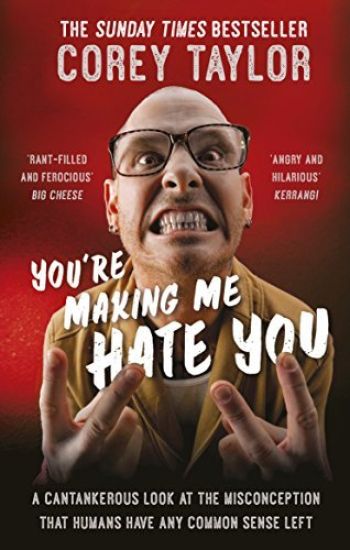
You're Making Me Hate You

You're Making Me Hate You

Corey Taylor

Ebury Publishing
2016
pokkari
From bad music, fame and infomercials to raising kids, sex and airport security, this book is the result of a one-man mission to demonstrate the alarming rise in worldwide idiocy, buffoonery and out-and-out disregard for intelligent thought.
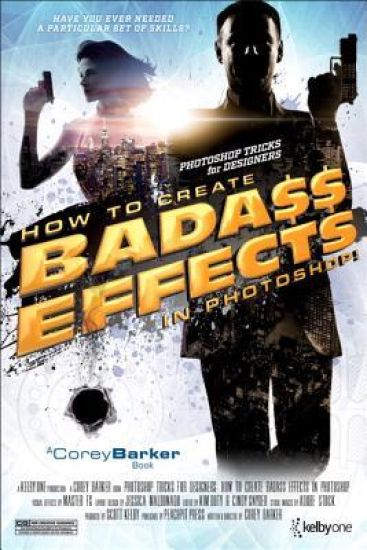
Photoshop Tricks for Designers

Photoshop Tricks for Designers

Corey Barker

Peachpit Press Publications
2016
nidottu
Perhaps you are working on a new project and need a little inspiration , or even a quick reference to show you how to do that one cool effect that will be the finishing touch on your latest creation. Whatever you need, this book can help you in so many ways. One of the toughest things about being a designer is getting a good idea. The next challenge is realizing that idea. This book will not only be a source of ideas , but will also show you how to create them step by step. You can even combine multiple effects to create other cool results–the book’s cover was designed by combining at least half a dozen techniques found within. Corey wrote this book for working designers, or anyone who just wants to add some “cool factor” to their projects. Each tutorial is a stand-alone technique or mini-project, so you do not have to follow the book in sequence. Just find what you like and have at it. And, as an added bonus, you can download all of t he images used in the book to follow along with. It’s everything you loved about the Down & Dirty books, now in a small handbook size you can use as a quick reference to a variety of effects.
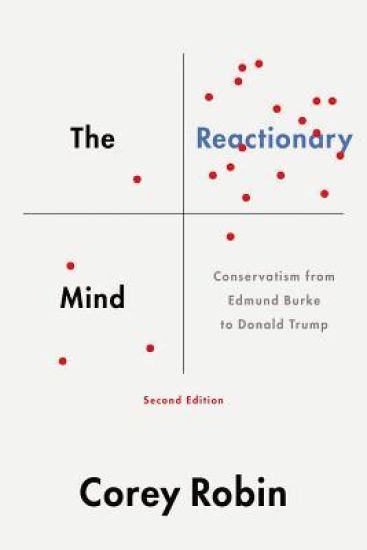
The Reactionary Mind

The Reactionary Mind

Corey Robin

Oxford University Press Inc
2017
nidottu
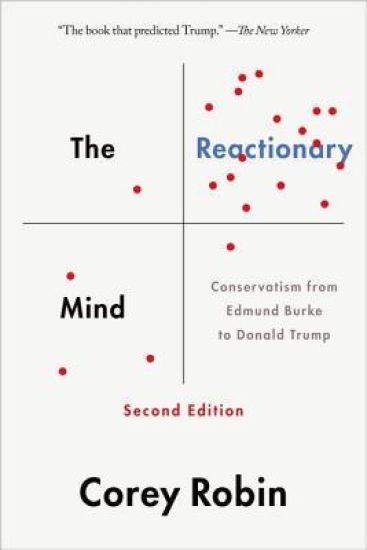
Late in life, William F. Buckley made a confession to Corey Robin. Capitalism is "boring," said the founding father of the American right. "Devoting your life to it," as conservatives do, "is horrifying if only because it's so repetitious. It's like sex." With this unlikely conversation began Robin's decade-long foray into the conservative mind. What is conservatism, and what's truly at stake for its proponents? If capitalism bores them, what excites them? Tracing conservatism back to its roots in the reaction against the French Revolution, Robin argues that the right is fundamentally inspired by a hostility to emancipating the lower orders. Some conservatives endorse the free market, others oppose it. Some criticize the state, others celebrate it. Underlying these differences is the impulse to defend power and privilege against movements demanding freedom and equality. Despite their opposition to these movements, conservatives favor a dynamic conception of politics and society--one that involves self-transformation, violence, and war. They are also highly adaptive to new challenges and circumstances. This partiality to violence and capacity for reinvention has been critical to their success. Written by a keen, highly regarded observer of the contemporary political scene, The Reactionary Mind ranges widely, from Edmund Burke to Antonin Scalia to Donald Trump, from John C. Calhoun to Ayn Rand. It advances the notion that all right-wing ideologies, from the eighteenth century through today, are historical improvisations on a theme: the felt experience of having power, seeing it threatened, and trying to win it back. When its first edition appeared in fall 2011, The Reactionary Mind set off a fierce debate, in the New York Review of Books, on academic blogs, and throughout the internet. So intense was the controversy that it became the subject of a profile in the New York Times. Now updated to include Trump's election and the rise of global populism, The Reactionary Mind is more relevant than ever.
The Reactionary Mind

The Reactionary Mind

Corey Robin

Oxford University Press Inc
2017
sidottu
Late in life, William F. Buckley made a confession to Corey Robin. Capitalism is "boring," said the founding father of the American right. "Devoting your life to it," as conservatives do, "is horrifying if only because it's so repetitious. It's like sex." With this unlikely conversation began Robin's decade-long foray into the conservative mind. What is conservatism, and what's truly at stake for its proponents? If capitalism bores them, what excites them? Tracing conservatism back to its roots in the reaction against the French Revolution, Robin argues that the right is fundamentally inspired by a hostility to emancipating the lower orders. Some conservatives endorse the free market, others oppose it. Some criticize the state, others celebrate it. Underlying these differences is the impulse to defend power and privilege against movements demanding freedom and equality. Despite their opposition to these movements, conservatives favor a dynamic conception of politics and society--one that involves self-transformation, violence, and war. They are also highly adaptive to new challenges and circumstances. This partiality to violence and capacity for reinvention has been critical to their success. Written by a keen, highly regarded observer of the contemporary political scene, The Reactionary Mind ranges widely, from Edmund Burke to Antonin Scalia to Donald Trump, from John C. Calhoun to Ayn Rand. It advances the notion that all right-wing ideologies, from the eighteenth century through today, are historical improvisations on a theme: the felt experience of having power, seeing it threatened, and trying to win it back. When its first edition appeared in fall 2011, The Reactionary Mind set off a fierce debate, in the New York Review of Books, on academic blogs, and throughout the internet. So intense was the controversy that it became the subject of a profile in the New York Times. Now updated to include Trump's election and the rise of global populism, The Reactionary Mind is more relevant than ever.
Wolff and the First Fifty Years of German Metaphysics

Wolff and the First Fifty Years of German Metaphysics

Corey W. Dyck

Oxford University Press
2024
sidottu
Wolff and the First Fifty Years of German Metaphysics offers a fresh account of philosophical developments in German philosophy in the first half of the 18th century. At the centre of this book is Wolff's seminal text on metaphysics, the Deutsche Metaphysik of 1719, a text that modernized and advanced German philosophy but also provoked a vigorous intellectual controversy which informed and animated German thought through the decades until Kant's later philosophical revolution. Corey W. Dyck draws extensively on the wider intellectual context and Wolff's own early philosophical and scientific writings to provide a new and comprehensive account of Wolff's metaphysics, with particular emphasis on Wolff's views on the human soul and God. Dyck explores the impact of Wolff's text, beginning with a widely-neglected aspect of Wolff's reception in Germany, namely, the striking uptake of his philosophy among women intellectuals and Wolff's hostile reception by his Pietist colleagues. In the concluding chapters, a number of key metaphysical debates in the aftermath of the controversy between Wolff and the Pietists are considered. The reader is shown how these two opposed intellectual systems served as the indispensable frame for metaphysical inquiry-inspiring and shaping discussion among German thinkers-in the first half of the 18th century. In the end, this all points to the rich philosophical vein exposed through the opening of the fracture between Wolffianism and Pietism, and takes a step towards giving Wolff-but also his Pietist critics and the philosophers who took up positions between them-their rightful place at the beginning of the history of classical German metaphysics.
The Free Port of Livorno and the Transformation of the Mediterranean World
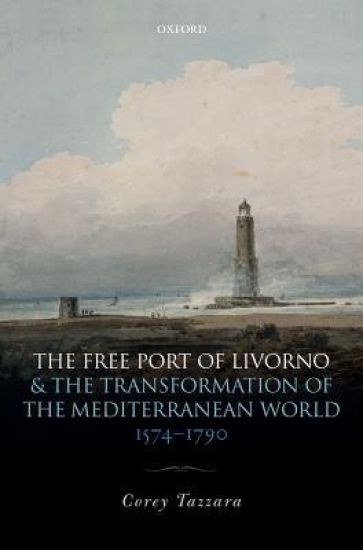
In the twilight of the Renaissance, the grand duke of Tuscany-a scion of the fabled Medici family of bankers-invited foreign merchants, artisans, and ship captains to settle in his port city of Livorno. The town quickly became one of the most bustling port cities in the Mediterranean, presenting a rich tableau of officials, merchants, mariners, and slaves. Nobody could have predicted in 1600 that their activities would contribute a chapter in the history of free trade. Yet by the late seventeenth century, the grand duke's invitation had evolved into a general program of hospitality towards foreign visitors, the liberal treatment of goods, and a model for the elimination of customs duties. Livorno was the earliest and most successful example of a free port in Europe. The story of Livorno shows the seeds of liberalism emerging, not from the studies of philosophers such as Adam Smith, but out of the nexus between commerce, politics, and identity in the early modern Mediterranean.
Early Modern German Philosophy (1690-1750)

Early Modern German Philosophy (1690-1750)

Corey W. Dyck

Oxford University Press
2019
sidottu
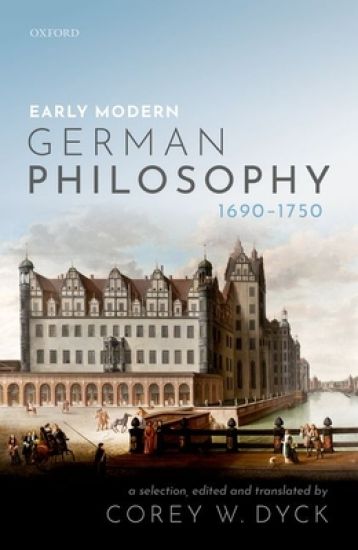
Early Modern German Philosophy (1690-1750) makes some of the key texts of early German thought available in English, in most cases for the first time. The translations range from texts by the most important figures of the period, including Christian Thomasius, Christian Wolff, Christian August Crusius, and Georg Friedrich Meier, as well as texts by consequential but less familiar thinkers such as Dorothea Christiane Erxleben, Theodor Ludwig Lau, Friedrich Wilhelm Stosch, and Joachim Lange. The topics covered range across a number of areas of theoretical philosophy, including metaphysics (the immortality of the soul, materialism and its refutation, the pre-established harmony), epistemology (the principle of sufficient reason, the limits of reason with respect to matters of faith), and logic (the role of prejudices in cognition and the doctrine of truth). These texts are intended to showcase German philosophy in the early Modern period as a far richer tradition than it is typically given credit for, and indeed as much more than either a footnote to Leibniz or merely a step on the way to Kant. This collection is a valuable resource for students and scholars interested in the early modern German tradition and the often neglected works that enlightened it.
Early Modern German Philosophy (1690-1750)

Early Modern German Philosophy (1690-1750)

Corey W. Dyck

Oxford University Press
2020
nidottu
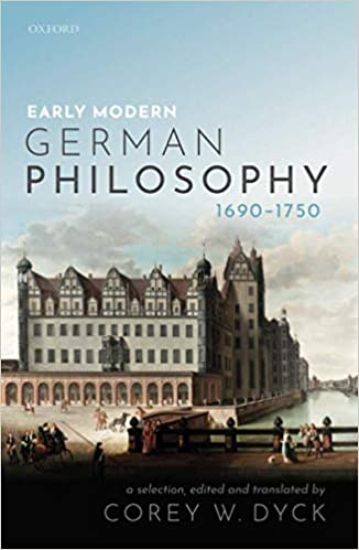
Early Modern German Philosophy (1690-1750) makes some of the key texts of early German thought available in English, in most cases for the first time. The translations range from texts by the most important figures of the period, including Christian Thomasius, Christian Wolff, Christian August Crusius, and Georg Friedrich Meier, as well as texts by consequential but less familiar thinkers such as Dorothea Christiane Erxleben, Theodor Ludwig Lau, Friedrich Wilhelm Stosch, and Joachim Lange. The topics covered range across a number of areas of theoretical philosophy, including metaphysics (the immortality of the soul, materialism and its refutation, the pre-established harmony), epistemology (the principle of sufficient reason, the limits of reason with respect to matters of faith), and logic (the role of prejudices in cognition and the doctrine of truth). These texts are intended to showcase German philosophy in the early Modern period as a far richer tradition than it is typically given credit for, and indeed as much more than either a footnote to Leibniz or merely a step on the way to Kant. This collection is a valuable resource for students and scholars interested in the early modern German tradition and the often neglected works that enlightened it.
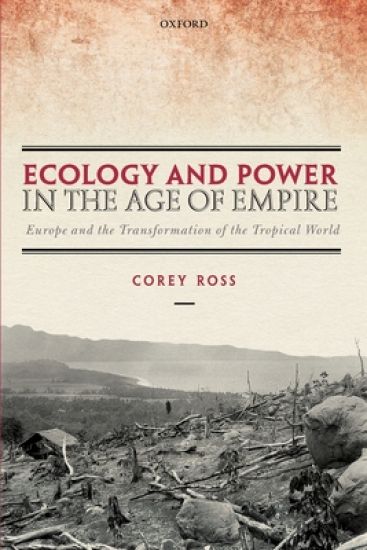
Ecology and Power in the Age of Empire

Ecology and Power in the Age of Empire

Corey Ross

Oxford University Press
2019
nidottu
Ecology and Power in the Age of Empire provides the first wide-ranging environmental history of the heyday of European imperialism, from the late nineteenth century to the end of the colonial era. It focuses on the ecological dimensions of the explosive growth of tropical commodity production, global trade, and modern resource management strategies that still visibly shape our world today, and how they were related to broader social, cultural, and political developments in Europe's colonies. Covering the overseas empires of all the major European powers, Corey Ross argues that tropical environments were not merely a stage on which conquest and subjugation took place, but were an essential part of the colonial project, profoundly shaping the imperial enterprise even as they were shaped by it. The story he tells is not only about the complexities of human experience, but also about people's relationship with the ecosystems in which they were themselves embedded: the soil, water, plants, and animals that were likewise a part of Europe's empire. Although it shows that imperial conquest rarely represented the signal ecological trauma that some accounts suggest, it nonetheless demonstrates that modern imperialism marked a decisive and largely negative milestone for the natural environment. By relating the expansion of modern empire, global trade, and mass consumption to the momentous ecological shifts that they entailed, this book provides a historical perspective on the vital nexus of social, political, and environmental issues that we face in the twenty-first-century world.
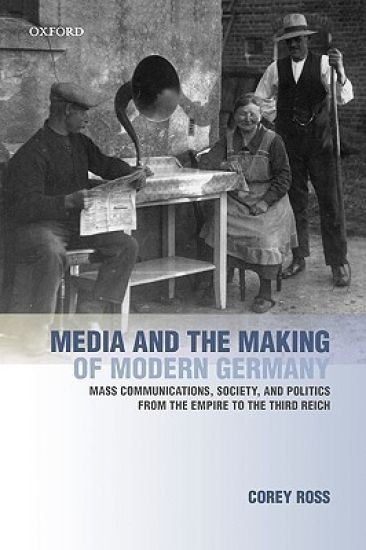
Media and the Making of Modern Germany

Media and the Making of Modern Germany

Corey Ross

Oxford University Press
2008
sidottu
Few developments in the industrial era have had a greater impact on everyday social life than the explosion of the mass media and commercial entertainments, and none have exerted a more profound influence on the nature of modern politics. Nowhere in Europe were the tensions and controversies surrounding the rise of mass culture more politically charged than in Germany-debates that played fatefully into the hands of the radical right. Corey Ross provides the first general account of the expansion of the mass media in Germany up to the Second World War, examining how the rise of film, radio, recorded music, popular press, and advertising fitted into the wider development of social, political, and cultural life. Spanning the period from the late nineteenth century to the Third Reich, Media and the Making of Modern Germany shows how the social impact and meaning of 'mass culture' were by no means straightforward or homogenizing, but rather changed under different political and economic circumstances. By locating the rapid expansion of communications media and commercial entertainments firmly within their broader social and political context, Ross sheds new light on the relationship between mass media, social change, and political culture during this tumultuous period in German history.
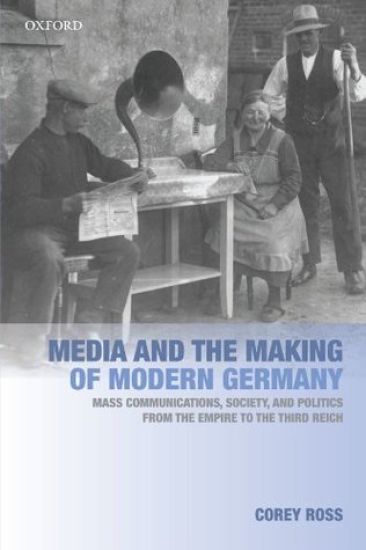
Media and the Making of Modern Germany

Media and the Making of Modern Germany

Corey Ross

Oxford University Press
2010
nidottu
Few developments in the industrial era have had a greater impact on everyday social life than the explosion of the mass media and commercial entertainments, and none have exerted a more profound influence on the nature of modern politics. Nowhere in Europe were the tensions and controversies surrounding the rise of mass culture more politically charged than in Germany-debates that played fatefully into the hands of the radical right. Corey Ross provides the first general account of the expansion of the mass media in Germany up to the Second World War, examining how the rise of film, radio, recorded music, popular press, and advertising fitted into the wider development of social, political, and cultural life. Spanning the period from the late nineteenth century to the Third Reich, Media and the Making of Modern Germany shows how the social impact and meaning of 'mass culture' were by no means straightforward or homogenizing, but rather changed under different political and economic circumstances. By locating the rapid expansion of communications media and commercial entertainments firmly within their broader social and political context, Ross sheds new light on the relationship between mass media, social change, and political culture during this tumultuous period in German history.
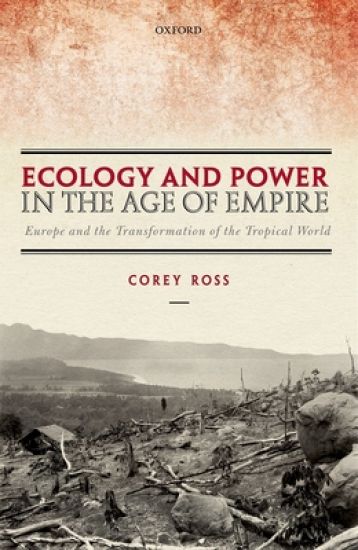
Ecology and Power in the Age of Empire

Ecology and Power in the Age of Empire

Corey Ross

Oxford University Press
2017
sidottu
Ecology and Power in the Age of Empire provides the first wide-ranging environmental history of the heyday of European imperialism, from the late nineteenth century to the end of the colonial era. It focuses on the ecological dimensions of the explosive growth of tropical commodity production, global trade, and modern resource management-transformations that still visibly shape our world today-and how they were related to broader social, cultural, and political developments in Europe's colonies. Covering the overseas empires of all the major European powers, Corey Ross argues that tropical environments were not merely a stage on which conquest and subjugation took place, but were an essential part of the colonial project, profoundly shaping the imperial enterprise even as they were shaped by it. The story he tells is not only about the complexities of human experience, but also about people's relationship with the ecosystems in which they were themselves embedded: the soil, water, plants, and animals that were likewise a part of Europe's empire. Although it shows that imperial conquest rarely represented a sudden bout of ecological devastation, it nonetheless demonstrates that modern imperialism marked a decisive and largely negative milestone for the natural environment. By relating the expansion of modern empire, global trade, and mass consumption to the momentous ecological shifts that they entailed, this book provides a historical perspective on the vital nexus of social, political, and environmental issues that we face in the twenty-first-century world.
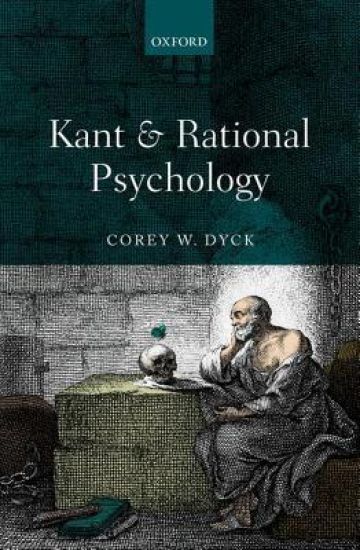
Kant and Rational Psychology

Kant and Rational Psychology

Corey W. Dyck

Oxford University Press
2014
sidottu
Corey W. Dyck presents a new account of Kant's criticism of the rational investigation of the soul in his monumental Critique of Pure Reason, in light of its eighteenth-century German context. When characterizing the rational psychology that is Kant's target in the Paralogisms of Pure Reason chapter of the Critique commentators typically only refer to an approach to, and an account of, the soul found principally in the thought of Descartes and Leibniz. But Dyck argues that to do so is to overlook the distinctive rational psychology developed by Christian Wolff, which emphasized the empirical foundation of any rational cognition of the soul, and which was widely influential among eighteenth-century German philosophers, including Kant. In this book, Dyck reveals how the received conception of the aim and results of Kant's Paralogisms must be revised in light of a proper understanding of the rational psychology that is the most proximate target of Kant's attack. In particular, he contends that Kant's criticism hinges upon exposing the illusory basis of the rational psychologist's claims inasmuch as he falls prey to the appearance of the soul as being given in inner experience. Moreover, Dyck demonstrates that significant light can be shed on Kant's discussion of the soul's substantiality, simplicity, personality, and existence by considering the Paralogisms in this historical context.
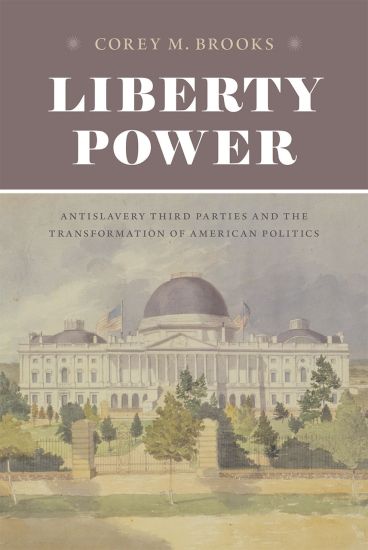
Liberty Power

Liberty Power

Corey M. Brooks

University of Chicago Press
2016
sidottu
Abraham Lincoln's Republican Party was the first party built on opposition to slavery to win on the national stage-but its victory was rooted in the earlier efforts of under-appreciated antislavery third parties. Liberty Power tells the story of how abolitionist activists built the most transformative third-party movement in American history and effectively reshaped political structures in the decades leading up to the Civil War. As Corey M. Brooks explains, abolitionist trailblazers who organized first the Liberty Party and later the more moderate Free Soil Party confronted formidable opposition from a two-party system expressly constructed to suppress disputes over slavery. Identifying the Whigs and Democrats as the mainstays of the southern Slave Power's national supremacy, savvy abolitionists insisted that only a party independent of slaveholder influence could wrest the federal government from its grip. A series of shrewd electoral, lobbying, and legislative tactics enabled these antislavery third parties to wield influence far beyond their numbers. In the process, these parties transformed the national political debate and laid the groundwork for the success of the Republican Party and the end of American slavery.
Killing the Koala and Poisoning the Prairie

Killing the Koala and Poisoning the Prairie

Corey J. A. Bradshaw; Paul R. Ehrlich

University of Chicago Press
2015
nidottu
Though separated by thousands of miles, the United States and Australia have much in common. Geographically both countries are expansive-the United States is the fourth largest in land mass and Australia the sixth-and both possess a vast amount of natural biodiversity. At the same time, both nations are on a crash course toward environmental destruction. Highly developed super consumers with enormous energy footprints and high rates of greenhouse-gas emissions, they are two of the biggest drivers of climate change per capita. As renowned ecologists Corey J. A. Bradshaw and Paul R. Ehrlich make clear in Killing the Koala and Poisoning the Prairie, both of these countries must confront the urgent question of how to stem this devastation and turn back from the brink. In this book, Bradshaw and Ehrlich provide a spirited exploration of the ways in which the United States and Australia can learn from their shared problems and combine their most successful solutions in order to find and develop new resources, lower energy consumption and waste, and grapple with the dynamic effects of climate change. Peppering the book with humor, irreverence, and extensive scientific knowledge, the authors examine how residents of both countries have irrevocably altered their natural environments, detailing the most pressing ecological issues of our time, including the continuing resource depletion caused by overpopulation. They then turn their discussion to the politics behind the failures of environmental policies in both nations and offer a blueprint for what must be dramatically changed to prevent worsening the environmental crisis. Although focused on two nations, Killing the Koala and Poisoning the Prairie clearly has global implications-the problems facing the United States and Australia are not theirs alone, and the solutions to come will benefit by being crafted in coalition. This book provides a vital opportunity to learn from both countries' leading environmental thinkers and to heed their call for a way forward together.
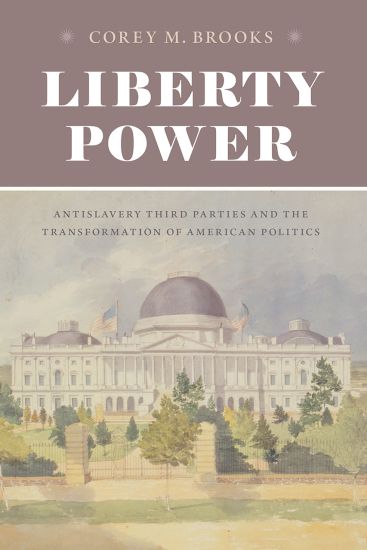
Liberty Power

Liberty Power

Corey M. Brooks

University of Chicago Press
2020
nidottu
Abraham Lincoln’s Republican Party was the first party built on opposition to slavery to win on the national stage—but its victory was rooted in the earlier efforts of under-appreciated antislavery third parties. Liberty Power tells the story of how abolitionist activists built the most transformative third-party movement in American history and effectively reshaped political structures in the decades leading up to the Civil War. As Corey M. Brooks explains, abolitionist trailblazers who organized first the Liberty Party and later the more moderate Free Soil Party confronted formidable opposition from a two-party system expressly constructed to suppress disputes over slavery. Identifying the Whigs and Democrats as the mainstays of the southern Slave Power’s national supremacy, savvy abolitionists insisted that only a party independent of slaveholder influence could wrest the federal government from its grip. A series of shrewd electoral, lobbying, and legislative tactics enabled these antislavery third parties to wield influence far beyond their numbers. In the process, these parties transformed the national political debate and laid the groundwork for the success of the Republican Party and the end of American slavery.
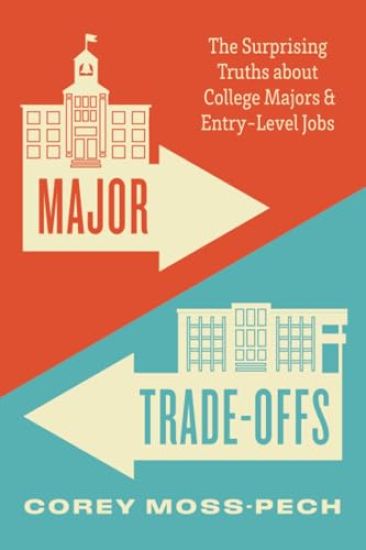
Major Trade-Offs

Major Trade-Offs

Corey Moss-Pech

THE UNIVERSITY OF CHICAGO PRESS
2025
sidottu
An eye-opening look at the relationship between students’ majors and their entry-level jobs. Humanities majors are used to answering the question, “So, what are you going to do with that degree?” The common misconception is that students in humanities programs don’t learn any useful skills for the real world. In Major Trade-Offs, sociologist Corey Moss-Pech argues that not only do humanities majors learn real-world skills, but they actually use them when they graduate. Despite this discrepancy, graduates with so-called practical degrees like business and engineering are much more likely to find employment, and they earn higher salaries. Why do we belittle a liberal arts education despite the valuable skills that students acquire during their studies? Major Trade-Offs addresses this question by following students from different majors as they enter the workforce. To understand the relationship between majors and entry-level jobs, Moss-Pech conducted nearly 200 interviews with roughly ninety students from four majors at a large Midwestern university: engineering, business, English, and communications. He follows these students through their senior years, chronicling their internships and the support their universities provide in helping them pursue their career paths. He found that graduates from practical majors entered the labor market successfully, typically through structured internship programs. However, many ended up in entry-level jobs that, while well-paid, were largely clerical and didn’t necessarily require a degree to perform. On the other hand, liberal arts majors rarely accessed structured internships and were largely left to carve out their own paths, but did use their degree skills once they secured a job. These results challenge popular myths about the “marketability” of these different majors and offer a new vision for the future of higher education. Liberal arts skills are essential in the labor market, and yet educators and policymakers still push resources into the practical arts, perpetuating the myth that those majors are more valuable while depriving students of a well-rounded education and leaving them no better prepared for the workforce than liberal arts students. Of interest to students, educators, and employers, Major Trade-Offs calls on colleges and universities to advocate for liberal arts majors, leveling the playing field for students as they plan for entry-level work.
Major Trade-Offs

Major Trade-Offs

Corey Moss-Pech

THE UNIVERSITY OF CHICAGO PRESS
2025
nidottu
An eye-opening look at the relationship between students’ majors and their entry-level jobs. Humanities majors are used to answering the question, “So, what are you going to do with that degree?” The common misconception is that students in humanities programs don’t learn any useful skills for the real world. In Major Trade-Offs, sociologist Corey Moss-Pech argues that not only do humanities majors learn real-world skills, but they actually use them when they graduate. Despite this discrepancy, graduates with so-called practical degrees like business and engineering are much more likely to find employment, and they earn higher salaries. Why do we belittle a liberal arts education despite the valuable skills that students acquire during their studies? Major Trade-Offs addresses this question by following students from different majors as they enter the workforce. To understand the relationship between majors and entry-level jobs, Moss-Pech conducted nearly 200 interviews with roughly ninety students from four majors at a large Midwestern university: engineering, business, English, and communications. He follows these students through their senior years, chronicling their internships and the support their universities provide in helping them pursue their career paths. He found that graduates from practical majors entered the labor market successfully, typically through structured internship programs. However, many ended up in entry-level jobs that, while well-paid, were largely clerical and didn’t necessarily require a degree to perform. On the other hand, liberal arts majors rarely accessed structured internships and were largely left to carve out their own paths, but did use their degree skills once they secured a job. These results challenge popular myths about the “marketability” of these different majors and offer a new vision for the future of higher education. Liberal arts skills are essential in the labor market, and yet educators and policymakers still push resources into the practical arts, perpetuating the myth that those majors are more valuable while depriving students of a well-rounded education and leaving them no better prepared for the workforce than liberal arts students. Of interest to students, educators, and employers, Major Trade-Offs calls on colleges and universities to advocate for liberal arts majors, leveling the playing field for students as they plan for entry-level work.