Kirjojen hintavertailu. Mukana 11 230 651 kirjaa ja 12 kauppaa.

Kirjahaku

Etsi kirjoja tekijän nimen, kirjan nimen tai ISBN:n perusteella.

1000 tulosta hakusanalla Croft Stuart

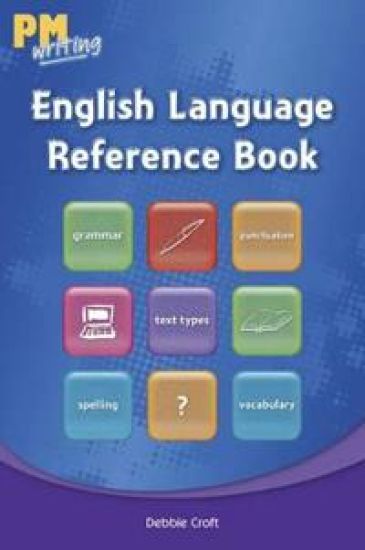
PM Writing English Language Reference Book

PM Writing English Language Reference Book

Debbie Croft

Cengage Learning Australia
2010
nidottu
The PM Writing English Language Reference Book has been written for students from Upper Primary through to Secondary School. It is a valuable companion to the PM Writing Program, but can also be used as an independent resource. All the major components of grammar, punctuation, vocabulary, text types and commonly confused words are comprehensively explained in this book. Each of the five chapters of the PM Writing English Language Reference Book has been colour-coded for quick and easy access to information. This is an essential resource for every Middle Years student!
Radical Construction Grammar

Radical Construction Grammar

William Croft

Oxford University Press
2001
nidottu
Radical Construction Grammar presents a profound critique of syntactic theory and argumentation, and offers a genuinely new approach to syntax based on the fact of grammatical diversity. Recent syntactic theories are essentially formal models for the representation of grammatical knowledge and posit complex syntactic structures in the analysis of sentences. The result has been a endless cycle of new and revised theories of syntactic representation. Radical Construction Grammar argues that this approach to syntax is incompatible with the grammatical variation found within and across languages. This book defends three fundamental theses: (i) constructions are the primitive units of syntactic representation, and grammatical categories are defined by constructions, not the other way around; (ii) the only syntactic structures are the part-whole relations between a construction and the syntactic elements that make it up; (iii) not only are grammatical categories construction-specific, but constructions are language-specific. In other words, syntactic structure is almost entirely language-specific; attempts to find a universal formal model are doomed to failure. Radical Construction Grammar integrates concepts from typological theory and construction grammar to uncover the genuine universals of grammar. Constructions are represented as complex symbolic units pairing form and meaning. The semantic map model of typological theory is used to map category distributions on a largely universal conceptual space. Universals of grammar are found in the mapping of meaning onto form. Systematic patterns of grammatical variation provide evidence for the topography of conceptual space, which in turn reflects the geography of the human mind.
Radical Construction Grammar

Radical Construction Grammar

William Croft

Oxford University Press
2001
sidottu
This book is based on the results of research in language typology, and motivated by the need for a theory to explain them. The essence of the approach is (a) that almost all aspects of grammatical structure are language specific, and (b) that language universals are to be found in conceptual structure and in the mapping of conceptual structure on to linguistic form. It proposes intimate links between syntactic and semantic structures, and argues that the basic elements of any language are not syntactic but syntactic-semantic 'Gestalts'. Professor Croft puts forward a new approach to syntactic representation and a new model of how language and languages work. He covers a wide range of syntactic phenomena, illustrating these with examples that show the varied grammatical structures of the world's languages. The book will be accessible all linguists at graduate level and beyond.
Verbs

Verbs

William Croft

Oxford University Press
2012
sidottu
This book presents a model of event structure for the analysis of aspectual constructions and argument structure constructions in English and other languages. Representing the culmination of two decades of the author's research and thought, it explores the contribution of semantics to the argument-structure and tense-aspect constructions in which verbs occur, integrating the aspectual and causal structures of events. The argument is framed in relation to current and previous scholarship and takes full account of diachronic and usage-based research. Professor Croft's analysis encompasses the full range of English verb classes and is enriched throughout by a strong typological dimension: the syntax and semantics of verbs are always seen from a crosslinguistic perspective. This allows the author to demonstrate the generality of his theory and to show how it breaks new ground in predicting and explaining linguistic facts. The subject of the book is at the heart of current work in syntax and semantics and the interface between them. It will interest semanticists, syntacticians and cognitive and functional-typological linguists. The transparency of the author's style and his avoidance of theory-dependent constructs will extend its appeal to linguists of all theoretical stripes.
Verbs

Verbs

William Croft

Oxford University Press
2012
nidottu
This book presents a model of event structure for the analysis of aspectual constructions and argument structure constructions in English and other languages. Representing the culmination of two decades of the author's research and thought, it explores the contribution of semantics to the argument-structure and tense-aspect constructions in which verbs occur, integrating the aspectual and causal structures of events. The argument is framed in relation to current and previous scholarship and takes full account of diachronic and usage-based research. Professor Croft's analysis encompasses the full range of English verb classes and is enriched throughout by a strong typological dimension: the syntax and semantics of verbs are always seen from a crosslinguistic perspective. This allows the author to demonstrate the generality of his theory and to show how it breaks new ground in predicting and explaining linguistic facts. The subject of the book is at the heart of current work in syntax and semantics and the interface between them. It will interest semanticists, syntacticians and cognitive and functional-typological linguists. The transparency of the author's style and his avoidance of theory-dependent constructs will extend its appeal to linguists of all theoretical stripes.