Kirjahaku
Etsi kirjoja tekijän nimen, kirjan nimen tai ISBN:n perusteella.
1000 tulosta hakusanalla Cyrus Redding

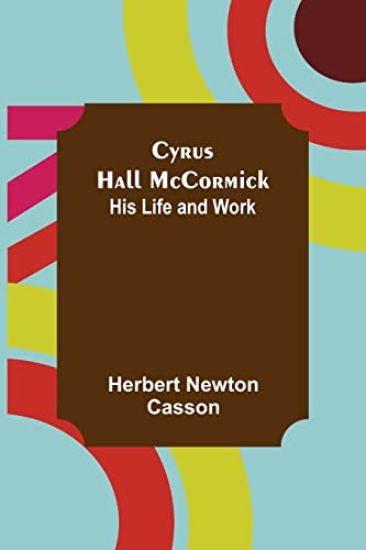
This book "" Cyrus Hall McCormick; His Life and Work "" has been considered important throughout the human history. It has been out of print for decades.So that this work is never forgotten we have made efforts in its preservation by republishing this book in a modern format for present and future generations. This whole book has been reformatted, retyped and designed. These books are not made of scanned copies and hence the text is clear and readable.
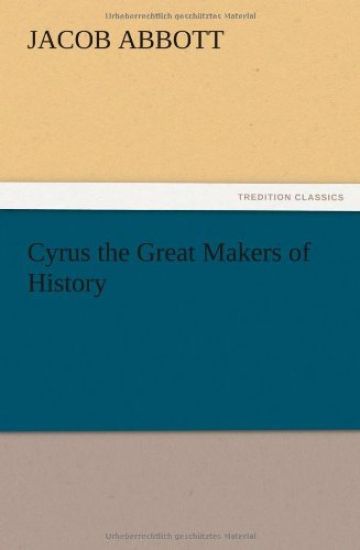
This book "" Cyrus the Great; Makers of History "" has been considered important throughout the human history. It has been out of print for decades.So that this work is never forgotten we have made efforts in its preservation by republishing this book in a modern format for present and future generations. This whole book has been reformatted, retyped and designed. These books are not made of scanned copies and hence the text is clear and readable.

The enchanting story of the real life Hannah Montana and her stunning success as a film, television, and music superstar. This biography tells the story of the real-life Hannah Montana, the daughter of country music superstar Billy Ray Cyrus, who has become an international phenomenon in her own right. Miley Cyrus details the star's life from her Franklin, Tennessee, childhood to snagging the role of Hannah Montana from over 1,000 other hopefuls. The book also follows Cyrus' transition from a wholesome Disney icon to a more mature actress and musician, covering both her efforts to be a positive teen influence, and controversies such as Cyrus' photo shoot for Vanity Fair with her father. As an added bonus, the book offers a complete Hannah Montana episode guide as well as a complete discography of Cyrus' recordings as both Hannah and Miley.
It seemed so logical at first. Fourteen-year-old Lenny Cyrus had loved Zooey Andrews since third grade. All the boy genius needed to do to win her heart was shrink down to the size of an amoeba, ooze into a gelatin capsule, and have his friend Harlan slip it (him ) into Zooey's Diet Coke.Told in three voices, this fantastical middle grade novel takes Lenny deep into Zooey's loud, splashing innards. The question is, will Lenny and Zooey survive his crazy experiment in nanotechnology?
The Cyrus Anointing: Accessing Treasures of Darkness and Hidden Riches of Secret Places
Ndoda H. Phungulwa
Shofar Media House
2018
nidottu
"THE CYRUS ANOINTING - Accessing Treasures of Darkness and Hidden Riches of Secret Places" employs the Biblical law called "the law of double reference" or "law of double fulfilment of prophecy" and unveils the prophetic significance of the life of ancient Medo-Persian Empire king, King Cyrus for the Church of Jesus Christ today.The reader is provided with a comprehensive; well balanced and in-depth look into, not only the mission of King Cyrus, but the author also provides a deep dive into the different complexions or characteristics of King Cyrus as well the tools or skills that Almighty God equipped King Cyrus with.The author takes the reader further by providing revelation and prophetic insight into the Modern Day release of the Cyrus Anointing for the present day. This release of the Cyrus Anointing is the grace that will enable believers in politics, business, finance, entertainment and all the other spheres of life to topple and overthrow Babylon.An exposition of Modern Day Babylon is also provided by the author as well as an in-depth look into the fall of Morden Day Babylon. The author closes the book by providing a thorough and detailed prophetic insight into the tragic terror attack of September 11, 2001.Through this first instalment, it is the author's sincere desire to have the Church established in this Present Day Truth and reality of the release of the Cyrus Anointing and the Fall of Babylon. For speaking invitations send an email to [email protected]
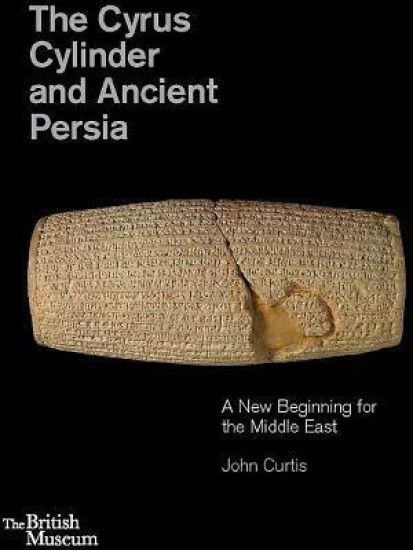
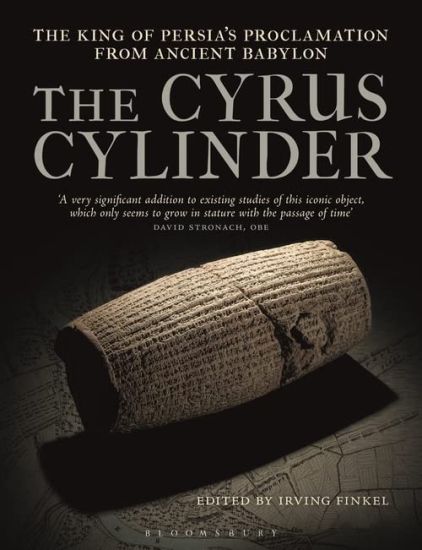
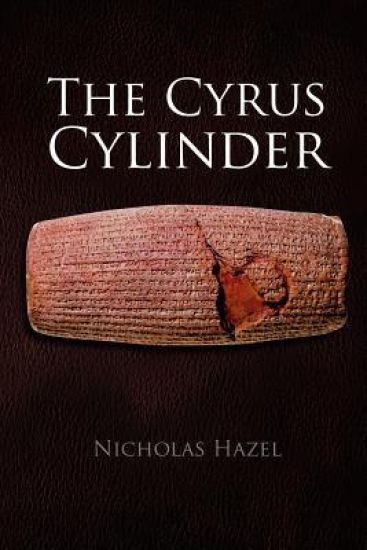
The Cyrus Cylinder is one of the most famous objects to have survived from the ancient world. Inscribed in Babylonian cuneiform on the orders of the Persian King Cyrus the Great (559-530BC) after he captured Babylon, it is often referred to as the first bill of human rights, as it appears to permit freedom of worship throughout the Persian Empire and to allow deported people to return to their homelands. It is a valued object by people all around the world as a symbol of tolerance and respect for different peoples and different faiths, which is why a copy of the cylinder is on display in the United Nations building in New York. This lavishly illustrated catalogue is published to complement the first ever tour of the object to the United States, along with sixteen other objects from the British Museum’s world-famous collection. Including a new authoritative translation of the Cyrus Cylinder by Irving Finkel, The Cyrus Cylinder and Ancient Persia offers a fascinating introduction into a period of great social and political change in the Ancient Near East.. ‘You could almost say that the Cyrus Cylinder is a history of the Middle East in one object and it is a link to a past which we all share and to a key moment in history that has shaped the world around us.’ - Neil MacGregor, Director of the British Museum
The Cyrus Cylinder
BLOOMSBURY PUBLISHING PLC
2021
sidottu
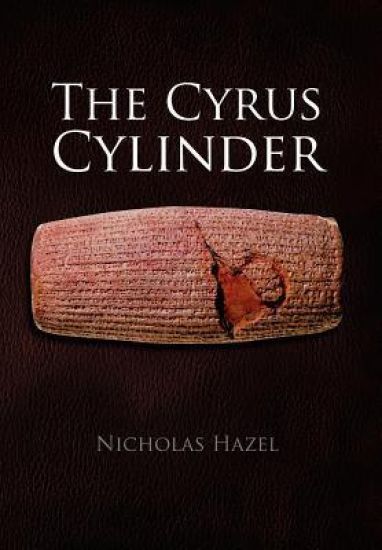
Some historical artefacts are destined forever to alter how the ancient world is perceived. The unearthing in today's Iraq (in 1879) of a clay cylinder-shaped decree from Cyrus the Great, founder of the Achaemenid dynasty of Persia, stands in the same tradition of game-changing discoveries from antiquity as Hammurabi's famous law code or the intact tomb of the boy-king Tutankhamun. For the Cyrus Cylinder contains in microcosm the whole history of its period. Inscribed with an account of the conquest of Babylon in 539 BC by the Persian king, it records an event which launched one of the greatest imperial adventures in history. It describes Cyrus' capture and deposition of Nabonidus, last native Babylonian ruler (represented by the Cylinder text as an oppressor of his own people), and proclaims the Persian, aided by the god Marduk, as a liberator. His annexation of Babylon was to become the platform upon which the Achaemenid military machine built its later vast imperium. But the Cylinder is more than an ancient exercise in propaganda. It has been celebrated as the world's first declaration of human rights, and an international symbol of religious tolerance, setting out the decree from which Cyrus freed the Jews in Babylon: an event recorded by Isaiah. Few other objects from antiquity are invested with so many hopes for the future. This important volume is the first to discuss the Cylinder and its remarkable history. Written by internationally respected authorities from the British Museum, it offers a fresh consideration of its subject in the light of new discoveries. Included here is a complete new translation of the Cylinder inscription using recently identified but previously unpublished sources. Archive materials have allowed a fresh investigation of the circumstances of the original nineteenth-century find by Hormuzd Rassam, and a reappraisal of the mysterious 'Chinese bone' forgeries. The book also discusses the extraordinary and evolving history of Cyrus' timeless message: a message that continues powerfully to resonate.
Around 550 B.C.E. the Persian people—who were previously practically unknown in the annals of history—emerged from their base in southern Iran (Fars) and engaged in a monumental adventure that, under the leadership of Cyrus the Great and his successors, culminated in the creation of an immense Empire that stretched from central Asia to Upper Egypt, from the Indus to the Danube. The Persian (or Achaemenid, named for its reigning dynasty) Empire assimilated an astonishing diversity of lands, peoples, languages, and cultures. This conquest of Near Eastern lands completely altered the history of the world: for the first time, a monolithic State as vast as the future Roman Empire arose, expanded, and matured in the course of more than two centuries (530–330) and endured until the death of Alexander the Great (323), who from a geopolitical perspective was “the last of the Achaemenids.” Even today, the remains of the Empire-the terraces, palaces, reliefs, paintings, and enameled bricks of Pasargadae, Persepolis, and Susa; the impressive royal tombs of Naqsh-i Rustam; the monumental statue of Darius the Great-serve to remind visitors of the power and unprecedented luxury of the Great Kings and their loyal courtiers (the “Faithful Ones”).Though long eclipsed and overshadowed by the towering prestige of the “ancient Orient” and “eternal Greece,” Achaemenid history has emerged into fresh light during the last two decades. Freed from the tattered rags of “Oriental decadence” and “Asiatic stagnation,” research has also benefited from a continually growing number of discoveries that have provided important new evidence-including texts, as well as archaeological, numismatic, and iconographic artifacts.The evidence that this book assembles is voluminous and diverse: the citations of ancient documents and of the archaeological evidence permit the reader to follow the author in his role as a historian who, across space and time, attempts to understand how such an Empire emerged, developed, and faded. Though firmly grounded in the evidence, the author’s discussions do not avoid persistent questions and regularly engages divergent interpretations and alternative hypotheses. This book is without precedent or equivalent, and also offers an exhaustive bibliography and thorough indexes.The French publication of this magisterial work in 1996 was acclaimed in newspapers and literary journals. Now Histoire de l’Empire Perse: De Cyrus a Alexandre is translated in its entirety in a revised edition, with the author himself reviewing the translation, correcting the original edition, and adding new documentation.Pierre Briant, Chaire Histoire et civilisation du monde achémenide et de l’empire d’Alexandre, Collège de France, is a specialist in the history of the Near East during the era of the Persian Empire and the conquests of Alexander. He is the author of numerous books.Peter T. Daniels, the translator, is an independent scholar, editor, and translator who studied at Cornell University and the University of Chicago. He lives and works in New York City.
Miley Cyrus - Endless Summer Vacation
HAL LEONARD CORPORATION
2023
nidottu
(Piano/Vocal/Guitar Artist Songbook). Miley Cyrus's 8th studio album was one of the most anticipated new releases of 2023 thanks to the runaway success of its debut single "Flowers" which topped the Billboard Singles chart for weeks at the start of the year Our matching folio features all twelve songs arranged for piano and voice with guitar chord frames. Titles include: Flowers * Handstand * Island * Jaded * Muddy Feet * River * Rose Colored Lenses * Thousand Miles * Violet Chemistry * Wildcard * Wonder Woman * You.
Miley Cyrus - Endless Summer Vacation
HAL LEONARD CORPORATION
2023
nidottu
(Easy Piano Personality). Miley Cyrus's 8th studio album was one of the most anticipated new releases of 2023 thanks to the runaway success of its debut single "Flowers" which topped the Billboard Singles chart for weeks at the start of the year Our matching folio features all twelve songs arranged for easy piano with lyrics. Titles include: Flowers * Handstand * Island * Jaded * Muddy Feet * River * Rose Colored Lenses * Thousand Miles * Violet Chemistry * Wildcard * Wonder Woman * You.
Some of the most fascinating human epochs lie in the borderlands between history and mystery. So it is with the life of Cyrus the Great, founder of the Persian Empire in the sixth century bce. By conquest or gentler means, he brought under his rule a dominion stretching from the Aegean Sea to the Hindu Kush and encompassing some tens of millions of people. All across this immense imperium, he earned support and stability by respecting local customs and religions, avoiding the brutal ways of tyranny, and efficiently administering the realm through provincial governors. The empire would last another two centuries, leaving an indelible Persian imprint on much of the ancient world. The Greek chronicler Xenophon, looking back from a distance of several generations, wrote: "Cyrus did indeed eclipse all other monarchs, before or since." The vision of the biblical prophet known as Second Isaiah anticipates Cyrus' repatriation of Jews living in exile in Babylon with these words of the Lord: "He is my shepherd and will accomplish all that I please."Despite what he achieved and bequeathed, much about Cyrus remains uncertain. Persians of his era had no great respect for the written word and kept no annals. The most complete accounts of his life were composed by Greeks. More fragmentary or tangential evidence takes many forms - among them, archaeological remains, administrative records in subject lands, and the always tricky stuff of legend.Given these challenges, Discovering Cyrus: The Persian Conqueror Astride the Ancient World is a remarkable feat of portraiture. In his vast sweep, Reza Zarghamee draws on sources of every kind, painstakingly assembling detail, and always weighing evidence carefully where contradictions arise. He describes the background of the Persian people, the turbulence of the times, and the roots of Cyrus' policies. His account of the imperial era itself delves into religion, military methods, commerce, court life, and much else besides. The result is a living, breathing Cyrus standing atop a distant world that played a key role in shaping our own.