Kirjojen hintavertailu. Mukana 11 627 220 kirjaa ja 12 kauppaa.

Kirjahaku

Etsi kirjoja tekijän nimen, kirjan nimen tai ISBN:n perusteella.

1000 tulosta hakusanalla Dan E. Perry

Stories Through The Ages Baby Boomers Plus 2023

Stories Through The Ages Baby Boomers Plus 2023

Henry E Peavler; Dan Peavler

Living Springs Publishers LLP
2023
pokkari
Autumn Leaves Falling by J. R. Reynolds: A story of two brothers with a very special bond that will melt the coldest of hearts. Heading Home-A Prisoner of War at Christmas by Robert Robeson: An account of a Vietnam veteran returning from that unpopular war to find protesters in the airport on his arrival. Drawknife by Bill Weatherford: A story about a boy's relationship with his grandfather. The Faller by Brad Bennett: A horrible event in World War II has unforeseen repercussions for many people through the years. The Good Things Consignment Shop by Jeannette M. Bond: Old and new clients often get a lot more than they bargained for as the shop owner looks for opportunities to ply her matchmaking skills. The Reunion by Raymond Brunt: A man has avoided going to a high school reunion for decades. He chooses this reunion to attend and discovers what he has missed. Beholden to the Sea by JD Clapp: Two men are winding down a fishing trip in the open waters of the Pacific. Suddenly the boat is destroyed as it crashes into an unseen obstacle. Drums of War and of Memory Eighty years on from World War II by Sarah Elizabeth Das Gupta: A memoir of a childhood in the Surrey countryside in the immediate aftermath of World War II.The Password by Edward E. Douglas: World War II...Germany. A young boy, and his grandfather, are part of the resistance. This is an exciting story full of suspense and intrigue . The Men in the Dunes by Ellen Herbert: It's 1967 and a young girl joins a military family on their beach excursion near Camp LeJeune, Jacksonville, North Carolina. Blank Page by George Koyl: Bill Morris receives a letter that contains a blank sheet of paper. A mystery that only one person can unravel. The journey to the surprise ending is full of suspense and anticipation. Lunch at the Sad Cafeteria by Michail Mulvey: A second-grade classroom three days before Christmas vacation, 1955. Michael, is battling his arch-enemy, a fellow classmate named Margaret. Despite their hatred for each other, the two share a common hatred for their teacher, Miss Cronin. Hamburger Girl by Patti Ann Pecina: A heart-warming story about an episode revolving around drive-in movie night. It is 1967, and despite the title the story really hinges on a fish sandwich gone horribly wrong. Dirge By Susan M. Pomerantz: A tragedy seen through the eyes of a 14-year-old girl. Our heroine, Kendra, is both a realist and a romantic who reads more than her mother thinks proper. She is forced to help her father with the other children as her mother's health deteriorates. Killer at Kozy Kove Kampground by Thom Schilling: A mystery unfolds as the family leaves for a vacation across the southeastern United States. A wonderful story of intrigue and misadventure that leaves you laughing and shaking your head at the same time. The Way it Had to Be by Bill Smoot: It is 1962. Danny is a reporter at a newspaper when a black man is shot by a policeman. The policeman's story is thin, and Danny tries to rally the paper with the few who are seeking justice.Grace by Elizabeth Taylor-Mead: Astory about a strong-willed woman narrated through the eyes of her granddaughter. Living poor but happy in "one of the more respectable parts of Brooklyn, New York." Our interest is kept throughout the story. The Last Word by Cheryl Velasquez: The siblings gather as the last few hours of their father's life unfolds. Many stories are shared...some funny, some poignant and some surprising.
Dear Leader Tales

Dear Leader Tales

E E King; Dan M Kalin; Eric Avedissian

Feral Cat Publishers
2020
pokkari
2020 has been a very trying year for humanity. In addition to a barely-checked viral contagion and widespread economic distress, the usual cavalcade of Dear Leaders are doing exactly what they do best: oppressing and dividing the rest of us. These stories and poems are meant to humorously talk truth about power and its misuse. From an orange-haired Wendigo to an Asian Dictator, from CEOs to demons to feline overlords - this wide-ranging collection touches on all manner of oblivious villainy. As another contentious American Presidential Election comes to a close, many of us could use a humorous respite and the reminder that our problems are not new or different, just oppression's same old song. Take a break with these clever tales and remember that the things we worry about today will pass and new ones will emerge. This collection will take you to the next screen.Featuring original stories and poems by Cathy Adams, Daniel Ausema, Eric Avedissian, Paul L. Bates, Jane Blanchard, Ben Boegehold, Warren Brown, Jim Courter, Devo Cutler, Derek Des Anges, Buzz Dixon, Katrina Dybzynska, Mike Ekunno, Louis Evans, Robert Morgan Fisher, Andrea Goyan, N.E. Griffin, Lauren Stoker, Jill Hand, Langley Hyde, Will Isenberg, Andrew Jensen, John H. Kalin, J.J.J. Kearns, Richard Lau, Kate Maxwell, Teresa Milbrodt, Lena Ng, Peter Ntephe, Mark Nutter, Nicole M. Pyles, Jim Robb, Jeff Seeman, Margaret S. E. Smith. Guest editor E. E. King joins this illustrious group as well as in-house authors Dan M. Kalin and Sarah M. Kalin.
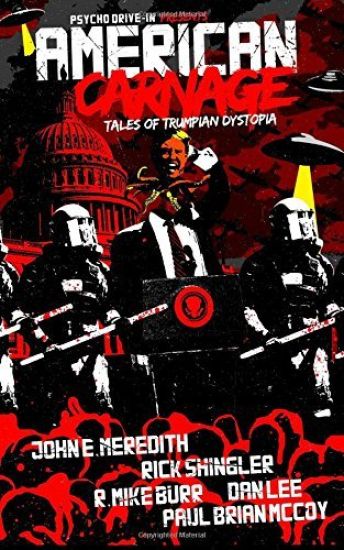
American Carnage: Tales of Trumpian Dystopia

American Carnage: Tales of Trumpian Dystopia

Dan Lee; John E. Meredith; Rick Shingler

Createspace Independent Publishing Platform
2018
nidottu
American Carnage features five writers from the horror/pop culture website Psycho Drive-In, telling original tales of dystopian science fiction and horror in Post-Trumpocalypsian settings. John E. Meredith's " What Kind of Monster Are You?" offers a unique take on a classic science fiction trope: aliens are coming to steal our women But this time, they've got a distinctly more sinister endgame in mind. Rick Shingler's "The Day the World Turned Day-Glo" is set after a major new technology has effectively made sunlight a commodity. And the only person who can do anything about it is alone on the moon. Dan Lee's "None but the Brave" follows the adventures of a sociopathic anti-terrorist agent in a future where nobody's minds are safe from observation - not even after death. R. Mike Burr's "Where Eagles Dare" is set the day after tomorrow as an unnamed protagonist comes under scrutiny by ill-intentioned patriots. Lastly, Paul Brian McCoy's "Big Takeover" continues the adventures of the protagonists of his novel The Unraveling, as they take a trip into the dreaming mind of the President in order to save him, and the country, from potential apocalypse. These five stories range from straight science fiction to existential horror to trash/schlock splatter. If you're feeling anxiety over the state of the world, these stories might not alleviate that worry, but they will definitely inspire, and disgust, you, all at the same time
The Schoolhouse Door

The Schoolhouse Door

E.Culpepper Clark; Dan T. Carter

The University of Alabama Press
2007
sidottu
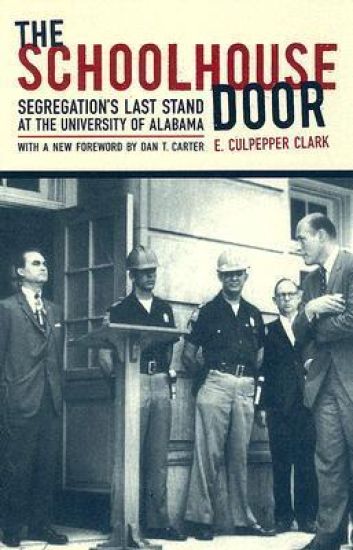
E. Culpepper Clark's book is a well-researched and crisply written narrative that draws its energy from the drama of the desegregation crisis in the postwar South...The first part of the story, covering the period 1943-57, centers on the admission to and expulsion from the University of Alabama of Autherine Lucy in 1956. In retrospect this appears as an opportunity for peaceful change that was tragically lost by inept university administrators and trustees, who stalled until Alabama's populist New Deal politics shifted sharply toward segregationist defiance following the bus boycott in Montgomery in 1955-56. The second part centers on the events culminating in Wallace's spectacular stand at Foster Auditorium in June 1963. The flagship at Tuscaloosa, threatened by the research pace of the branch campuses at Birmingham and Huntsville, unable to keep or recruit superior faculty during the post-Sputnik boom years, weakly led by strong politicians like John Patterson and Wallace, emerged from the drama as a badly mauled institution, notable chiefly for its football team and Coach Paul 'Bear' Bryant.
The Schoolhouse Door

The Schoolhouse Door

E.Culpepper Clark; Dan T. Carter

The University of Alabama Press
2007
nidottu
E. Culpepper Clark's book is a well-researched and crisply written narrative that draws its energy from the drama of the desegregation crisis in the postwar South...The first part of the story, covering the period 1943-57, centers on the admission to and expulsion from the University of Alabama of Autherine Lucy in 1956. In retrospect this appears as an opportunity for peaceful change that was tragically lost by inept university administrators and trustees, who stalled until Alabama's populist New Deal politics shifted sharply toward segregationist defiance following the bus boycott in Montgomery in 1955-56. The second part centers on the events culminating in Wallace's spectacular stand at Foster Auditorium in June 1963. The flagship at Tuscaloosa, threatened by the research pace of the branch campuses at Birmingham and Huntsville, unable to keep or recruit superior faculty during the post-Sputnik boom years, weakly led by strong politicians like John Patterson and Wallace, emerged from the drama as a badly mauled institution, notable chiefly for its football team and Coach Paul 'Bear' Bryant.
Why the Raven Calls the Canyon

Why the Raven Calls the Canyon

E. Dan Klepper; Bill Wright

Texas A M University Press
2017
sidottu
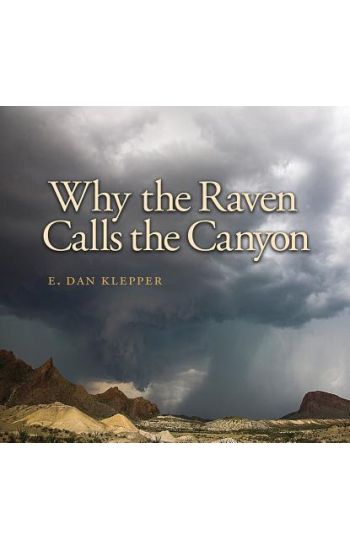
Fresno Ranch, an abandoned horse and mule operation located in a remote stretch of the Rio Grande River bordering Mexico, gives evidence of a human presence spanning centuries. The ranch saw a period of entrepreneurial mule breeding and ranching, and ownership by Texas artist and publishing heiress Jeanne Norsworthy, who built an off-the-grid, hand-constructed adobe studio on the premises. Photographer and freelance writer E. Dan Klepper spent seven years, off and on, living and working at Fresno Ranch. By 2008, when the 7,000-acre property was acquired by the Texas Parks and Wildlife Department to become part of Big Bend Ranch State Park, the adobe studio dwelling and its associated structures had been sitting vacant for almost ten years—many rugged miles from the nearest electrical power line or municipal water system. Between 2006 and 2013, Klepper assisted his friend Rodrigo Trevizo, park ranger and caretaker for the property, with the various chores required to keep the ranch in operating condition. The two excavated and repaired the primary water network, cared for the livestock, cleared brush, and maintained a small, solar-powered electrical system. Days of 110-degree heat, boiling water for washing and cooking, and keeping a wary eye out for rattlesnakes alternated with evenings spent in the flicker of kerosene lanterns, listening to the rasping of the ravens as they scoured the canyon in the gathering dark. In vivid images and well-considered prose, Klepper reflects on his experiences at Fresno Ranch, “witnessing the unfolding of a natural world unfettered by the overpowering human footprint that has dominated so many of our remaining wild places.” For aficionados of fine art photography, cultural and natural history enthusiasts, and fans of the Big Bend region and its austere beauty, Why the Raven Calls the Canyon offers a provocative visual journal of off-the-grid living that celebrates the unique landscape of the Big Bend.
100 Classic Hikes Texas: Big Bend Country * Panhandle Plains * Prairies and Lakes * Piney Woods * Gulf Coast * South Texas Plains * Hill Country
Comprehensive, entertaining guide to the best trails Texas has to offer Fully revised, including 30 new trails New details on the state's ecoregions All new full-color photos and maps for each hike With more than 80 parks, 56 wildlife management areas, 9 natural areas, and 28 historic sites and parklands, Texas offers a wide range of hiking options. In this new edition of 100 Classic Hikes: Texas, writer, hiker, and native Texan E. Dan Klepper explores the most beautiful, iconic, and interesting trails from the Panhandle to the Gulf Coast, and from Big Bend to Piney Woods. Enriching the experience with overviews of the ecology of each region, Klepper also provides all the key details: route distance and time plus difficulty rating, elevation gain, permit information, and more. With more offerings in the popular Big Bend, Hill Country, and Panhandle regions, as well as more family-friendly and urban-based trails, this is the ultimate guide to the Lone Star State
Presidential Communication

Presidential Communication

Robert E. Denton; Dan F. Hahn

Praeger Publishers Inc
1986
sidottu
Presidential Communication is the first book to combine a study of the presidency with communications. First it builds a base for the rhetorical presidency--what it means and how it works--and why an Approach based on an analysis of presidential rhetoric and persuasion works better than others to uncover the essential nature of the office. The authors also examine the presidency from the major areas of concentration traditionally found in communications scholarship. The theoretical discussion is reinforced with case studies drawn from recent history.
Presidential Communication

Presidential Communication

Robert E. Denton; Dan F. Hahn

Praeger Publishers Inc
1986
nidottu
Presidential Communication is the first book to combine a study of the presidency with communications. First it builds a base for the rhetorical presidency--what it means and how it works--and why an Approach based on an analysis of presidential rhetoric and persuasion works better than others to uncover the essential nature of the office. The authors also examine the presidency from the major areas of concentration traditionally found in communications scholarship. The theoretical discussion is reinforced with case studies drawn from recent history.
The Political Pundits

The Political Pundits

James E. Combs; Dan Nimmo

Praeger Publishers Inc
1992
sidottu
The Political Pundits surveys in detail the small, elite group of persons who comment on and analyze politics in newspapers and newsmagazines, on radio and television, through lectures, books, and all other forms of political media. Dan Nimmo and James E. Combs discuss the key political role pundits play, their methods and strategies, and the potential danger they present to American political life. Our democracy is being transformed into a punditocracy, which replaces serious citizen debate with discussion guided by show business values. Punditry, Nimmo and Combs argue, produces symbolic rather than effective healing of political ills, political paternalism rather than political reflection, and, in the end, public disenchantment with politics.The authors conclude that pundits should not be taken too seriously, and approach their outpourings using a comic, or bardic, framework. In Part One, the discussion focuses on four generic types of pundits: Priests, Bards, Sages, and Oracles. Part Two identifies three pundit roles: as technicians, as members of the Chattering Class, and as media critics. Each chapter provides examples, cases, and profiles to demonstrate the dominance of punditry. The Political Pundits challenges the generally accepted view that learned and informed public discussion in politics provides an adequate forum for informing and involving citizens. Scholars and students of political science and communications will find the role of the pundits demystified--the curtain pulled back to reveal the wizards.
The Political Pundits

The Political Pundits

James E. Combs; Dan Nimmo

Praeger Publishers Inc
1992
nidottu
The Political Pundits surveys in detail the small, elite group of persons who comment on and analyze politics in newspapers and newsmagazines, on radio and television, through lectures, books, and all other forms of political media. Dan Nimmo and James E. Combs discuss the key political role pundits play, their methods and strategies, and the potential danger they present to American political life. Our democracy is being transformed into a punditocracy, which replaces serious citizen debate with discussion guided by show business values. Punditry, Nimmo and Combs argue, produces symbolic rather than effective healing of political ills, political paternalism rather than political reflection, and, in the end, public disenchantment with politics. The authors conclude that pundits should not be taken too seriously, and approach their outpourings using a comic, or bardic, framework. In Part One, the discussion focuses on four generic types of pundits: Priests, Bards, Sages, and Oracles. Part Two identifies three pundit roles: as technicians, as members of the Chattering Class, and as media critics. Each chapter provides examples, cases, and profiles to demonstrate the dominance of punditry. The Political Pundits challenges the generally accepted view that learned and informed public discussion in politics provides an adequate forum for informing and involving citizens. Scholars and students of political science and communications will find the role of the pundits demystified--the curtain pulled back to reveal the wizards.
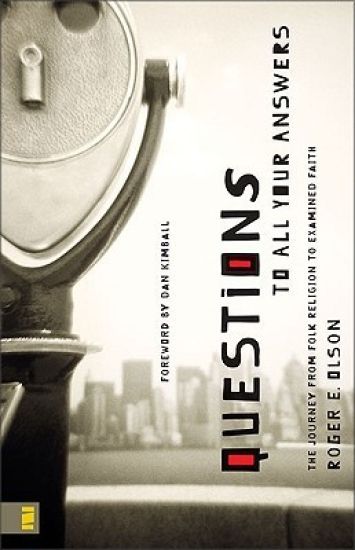
Questions to All Your Answers

Questions to All Your Answers

Roger E. Olson; Dan Kimball

Zondervan
2008
nidottu
Many Christians’ faith exists as a loose collection of unexamined clichés and slogans borrowed from songs, devotional books, sermon illustrations, and even the internet. Too often this belief system (if it can be called a “system”) lacks coherence and intelligibility; it can hardly be expressed, let alone defended, to others. The problem with folk religion is that it too easily withers under the onslaughts of secularism or seemingly reasonable answers provided by cults and new religions. Christianity has a long tradition of intellectual examination of other faiths and its own beliefs. Socrates said that the unexamined life is not worth living; great Christian minds of all the ages have believed the unexamined faith is not worth believing. Reflective Christianity is Christian faith that has subjected itself to the rigorous questioning of Scripture, tradition, reason, and experience. It is mature Christian faith that goes on believing even as it questions what it believes. The goal of this book is not to destroy anyone’s faith but to build it up by placing it on a firmer foundation of critical examination. Ten popular Christian clichés are subjected to critical inquiry and interrogated to discover whether they contain truth or are in error. In most cases the conclusion is—both. The aim is not to tear down straw men but to demonstrate a path toward stronger, more mature Christian belief.
Deciding for Others

Deciding for Others

Allen E. Buchanan; Dan W. Brock

Cambridge University Press
1990
pokkari
This book is the most comprehensive treatment available of one of the most urgent - and yet in some respects most neglected - problems in bioethics: decision-making for incompetents. Part I develops a general theory for making treatment and care decisions for patients who are not competent to decide for themselves. It provides an in-depth analysis of competence, articulates and defends a coherent set of principles to specify suitable surrogate decisionmakers and to guide their choices, examines the value of advance directives, and investigates the role that considerations of cost ought to play in decisions concerning incompetents. Part II applies this theoretical framework to the distinctive problems of three important classes of individuals, many of whom are incompetent: minors, the elderly and psychiatric patients. The authors’ approach combines a probing analysis of fundamental issues in ethical theory with a sensitive awareness of the concrete realities of health care institutions and the highly personal and individual character of difficult practical problems. Its broad scope will appeal to health professionals, moral philosophers and lawyers alike.
Deciding for Others

Deciding for Others

Allen E. Buchanan; Dan W. Brock

Cambridge University Press
1990
sidottu
This book is the most comprehensive treatment available of one of the most urgent - and yet in some respects most neglected - problems in bioethics: decision-making for incompetents. Part I develops a general theory for making treatment and care decisions for patients who are not competent to decide for themselves. It provides an in-depth analysis of competence, articulates and defends a coherent set of principles to specify suitable surrogate decisionmakers and to guide their choices, examines the value of advance directives, and investigates the role that considerations of cost ought to play in decisions concerning incompetents. Part II applies this theoretical framework to the distinctive problems of three important classes of individuals, many of whom are incompetent: minors, the elderly and psychiatric patients. The authors’ approach combines a probing analysis of fundamental issues in ethical theory with a sensitive awareness of the concrete realities of health care institutions and the highly personal and individual character of difficult practical problems. Its broad scope will appeal to health professionals, moral philosophers and lawyers alike.
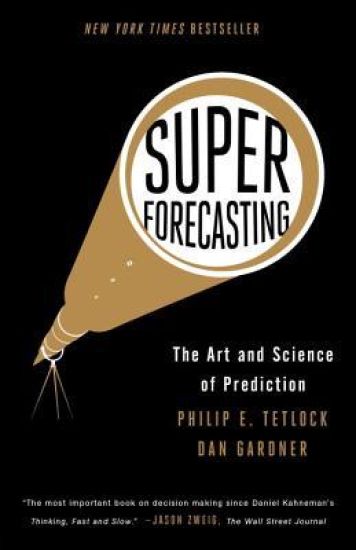
Superforecasting: The Art and Science of Prediction

Superforecasting: The Art and Science of Prediction

Philip E. Tetlock; Dan Gardner

Crown Publishing Group (NY)
2016
nidottu
NEW YORK TIMES BESTSELLER - NAMED ONE OF THE BEST BOOKS OF THE YEAR BY THE ECONOMIST "The most important book on decision making since Daniel Kahneman's Thinking, Fast and Slow."--Jason Zweig, The Wall Street Journal Everyone would benefit from seeing further into the future, whether buying stocks, crafting policy, launching a new product, or simply planning the week's meals. Unfortunately, people tend to be terrible forecasters. As Wharton professor Philip Tetlock showed in a landmark 2005 study, even experts' predictions are only slightly better than chance. However, an important and underreported conclusion of that study was that some experts do have real foresight, and Tetlock has spent the past decade trying to figure out why. What makes some people so good? And can this talent be taught? In Superforecasting, Tetlock and coauthor Dan Gardner offer a masterwork on prediction, drawing on decades of research and the results of a massive, government-funded forecasting tournament. The Good Judgment Project involves tens of thousands of ordinary people--including a Brooklyn filmmaker, a retired pipe installer, and a former ballroom dancer--who set out to forecast global events. Some of the volunteers have turned out to be astonishingly good. They've beaten other benchmarks, competitors, and prediction markets. They've even beaten the collective judgment of intelligence analysts with access to classified information. They are "superforecasters." In this groundbreaking and accessible book, Tetlock and Gardner show us how we can learn from this elite group. Weaving together stories of forecasting successes (the raid on Osama bin Laden's compound) and failures (the Bay of Pigs) and interviews with a range of high-level decision makers, from David Petraeus to Robert Rubin, they show that good forecasting doesn't require powerful computers or arcane methods. It involves gathering evidence from a variety of sources, thinking probabilistically, working in teams, keeping score, and being willing to admit error and change course. Superforecasting offers the first demonstrably effective way to improve our ability to predict the future--whether in business, finance, politics, international affairs, or daily life--and is destined to become a modern classic.