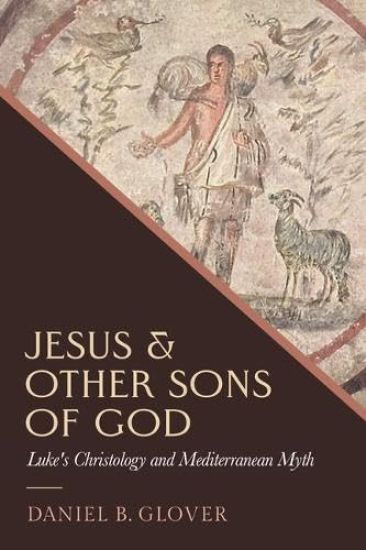
In a world full of demigods, heroes, daimones, and Olympians, how did early Christians conceptualize Jesus's divinity? What symbols, images, and literary motifs were available to them as elements of an emerging belief in Christ as divine? Scholars have focused upon the origins of "high Christology" for decades. Only recently have we begun to address how early Christians inscribed and communicated that belief to others in the ancient Mediterranean. In Jesus and Other Sons of God, Daniel B. Glover takes up these important, interlacing questions of formative Christian belief. Glover focuses this study upon the author of Luke and Acts, situating him firmly within his historical, social, and literary contexts. Against those who have asserted that early Christian literature was written exclusively or primarily for Christians, Glover argues that Luke wrote for an audience of well-educated, literate peers—a cadre of elite cultural producers who were interested in new religious movements. With this reimagined readership in mind, Glover demonstrates that Luke not only wrote among and for the literary elite but also as and like one of them. In retrieving the presentation of Jesus's deity in Luke/Acts, Glover elucidates how Luke adopted and to some extent adapted both the rhetorical-literary practices and mytho-theological convictions of his milieu to give expression to the way he understood Jesus. This important study offers at once a more precise picture of Luke's social location, religious engagement, and literary procedure as well as a thorough and historically coherent reading of Luke's Christology in its ancient Mediterranean setting. Scholars and students of New Testament, early Christianity, and religion in antiquity will benefit from the incisive insights yielded by Glover's groundbreaking book.
Es un libro que ofrece pruebas de las formulas matem ticas b sicas. Se pueden encontrar en este libro pruebas de formulas que se relacionan con: lgebra, logaritmos, series, calculo, reas y vol menes. This is a book that offers mathematical proofs for the basic formulas of mathematics. Proofs of formulas related to: algebra, logarithms, series, calculus, areas and volumes can be found in this book.
In Far Off and Distant Times is a collection of material written by Daniel B. Thomas before his death while recovering from open-heart surgery. His collection of writing illustrates his exceptional talent. Although he never complained about his ailments, they were pronounced and perhaps more serious than he realized. It was often, then, Danny's intention to write material that would challenge the reader in ways that made people question their own biases. This book's first section begins with the most developed and prominent piece in the collection, "Turn to Stone a Statue's Eye," a novella which speaks to the reality of human greed and condemns selfishness. The next section includes short stories that often touch on more complex and challenging themes. To conclude, the collection ends with a compilation of poems and songs Danny hoped to turn to music. The themes vary in much of his poetry.
This book gathers together information concerning the interaction of hu man stereopsis with various stereoscopic viewing devices, especially those used in teleoperator systems. The book is not concerned with machine vi sion systems. In these systems, data analogous to human binocular visual information is gathered and analyzed by some device for use in decision making or control, often without the intervention of a human. This subject presents problems of considerable complexity; it has generated many inge nious solutions and has been the inspiration of much work of fundamental importance. But the problems are quite different from those encountered in the design of systems intended to exploit human stereopsis, and there is surprisingly little cross-fertilization between the two fields. 1. 1. SCOPE AND STRUCTURE OF THIS BOOK The book surveys the known properties of the human unaided binocu lar system, and where possible gives the magnitude of parameters that are of use in designing technical systems involving a human operator. Chapter 2 summarizes the human stereoscopic vision literature including the depth distortions of unaided stereoscopic viewing. Chapter 3 describes a variety of 3-D image viewing techniques and deals with the performance limits of human stereopsis assisted by simple stereoscopic viewing devices. Chapter 4 extends this treatment to television binocular viewing devices, and shows 1 2 Chapter 1 that the nature of the depth distortion is changed. Chapter 5 analyzes the geometry of single camera stereoscopic systems, and discusses the advan tages and disadvantages of such systems.
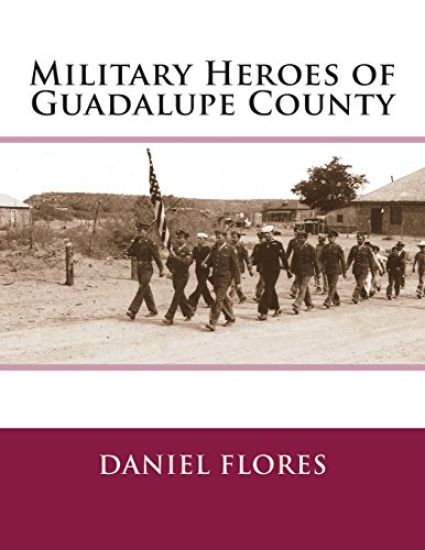
I have chosen the tile Pasaron Por Aqu after the Spanish "pas por aqu " inscription left by Juan de O ate at El Morro National Monument. He carved his message into the side of a cliff when he visited the area in 1605. El Morro, also known as Inscription Rock, is located near Zuni in western New Mexico. Literally translated into English, "pas por aqu " means "he passed through these parts." "Pasaron por aqu " means "they passed through these parts." I have included short vignettes about fifty people who contributed to the rich history and lore of Guadalupe county. Included in Pasaron Por Aqu are the four delegates elected from Guadalupe county to attend the Constitutional Convention of 1910. The delegates of the convention were able to draft a constitution for what was then the Territory of New Mexico. The constitution they drafted led to statehood for New Mexico in 1912. Two individuals who visited the area found themselves in the county through circumstances beyond their control. One of them was Charles Lindbergh, the first aviator to fly solo non-stop across the Atlantic. He was forced to land in Vaughn due to engine trouble. America's folk hero, newspaper columnist and movie actor Will Rogers, who was flying towards California, was forced to land in Vaughn because of severe weather conditions. Other vignettes include a famous outlaw, this one died of old age, and several other political leaders. A Roman Catholic nun who mentored the president of a South American country is included. Some of the vignettes are about early settlers in the area. A railroad magnate who helped build Santa Rosa, though he didn't settle here, is the subject of one of the vignettes. The founder of Santa Rosa, Celso Baca, is included. An area rancher, John Hicks, who was the role model for Owen Wister's classic western novel, The Virginian, is the subject of one of the vignettes. I have also chosen to include Virginia Pino, an elderly woman who I knew as a young boy growing up in Puerto de Luna. She truly represented the pioneer spirit of the early days of Puerto de Luna. There are several omissions from Pasaron Por Aqu . I have chosen to omit the Spanish conquistador Francisco Vasquez de Coronado and his venture through the area in the 1540s. I have also not included Kit Carson and the Navajo Long Walk of the early 1860s. Carson made several jaunts through the area as he escorted Navajo Indians on their way to Bosque Redondo near present-day Fort Sumner. Also omitted is the first American archbishop of New Mexico, Jean-Baptiste Lamy. Lamy made several solo trips into the area in the mid 19th century Pasaron Por Aqu has been alphabetized by surname, though some of the persons included were known only by a nickname. Those are listed alphabetically by their nickname rather than surname.
My parents lived in Sunfish, Kentucky during my early years of childhood. I grew up at the "Susie House". This was a two room house, no indoor plumbing, no electricity, no telephone, and without internet. We had a marvelous two-seater outhouse that served a family of 8 well. There were my parents, Ben and Gladys Durbin, plus six kids living in the two room Susie House. In today's world this would seem intolerable conditions, but at the time this was just the way things were. This book is the result of my curiosity of the story behind the Susie House; how it got its name, and the people involved and why my parents came to live there. The story quest triggered me to remember things that happened as I was growing up. At our family reunions invariably someone tells a "remember when" story of something that happened from childhood in Sunfish. I wanted to capture some of these incidents for posterity. It is impossible to capture all the memories, but the ones retold in this book help tell the story of what life was like at the Susie House. Oral traditions fade through the successive generations and many of our remembrances are lost through time. I have added my memories and those of my siblings recalling life at the Susie House and growing up in Sunfish, Kentucky. Appendix-A contains Deed Records dating to 1828. Appendix-b contains detailed genealogy charts and reports on Durbin and Anderson ancestors.