Kirjojen hintavertailu. Mukana 11 342 296 kirjaa ja 12 kauppaa.

Kirjahaku

Etsi kirjoja tekijän nimen, kirjan nimen tai ISBN:n perusteella.

1000 tulosta hakusanalla David A. Alhadeff

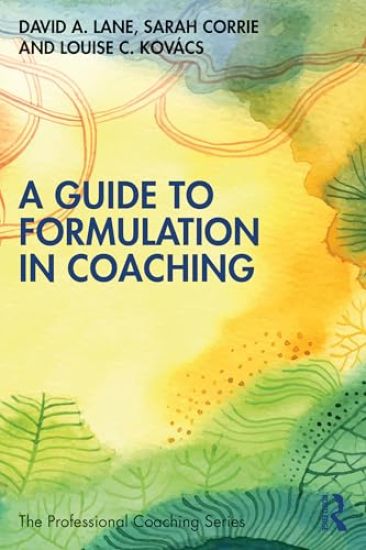
A Guide to Formulation in Coaching

A Guide to Formulation in Coaching

David A. Lane; Sarah Corrie; Louise C. Kovács

TAYLOR FRANCIS LTD
2025
nidottu
Lane, Corrie and Kovács present a foundational text for coaches wishing to improve their coaching practice through use of formulation.A Guide to Formulation in Coaching examines the nature and purpose of formulation and how to develop effective formulations that can inform and improve practice. It combines theoretical perspectives with case studies illustrating its use in different coaching contexts to provide a comprehensive and accessible account of the purpose, perspectives and processes used in formulation. In addition to providing practice-based examples and drawing on the literature, the book provides a series of exercises to enable readers to refine their individual approaches.Practical and accessibly written, this book will be a valuable resource for coaches and coaching psychologists, coaching supervisors and trainers, and academics interested in understanding the role of formulation and how it applies in a coaching context.
A Guide to Formulation in Coaching

A Guide to Formulation in Coaching

David A. Lane; Sarah Corrie; Louise C. Kovács

TAYLOR FRANCIS LTD
2025
sidottu
Lane, Corrie and Kovács present a foundational text for coaches wishing to improve their coaching practice through use of formulation.A Guide to Formulation in Coaching examines the nature and purpose of formulation and how to develop effective formulations that can inform and improve practice. It combines theoretical perspectives with case studies illustrating its use in different coaching contexts to provide a comprehensive and accessible account of the purpose, perspectives and processes used in formulation. In addition to providing practice-based examples and drawing on the literature, the book provides a series of exercises to enable readers to refine their individual approaches.Practical and accessibly written, this book will be a valuable resource for coaches and coaching psychologists, coaching supervisors and trainers, and academics interested in understanding the role of formulation and how it applies in a coaching context.
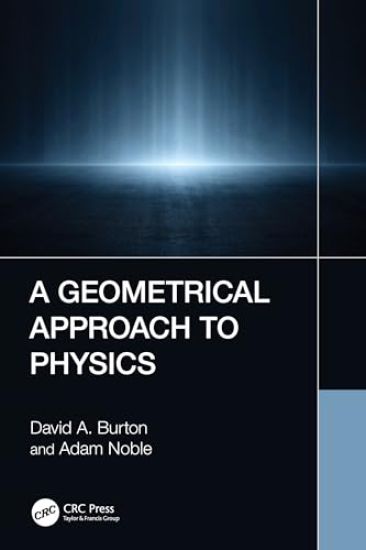
A Geometrical Approach to Physics

A Geometrical Approach to Physics

David A. Burton; Adam Noble

TAYLOR FRANCIS LTD
2024
nidottu
This book provides an accessible introduction to using the tools of differential geometry to tackle a wide range of topics in physics, with the concepts developed through numerous examples to help the reader become familiar with the techniques.Physical applications are used to develop the techniques and demonstrate their wide-ranging applicability. Formalism is introduced sparingly and step-by-step, where it is needed, and chapters contain exercises for readers to test their understanding. Worked solutions to the exercises are included.It is an ideal textbook for advanced undergraduate or postgraduate courses on mathematical methods for physicists, for students whose background is in physics rather than mathematics. It is assumed that the reader has no prior knowledge of mathematical methods beyond the content of a standard undergraduate physics degree.The purpose of the book is to act as a ‘gateway’ to more advanced books on the applications of differential geometry in physics. It will also help the reader to better appreciate modern physics research that makes use of differential geometry, and the common features that permeate the discipline as a whole.Key Features:Presents a light and accessible treatmentCan be used as a textbook for a short course on mathematical methods for physicistsAccessible to advanced undergraduates and postgraduates whose background is in physics, not mathematics
A Geometrical Approach to Physics

A Geometrical Approach to Physics

David A. Burton; Adam Noble

TAYLOR FRANCIS LTD
2024
sidottu
This book provides an accessible introduction to using the tools of differential geometry to tackle a wide range of topics in physics, with the concepts developed through numerous examples to help the reader become familiar with the techniques.Physical applications are used to develop the techniques and demonstrate their wide-ranging applicability. Formalism is introduced sparingly and step-by-step, where it is needed, and chapters contain exercises for readers to test their understanding. Worked solutions to the exercises are included.It is an ideal textbook for advanced undergraduate or postgraduate courses on mathematical methods for physicists, for students whose background is in physics rather than mathematics. It is assumed that the reader has no prior knowledge of mathematical methods beyond the content of a standard undergraduate physics degree.The purpose of the book is to act as a ‘gateway’ to more advanced books on the applications of differential geometry in physics. It will also help the reader to better appreciate modern physics research that makes use of differential geometry, and the common features that permeate the discipline as a whole.Key Features:Presents a light and accessible treatmentCan be used as a textbook for a short course on mathematical methods for physicistsAccessible to advanced undergraduates and postgraduates whose background is in physics, not mathematics
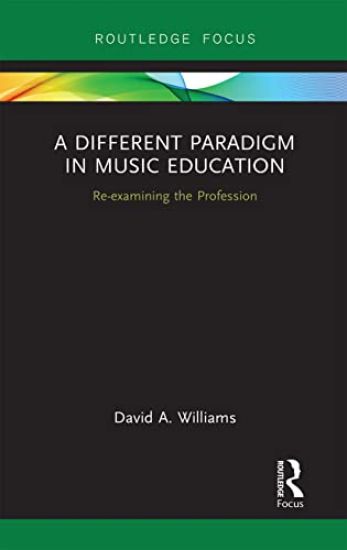
A Different Paradigm in Music Education

A Different Paradigm in Music Education

David A Williams

TAYLOR FRANCIS LTD
2021
nidottu
A Different Paradigm in Music Education is a "let’s consider some possibilities" book. Instead of a music methods book, it is a look at where the music education profession is and how music teachers might improve what it is we do. It is about change. It is about questioning the current music education paradigm, especially regarding its exclusive role as the only model. The intent is to help pre-service and in-service music educators consider new modes of pedagogical thought that will allow us to broaden our reach in schools and better help students develop as creative musicians across their lifespan.The book includes an overview of several opportunities and course examples that would make music education more relevant and meaningful, especially for students that are not interested in our traditional performance offerings. The author wishes to stimulate discussions, with the goal for the music education profession to grow and mature.
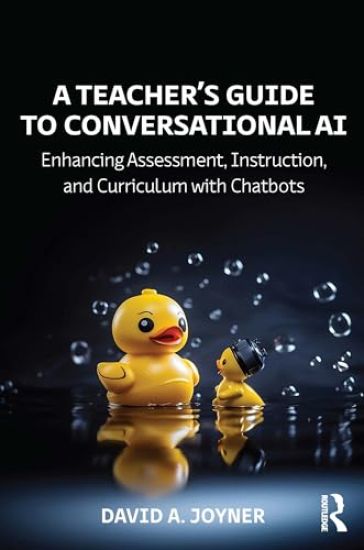
A Teacher’s Guide to Conversational AI

A Teacher’s Guide to Conversational AI

David A. Joyner

TAYLOR FRANCIS LTD
2024
nidottu
A Teacher’s Guide to Conversational AI explores the practical role that language-based artificial intelligence tools play in classroom teaching, learning experiences, and student assessment. Today’s educators are well aware that conversational and generative AI—chatbots, intelligent tutoring systems, large language models, and more—represent a complex new factor in teaching and learning. This introductory primer offers comprehensive, novice-friendly guidance into the challenges and opportunities of incorporating AI into K-12 schools and college classes in ways that are appropriate, nourishing to students, and outcomes-driven.Opening with an informative overview of the foundational properties, key terminology, and ethical considerations of these tools, the book offers a coherent and realistic vision of classrooms that are enhanced, rather than stymied, by AI systems. This includes strategies for:· designing assessments that are conducive to students’ beneficial use of AI while mitigating overreliance or dishonesty;· using AI to generate lesson examples for student critique or custom content that reinforces course principles;· leveraging chatbots as a co-instructor or a tutor, a guide during student-driven learning, a virtual debate or brainstorming partner, and a design project; and· creating course content, lesson plans and activities, expanded language and accessibility options, and beyond. Through the depth of understanding and applied approach provided in these chapters, teachers and leaders in training and in service, alongside private tutors, college instructors, and other educators, will be better prepared to future-proof their efforts to serve new generations of learners.
A Teacher’s Guide to Conversational AI

A Teacher’s Guide to Conversational AI

David A. Joyner

TAYLOR FRANCIS LTD
2024
sidottu
A Teacher’s Guide to Conversational AI explores the practical role that language-based artificial intelligence tools play in classroom teaching, learning experiences, and student assessment. Today’s educators are well aware that conversational and generative AI—chatbots, intelligent tutoring systems, large language models, and more—represent a complex new factor in teaching and learning. This introductory primer offers comprehensive, novice-friendly guidance into the challenges and opportunities of incorporating AI into K-12 schools and college classes in ways that are appropriate, nourishing to students, and outcomes-driven.Opening with an informative overview of the foundational properties, key terminology, and ethical considerations of these tools, the book offers a coherent and realistic vision of classrooms that are enhanced, rather than stymied, by AI systems. This includes strategies for:· designing assessments that are conducive to students’ beneficial use of AI while mitigating overreliance or dishonesty;· using AI to generate lesson examples for student critique or custom content that reinforces course principles;· leveraging chatbots as a co-instructor or a tutor, a guide during student-driven learning, a virtual debate or brainstorming partner, and a design project; and· creating course content, lesson plans and activities, expanded language and accessibility options, and beyond. Through the depth of understanding and applied approach provided in these chapters, teachers and leaders in training and in service, alongside private tutors, college instructors, and other educators, will be better prepared to future-proof their efforts to serve new generations of learners.
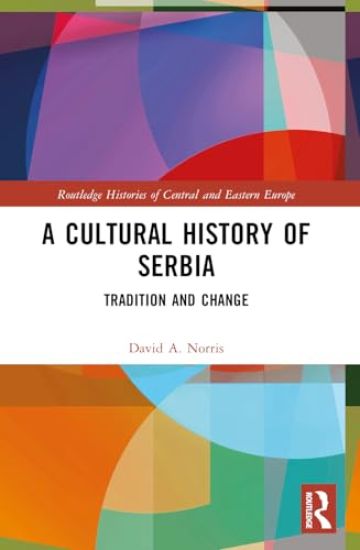
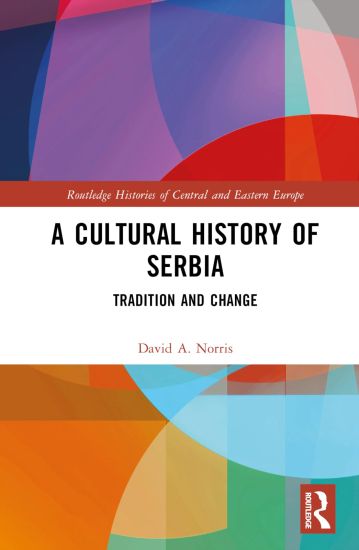
A Cultural History of Serbia

A Cultural History of Serbia

David A. Norris

TAYLOR FRANCIS LTD
2025
nidottu
This volume focuses on Serbia’s need to manage change while preserving community identities, a narrative that avoids the common depiction of Serbian culture as a hostile struggle between modernizers supporting foreign models and traditionalists advocating forms of national cultural patrimony. Traditions only function if they are allowed to bend to the necessary modifications demanded by a community’s changing historical circumstances. Tradition and change are two sides of the same coin which Serbia, in its many different incarnations, has experienced over the centuries, protecting its national heritage while borrowing and adapting intellectual and other trends from Byzantine, Ottoman and Western sources. Outside influences have been imposed as a direct result of foreign rule or through more friendly channels of communication, leading to a complex relationship between autochthonous and alien elements in Serbian society and culture. This book argues that the division between the national and international frameworks has often been a false dichotomy, with outside features embedded in domestic symbolic capital and Serbian culture simultaneously determined on local, national, regional and global levels. David A. Norris’s approach offers a new perspective to students, academics and general readers interested in the history of Serbia’s participation in the broad networks of cultural exchange.
Rivers of Change - Channels of Hope: A Mental Health Survivor's Guide Through Lived Experience
You are not alone and there is hope*If you are struggling with a mental health challenge or substance use*If you are wondering if there is anybody else like me, am I ok?This book of healing poetry creates a light in the darkness, a comforting voice in the storm. David's raw, real and sometimes vulnerable words as he shares his journey can help you navigate the currents of substance use and mental illness with the healing power of words.
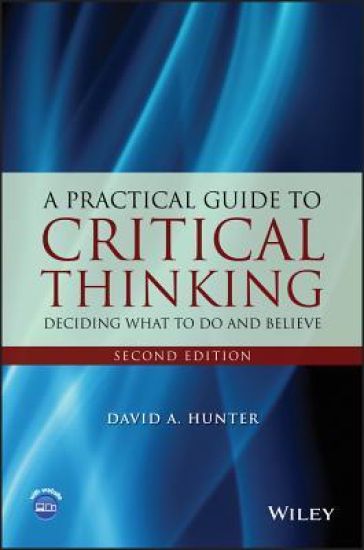
A Practical Guide to Critical Thinking

A Practical Guide to Critical Thinking

David A. Hunter

John Wiley Sons Inc
2014
nidottu
A thoroughly updated introduction to the concepts, methods, and standards of critical thinking, A Practical Guide to Critical Thinking: Deciding What to Do and Believe, Second Edition is a unique presentation of the formal strategies used when thinking through reasons and arguments in many areas of expertise. Pursuing an interdisciplinary approach to critical thinking, the book offers a broad conception of critical thinking and explores the practical relevance to conducting research across fields such as, business, education, and the biological sciences. Applying rigor when necessary, the Second Edition maintains an informal approach to the fundamental core concepts of critical thinking. With practical strategies for defining, analyzing, and evaluating reasons and arguments, the book illustrates how the concept of an argument extends beyond philosophical roots into experimentation, testing, measurement, and policy development and assessment. Featuring plenty of updated exercises for a wide range of subject areas, A Practical Guide to Critical Thinking Deciding What to Do and Believe, Second Edition also includes: Numerous real-world examples from many fields of research, which reflect the applicability of critical thinking in everyday lifeNew topical coverage, including the nature of reasons, assertion and supposing, narrow and broad definitions, circumstantial reasons, and reasoning about causal claimsSelected answers to various exercises to provide readers with instantaneous feedback to support and extend the lessons A Practical Guide to Critical Thinking Deciding What to Do and Believe, Second Edition is an excellent textbook for courses on critical thinking and logic at the undergraduate and graduate levels as well as an appropriate reference for anyone with a general interest in critical thinking skills.
A Cultural History of Serbia

A Cultural History of Serbia

David A. Norris

TAYLOR FRANCIS LTD
2024
sidottu
This volume focuses on Serbia’s need to manage change while preserving community identities, a narrative that avoids the common depiction of Serbian culture as a hostile struggle between modernizers supporting foreign models and traditionalists advocating forms of national cultural patrimony.Traditions only function if they are allowed to bend to the necessary modifications demanded by a community’s changing historical circumstances. Tradition and change are two sides of the same coin which Serbia, in its many different incarnations, has experienced over the centuries, protecting its national heritage while borrowing and adapting intellectual and other trends from Byzantine, Ottoman and Western sources. Outside influences have been imposed as a direct result of foreign rule or through more friendly channels of communication, leading to a complex relationship between autochthonous and alien elements in Serbian society and culture. This book argues that the division between the national and international frameworks has often been a false dichotomy, with outside features embedded in domestic symbolic capital and Serbian culture simultaneously determined on local, national, regional and global levels.David A. Norris’s approach offers a new perspective to students, academics and general readers interested in the history of Serbia’s participation in the broad networks of cultural exchange.