

Kirjahaku
Etsi kirjoja tekijän nimen, kirjan nimen tai ISBN:n perusteella.
1000 tulosta hakusanalla David Colquhoun

David Walker’s Appeal to the Coloured Citizens of the World
Pennsylvania State University Press
2000
sidottu
In 1829 David Walker, a free black born in Wilmington, North Carolina, wrote one of America’s most provocative political documents of the nineteenth century, Walker’s Appeal to the Coloured Citizens of the World. Decrying the savage and unchristian treatment blacks suffered in the United States, Walker challenged his “afflicted and slumbering brethren” to rise up and cast off their chains. Walker worked tirelessly to circulate his book via underground networks in the South, and he was so successful that Southern lawmakers responded with new laws cracking down on “incendiary” antislavery material. Although Walker died in 1830, the Appeal remained a rallying point for African Americans for many years to come, anticipating the radicalism of later black leaders, from Malcolm X to Martin Luther King, Jr. In this new edition of the Appeal, the first in over thirty years, Peter P. Hinks, the leading authority on David Walker, provides a masterly introduction and extensive annotations that incorporate the most up-to-date research on Walker, much of it first reported by Hinks in his highly acclaimed biography, To Awaken My Afflicted Brethren. Hinks also includes a unique appendix of documents showing the contemporary response—from North and South, black and white—to the Appeal itself and Walker’s attempts to distribute it in the South. Historians and political activists have long recognized the importance of Walker’s Appeal. At last we have an edition worthy of its persuasive immediacy and its enduring place in American history.
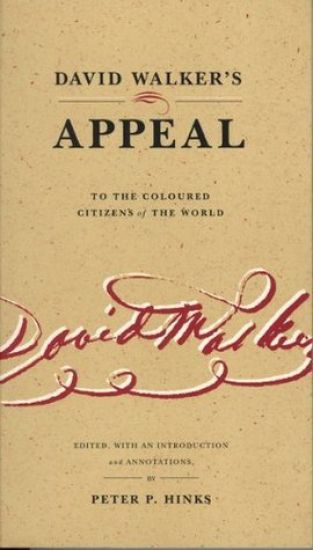
David Walker’s Appeal to the Coloured Citizens of the World
Pennsylvania State University Press
2000
pokkari
In 1829 David Walker, a free black born in Wilmington, North Carolina, wrote one of America’s most provocative political documents of the nineteenth century, Walker’s Appeal to the Coloured Citizens of the World. Decrying the savage and unchristian treatment blacks suffered in the United States, Walker challenged his “afflicted and slumbering brethren” to rise up and cast off their chains. Walker worked tirelessly to circulate his book via underground networks in the South, and he was so successful that Southern lawmakers responded with new laws cracking down on “incendiary” antislavery material. Although Walker died in 1830, the Appeal remained a rallying point for African Americans for many years to come, anticipating the radicalism of later black leaders, from Malcolm X to Martin Luther King, Jr. In this new edition of the Appeal, the first in over thirty years, Peter P. Hinks, the leading authority on David Walker, provides a masterly introduction and extensive annotations that incorporate the most up-to-date research on Walker, much of it first reported by Hinks in his highly acclaimed biography, To Awaken My Afflicted Brethren. Hinks also includes a unique appendix of documents showing the contemporary response—from North and South, black and white—to the Appeal itself and Walker’s attempts to distribute it in the South. Historians and political activists have long recognized the importance of Walker’s Appeal. At last we have an edition worthy of its persuasive immediacy and its enduring place in American history.
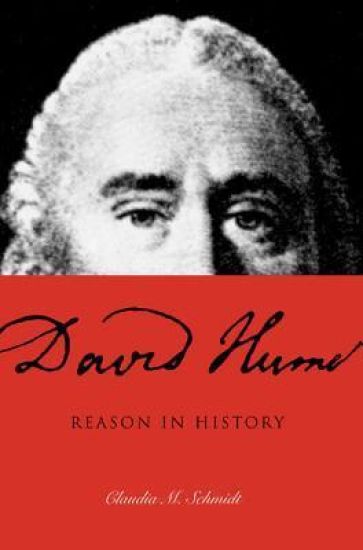
In his seminal Philosophy of David Hume (1941), Norman Kemp Smith called for a study of Hume "in all his manifold activities: as philosopher, as political theorist, as economist, as historian, and as man of letters," indicating that "Hume's philosophy, as the attitude of mind that found for itself these various forms of expression, will then have been presented, adequately and in due perspective, for the first time." Claudia Schmidt seeks to address this long-standing need in Hume scholarship. Against the charges that Hume holds no consistent philosophical position, offers no constructive account of rationality, and sees no positive relation between philosophy and other areas of inquiry, Schmidt argues for the overall coherence of Hume's thought as a study of "reason in history." She develops this interpretation by tracing Hume's constructive account of human cognition and its historical dimension as a unifying theme across the full range of his writings. Hume, she shows, provides a positive account of the ways in which our concepts, beliefs, emotions, and standards of judgment in different areas of inquiry are shaped by experience, both in the personal history of the individual and in the life of a community. This book is valuable at many levels: for students, as an introduction to Hume's writings and issues in their interpretation; for Hume specialists, as a unified and intriguing interpretation of his thought; for philosophers generally, as a synthesis of recent developments in Hume scholarship; and for scholars in other disciplines, as a guide to Hume's contributions to their own fields.

In his seminal Philosophy of David Hume (1941), Norman Kemp Smith called for a study of Hume "in all his manifold activities: as philosopher, as political theorist, as economist, as historian, and as man of letters," indicating that "Hume's philosophy, as the attitude of mind that found for itself these various forms of expression, will then have been presented, adequately and in due perspective, for the first time." Claudia Schmidt seeks to address this long-standing need in Hume scholarship. Against the charges that Hume holds no consistent philosophical position, offers no constructive account of rationality, and sees no positive relation between philosophy and other areas of inquiry, Schmidt argues for the overall coherence of Hume's thought as a study of "reason in history." She develops this interpretation by tracing Hume's constructive account of human cognition and its historical dimension as a unifying theme across the full range of his writings. Hume, she shows, provides a positive account of the ways in which our concepts, beliefs, emotions, and standards of judgment in different areas of inquiry are shaped by experience, both in the personal history of the individual and in the life of a community. This book is valuable at many levels: for students, as an introduction to Hume's writings and issues in their interpretation; for Hume specialists, as a unified and intriguing interpretation of his thought; for philosophers generally, as a synthesis of recent developments in Hume scholarship; and for scholars in other disciplines, as a guide to Hume's contributions to their own fields.

David Franks, a colonial businessman in Philadelphia, was one of the most important figures in American Jewish history in the eighteenth century. This extensively researched biography illuminates not only Franks's personal dealings, but also his business life. Franks was involved with Indian trade, ship design and building, manufacturing, international trade, land speculation, westward exploration, and military provisioning. This volume follows Franks from his beginnings in a prominent Jewish family to his trials for treason and his exile in the postrevolutionary period, offering a unique portrait of a forgotten American.

David Franks, a colonial businessman in Philadelphia, was one of the most important figures in American Jewish history in the eighteenth century. This extensively researched biography illuminates not only Franks's personal dealings, but also his business life. Franks was involved with Indian trade, ship design and building, manufacturing, international trade, land speculation, westward exploration, and military provisioning. This volume follows Franks from his beginnings in a prominent Jewish family to his trials for treason and his exile in the postrevolutionary period, offering a unique portrait of a forgotten American.
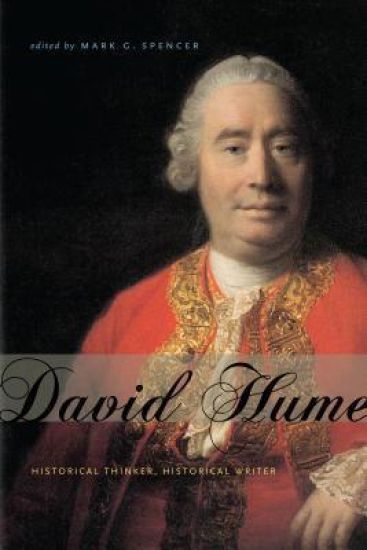
This volume provides a new and nuanced appreciation of David Hume as a historian. Gone for good are the days when one can offhandedly assert, as R. G. Collingwood once did, that Hume “deserted philosophical studies in favour of historical” ones. History and philosophy are commensurate in Hume’s thought and works from the beginning to the end. Only by recognizing this can we begin to make sense of Hume’s canon as a whole and see clearly his many contributions to fields we now recognize as the distinct disciplines of history, philosophy, political science, economics, literature, religious studies, and much else besides. Casting their individual beams of light on various nooks and crannies of Hume’s historical thought and writing, the book’s contributors illuminate the whole in a way that would not be possible from the perspective of a single-authored study.Aside from the editor, the contributors are David Allan, M. A. Box, Timothy M. Costelloe, Roger L. Emerson, Jennifer Herdt, Philip Hicks, Douglas Long, Claudia M. Schmidt, Michael Silverthorne, Jeffrey M. Suderman, Mark R. M. Towsey, and F. L. van Holthoon.
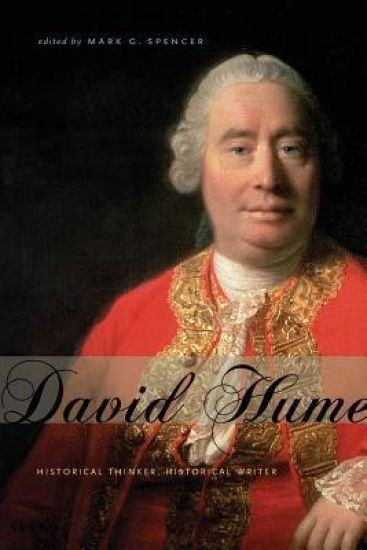
This volume provides a new and nuanced appreciation of David Hume as a historian. Gone for good are the days when one can offhandedly assert, as R. G. Collingwood once did, that Hume “deserted philosophical studies in favour of historical” ones. History and philosophy are commensurate in Hume’s thought and works from the beginning to the end. Only by recognizing this can we begin to make sense of Hume’s canon as a whole and see clearly his many contributions to fields we now recognize as the distinct disciplines of history, philosophy, political science, economics, literature, religious studies, and much else besides. Casting their individual beams of light on various nooks and crannies of Hume’s historical thought and writing, the book’s contributors illuminate the whole in a way that would not be possible from the perspective of a single-authored study.Aside from the editor, the contributors are David Allan, M. A. Box, Timothy M. Costelloe, Roger L. Emerson, Jennifer Herdt, Philip Hicks, Douglas Long, Claudia M. Schmidt, Michael Silverthorne, Jeffrey M. Suderman, Mark R. M. Towsey, and F. L. van Holthoon.

David Recardo's Grundgesetze der Volkswirthschaft und Besteureung. Erster Band
David Ricardo
Wentworth Press
2018
sidottu
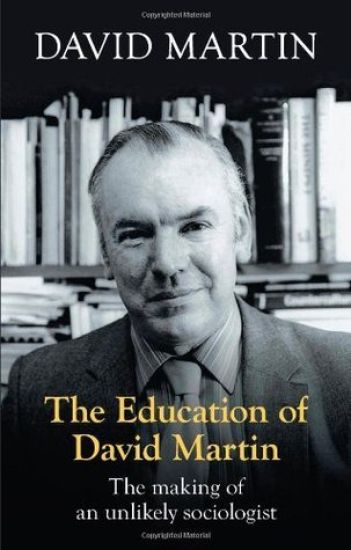
David Martin is one of the most distinguished writers on Christianity and society in modern times. Known and respected internationally for his critique of the secularisation theory that once dominated sociology, David Martin is credited with generating the first comparative general theory of secularisation. A regular contributor to media debates on the role of religion in society, his many influential writings and broadcasts range extensively over issues of religion, politics, violence and war. David Martin's vivid, elegant and absorbing prose offers surprising and often moving insights into his life, times and intellectual development. As Professor Emeritus of Sociology at the LSE he gives a compelling behind-the-scenes account of the protests during the 1960s and 1970s. He also recounts the ups and downs of his leading role in championing the King James Bible and the Prayer Book in the 1980's. It will be a must read for the many people, both within and without the church, who have been influenced by his seminal writings.

David’s dad gives him a very important job to do. But can the shepherd boy overcome his fear of the Hairy Beast to save the flock? David and the Hairy Beast gently explores the issue of a young child’s sense of identity and belonging in the family, showing how even they can make a positive contribution. It is a tale which encourages us to read between the lines of what the Bible tells us about David’s early years. The light-hearted and beautifully illustrated pictures will delight parents and children alike, regardless of religious conviction.

The prophet Samuel is looking for the next king of Israel. Will he find him on David's farm? David and the Kingmaker examines the vital issue of self-worth, and reminds children that good character is far more important than good looks, brains, talent or popularity. Through his encounter with the prophet Samuel, David catches a glimpse of how God sees him, and of his amazing future as king of Israel. It is a tale which encourages us to read between the lines of what the Bible tells us about David’s early years. The light-hearted and beautifully illustrated pictures will delight parents and children alike, regardless of religious conviction.

When the whole army of Israel is too scared to fight a giant, will young David be any braver? David must draw on his experience of seeing off the Hairy Beast to deal with a far greater foe. In this retelling of the familiar story of David's encounter with Goliath, children are taught that any problem can be overcome if we approach it with courage, self-belief, and faith in God. It is a tale which encourages us to read between the lines of what the Bible tells us about David's early years. The light-hearted and beautifully illustrated pictures will delight parents and children alike, regardless of religious conviction.
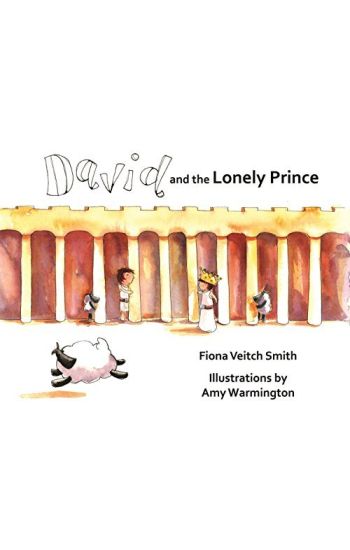
David is invited to a sleepover at King Saul's palace. But will David and the king's son ever become friends? David and the Lonely Prince shows us that for many children, learning to make friends can be a challenge. It is a tale which encourages us to read between the lines of what the Bible tells us about David’s early years. The light-hearted and beautifully illustrated pictures will delight parents and children alike, regardless of religious conviction.

When David agrees to spend a holiday with his best friend Jonathan, he never imagines he will have to run away from a spear-throwing king. In this age-appropriate retelling of the Bible story of when Saul tries to kill David with a spear, children learn about the faithfulness of God, the value of friendship and the need to forgive our enemies. It is a tale which encourages us to read between the lines of what the Bible tells us about David's early years. The light-hearted and beautifully illustrated pictures will delight parents and children alike, regardless of religious conviction.

In this final adventure, David is transported forward in time to the little town of Bethlehem, which has just witnessed the birth of a new King. But all is not well in Israel and it is not long before David is called upon to once more stand up to the terrible Hairy Beast - this time in order to save the baby Jesus. The light-hearted and beautifully illustrated pictures will delight parents and children alike, regardless of religious conviction.

From his time as Captain of England's cricket team to his pioneering work as Bishop of Liverpool, David Sheppard led a remarkable life. Now his story is told in full for the first time in this fascinating and insightful biography. Batting for the Poor draws on the papers left by Sheppard in the Liverpool Central Library as well as other archival material and more than 150 interviews conducted by Andrew Bradstock, all brought together to create a picture of a diligent and passionate man who helped break down divisions and turn Liverpool's fortunes around. Batting for the Poor is a vivid, entertaining biography that will be enjoyed by cricket fans, those interested in twentieth century history or the history of Liverpool and those interested in man that inspired so many as the Bishop of Liverpool. You will discover the story of an exceptional leader, and learn about the history of some of the divisions and struggles in the second half of the twentieth century that still impact society and culture in England today.

From his time as Captain of England's cricket team to his pioneering work as Bishop of Liverpool, David Sheppard led a remarkable life. Now his story is told in full for the first time in this fascinating and insightful biography. Batting for the Poor draws on the papers left by Sheppard in the Liverpool Central Library as well as other archival material and more than 150 interviews conducted by Andrew Bradstock, all brought together to create a picture of a diligent and passionate man who helped break down divisions and turn Liverpool's fortunes around. Batting for the Poor is a vivid, entertaining biography that will be enjoyed by cricket fans, those interested in twentieth century history or the history of Liverpool and those interested in man that inspired so many as the Bishop of Liverpool. You will discover the story of an exceptional leader, and learn about the history of some of the divisions and struggles in the second half of the twentieth century that still impact society and culture in England today.

Beginning with Lost Highway, director David Lynch “swerved” in a new direction, one in which very disorienting images of the physical world take center stage in his films. Seeking to understand this unusual emphasis in his work, noted Lynch scholar Martha Nochimson engaged Lynch in a long conversation of unprecedented openness, during which he shared his vision of the physical world as an uncertain place that masks important universal realities. He described how he derives this vision from the Holy Vedas of the Hindu religion, as well as from his layman’s fascination with modern physics.With this deep insight, Nochimson forges a startlingly original template for analyzing Lynch’s later films-the seemingly unlikely combination of the spiritual landscape envisioned in the Holy Vedas and the material landscape evoked by quantum mechanics and relativity. In David Lynch Swerves, Nochimson navigates the complexities of Lost Highway, The Straight Story, Mulholland Drive, and Inland Empire with uncanny skill, shedding light on the beauty of their organic compositions; their thematic critiques of the immense dangers of modern materialism; and their hopeful conceptions of human potential. She concludes with excerpts from the wide-ranging interview in which Lynch discussed his vision with her, as well as an interview with Columbia University physicist David Albert, who was one of Nochimson’s principal tutors in the discipline of quantum physics.