Kirjojen hintavertailu. Mukana 12 016 292 kirjaa ja 12 kauppaa.

Kirjahaku

Etsi kirjoja tekijän nimen, kirjan nimen tai ISBN:n perusteella.

1000 tulosta hakusanalla David E. McClean

Raising Capital

Raising Capital

David E. Vance

Springer-Verlag New York Inc.
2005
sidottu
Most small businesses cite lack of capital is a major constraint on growth. "Raising Capital" focuses on non-bank sources of capital since banks only lend to companies that fit a very narrow profile. The topics covered include: (i) capital sources entrepreneurs can tap when they are too small or unusual for banks, (ii) angel investors and venture capital, (iii) where to look for angels, venture capitalists and other capital sources, (iv) how to pitch your company and close the deal, (v) deal terms and issues that arise when negotiating a deal, (vi) going public through an IPO or little known small public offerings, (viii) asset based lenders, and (ix) other financing vehicles including: bond, commercial paper, PIPEs and securitization. The scope of the book ranges from capital for entrepreneurs who have little more than an idea, to capital for top rated companies.
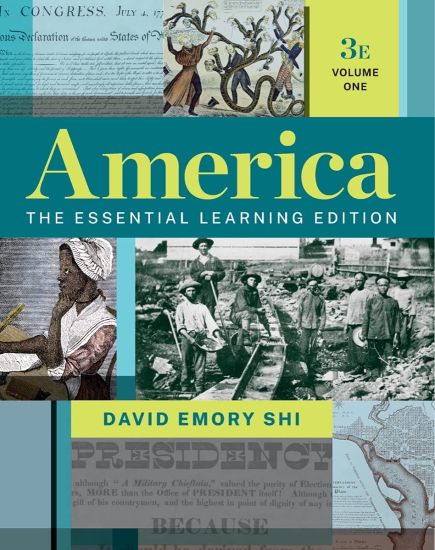
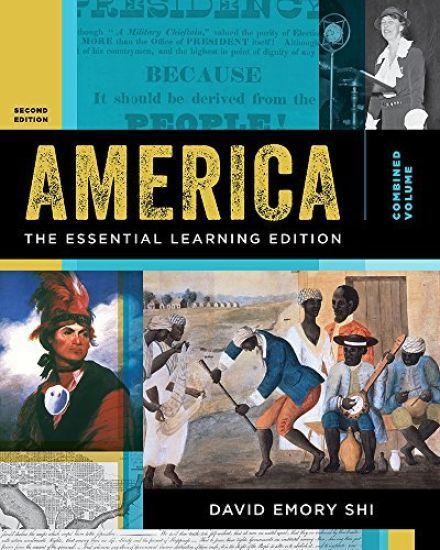
America: The Essential Learning Edition
The Essential Learning Edition of America’s celebrated narrative offers a unique pedagogical program built around core objectives. In-chapter features guide reading, source activities guide analysis, and digital resources reinforce the reading and skill development, all providing a clear path for student success. The Second Edition has been made even more accessible and engaging with a streamlined narrative, expanded visuals, added coverage on the culture of daily life, and NEW History Skills Tutorials.
America

America

David E. Shi

WW NORTON CO
2021
muu
America is the leading narrative history because students love to read it. Additional coverage of immigration enhances the timeliness of the narrative. New Chapter Overview videos, History Skills Tutorials, and Norton’s adaptive learning tool, InQuizitive, help students develop history skills, engage with the reading, and come to class prepared, while AP®-specific resources help teachers prepare lesson plans and assessments. AP® is a trademark registered and/or owned by the College Board, which was not involved in the production of, and does not endorse, this product.
Dealing with Dying, Death, and Grief during Adolescence
For some, life’s introduction to death and grief comes early, and when it does it can take many forms. Not only does Dealing with Dying, Death, and Grief during Adolescence tackle them all, it does so with David Balk’s remarkable sensitivity to and deep knowledge of the pressures and opportunities adolescents face in their transition from childhood to adulthood. In seamless, jargon-free language, Balk brings readers up to date with what we know about adolescent development, because over time such changes form the backstory we need to comprehend the impact of death and bereavement in an adolescent’s life. The book’s later chapters break down the recent findings in the study of life-threatening illness and bereavement during adolescence. And, crucially, these chapters also examine interventions that assist adolescents coping with these difficulties. Clinicians will come away from this book with both a grounded understanding of adolescent development and the adolescent experience of death, and they’ll also gain specific tools for helping adolescents cope with death and grief on their own terms. For any clinician committed to supporting adolescents facing some of life’s most difficult experiences, this integrated, up-to-date, and deeply insightful text is simply the book to have. David E. Balk is professor in the department of health and nutrition sciences at Brooklyn College (CUNY), where he directs the graduate program in thanatology. He is the author of Adolescent Development: Early Through Late Adolescence, Helping the Bereaved College Student, and several other books on death and bereavement. He is also co-editor of the 2nd edition of the Handbook of Thanatology (Routledge, 2013).
Dealing with Dying, Death, and Grief during Adolescence
For some, life’s introduction to death and grief comes early, and when it does it can take many forms. Not only does Dealing with Dying, Death, and Grief during Adolescence tackle them all, it does so with David Balk’s remarkable sensitivity to and deep knowledge of the pressures and opportunities adolescents face in their transition from childhood to adulthood. In seamless, jargon-free language, Balk brings readers up to date with what we know about adolescent development, because over time such changes form the backstory we need to comprehend the impact of death and bereavement in an adolescent’s life. The book’s later chapters break down the recent findings in the study of life-threatening illness and bereavement during adolescence. And, crucially, these chapters also examine interventions that assist adolescents coping with these difficulties. Clinicians will come away from this book with both a grounded understanding of adolescent development and the adolescent experience of death, and they’ll also gain specific tools for helping adolescents cope with death and grief on their own terms. For any clinician committed to supporting adolescents facing some of life’s most difficult experiences, this integrated, up-to-date, and deeply insightful text is simply the book to have. David E. Balk is professor in the department of health and nutrition sciences at Brooklyn College (CUNY), where he directs the graduate program in thanatology. He is the author of Adolescent Development: Early Through Late Adolescence, Helping the Bereaved College Student, and several other books on death and bereavement. He is also co-editor of the 2nd edition of the Handbook of Thanatology (Routledge, 2013).
Ancient African Christianity

Ancient African Christianity

David E. Wilhite

Routledge
2017
sidottu
Christianity spread across North Africa early, and it remained there as a powerful force much longer than anticipated. While this African form of Christianity largely shared the Latin language and Roman culture of the wider empire, it also represented a unique tradition that was shaped by its context. Ancient African Christianity attempts to tell the story of Christianity in Africa from its inception to its eventual disappearance. Well-known writers such as Tertullian, Cyprian, and Augustine are studied in light of their African identity, and this tradition is explored in all its various expressions. This book is ideal for all students of African Christianity and also a key introduction for anyone wanting to know more about the history, religion, and philosophy of these early influential Christians whose impact has extended far beyond the African landscape.
Ancient African Christianity

Ancient African Christianity

David E. Wilhite

Routledge
2017
nidottu
Christianity spread across North Africa early, and it remained there as a powerful force much longer than anticipated. While this African form of Christianity largely shared the Latin language and Roman culture of the wider empire, it also represented a unique tradition that was shaped by its context. Ancient African Christianity attempts to tell the story of Christianity in Africa from its inception to its eventual disappearance. Well-known writers such as Tertullian, Cyprian, and Augustine are studied in light of their African identity, and this tradition is explored in all its various expressions. This book is ideal for all students of African Christianity and also a key introduction for anyone wanting to know more about the history, religion, and philosophy of these early influential Christians whose impact has extended far beyond the African landscape.
An Instinct for Dragons

An Instinct for Dragons

David E. Jones

Routledge
2002
nidottu
First published in 2002. The image of a dragon- magnificent, terrifying, voracious and powerful- is ingrained in our culture. But where di it originate? And how is that people from Africa to China to America picture it the same? An Instinct for Dragons is anthropologist David E. Jones' account of his search for the mysterious birth of this ubiquitous monster. Nit only does virtually every culture in the world have a name for dragons- smok in Polish, tatsu in Japanese, unktena in Cherokee- but dragons everywhere share many of the same characteristics: multiple heads, blazing eyes, earth-shaking roars, fiery breath, and the abduction of princesses. Spanning dragon lore from all paces and periods, Jones scrutinizes sightings and references from dragon inscriptions on cave walls, cliffs and pots to the Loch Ness monster to the Internet. Jones' research is erudite, and his conclusion is stunning; not only is our fear and fascination with dragons a direct result of the predators who threatened our evolution, but humankind is essentially 'hardwired' to believe in the dragon. This book will fascinate any reader interested in the cultural history of this most venerable of monsters.
Making Hard Choices in Journalism Ethics

Making Hard Choices in Journalism Ethics

David E. Boeyink; Sandra L. Borden

Routledge
2010
sidottu
This book teaches students how to make the difficult ethical decisions that journalists routinely face. By taking a case-based approach, the authors argue that the best way to make an ethical decision is to look closely at a particular situation, rather than looking first to an abstract set of ethical theories or principles. This book goes beyond the traditional approaches of many other journalism textbooks by using cases as the starting point for building ethical practices. Casuistry, the technical name of such a method, develops provisional guidelines from the bottom up by reasoning analogically from an "easy" ethical case (the "paradigm") to "harder" ethical cases. Thoroughly grounded in actual experience, this method admits more nuanced judgments than most theoretical approaches.
Making Hard Choices in Journalism Ethics

Making Hard Choices in Journalism Ethics

David E. Boeyink; Sandra L. Borden

Routledge
2010
nidottu
This book teaches students how to make the difficult ethical decisions that journalists routinely face. By taking a case-based approach, the authors argue that the best way to make an ethical decision is to look closely at a particular situation, rather than looking first to an abstract set of ethical theories or principles. This book goes beyond the traditional approaches of many other journalism textbooks by using cases as the starting point for building ethical practices. Casuistry, the technical name of such a method, develops provisional guidelines from the bottom up by reasoning analogically from an "easy" ethical case (the "paradigm") to "harder" ethical cases. Thoroughly grounded in actual experience, this method admits more nuanced judgments than most theoretical approaches.
Fifty Years of Peeling Away the Lead Paint Problem

Fifty Years of Peeling Away the Lead Paint Problem

David E. Jacobs

ELSEVIER SCIENCE PUBLISHING CO INC
2022
nidottu
Fifty Years of Peeling Away the Lead Paint Problem: Saving Our Children's Future with Healthy Housing documents the history of childhood lead poisoning from paint between 1970 and 2022. Tracing the failure of the medical model (treatment after exposure) that marked the 1970s and 1980s and its replacement with a prevention housing-focused effort, the book documents the changes in health, housing and environmental science and policy. It is the first book to examine how the lead poisoning law in the U.S. was passed in 1992 and later implemented, with implications for the future, in particular, the emergence of a healthy housing movement. The book describes the roles played by Congress, various administrations, agencies, local governments, the private sector, researchers, and a popular citizen's movement, especially parents. The role of the courts is discussed, including a controversial lead paint case on research ethics in Baltimore through an environmental justice lens. This book is the first to examine another recent case in California, where ten local jurisdictions established a precedent by successfully suing the lead paint industry to help pay for abatement.
The Global Carbon Cycle and Climate Change

The Global Carbon Cycle and Climate Change

David E. Reichle

Elsevier - Health Sciences Division
2023
nidottu
The Global Carbon Cycle and Climate Change: Scaling Ecological Energetics from Organism to the Biosphere, Second Edition examines the global carbon cycle and energy balance of the biosphere, following carbon and energy through increasingly complex levels of metabolism—from cells to ecosystems. Utilizing scientific explanations, analyses of ecosystem functions, extensive references, and cutting-edge examples of energy flow in ecosystems, this is an essential resource to aid in understanding the scientific basis of the role of ecological systems in climate change. Includes new chapters on dynamic properties of the global carbon cycle, climate models and projections, and managing carbon in the global biogeochemical cycle.
The Perfect Weapon: War, Sabotage, and Fear in the Cyber Age

The Perfect Weapon: War, Sabotage, and Fear in the Cyber Age

David E. Sanger

Crown Publishing Group (NY)
2019
nidottu
NOW AN HBO(R) DOCUMENTARY FROM AWARD-WINNING DIRECTOR JOHN MAGGIO - "An important--and deeply sobering--new book about cyberwarfare" (Nicholas Kristof, New York Times), now updated with a new chapter. The Perfect Weapon is the startling inside story of how the rise of cyberweapons transformed geopolitics like nothing since the invention of the atomic bomb. Cheap to acquire, easy to deny, and usable for a variety of malicious purposes, cyber is now the weapon of choice for democracies, dictators, and terrorists. Two presidents--Bush and Obama--drew first blood with Operation Olympic Games, which used malicious code to blow up Iran's nuclear centrifuges, and yet America proved remarkably unprepared when its own weapons were stolen from its arsenal and, during President Trump's first year, turned back on the United States and its allies. And if Obama would begin his presidency by helping to launch the new era of cyberwar, he would end it struggling unsuccessfully to defend the 2016 U.S. election from interference by Russia, with Vladimir Putin drawing on the same playbook he used to destabilize Ukraine. Moving from the White House Situation Room to the dens of Chinese government hackers to the boardrooms of Silicon Valley, New York Times national security correspondent David Sanger reveals a world coming face-to-face with the perils of technological revolution, where everyone is a target. "Timely and bracing . . . With the deep knowledge and bright clarity that have long characterized his work, Sanger recounts the cunning and dangerous development of cyberspace into the global battlefield of the twenty-first century."--Washington Post