
Kirjahaku
Etsi kirjoja tekijän nimen, kirjan nimen tai ISBN:n perusteella.
1000 tulosta hakusanalla David F Bates

A study of the growth of the Peyote religion among the Navaho Indians, and the conflict attending it. Covering all aspects of Peyotism - political, religious and philosophical - the author makes a case for those who believe in Peyotism to practice their religion unhampered by law or social stigma.

Conservation/Ecology, Resources for Environmental Education
David F. Harrah
Scarecrow Pr
1975
sidottu
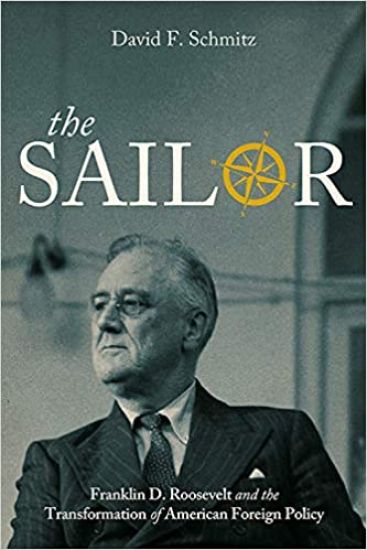
"As with sailing, so with politics: make your cloth too taut and your ship will dip and heel, but slacken off and trim your sails, and things head up again." - Euripides, OrestesThe Great Depression of the 1930s and the global crisis of World War II created ripe conditions for change in both US and international politics, setting off many questions regarding America's role in the world. The power and influence held by the United States at this time informed Franklin Roosevelt's belief that the country was optimally positioned to become a world leader. As such, his decisions and actions preceding the war were a critical juncture in twentieth-century US foreign policy and responsible for the nation's eventual entrance into the war. Scholarship often presents the 32nd President as an isolationist with little continuity or initiative in his approach to world politics. Based on a new, interpretive framework, however, FDR's actions take on a more purposeful tack.The Sailor: Franklin D. Roosevelt and the Transformation of American Foreign Policy, 1933-1945 examines Roosevelt's worldview and political ideology throughout his career to understand how they shaped the policies he developed in response to the crises that arose during his presidency. Author David Schmitz explains why Roosevelt found the traditional foreign policy of neutrality inadequate and shows how the president spurred a new, internationalist approach in the United States' dealings with other actors on the global stage. Arguing against existing scholarship that suggests FDR rarely made informed foreign policy decisions, Schmitz claims that the president was consistent and calculating in his outlook and actions involving international affairs and the direction of American foreign policy. Guided by a vision of peace and American security, Schmitz argues that Roosevelt pursued a "Third Way" between imperialism and revolution: a pro-Western nationalism built upon organized, international collaboration with a focus toward promoting and protecting American values and institutions.Schmitz shows how Roosevelt intentionally carried out this vision in the hopes of bringing about "an end to the beginnings of all wars."The Sailor is an important interpretive analysis of the Roosevelt administration's foreign policy. By challenging previously held assumptions, Schmitz constructs a new narrative about FDR's overall attitude to the US and its role in a postwar world. He shows how FDR successfully transformed US neutrality into US internationalism, forever changing the direction of American foreign policy. This work will appeal to scholars and general readers alike, specifically, those interested in Franklin Roosevelt, World War II, and American foreign relations.
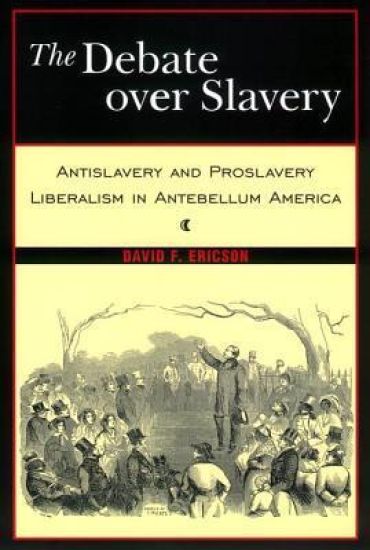
Frederick Douglass and George Fitzhugh disagreed on virtually every major issue of the day. On slavery, women's rights, and the preservation of the Union their opinions were diametrically opposed. Where Douglass thundered against the evils of slavery, Fitzhugh counted its many alleged blessings in ways that would make modern readers cringe. What then could the leading abolitionist of the day and the most prominent southern proslavery intellectual possibly have in common? According to David F. Ericson, the answer is as surprising as it is simple; liberalism. In The Debate Over Slavery David F. Ericson makes the controversial argument that despite their many ostensible differences, most Northern abolitionists and Southern defenders of slavery shared many common commitments: to liberal principles; to the nation; to the nation's special mission in history; and to secular progress. He analyzes, side-by-side, pro and antislavery thinkers such as Lydia Marie Child, Frederick Douglass, Wendell Phillips, Thomas R. Dew, and James Fitzhugh to demonstrate the links between their very different ideas and to show how, operating from liberal principles, they came to such radically different conclusions. His raises disturbing questions about liberalism that historians, philosophers, and political scientists cannot afford to ignore.
Frederick Douglass and George Fitzhugh disagreed on virtually every major issue of the day. On slavery, women's rights, and the preservation of the Union their opinions were diametrically opposed. Where Douglass thundered against the evils of slavery, Fitzhugh counted its many alleged blessings in ways that would make modern readers cringe. What then could the leading abolitionist of the day and the most prominent southern proslavery intellectual possibly have in common? According to David F. Ericson, the answer is as surprising as it is simple; liberalism. In The Debate Over Slavery David F. Ericson makes the controversial argument that despite their many ostensible differences, most Northern abolitionists and Southern defenders of slavery shared many common commitments: to liberal principles; to the nation; to the nation's special mission in history; and to secular progress. He analyzes, side-by-side, pro and antislavery thinkers such as Lydia Marie Child, Frederick Douglass, Wendell Phillips, Thomas R. Dew, and James Fitzhugh to demonstrate the links between their very different ideas and to show how, operating from liberal principles, they came to such radically different conclusions. His raises disturbing questions about liberalism that historians, philosophers, and political scientists cannot afford to ignore.

Chronicles the rise and fall and rise again of drugs popular in the U.S. Most Americans would be surprised to learn that large quantities of beer were brought over on the Puritan ships and that the hallowed Puritans were fond of drink. How many today realize that hemp was once one of our most lucrative cash crops encouraged by President John Adams and promoted by the Agriculture department? Or that cocaine, opium and heroin had several waves of popularity in this century and the last? Drugs and alcohol have been with us from the start. So have attempts to control or eliminate their use. In the first anthology of its kind, renowned drug policy expert David Musto chronicles the rise and fall and rise again of the most popular mind altering substances in the Unites States: alcohol, marijuana, cocaine and opiates. In the section on alcohol we hear the Reverend Lyman Beecher, prominent radical abolitionist and father of Harriet Beecher Stowe, thundering against the evils of alcohol in 1826. We read medical documents that show how the first stirrings of concern about about what is now termed fetal-alcohol syndrome in 1910 turned public opinion against drinking and helped move the country toward Prohibition. The sections on illegal drugs contain surprises as well. With accessible, jargon-free introductions this anthology puts drug and alcohol use at the center of American culture. At this critical point in the "war on drugs" if we do not appreciate our drug and alcohol history we may become captive to the powerful emotions that lead to draconian repression, exaggeration, or apathy and silence.

This book examines the relationship between a person's intentions to start a business and specific personal and situational factors.

Blue Metros, Red States
David F. Damore; Robert E. Lang; Karen A. Danielsen
Brookings Institution
2020
nidottu
Assessing where the red/blue political line lies in swing states and how it is shiftingDemocratic-leaning urban areas in states that otherwise lean Republican is an increasingly important phenomenon in American politics, one that will help shape elections and policy for decades to come. Blue Metros, Red States explores this phenomenon by analyzing demographic trends, voting patterns, economic data, and social characteristics of twenty-seven major metropolitan areas in thirteen swing states that will ultimately decide who is elected president and the party that controls each chamber of Congress.The book's key finding is a sharp split between different types of suburbs in swing states. Close-in suburbs that support denser mixed use projects and transit such as light rail mostly vote for Democrats. More distant suburbs that feature mainly large-lot, single-family detached houses and lack mass transit often vote for Republicans. The book locates the red/blue dividing line and assesses the electoral state of play in every swing state. This red/blue political line is rapidly shifting, however, as suburbs urbanize and grow more demographically diverse. Blue Metros, Red States is especially timely as the 2020 elections draw near.

Natural Resources in the Governmental Process
David F. Paulsen
University of Arizona Press
1970
pokkari

An important reassessment of Commodore Jesse Duncan Elliott, highlighting his controversial actions as well as his significant contributions to the development of the American Navy, making it a compelling read for history buffs interested in naval history and diplomacy.
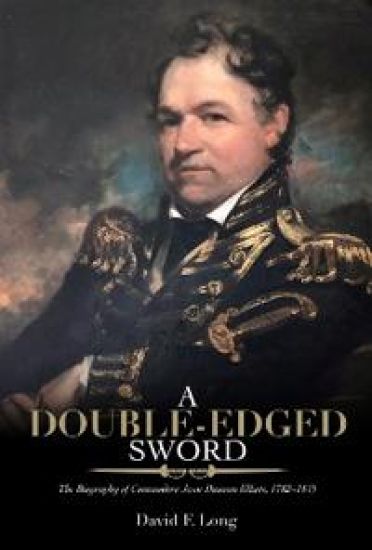
An important reassessment of Commodore Jesse Duncan Elliott, highlighting his controversial actions as well as his significant contributions to the development of the American Navy, making it a compelling read for history buffs interested in naval history and diplomacy.

An Introduction to Wavelet Analysis provides a comprehensive presentation of the conceptual basis of wavelet analysis, including the construction and application of wavelet bases. The book develops the basic theory of wavelet bases and transforms without assuming any knowledge of Lebesgue integration or the theory of abstract Hilbert spaces. The book motivates the central ideas of wavelet theory by offering a detailed exposition of the Haar series, and then shows how a more abstract approach allows us to generalize and improve upon the Haar series. Once these ideas have been established and explored, variations and extensions of Haar construction are presented. The mathematical pre-requisites for the book are a course in advanced calculus, familiarity with the language of formal mathematical proofs, and basic linear algebra concepts. Features: *Rigorous proofs with consistent assumptions on the mathematical background of the reader; does not assume familiarity with Hilbert spaces or Lebesgue measure * Complete background material on (Fourier Analysis topics) Fourier Analysis * Wavelets are presented first on the continuous domain and later restricted to the discrete domain, for improved motivation and understanding of discrete wavelet transforms and applications. * Special appendix, "Excursions in Wavelet Theory " provides a guide to current literature on the topic * Over 170 exercises guide the reader through the text. The book is an ideal text/reference for a broad audience of advanced students and researchers in applied mathematics, electrical engineering, computational science, and physical sciences. It is also suitable as a self-study reference guide for professionals. All readers will find
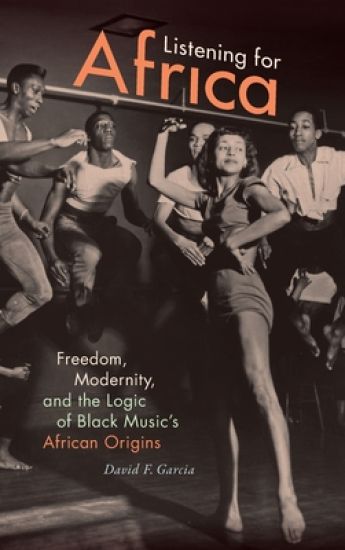
In Listening for Africa David F. Garcia explores how a diverse group of musicians, dancers, academics, and activists engaged with the idea of black music and dance’s African origins between the 1930s and 1950s. Garcia examines the work of figures ranging from Melville J. Herskovits, Katherine Dunham, and Asadata Dafora to Duke Ellington, Dámaso Pérez Prado, and others who believed that linking black music and dance with Africa and nature would help realize modernity’s promises of freedom in the face of fascism and racism in Europe and the Americas, colonialism in Africa, and the nuclear threat at the start of the Cold War. In analyzing their work, Garcia traces how such attempts to link black music and dance to Africa unintentionally reinforced the binary relationships between the West and Africa, white and black, the modern and the primitive, science and magic, and rural and urban. It was, Garcia demonstrates, modernity’s determinations of unraced, heteronormative, and productive bodies, and of scientific truth that helped defer the realization of individual and political freedom in the world.
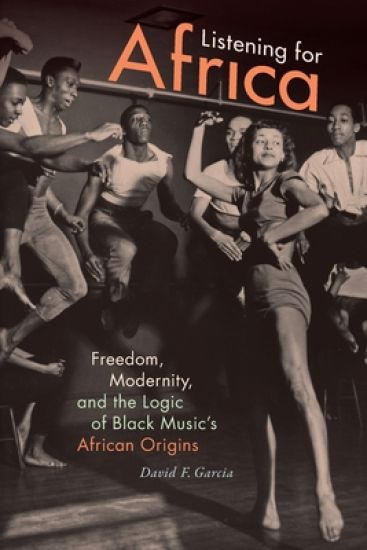
In Listening for Africa David F. Garcia explores how a diverse group of musicians, dancers, academics, and activists engaged with the idea of black music and dance’s African origins between the 1930s and 1950s. Garcia examines the work of figures ranging from Melville J. Herskovits, Katherine Dunham, and Asadata Dafora to Duke Ellington, Dámaso Pérez Prado, and others who believed that linking black music and dance with Africa and nature would help realize modernity’s promises of freedom in the face of fascism and racism in Europe and the Americas, colonialism in Africa, and the nuclear threat at the start of the Cold War. In analyzing their work, Garcia traces how such attempts to link black music and dance to Africa unintentionally reinforced the binary relationships between the West and Africa, white and black, the modern and the primitive, science and magic, and rural and urban. It was, Garcia demonstrates, modernity’s determinations of unraced, heteronormative, and productive bodies, and of scientific truth that helped defer the realization of individual and political freedom in the world.

Baptism
David F. (EDT) Wright; Sinclair B. (CON) Ferguson; Anthony N. S. (CON) Lane
Inter-Varsity Press,US
2009
pokkari

The twentieth century witnessed the rise of the United States as the preeminent player on the world stage. While many individuals were responsible for the American ascension, few have left a larger legacy in the arena of foreign policy than Henry L. Stimson. Serving nearly every American president from Theodore Roosevelt to Harry S. Truman, Stimson shaped America's worldview and influenced America's foreign affairs decisions for over 40 years. A Republican, Stimson served as Secretary of War under William H. Taft (1911-13), Secretary of State under Herbert Hoover (1929-33), and Secretary of War for Franklin D. Roosevelt and Harry S. Truman (1940-45); in addition, he fought in World War I, initiated the Good Neighbor Policy in Central America, and served as Governor General of the Philippines (1927-29). In this new book, David Schmitz reveals how the life of Stimson provides a unique framework for analyzing America's foreign policy development from the imperialism of the 1890s to the origins of the Cold War and the emergence of the United States as the world's leading power after World War II. The author also explains the continuities in foreign policy over this period and the emergence of the internationalist perspective over isolation-ism, showing how Stimson was able to pass along his perspec-tives to the next generation of American policymakers who after World War II established the internationalist mindset of the Cold War years. Stimson's crucial role in the development and use of the atomic bomb is also examined. Henry L. Stimson: The First Wise Man is useful for courses in United States foreign policy, World War II, American history from 1900-1945, and survey courses in U.S. history.
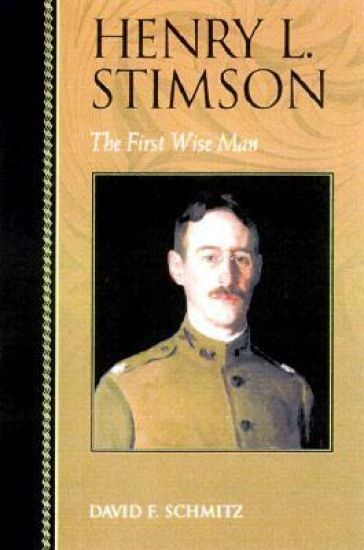
The twentieth century witnessed the rise of the United States as the preeminent player on the world stage. While many individuals were responsible for the American ascension, few have left a larger legacy in the arena of foreign policy than Henry L. Stimson. Serving nearly every American president from Theodore Roosevelt to Harry S. Truman, Stimson shaped America's worldview and influenced America's foreign affairs decisions for over 40 years. A Republican, Stimson served as Secretary of War under William H. Taft (1911-13), Secretary of State under Herbert Hoover (1929-33), and Secretary of War for Franklin D. Roosevelt and Harry S. Truman (1940-45); in addition, he fought in World War I, initiated the Good Neighbor Policy in Central America, and served as Governor General of the Philippines (1927-29). In this new book, David Schmitz reveals how the life of Stimson provides a unique framework for analyzing America's foreign policy development from the imperialism of the 1890s to the origins of the Cold War and the emergence of the United States as the world's leading power after World War II. The author also explains the continuities in foreign policy over this period and the emergence of the internationalist perspective over isolation-ism, showing how Stimson was able to pass along his perspec-tives to the next generation of American policymakers who after World War II established the internationalist mindset of the Cold War years. Stimson's crucial role in the development and use of the atomic bomb is also examined. Henry L. Stimson: The First Wise Man is useful for courses in United States foreign policy, World War II, American history from 1900-1945, and survey courses in U.S. history.


Intergenerational Transfers under Community Rating
David F. Bradford; Derrick A. Max
AEI Press
1996
pokkari
The authors examine the intergenerational transfers that can be expected from a shift to community rating under a mandatory health insurance purchase requirement.