Kirjahaku
Etsi kirjoja tekijän nimen, kirjan nimen tai ISBN:n perusteella.
1000 tulosta hakusanalla David G. Croly
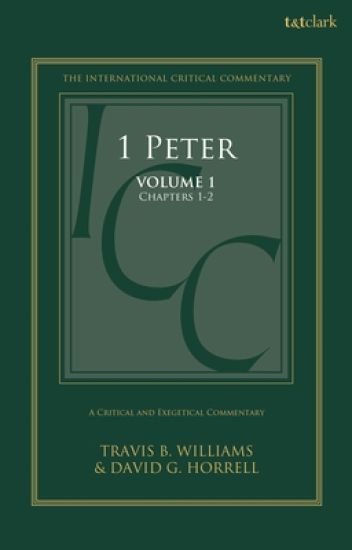
1 Peter
David G. Horrell; Travis B. Williams
Continuum International Publishing Group Ltd.
2023
sidottu
The first volume in Travis B. Williams’ and David G. Horrell’s magisterial ICC commentary on first Peter. Williams and Horrell bring together all the relevant aids to exegesis - linguistic, textual, archaeological, historical, literary, and theological - to help the reader understand the letter. This first volume presents introductory maps, and a comprehensive introduction covering aspects such as genre, canonicity, early citations of the letter, and its theology and influence. A particular feature of the introduction is that each section is preceded by an initial bibliography. The exegesis also provides for each passage sections on bibliography, text-criticism, literary introduction, detailed exegesis, and overall summary. Following the introduction volume 1 provides commentary up to 2.10, the conclusion of the first major section of the letter.
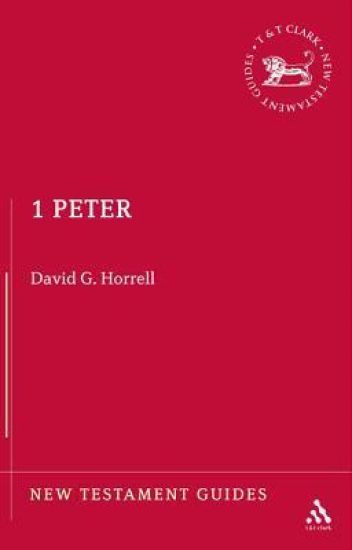
This volume offers a concise and accessible introduction to 1 Peter, especially aimed at undergraduate-level students. It provides information on the likely historical and social setting of this letter, on its literary form and theological content, and on issues involved in its interpretation. In particular, this volume suggests that 1 Peter is an important text not least for the ways in which it both reflects and constructs early Christian identity, in its relationships with Judaism and the Roman Empire. Although 1 Peter remains neglected compared with the canonical gospels and the major Pauline letters, Horrell argues that the letter deserves much more attention for the pivotal contribution it makes to the development of early Christianity and for the ways in which it reveals this development in progress.
This volume offers a concise and accessible introduction to 1 Peter, especially aimed at undergraduate-level students. It provides information on the likely historical and social setting of this letter, on its literary form and theological content, and on issues involved in its interpretation. In particular, this volume suggests that 1 Peter is an important text not least for the ways in which it both reflects and constructs early Christian identity, in its relationships with Judaism and the Roman Empire. Although 1 Peter remains neglected compared with the canonical gospels and the major Pauline letters, Horrell argues that the letter deserves much more attention for the pivotal contribution it makes to the development of early Christianity and for the ways in which it reveals this development in progress.
The Social Ethos of the Corinthian Correspondence
David G. Horrell
BLOOMSBURY PUBLISHING PLC
1996
sidottu
An exemplary study, focussing on the Corinthian correspondence, of the social ethos of early Christian teaching and its development.
Becoming Christian examines various facets of the first letter of Peter, in its social and historical setting, in some cases using new social-scientific and postcolonial methods to shed light on the ways in which the letter contributes to the making of Christian identity. At the heart of the book chapters 5-7, examine the contribution of 1 Peter to the construction of Christian identity, the persecution and suffering of Christians in Asia Minor, the significance of the name ‘Christian', and the response of the letter to the hostility encountered by Christians in society. There are no recent books which bring together such a wealth of information and analysis of this crucial early Christian text. Becoming Christian has developed out of Horrell's ongoing research for the International Critical Commentary on 1 Peter. Together these chapters offer a series of significant and original engagements with this letter, and a resource for studies of 1 Peter for some time to come.
This tried and tested introduction to Paul needs little introduction of its own. After considering Paul's importance and influence, and the important sources for the study of Paul, the volume covers the following key topics: the earliest period of Christianity - from Jesus to Paul; Paul's life before and after his 'conversion'; his individual letters; the major elements of his theology; his attitude to Israel and the Jewish law; perspectives on the Pauline assemblies, including their socio-economic location, meeting places, and attitudes towards women; and Paul's legacy in the New Testament and beyond. The volume has been revised throughout and fully updated with respect to bibliography, and to presenting the latest debates surrounding Paul's thought in a manageable format - including those around ‘old’ and ‘new’ perspectives, with a new section on the ‘radical’ new Jewish perspective, and those related to the socio-economic status and character of the Pauline assemblies. The helpful study questions and reading lists have also been revised.
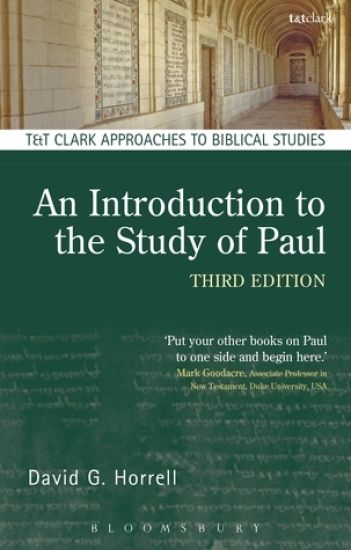
This tried and tested introduction to Paul needs little introduction of its own. After considering Paul's importance and influence, and the important sources for the study of Paul, the volume covers the following key topics: the earliest period of Christianity - from Jesus to Paul; Paul's life before and after his 'conversion'; his individual letters; the major elements of his theology; his attitude to Israel and the Jewish law; perspectives on the Pauline assemblies, including their socio-economic location, meeting places, and attitudes towards women; and Paul's legacy in the New Testament and beyond. The volume has been revised throughout and fully updated with respect to bibliography, and to presenting the latest debates surrounding Paul's thought in a manageable format - including those around ‘old’ and ‘new’ perspectives, with a new section on the ‘radical’ new Jewish perspective, and those related to the socio-economic status and character of the Pauline assemblies. The helpful study questions and reading lists have also been revised.
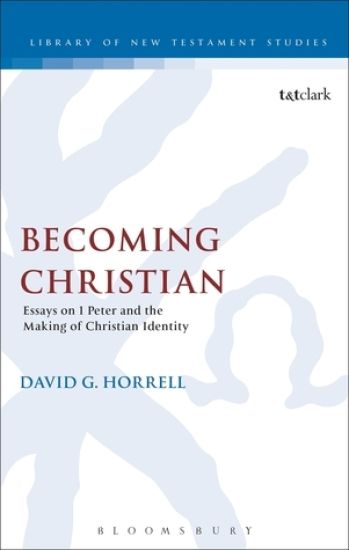
Becoming Christian examines various facets of the first letter of Peter, in its social and historical setting, in some cases using new social-scientific and postcolonial methods to shed light on the ways in which the letter contributes to the making of Christian identity. The heart of the book, chapters 5-7, examines the contribution of 1 Peter to the construction of Christian identity, the persecution and suffering of Christians in Asia Minor, the significance of the name ‘Christian', and the response of the letter to the hostility encountered by Christians in society. There are no recent books which bring together such a wealth of information and analysis of this crucial early Christian text. Becoming Christian has developed out of Horrell's ongoing research for the International Critical Commentary on 1 Peter. Together these chapters offer a series of significant and original engagements with this letter, and a resource for studies of 1 Peter for some time to come.
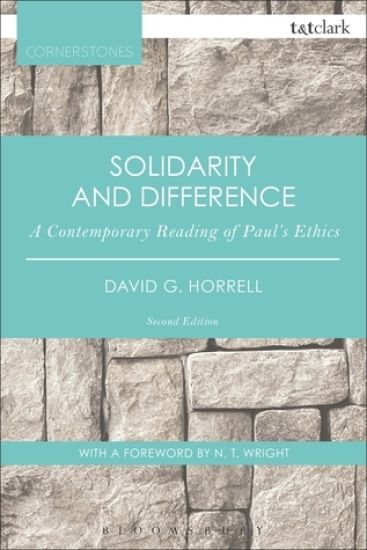
David G. Horrell presents a study of Pauline ethics, examining how Paul's moral discourse envisages and constructs communities in which there is a strong sense of solidarity but also legitimate difference in various aspects of ethical practice. Horrell reads New Testament texts with an explicit awareness of contemporary ethical theory, and assesses Paul's contribution as a moral thinker in the context of modern debate. Using a framework indebted to the social sciences, as well as to contemporary ethical theory, Horrell examines the construction of community in Paul's letters, the notions of purity, boundaries and identity, Paul's attempts to deal with diversity in his churches, the role of imitating Christ in Paul's ethics, and the ethic Paul develops for interaction with 'outsiders'. Finally, the pattern of Paul's moral thinking is considered in relation to the liberal-communitarian debate, with explicit consideration given to the central moral norms of Pauline thought, and the prospects for, and problems with, appropriating these in the contemporary world. This Cornerstones edition includes an extended reflective introduction and a substantial foreword from N.T. Wright.

The second volume in Travis B. Williams’ and David G. Horrell’s magisterial ICC commentary on first Peter. Williams and Horrell bring together all the relevant aids to exegesis - linguistic, textual, archaeological, historical, literary, and theological - to help the reader understand the letter. This second covers the major part of the letter, providing commentary on 2.11 to the end of the letter. The exegesis provides for each passage sections on bibliography, text-criticism, literary introduction, detailed exegesis, and overall summary. The volume concludes with a comprehensive bibliography, which covers the whole epistle.

In this fiction novel, some of the history about the methods used to control viruses and bacteria in the US. are discovered. For many, it is an area of mysterious labs located in the US. that the general public in locations people are not aware. A research student, working on a Master's Degree program studying the ecology of a set of ponds, discovers a problem on one of the ponds that he is observing. It requires the help of the DNR to solve the deaths of wildlife on the ponds along with one of the diagnostic labs. This full color book contains photographs of the wildlife studied on the ponds.

On the Fiery Breath of Dragons: A story of young warriors in the skies above the Pacific Ocean who helped save our world from tyranny
David G. Oakley
David G. Oakley
2009
nidottu
A story of young warriors, airmen of the 307th Bombardment Group, 372nd Bomb Squadron, in the skies above the Pacific Ocean during World War II who helped save our world from tyranny. These boys of the 307th BG, 372nd BS, are the same caliber of airmen of the B-24 Liberators on their missions that we read about in Laura Hillenbrand's, "Unbroken: A World War II Story of Survival, Resilience, and Redemption", the story of Louis Zamperini. Theirs was extremely hazardous duty and it is remarkable that it was performed by these mere boys from America. It might be noted here, and the reader might remain mindful, as the story progresses, that these mere boys were in so many ways just that, mere boys. This couldn't be more clearly depicted than when reading of the days these boys mischievously slipped away from K.P. duty before being dismissed, finding themselves paying the consequences the following day, or neglecting to sweep out their quarters one morning only to sweat out the consequences following the unexpected inspection, or lying around reading and sleeping, sitting around playing cards and drinking Cokes, swimming and lying on the beach, shooting targets with their .45s, building up their living quarters and constructing crude furniture and fixtures from scraps, partying with the added benefit of alcohol provided by the Army one day, only to be hung-over and bored the next day, and on and on, as the war wore on. All of this, their day to day life, before and after flying each mission into and back out of the mouths of the fire-breathing Japanese dragons, destroying air fields and oil fields, planes and aviation fuel, the very nourishment critical to the survival of that dragon. These boys, somehow possessing an ever-present and undiminished esprit de corps, brought that dragon down in no less heroic fashion than those dragons courageous knights of old slew in their mythical adventures. But, clearly, there was nothing mythical about the dragons these boys destroyed, nor the fire they breathed, as these boys repeatedly flew on the fiery breath of those dragons. These boys will always be heroes and this nation will forever owe them a debt of gratitude, a debt that will remain forever unpaid, and forever beyond our ability to repay it. Never have they presumed nor expected that "we, the people" do so, for they have always been wise enough to know that they are we. Yes, they were only mere boys, yet with a maturity that many men don't realize in an entire lifetime. Dad was only 20 years old when he returned home following his military service.

Roll the Bones tells the story of gambling: where it came from, how it has changed, and where it is now. This is the new Casino Edition. which updates and expands the global history of gambling to include a greater focus on casinos, from their development in European spas to their growth in Reno and Las Vegas. New material chronicles in greater depth the development of casino resorts on the Las Vegas Strip and their spread throughout the United States. A new chapter better places Atlantic City's casinos into their correct context, and new material accounts for the rise of casinos in Asia and online gaming.From the first modern casino in Venice (1638), casinos have grown incredibly. During the 18th and 19th century, a series of European spa towns, culminating in Monte Carlo, hosted casinos. In the United States, during those same years, gambling developed both in illegal urban gambling halls and in the wide-open saloons of the western frontier.Those two strands of American gambling came together in Nevada's legal casinos, whose current regime dates from 1931. Developing with a healthy assist from elements affiliated with organized crime, these casinos eventually outgrew their rough-hewn routes, becoming sun-drenched pleasure palaces along the Las Vegas Strip.With Nevada casinos proving successful, other states, beginning with New Jersey in 1976, rolled the dice. From there, casinos have come to America's tribal lands, rivers, and urban centers.In the last decade, gambling has moved online, while Asia--with multi-billion dollar projects in Macau and Singapore--has become a new casino frontier.Reading Roll the Bones, you'll get a better appreciation for how long casinos and gambling have been with us--and what they mean to us today.
THE CRYSTAL DESERT: SUMMERS IN ANTARCTICA is the story of life's tenacity on the coldest of Earth's continents. It tells of the explorers who discovered Antarctica, of the whalers and sealers who despoiled it, and of the scientists who are deciphering its mysteries. In beautiful, lucid prose, David G. Campbell chronicles the desperately short summers on the Antarctic Peninsula. He presents a fascinating portrait of the evolution of life in Antarctica and also of the evolution of the continent itself.
This book supports the long-held traditional and biblical position on marriage, divorce and remarriage.To Love & To Cherish 'Until Death Do Us Part'. Marriage is to be permanent. This is not a new - or bad - idea.Jesus declares that it's God's way "from the beginning."A man and a woman become "one flesh" ...for GOOD "What therefore God has joined together, let not man separate." (Matt 19:4-6)Yet today marriage is widely dishonoured.Divorce and remarriage are commonplace.Jesus' teaching is largely misunderstood - or ignored.Matthew 19:9 is one of the most misused verses in the Bible.This PhD study (Australian College of Theology) shows why the 'exception clause' is found (twice) in Matthew's Gospel and nowhere else. "Sexual immorality" is no trivial offence and offers no easy escape from marriage. In the context of a legal question, it has a straightforward and deadly meaning. By the Law, as written, it attracts real not metaphorical death Any man who writes "sexual immorality" on his wife's divorce certificate hands her a death sentence Does Jesus advocate this for Christians today? No. We must not rush straight to Christian application, but appreciate that Jesus was tested on the Law, and turns the tables on his lawless testers. Whoever divorces for this or "for any cause" (Matt 19:3) may prove to be hard-hearted and join the ranks of the "hypocrites" who oppose Jesus (Matt 23:25). Still, there is good news: "Blessed are the merciful, for they shall receive mercy." (Matt 5:7)God desires mercy, and mercy requires mercy - especially when two imperfect people live together in marriage. Matthew 19:9 is best read in the light of Jesus' words on forgiveness recorded immediately prior. IT'S A GAME CHANGER