Kirjojen hintavertailu. Mukana 11 717 486 kirjaa ja 12 kauppaa.

Kirjahaku

Etsi kirjoja tekijän nimen, kirjan nimen tai ISBN:n perusteella.

1000 tulosta hakusanalla David Gregory

The Science of Forensic Entomology

The Science of Forensic Entomology

David B. Rivers; Gregory A. Dahlem

JOHN WILEY SONS INC
2022
nidottu
A thoroughly updated introduction to forensic entomology In the newly revised second edition of The Science of Forensic Entomology, two distinguished entomologists deliver a foundational and practical resource that equips students and professionals to be able to understand and resolve questions concerning the presence of specific insects at crime scenes. Each chapter in the book addresses a topic that delves into the underlying biological principles and concepts relevant to the insect biology that grounds the use of insects in legal and investigational contexts. In addition to non-traditional topics, including the biology of maggot masses, temperature tolerances of necrophagous insects, chemical attraction and communication, reproductive strategies of necrophagous flies, and archaeoentomology, the book also offers readers: A thorough introduction to the role of forensic science in criminal investigations and the history of forensic entomologyComprehensive discussions of the biology, taxonomy, and natural history of forensically important insectsFulsome treatments of the postmortem decomposition of human remains and vertebrate carrionIn-depth introduction to the concepts of accumulated degree days and the use of insect development for estimation of the postmortem intervalNew chapters dedicated to forensic entomotoxicology, aquatic insects in forensic investigations, microbiomes of forensic insects and carrion, professional standards, and case studies Perfect for graduate and advanced undergraduate students in forensic entomology, forensic biology, and general forensic science, The Science of Forensic Entomology will also earn a place in the libraries of law enforcement and forensic investigators, as well as researchers in forensic entomology

The Science of Forensic Entomology

The Science of Forensic Entomology

David B. Rivers; Gregory A. Dahlem

Wiley-Blackwell
2014
sidottu
The Science of Forensic Entomology builds a foundation of biological and entomological knowledge that equips the student to be able to understand and resolve questions concerning the presence of specific insects at a crime scene, in which the answers require deductive reasoning, seasoned observation, reconstruction and experimentation—features required of all disciplines that have hypothesis testing at its core. Each chapter addresses topics that delve into the underlying biological principles and concepts relevant to the insect biology that forms the bases for using insects in matters of legal importance. The book is more than an introduction to forensic entomology as it offers in depth coverage of non-traditional topics, including the biology of maggot masses, temperature tolerances of necrophagous insects; chemical attraction and communication; reproductive strategies of necrophagous flies; archaeoentomology, and use of insects in modern warfare (terrorism). As such it will enable advanced undergraduate and postgraduate students the opportunity to gain a sound knowledge of the principles, concepts and methodologies necessary to use insects and other arthropods in a wide range of legal matters.
Journalism in the Civil War Era

Journalism in the Civil War Era

David W. Bulla; Gregory A. Borchard

Peter Lang Publishing Inc
2010
sidottu
Journalism in the Civil War Era examines the contributions of newspapers and magazines to the American public’s understanding of the nation’s greatest internal conflict. It documents the effect the Civil War had on journalism, and the effect journalism had on the Civil War. It describes the politics that affected the press, the constraints placed upon it, and the influence of technology. The book discusses the editors and reporters who covered the war, profiling the typical newspaper of the era as well as the response of the press corps to wartime challenges. Providing a broad account of journalism during this period, this book serves as an important reference for scholars and students, and as a supplementary text for courses in journalism history, U.S. press history, civil rights law, and nineteenth century history.
Journalism in the Civil War Era (Second Edition)

Journalism in the Civil War Era (Second Edition)

David W. Bulla; Gregory A. Borchard

PETER LANG PUBLISHING INC
2023
nidottu
Journalism in the Civil War Era presents the historical context of Civil War journalism—placing the press of the era within the entire nineteenth century. It gives a broad account of journalism in the Civil War, reflecting on the political, military, legal, and journalistic issues involved in this era. It is written with chapters that examine these various facets of the journalism of the period, but they are connected by the theme of the development of the wartime press, with an emphasis on the professional, political, social, economic, legal, and military factors that affected it. It provides: An in-depth look at the political press in the 1850s and 1860s, and how it played a major role in the nation’s understanding of the conflict; Technology’s role in carrying information in a timely fashion; The development of journalism as a profession; The international context of Civil War journalism; The leadership journalists displayed, including Horace Greeley and his New York Tribune bully pulpit; The nature of journalism during the war; The way freedom of the press was advanced by polarizing political extremes. The work is historical, written in an engaging style, and meant to encourage readers to explore and analyze the value of freedom of the press during that very time when it most comes under fire—wartime. “David W. Bulla and Gregory A. Borchard explore ties between journalism and politics and between New York and the Midwest (then known as the West) before the Civil War. Newspapers shared an increasing emphasis on information over opinion. Facts often tended to fit the editors’ agendas with winners overplaying their triumphs and losers becoming more restrained. Major newspapers, particularly the New York Herald with the largest investment in correspondents, placed news on the front page and interpretation inside, even while publisher James Gordon Bennett initially blamed Lincoln for the war. Major dailies increasingly reported news from the front and smaller papers relied more on opinion and local angles.”—William E. Huntzicker, Minneapolis writer and author of The Popular Press 1833-1865 "Bulla and Borchard have produced what has been long needed in the study of U.S. Civil War journalism: a social and cultural history of the American press that goes beyond anecdotal accounts of war news. They explore the nature of the Civil War-era press itself in all its strengths and weaknesses, ranging from political and economic grandstanding and over-the-top verbal grandiloquence to the sheer bravery and determination of a number of editors, publishers, and journalists who viewed their tasks as interpreters and informers of the day’s news. Using a mix of carefully selected case studies as well as an extensive study of newspapers both large and small, this highly readable work places the Civil War press squarely where it belongs—as a part of the larger social and cultural experience of mid-nineteenth century America."—Mary M. Cronin, Department of Journalism, New Mexico State University "The study of Civil War journalism has traditionally been treated as a facet of the history of war correspondence, but war reporting does not exist in a vacuum, as David Bulla and Gregory Borchard skillfully show readers in their latest edition of Journalism in the Civil War Era. This new edition freshens the book’s original version by expanding on their insightful examination of the way the American Civil War ushered in the greater reliance on the information model of journalism, which would exist side-by-side with the existing partisan model. Few scholars have attempted the sort of holistic study that examines not only the nature of Civil War journalism but, more significantly, the symbiotic relationship between the press and its culture. Bulla and Borchard have done the hard work of digging out the necessary evidence to paint a full-color portrait of journalism during America’s bloodiest conflict."—Debbie van Tuyll, Professor Emerita, Department of Communications, Augusta University
Journalism in the Civil War Era (Second Edition)

Journalism in the Civil War Era (Second Edition)

David W. Bulla; Gregory A. Borchard

PETER LANG PUBLISHING INC
2023
sidottu
Journalism in the Civil War Era presents the historical context of Civil War journalism—placing the press of the era within the entire nineteenth century. It gives a broad account of journalism in the Civil War, reflecting on the political, military, legal, and journalistic issues involved in this era. It is written with chapters that examine these various facets of the journalism of the period, but they are connected by the theme of the development of the wartime press, with an emphasis on the professional, political, social, economic, legal, and military factors that affected it. It provides: An in-depth look at the political press in the 1850s and 1860s, and how it played a major role in the nation’s understanding of the conflict; Technology’s role in carrying information in a timely fashion; The development of journalism as a profession; The international context of Civil War journalism; The leadership journalists displayed, including Horace Greeley and his New York Tribune bully pulpit; The nature of journalism during the war; The way freedom of the press was advanced by polarizing political extremes. The work is historical, written in an engaging style, and meant to encourage readers to explore and analyze the value of freedom of the press during that very time when it most comes under fire—wartime. “David W. Bulla and Gregory A. Borchard explore ties between journalism and politics and between New York and the Midwest (then known as the West) before the Civil War. Newspapers shared an increasing emphasis on information over opinion. Facts often tended to fit the editors’ agendas with winners overplaying their triumphs and losers becoming more restrained. Major newspapers, particularly the New York Herald with the largest investment in correspondents, placed news on the front page and interpretation inside, even while publisher James Gordon Bennett initially blamed Lincoln for the war. Major dailies increasingly reported news from the front and smaller papers relied more on opinion and local angles.”—William E. Huntzicker, Minneapolis writer and author of The Popular Press 1833-1865 "Bulla and Borchard have produced what has been long needed in the study of U.S. Civil War journalism: a social and cultural history of the American press that goes beyond anecdotal accounts of war news. They explore the nature of the Civil War-era press itself in all its strengths and weaknesses, ranging from political and economic grandstanding and over-the-top verbal grandiloquence to the sheer bravery and determination of a number of editors, publishers, and journalists who viewed their tasks as interpreters and informers of the day’s news. Using a mix of carefully selected case studies as well as an extensive study of newspapers both large and small, this highly readable work places the Civil War press squarely where it belongs—as a part of the larger social and cultural experience of mid-nineteenth century America."—Mary M. Cronin, Department of Journalism, New Mexico State University "The study of Civil War journalism has traditionally been treated as a facet of the history of war correspondence, but war reporting does not exist in a vacuum, as David Bulla and Gregory Borchard skillfully show readers in their latest edition of Journalism in the Civil War Era. This new edition freshens the book’s original version by expanding on their insightful examination of the way the American Civil War ushered in the greater reliance on the information model of journalism, which would exist side-by-side with the existing partisan model. Few scholars have attempted the sort of holistic study that examines not only the nature of Civil War journalism but, more significantly, the symbiotic relationship between the press and its culture. Bulla and Borchard have done the hard work of digging out the necessary evidence to paint a full-color portrait of journalism during America’s bloodiest conflict."—Debbie van Tuyll, Professor Emerita, Department of Communications, Augusta University
Perioperative Transesophageal Echocardiography

Perioperative Transesophageal Echocardiography

David L. Reich; Gregory Fischer

W B Saunders Co Ltd
2013
sidottu
From basic concepts to state-of-the-art techniques, Perioperative Transesophageal Echocardiography: A Companion to Kaplan's Cardiac Anesthesia helps you master everything you need to know to effectively diagnose and monitor your cardiothoracic surgery patients. Comprehensive coverage and unsurpassed visual guidance make this companion to Kaplan?s Cardiac Anesthesia a must for anesthesiologists, surgeons, and nurse anesthetists who need to be proficient in anesthesia care. "a powerful learning tool." Reviewed by: JH Rosser and GH Mills, Sheffield on behalf of British Journal of Anaesthesia, December 2015 Recognize the Transesophageal Echocardiography (TEE) images you see in practice by comparing them to abundant 2D and 3D images, as well as an extensive online library of moving (cine) images. Learn from acknowledged leaders in the field of cardiac anesthesiology - Drs. David L. Reich and Gregory W. Fischer. See how to address specific clinical situations with detailed case studies and discussions of challenging issues. Access the complete contents and videos online at Expert Consult.
The Struggle for Iran

The Struggle for Iran

David S. Painter; Gregory Brew

THE UNIVERSITY OF NORTH CAROLINA PRESS
2023
sidottu
Beginning with the nationalization of the Iranian oil industry in spring 1951 and ending with its reversal following the overthrow of Prime Minister Mohammad Mosaddeq in August 1953, the Iranian oil crisis was a crucial turning point in the global Cold War. The nationalization challenged Great Britain's preeminence in the Middle East and threatened Western oil concessions everywhere. Fearing the loss of Iran and possibly the entire Middle East and its oil to communist control, the United States and Great Britain played a key role in the ouster of Mosaddeq, a constitutional nationalist opposed to communism and Western imperialism. U.S. intervention helped entrench monarchical power, and the reversal of Iran's nationalization confirmed the dominance of Western corporations over the resources of the Global South for the next twenty years.Drawing on years of research in American, British, and Iranian sources, David S. Painter and Gregory Brew provide a concise and accessible account of Cold War competition, Anglo-American imperialism, covert intervention, the political economy of global oil, and Iran's struggle against autocratic government. The Struggle for Iran dispels myths and misconceptions that have hindered understanding this pivotal chapter in the history of the post–World War II world.
The Struggle for Iran

The Struggle for Iran

David S. Painter; Gregory Brew

THE UNIVERSITY OF NORTH CAROLINA PRESS
2023
pokkari
Beginning with the nationalization of the Iranian oil industry in spring 1951 and ending with its reversal following the overthrow of Prime Minister Mohammad Mosaddeq in August 1953, the Iranian oil crisis was a crucial turning point in the global Cold War. The nationalization challenged Great Britain's preeminence in the Middle East and threatened Western oil concessions everywhere. Fearing the loss of Iran and possibly the entire Middle East and its oil to communist control, the United States and Great Britain played a key role in the ouster of Mosaddeq, a constitutional nationalist opposed to communism and Western imperialism. U.S. intervention helped entrench monarchical power, and the reversal of Iran's nationalization confirmed the dominance of Western corporations over the resources of the Global South for the next twenty years.Drawing on years of research in American, British, and Iranian sources, David S. Painter and Gregory Brew provide a concise and accessible account of Cold War competition, Anglo-American imperialism, covert intervention, the political economy of global oil, and Iran's struggle against autocratic government. The Struggle for Iran dispels myths and misconceptions that have hindered understanding this pivotal chapter in the history of the post–World War II world.
Historic Homes of New Albany, Indiana

Historic Homes of New Albany, Indiana

David C. Barksdale; Gregory A. Sekula

History Press Library Editions
2015
sidottu
New Albany's historic homes boast unique histories and fascinating stories of those who inhabited them. Founded in 1813 below the falls of the Ohio River, the city was Indiana's most populous by the middle of the nineteenth century. Many leading citizens built grand mansions and family dwellings that beamed with prosperity and influence. The architectural legacy during these formative years continued into the early twentieth century and produced historic neighborhoods with a rich collection of housing styles. Join authors David C. Barksdale and Gregory A. Sekula as they delve into the history of New Albany's most cherished old homes.
Let Us Give Thanks

Let Us Give Thanks

David Holeton; Catherine Hall; Gregory Kerr-Wilson

Wipf Stock Publishers
2020
pokkari
This is a basic "how-to" book, primarily for presiders, but also helpful for lay readers in the parish. The book "walks through" the BAS Eucharist, discussing the various activities and how they might be most effectively accomplished. Helpful information on history, shape, and structure for the various parts of the liturgy is provided, as well as practical details to aid parish communities in preparing for the Sunday liturgy week by week.
Let Us Give Thanks

Let Us Give Thanks

David Holeton; Catherine Hall; Gregory Kerr-Wilson

Wipf Stock Publishers
2020
sidottu
This is a basic "how-to" book, primarily for presiders, but also helpful for lay readers in the parish. The book "walks through" the BAS Eucharist, discussing the various activities and how they might be most effectively accomplished. Helpful information on history, shape, and structure for the various parts of the liturgy is provided, as well as practical details to aid parish communities in preparing for the Sunday liturgy week by week.
Early Warning

Early Warning

David H. Smith; Kimberly A. Quaid; Roger B. Dworkin; Gregory P. Gramelspacher

Indiana University Press
1998
sidottu
"This timely, well-written book brings together the collective experience of experts from the fields of medicine, psychiatry, religious studies, bioethics, and molecular genetics in an effort to develop coherent guidelines for the counseling of potential sufferers from genetic diseases." —Journal of Religion and Health This book presents 29 case studies that identify the most important ethical issues that are likely to emerge from new technologies of genetic testing and develops a series of guidelines based on those case studies. By providing the clinical origins and rationale behind each of its recommendations, the book will help readers think through the ethical issues and will assist them in the development of additional guidelines.
Place- and Community-Based Education in Schools

Place- and Community-Based Education in Schools

Gregory A. Smith; David Sobel

Routledge
2010
sidottu
Place- and community-based education – an approach to teaching and learning that starts with the local – addresses two critical gaps in the experience of many children now growing up in the United States: contact with the natural world and contact with community. It offers a way to extend young people’s attention beyond the classroom to the world as it actually is, and to engage them in the process of devising solutions to the social and environmental problems they will confront as adults. This approach can increase students’ engagement with learning and enhance their academic achievement.Envisioned as a primer and guide for educators and members of the public interested in incorporating the local into schools in their own communities, this book explains the purpose and nature of place- and community-based education and provides multiple examples of its practice. The detailed descriptions of learning experiences set both within and beyond the classroom will help readers begin the process of advocating for or incorporating local content and experiences into their schools.
Place- and Community-Based Education in Schools

Place- and Community-Based Education in Schools

Gregory A. Smith; David Sobel

Routledge
2010
nidottu
Place- and community-based education – an approach to teaching and learning that starts with the local – addresses two critical gaps in the experience of many children now growing up in the United States: contact with the natural world and contact with community. It offers a way to extend young people’s attention beyond the classroom to the world as it actually is, and to engage them in the process of devising solutions to the social and environmental problems they will confront as adults. This approach can increase students’ engagement with learning and enhance their academic achievement.Envisioned as a primer and guide for educators and members of the public interested in incorporating the local into schools in their own communities, this book explains the purpose and nature of place- and community-based education and provides multiple examples of its practice. The detailed descriptions of learning experiences set both within and beyond the classroom will help readers begin the process of advocating for or incorporating local content and experiences into their schools.
Amobarbital Effects and Lateralized Brain Function

Amobarbital Effects and Lateralized Brain Function

David W. Loring; Kimford J. Meador; Gregory P. Lee; Don W. King

Springer-Verlag New York Inc.
2013
nidottu
The intracarotid amobarbital (or Amytal) procedure is commonly referred to as the Wada test in tribute to Juhn Wada, the physician who devised the technique and performed the fIrst basic animal research and clinical studies with this method. Wada testing has become an integral part of the pre­ operative evaluation for epilepsy surgery. Interestingly, however, Wada initially developed this method as a technique to assess language dominance in psychiatric patients in order that electroconvulsant therapy could be applied unilaterally to the non-dominant hemisphere. Epilepsy surgery has matured as a viable treatment for intractable seizures and is no longer confmed to a few major universities and medical institutes. Yet, as is increasingly clear by examining the surveys of approaches used by epilepsy surgery centers (e.g., Rausch, 1987; Snyder, Novelly, & Harris, 1990), there is not only great heterogeneity in the methods used during Wada testing to assess language and memory functions, but there also seems to be a lack of consensus regarding the theoretical assumptions, and perhaps, even the goals of this procedure.
Trading the Silver Seed

Trading the Silver Seed

David Lewis; Geof D. Wood; Rick Gregory

Practical Action Publishing
1996
nidottu
This is the first study of social, economic and technical aspects of aquaculture in Bangladesh. The authors analyse rural society through the trading activities necessary in aquaculture. These insights have practical implications and this book shows how it is possible to build on existing relationships and technologies and facilitate innovative poverty-focused strategies. This study of the fish trading network demonstrates that a preoccupation with high technology 'quick fix' solutions in development may overlook the indigenous problem-solving strategies of local people and documents a particularly striking example.
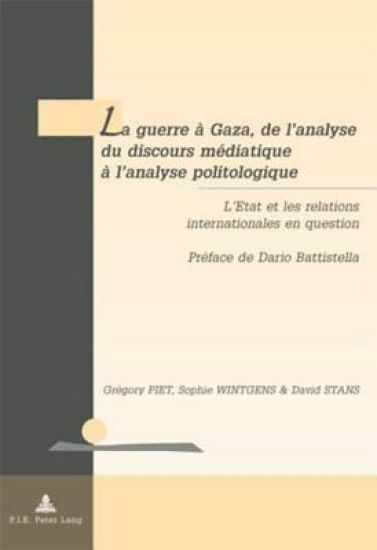
La Guerre À Gaza, de l'Analyse Du Discours Médiatique À l'Analyse Politologique

La Guerre À Gaza, de l'Analyse Du Discours Médiatique À l'Analyse Politologique

Grégory Piet; Sophie Wintgens; David Stans

European Interuniversity Press
2010
nidottu
Un an apres la guerre a Gaza et l'operation israelienne " Plomb durci ", il convient de tirer le bilan de cet evenement international largement couvert par les medias. Si ceux-ci ont donne l'occasion aux opinions publiques de se forger leur propre lecture de l'evenement, la presse ecrite n'a-t-elle pas plus particulierement travaille a une vision specifique de la comprehension et de la mise en perspective de cette guerre ou de ce conflit ? Cet ouvrage propose deux eclairages complementaires de la guerre a Gaza qui, confrontes l'un a l'autre, rejoignent une question epistemologique centrale en sciences sociales. Le premier plonge ses racines dans les Media Studies en exploitant un materiau de recherche (discours non-savants) issu de quatre quotidiens francophones (Le Figaro, Le Monde, Le Soir et La Libre Belgique). Le deuxieme consiste en une analyse politologique (discours savants) de certaines notions cles qui sont riches d'enseignements. L'imprecision inherente aux concepts de " guerre ", de " communaute internationale " ou encore de " diplomatie ", par exemple, sera au coeur de ce second eclairage. Depassant la seule comparaison entre les discours non-savants et savants, cet ouvrage livre in fine une vision originale de l'implication des relations internationales et de l'Etat dans la resolution d'un conflit.