Kirjojen hintavertailu. Mukana 11 342 296 kirjaa ja 12 kauppaa.

Kirjahaku

Etsi kirjoja tekijän nimen, kirjan nimen tai ISBN:n perusteella.

1000 tulosta hakusanalla David J. Fitzpatrick

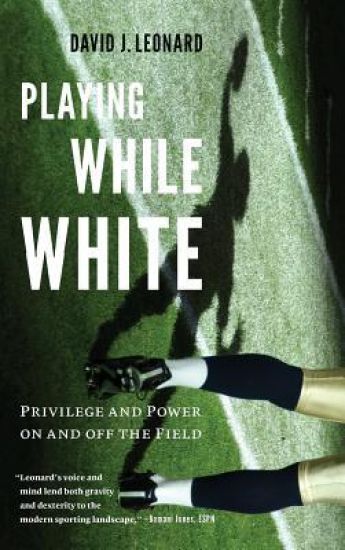
Playing While White

Playing While White

David J. Leonard

University of Washington Press
2017
sidottu
Playing While White argues that whiteness matters in sports culture, both on and off the field. Offering critical analysis of athletic stars such as Johnny Manziel, Marshall Henderson, Jordan Spieth, Lance Armstrong, Josh Hamilton, as well as the predominantly white cultures of NASCAR and extreme sports, David Leonard identifies how whiteness is central to the commodification of athletes and the sports they play.Leonard demonstrates that sporting cultures are a key site in the trafficking of racial ideas, narratives, and ideologies. He identifies how white athletes are frequently characterized as intelligent leaders who are presumed innocent of the kinds of transgressions black athletes are often pathologized for. With an analysis of the racial dynamics of sports traditions as varied as football, cycling, hockey, baseball, tennis, snowboarding, and soccer, as well as the reception and media portrayals of specific white athletes, Leonard examines how and why whiteness matters within sports and what that tells us about race in the twenty-first century United States.
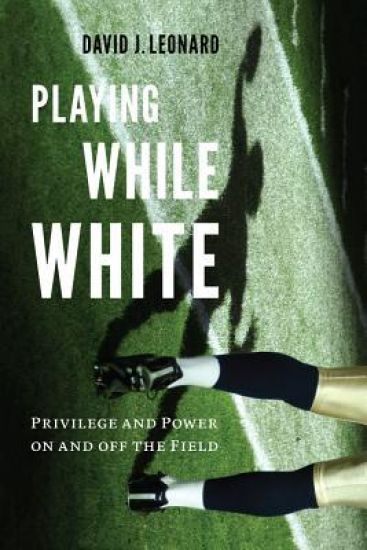
Playing While White

Playing While White

David J. Leonard

University of Washington Press
2017
pokkari
Playing While White argues that whiteness matters in sports culture, both on and off the field. Offering critical analysis of athletic stars such as Johnny Manziel, Marshall Henderson, Jordan Spieth, Lance Armstrong, Josh Hamilton, as well as the predominantly white cultures of NASCAR and extreme sports, David Leonard identifies how whiteness is central to the commodification of athletes and the sports they play.Leonard demonstrates that sporting cultures are a key site in the trafficking of racial ideas, narratives, and ideologies. He identifies how white athletes are frequently characterized as intelligent leaders who are presumed innocent of the kinds of transgressions black athletes are often pathologized for. With an analysis of the racial dynamics of sports traditions as varied as football, cycling, hockey, baseball, tennis, snowboarding, and soccer, as well as the reception and media portrayals of specific white athletes, Leonard examines how and why whiteness matters within sports and what that tells us about race in the twenty-first century United States.
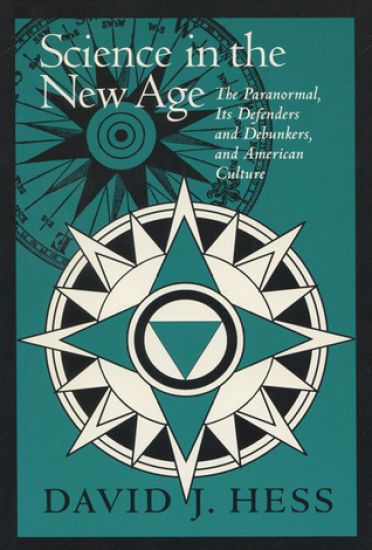
Science in the New Age

Science in the New Age

David J. Hess

Univ of Wisconsin Pr
1993
pokkari
Explores ideologies of the paranormal in the USA, from views put forward by parapsychologists and crystal healers, to skeptical debunkers. Adopting a cultural perspective, Hess studies how each group constructs its own boundaries of true and false knowledge.
Protest at Selma

Protest at Selma

David J. Garrow

Yale University Press
2015
pokkari
“The work of David J. Garrow is more than a day-by-day account of how the historic Voting Rights Act of 1965 came into being. It is also a skillful analysis of the dynamics of protest activity and more particularly of the ways in which successful protesters deliberately use the mass media to influence uninvolved audiences.” –American Historical Review“A valuable book, because it is a reminder of both the heroism and the brutality displayed in the great civil rights crusade.” –David Herbert Donald, The New Republic“One of the most comprehensive studies yet of a single campaign within the civil-rights movement.” –Pat Watters, New York Times Book Review“An excellent fusion of important theoretical constructs with careful and thoughtful empirical analysis. A desirable addition to most college libraries, useful for a variety of courses….Thoroughly documented. Recommended.” –Choice
Body Doubles

Body Doubles

David J. Getsy

Yale University Press
2004
sidottu
Late nineteenth-century Britain experienced an explosion of interest in sculpture. Sculptors of the “New Sculpture” movement sought a new direction and a modern idiom for their art. This book analyzes for the first time the art-theoretical concerns of the late-Victorian sculptors, focusing on their attitudes toward representation of the human body. David J. Getsy uncovers a previously unrecognized sophistication in the New Sculpture through close study of works by key figures in the movement: Frederic Leighton, Alfred Gilbert, Hamo Thornycroft, Edward Onslow Ford, and James Havard Thomas.These artists sought to activate and animate the conventional format of the ideal statue so that it would convincingly stand in for both a living body and an ideal image. Getsy demonstrates the conceptual complexity of the New Sculptors and places their concerns within the larger framework of modern sculpture. Published for the Paul Mellon Centre for Studies in British Art
The Spanish Frontier in North America

The Spanish Frontier in North America

David J. Weber

Yale University Press
2009
pokkari
A compact synthesis of David J. Weber’s prize-winning history of colonial Spanish North America, from the first Spanish-Indian contact through Spain’s gradual retreat Praise for the previous edition: "I cannot imagine a single book giving a more comprehensive and balanced study of Spain's presence in North America."—Louis Kleber, History Today "For readers seeking to understand the larger meaning of the Spanish heritage in North America, Weber's vivid narrative is a must. This is social and cultural history at its best."—Howard R. Lamar, Yale University "A superb study."—Choice "[A] deeply researched and splendidly conceived and written survey."—Alvin M. Josephy, Jr., New York Times Book Review
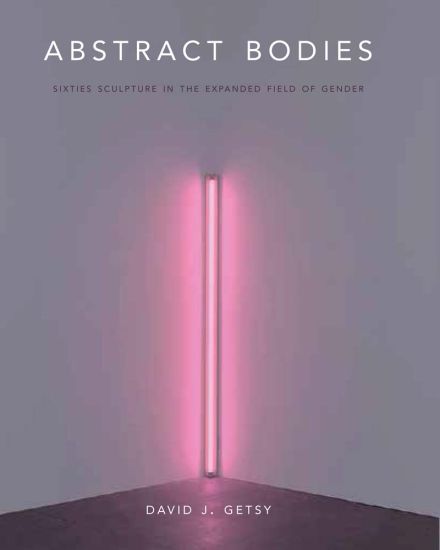
Abstract Bodies

Abstract Bodies

David J. Getsy

YALE UNIVERSITY PRESS
2023
pokkari
An innovative analysis of 1960s abstract sculpture that draws on transgender studies and queer theory Now back in print, Abstract Bodies was the first book to bridge the interdisciplinary field of transgender studies with the discipline of art history. Original and theoretically astute, it recasts debates around abstraction and figuration in 1960s art through a discussion of gender’s mutability and multiplicity. In that decade, sculpture purged representation and figuration but continued to explore the human as an implicit reference. Even as the statue and the figure were left behind, artists and critics asked how the human, and particularly gender and sexuality, related to abstract sculptural objects that refused the human form. This book examines abstract sculpture in the 1960s that came to propose unconventional and open accounts of bodies, persons, and genders. Drawing on transgender studies and queer theory, David J. Getsy offers innovative and archivally rich new interpretations of artworks by and critical writing about four major artists—Dan Flavin (1933–1996), Nancy Grossman (b. 1940), John Chamberlain (1927–2011), and David Smith (1906–1965). Abstract Bodies makes a case for abstraction as a resource in reconsidering gender’s multiple capacities and offers an ambitious contribution to this burgeoning interdisciplinary field.
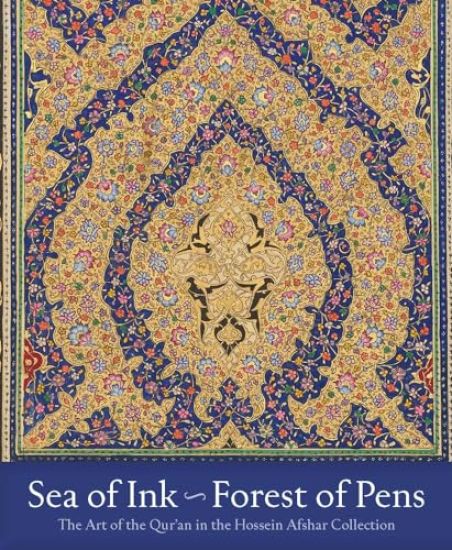
Sea of Ink--Forest of Pens

Sea of Ink--Forest of Pens

David J. Roxburgh

YALE UNIVERSITY PRESS
2025
sidottu
A spectacular study of calligraphy, the most esteemed form of visual and textual expression in the Islamic world, through a storied collection of Qur’an manuscripts Spanning more than a millennium, from the seventh through the nineteenth century, Sea of Ink, Forest of Pens: The Art of the Qur’an in the Hossein Afshar Collection sheds new light on the production of deluxe Qur’an manuscripts across Islamic lands through sixty-four exemplary works. The vast majority of these pieces are published for the first time in this richly illustrated book, which opens with a historical essay tracing important developments and stylistic trends represented in the collection. Renowned Islamic art scholar David Roxburgh examines the evolution and variations of scripts, beginning with the earliest recordings and reflecting on subsequent transformations through key single folios, bifolios, and bound Qur’an manuscripts. He also delves into the art of Qur’anic illumination, and the publication includes a richly illustrated glossary to guide the reader. Distributed for The Museum of Fine Arts, Houston
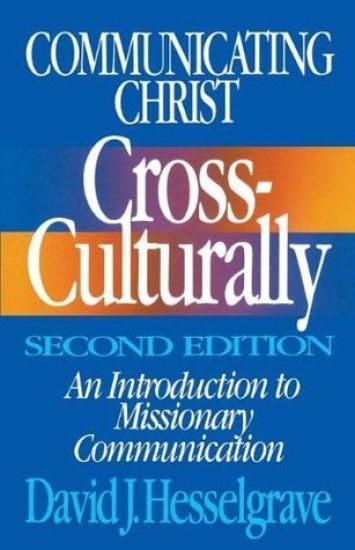
Communicating Christ Cross-Culturally, Second Edition
This revised edition of Dr. David Hesselgrave's great work Communicating Christ Cross-Culturally updates the original edition and interacts with the most recent literature on this increasingly important topic. The original edition went through fifteen printings and, very deservedly, has come to be one of the most widely used textbooks on Christian cross-cultural communications. The revisions in this new edition are extensive and carry on the high level of discussion maintained throughout the original edition, taking into account, for example, the current discussion on the relationship between form and function and the enormous body of literature that has sprung up recently on contextualization. To enhance the volume's usefulness for students, Dr. Hesselgrave has added an extensive bibliography of twenty-five pages on various aspects of cross-cultural communications. This revision of Communicating Christ Cross-Culturally is superb. It raises a great book into a unique category, undoubtedly the finest book on this topic available today.
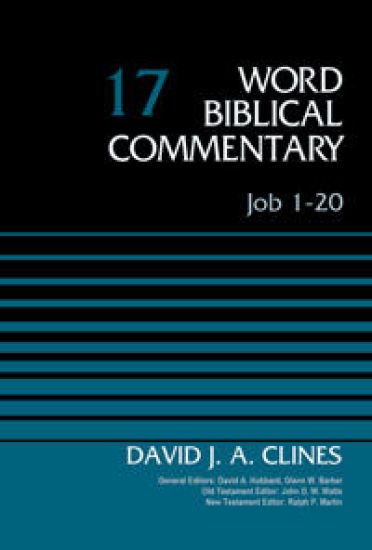
Job 1-20, Volume 17

Job 1-20, Volume 17

David J. A. Clines

Zondervan
2015
sidottu
The Word Biblical Commentary delivers the best in biblical scholarship, from the leading scholars of our day who share a commitment to Scripture as divine revelation. This series emphasizes a thorough analysis of textual, linguistic, structural, and theological evidence. The result is judicious and balanced insight into the meanings of the text in the framework of biblical theology. These widely acclaimed commentaries serve as exceptional resources for the professional theologian and instructor, the seminary or university student, the working minister, and everyone concerned with building theological understanding from a solid base of biblical scholarship.Overview of Commentary OrganizationIntroduction—covers issues pertaining to the whole book, including context, date, authorship, composition, interpretive issues, purpose, and theology.Each section of the commentary includes:Pericope Bibliography—a helpful resource containing the most important works that pertain to each particular pericope.Translation—the author’s own translation of the biblical text, reflecting the end result of exegesis and attending to Hebrew and Greek idiomatic usage of words, phrases, and tenses, yet in reasonably good English.Notes—the author’s notes to the translation that address any textual variants, grammatical forms, syntactical constructions, basic meanings of words, and problems of translation.Form/Structure/Setting—a discussion of redaction, genre, sources, and tradition as they concern the origin of the pericope, its canonical form, and its relation to the biblical and extra-biblical contexts in order to illuminate the structure and character of the pericope. Rhetorical or compositional features important to understanding the passage are also introduced here.Comment—verse-by-verse interpretation of the text and dialogue with other interpreters, engaging with current opinion and scholarly research.Explanation—brings together all the results of the discussion in previous sections to expose the meaning and intention of the text at several levels: (1) within the context of the book itself; (2) its meaning in the OT or NT; (3) its place in the entire canon; (4) theological relevance to broader OT or NT issues.General Bibliography—occurring at the end of each volume, this extensive bibliographycontains all sources used anywhere in the commentary.
Job 21-37, Volume 18A

Job 21-37, Volume 18A

David J. A. Clines

Zondervan
2015
sidottu
The Word Biblical Commentary delivers the best in biblical scholarship, from the leading scholars of our day who share a commitment to Scripture as divine revelation. This series emphasizes a thorough analysis of textual, linguistic, structural, and theological evidence. The result is judicious and balanced insight into the meanings of the text in the framework of biblical theology. These widely acclaimed commentaries serve as exceptional resources for the professional theologian and instructor, the seminary or university student, the working minister, and everyone concerned with building theological understanding from a solid base of biblical scholarship.Overview of Commentary OrganizationIntroduction—covers issues pertaining to the whole book, including context, date, authorship, composition, interpretive issues, purpose, and theology.Each section of the commentary includes:Pericope Bibliography—a helpful resource containing the most important works that pertain to each particular pericope.Translation—the author’s own translation of the biblical text, reflecting the end result of exegesis and attending to Hebrew and Greek idiomatic usage of words, phrases, and tenses, yet in reasonably good English.Notes—the author’s notes to the translation that address any textual variants, grammatical forms, syntactical constructions, basic meanings of words, and problems of translation.Form/Structure/Setting—a discussion of redaction, genre, sources, and tradition as they concern the origin of the pericope, its canonical form, and its relation to the biblical and extra-biblical contexts in order to illuminate the structure and character of the pericope. Rhetorical or compositional features important to understanding the passage are also introduced here.Comment—verse-by-verse interpretation of the text and dialogue with other interpreters, engaging with current opinion and scholarly research.Explanation—brings together all the results of the discussion in previous sections to expose the meaning and intention of the text at several levels: (1) within the context of the book itself; (2) its meaning in the OT or NT; (3) its place in the entire canon; (4) theological relevance to broader OT or NT issues.General Bibliography—occurring at the end of each volume, this extensive bibliographycontains all sources used anywhere in the commentary.
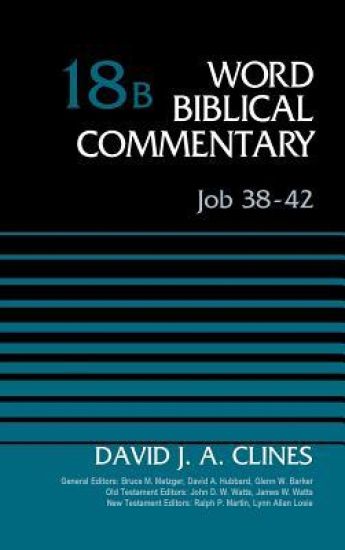
Job 38-42, Volume 18B

Job 38-42, Volume 18B

David J. A. Clines

Zondervan
2015
sidottu
The Word Biblical Commentary delivers the best in biblical scholarship, from the leading scholars of our day who share a commitment to Scripture as divine revelation. This series emphasizes a thorough analysis of textual, linguistic, structural, and theological evidence. The result is judicious and balanced insight into the meanings of the text in the framework of biblical theology. These widely acclaimed commentaries serve as exceptional resources for the professional theologian and instructor, the seminary or university student, the working minister, and everyone concerned with building theological understanding from a solid base of biblical scholarship.Overview of Commentary OrganizationIntroduction—covers issues pertaining to the whole book, including context, date, authorship, composition, interpretive issues, purpose, and theology.Each section of the commentary includes:Pericope Bibliography—a helpful resource containing the most important works that pertain to each particular pericope.Translation—the author’s own translation of the biblical text, reflecting the end result of exegesis and attending to Hebrew and Greek idiomatic usage of words, phrases, and tenses, yet in reasonably good English.Notes—the author’s notes to the translation that address any textual variants, grammatical forms, syntactical constructions, basic meanings of words, and problems of translation.Form/Structure/Setting—a discussion of redaction, genre, sources, and tradition as they concern the origin of the pericope, its canonical form, and its relation to the biblical and extra-biblical contexts in order to illuminate the structure and character of the pericope. Rhetorical or compositional features important to understanding the passage are also introduced here.Comment—verse-by-verse interpretation of the text and dialogue with other interpreters, engaging with current opinion and scholarly research.Explanation—brings together all the results of the discussion in previous sections to expose the meaning and intention of the text at several levels: (1) within the context of the book itself; (2) its meaning in the OT or NT; (3) its place in the entire canon; (4) theological relevance to broader OT or NT issues.General Bibliography—occurring at the end of each volume, this extensive bibliographycontains all sources used anywhere in the commentary.
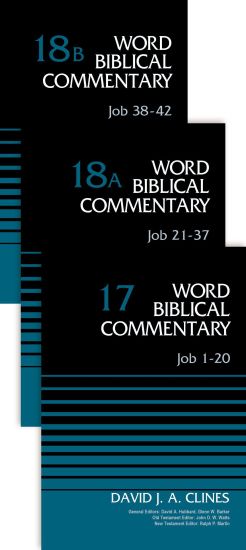
Job (3-Volume Set---17, 18A, and 18B)

Job (3-Volume Set---17, 18A, and 18B)

David J. A. Clines

Zondervan Academic
2017
sidottu
The Word Biblical Commentary delivers the best in biblical scholarship, from the leading scholars of our day who share a commitment to Scripture as divine revelation. This series emphasizes a thorough analysis of textual, linguistic, structural, and theological evidence. The result is judicious and balanced insight into the meanings of the text in the framework of biblical theology. These widely acclaimed commentaries serve as exceptional resources for the professional theologian and instructor, the seminary or university student, the working minister, and everyone concerned with building theological understanding from a solid base of biblical scholarship. Overview of Commentary Organization Introduction—covers issues pertaining to the whole book, including context, date, authorship, composition, interpretive issues, purpose, and theology. Each section of the commentary includes: Pericope Bibliography—a helpful resource containing the most important works that pertain to each particular pericope. Translation—the author’s own translation of the biblical text, reflecting the end result of exegesis and attending to Hebrew and Greek idiomatic usage of words, phrases, and tenses, yet in reasonably good English. Notes—the author’s notes to the translation that address any textual variants, grammatical forms, syntactical constructions, basic meanings of words, and problems of translation. Form/Structure/Setting—a discussion of redaction, genre, sources, and tradition as they concern the origin of the pericope, its canonical form, and its relation to the biblical and extra-biblical contexts in order to illuminate the structure and character of the pericope. Rhetorical or compositional features important to understanding the passage are also introduced here. Comment—verse-by-verse interpretation of the text and dialogue with other interpreters, engaging with current opinion and scholarly research. Explanation—brings together all the results of the discussion in previous sections to expose the meaning and intention of the text at several levels: (1) within the context of the book itself; (2) its meaning in the OT or NT; (3) its place in the entire canon; (4) theological relevance to broader OT or NT issues. General Bibliography—occurring at the end of each volume, this extensive bibliographycontains all sources used anywhere in the commentary.
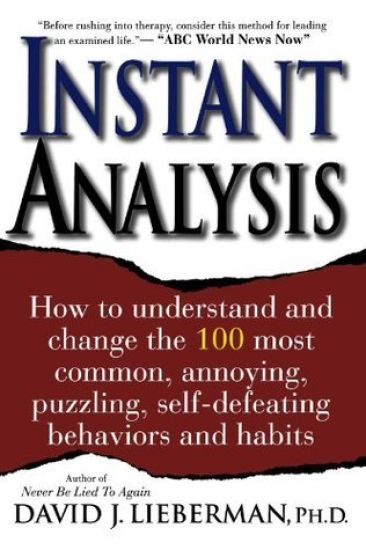
Instant Analysis: How to Get the Truth in 5 Minutes or Less in Any Conversation or Situation
Have you ever wondered... Why am I so eaily discouraged?Why do I procrasinate?Why do I stare at myself in the mirror?Why do I keep people waiting?Why do I eat when I am not hungry?Why do I secretly hope other people will fail?Why do I feel alone even when I'm around other people?Why am I constantly misplacing my keys and other things?Why do I enjoy hearing the secrets and confessions of others?Why will I do a favor for someone I don't even like?Why am I so superstitious?Why do I have trouble asking for help? If any of these behavior, habit, and thoughts are keeping you from having the life you want, then you need to know that help has finally arrived in David J Lieberman's Instant Analysis.
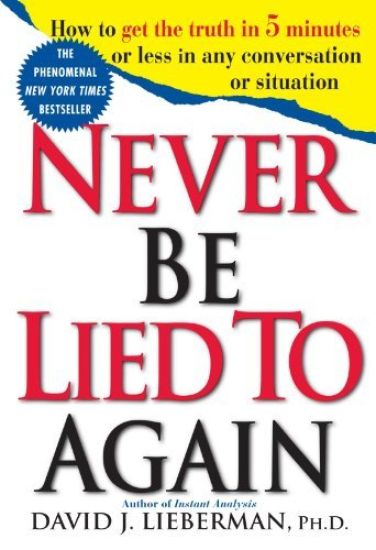
Never Be Lied To Again

Never Be Lied To Again

David J. Lieberman

St Martin's Press
2000
nidottu
How many times have you been manipulated or taken advantage of by someone's lies? Are you tired of being deceived, tricked, and fooled? Finally, renowned behaviorist David J. Lieberman shows you how to stop the lies and uncover the truth-- in any conversation or situation. In a simple, user-friendly format, Dr. Lieberman gives you the tools to determine, with uncanny accuracy, if you are being lied to.Utilizing newly developed techniques in hypnosis and psycholinguistics, this book also shows you how to easily influence anyone to tell the truth-- within minutes. Use it in any situation, from casual conversation to in-depth interviews. Never Be Lied to Again is chock-full of colorful examples and engaging scenarios to help you keep from being taken advantage of and give you that extra edge. Use these groundbreaking techniques to take control of every personal and business situation...and never be lied to again.
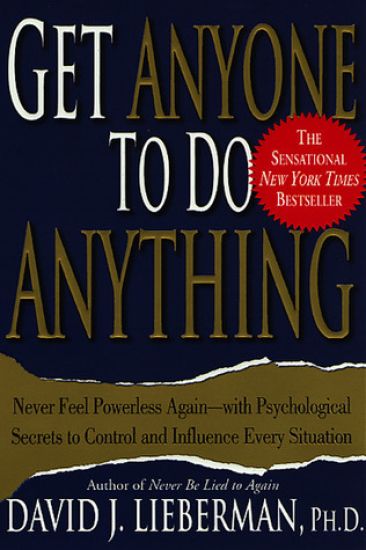
Get Anyone to Do Anything

Get Anyone to Do Anything

David J. Lieberman

St Martin's Press
2001
nidottu
In his runaway bestseller NEVER BE LIED TO AGAIN, Dr David Lieberman broke new ground with his insights on the way people communicate. Now he revolutionises interpersonal relationships with GET ANYONE TO DO ANYTHING, another phenomenal New York Times bestseller. Lieberman is a master at exploring the human psyche. With this intriguing, provocative book, he explains how to read people, how to avoid being manipulated and how to get the upper hand in every situation.
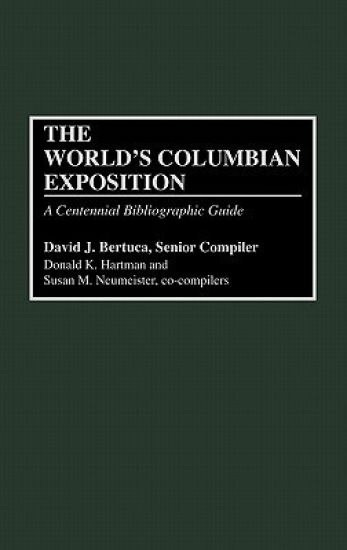
The World's Columbian Exposition

The World's Columbian Exposition

David J. Bertuca; Donald K. Hartman; Susan Neumeister

Greenwood Press
1996
sidottu
In 1893, the World's Columbian Exposition had a profound impact on urban planning and the Beaux-Arts period of American architecture. The fair introduced the Ferris Wheel, Cracker Jacks, and fiberglass. Yet today, except for one building and a grassy park, all that remains is the legacy of printed material dispersed throughout the country. This reference guide, intended for historians, librarians, and collectors, provides access to that legacy. The introduction summarizes the Exposition's influence. The bibliography, arranged to allow researchers to browse topics broadly, describes over 6,000 books, journal articles, and other materials. A directory of special collections of fair-related materials is also included. Newspaper and magazine articles, books, dissertations, drawings, photographs, maps, letters, documents, and collections of memorabilia—these provide the enduring heritage of the fair. This guide provides information on all aspects of that heritage. In addition to the bibilography itself, an extensive introduction discusses the influence the fair has had on America. Illustrations provide a visual portrayal of the fair. A directory of special collections of fair-related materials provides an inventory of each collection, along with addresses and telephone numbers. This book is the only comprehensive reference guide to the World's Columbian Exposition.