

Kirjahaku
Etsi kirjoja tekijän nimen, kirjan nimen tai ISBN:n perusteella.
1000 tulosta hakusanalla David Leitha


Three dead at a remote farm, killed by a horrific haemorrhagic virus. Three more close by. Then another, in a crashed car. But when young Professor Danny von Kasper, world expert in virus genetics, investigates, his helicopter gets shot down, killing his bodyguard and nearly killing him. Simon Shearer, taking over as BG, finds only questions - starting with: What causes Danny's raving nightmares? Top detective Dagmar Paulini, leading the inquiry, views Shearer with suspicion: Why? Danny proves the rogue virus was genetically engineered: who engineered it? A Baltic island, once used for sinister East German microbiology tests, is out of bounds: but is the island really contaminated? Shearer saves Danny as a hitman shoots: but which of them was he really trying to kill? Danny finally admits that his father, dead, and mother, vanished, were part of the 1970s-80s Baader-Meinhof terrorist movement. He is terrified of his own genetic legacy. Mystery deepens as two new top players join Dagmar's inquiry. One is from German foreign intelligence, one is a CIA officer with clearance so high that he needs his own special liaison office with his boss. But the German spook acts suspiciously, while the American officer wants CIA to take over the whole inquiry. The hunt takes Danny and Shearer to Israel and another shoot-out. And it's Shearer's Israeli contacts who alert him to a mole in Dagmar's inquiry and warn Shearer of an impending attack, using the haemorrhagic virus - now proved by Danny to have been genetically engineered into a bioweapon. Caught in the midst of the intrigue, Dagmar Paulini gets sacked - and the American officer, who has been cultivating top politicians in Berlin, takes her place in charge of the investigation. His own subsequent actions raise even more questions: is he really answering to his CIA boss, or is someone or something else involved? By this time, Danny has identified the bioweapon. It's a monster of genetic engineering - can it really be stopped? Answers lie in a secretive lab in Botswana. Dagmar convinces herself of Shearer's bona fides. But when she gets sacked as lead investigator, Danny and Shearer are forced to go on the run to track down the suspect lab. And in the showdown in Botswana, Danny comes face to face with the last person he'd ever have expected to meet. Baader-Meinhof terrorist mother comes face to face with virology professor son. But the spark of love that the encounter might have kindled dies quickly when each of the two, at ideologically opposite poles, proves ready to kill the other. This story has roots in the darkest days of the Cold War. To the days when Checkpoint Charlie really was a haven for a whole clan of rabbits.



Leith lies on the south shore of the Firth of Forth, a few miles north of Edinburgh. Since the 12th century it has been the main port serving Edinburgh and the Lothians. This book identifies many of Leith's population during the 17th and 18th centuries and is based on a wide range of sources, both manuscript and published, such as testaments, sasines (property records), services of heirs, court books, port books, monumental inscriptions, register of deeds, apprenticeship records, burgess rolls, government records, journals, and newspapers.During the early modern period Leith traded with ports around the Baltic, the North Sea, and the Mediterranean, as well as with the Americas. Its seamen, in Dutch or English service, could be found as far away as Asia or the Americas. Leith was a major importer and distribution center of French and Spanish wine from the 16th century onwards. Leith also had a thriving whaling industry, and shipbuilding, dependent upon timber from Norway, was another traditional industry. However, the emphasis of the economy was on seafaring. Leith was the single most important port in Scotland until the rise of trans-Atlantic trade enabled the Clyde ports of Glasgow-Greenock to become pre-eminent.

The People of Edinburgh and Leith at Home and Abroad, 1800-1850
David Dobson
Clearfield
2022
pokkari
The second half of the 18th century saw the construction of the New Town of Edinburgh, to the north of the medieval burgh and across the Nor' Loch. During the first half of the 19th century, Edinburgh and Leith remained as two distinct communities. Leith only became a burgh in 1833 and remained so until it was formally integrated into Edinburgh in 1922. This book is based largely on contemporary newspapers and magazines, monumental inscriptions around Edinburgh, and a host of sources found in archives. The entries combine information on people who went abroad as well as those who remained in Edinburgh. The Scottish Enlightenment gave Edinburgh much of its international renown. Edinburgh became the capital of the Scottish professional classes, and it also was the center of publishing, banking, the Church, and insurance companies, as well as distinguished educational establishments. Transportation improvements, such as the Leith Docks, introduction of the railways, and construction of bridges within the city, enabled Edinburgh to expand. During the 19th century, the affluent would abandon the Old Town in favor of the New Town, the middle classes and the skilled workers moved out to the suburbs, while those who had no option remained in the Old Town. Leith functioned as the port of Edinburgh. The import-export trade initially was confined to western Europe but eventually became worldwide. Timber was imported from Scandinavia, grain from the Baltic, and wine from France and Spain, while coal from nearby coalfields was exported to Scandinavia and the Netherlands. Leith was famous for its glass and bottle-making works, brewing, distilling, and warehousing. Leith was also an important shipbuilding center, and many immigrant transports sailed from Leith.

The Sculptured Stones of Leith; With Historical and Antiquarian Notices.
David Henderson Robertson
British Library, Historical Print Editions
2011
pokkari
Title: The Sculptured Stones of Leith; with historical and antiquarian notices.Publisher: British Library, Historical Print EditionsThe British Library is the national library of the United Kingdom. It is one of the world's largest research libraries holding over 150 million items in all known languages and formats: books, journals, newspapers, sound recordings, patents, maps, stamps, prints and much more. Its collections include around 14 million books, along with substantial additional collections of manuscripts and historical items dating back as far as 300 BC.The GENERAL HISTORICAL collection includes books from the British Library digitised by Microsoft. This varied collection includes material that gives readers a 19th century view of the world. Topics include health, education, economics, agriculture, environment, technology, culture, politics, labour and industry, mining, penal policy, and social order. ++++The below data was compiled from various identification fields in the bibliographic record of this title. This data is provided as an additional tool in helping to insure edition identification: ++++ British Library Robertson, David Henderson; 1851. pp. 128. pl. XVIII.; 4 . 10370.g.10.

Venom Epic Collection: Lethal Protector
David Michelinie; Peter David; Howard Mackie
MARVEL COMICS
2021
nidottu

Marvel Select - Venom Lethal Protector: Heart Of The Hunted
David Michelinie
PANINI PUBLISHING LTD
2023
nidottu

Marvel Select Venom: Lethal Protector - Life and Deaths
David Michelinie
PANINI PUBLISHING LTD
2024
nidottu

Strengere Regulierung der Leiharbeit und ihre wirtschaftlichen Folgen
David Zelenka
GRIN Verlag
2019
nidottu


Von der Probefahrt bis zur Zulassung: Der ultimative Leitfaden für den Gebrauchtwagenkauf
David Haas
BoD - Books on Demand
2023
nidottu

Professor Cocktail's Zombie Horde: Recipes for the World's Most Lethal Drink
David J. Montgomery
Createspace Independent Publishing Platform
2013
nidottu
One of the world's most sublime drinking pleasures, the Zombie is the cocktail that launched a thousand Tiki bars. A sweet and sour m lange of citrus, spice, and lots of rum, the Zombie stands as one of the most significant cocktails of the past century. Created by Don the Beachcomber in 1934, the Zombie took the world by storm, and soon became the quintessential Tiki drink. Eventually, it would appear on the menus of thousands of bars and restaurants around the world. In Zombie Horde, David J. Montgomery (aka Professor Cocktail) leads you on a journey through the history of the Zombie, starting with its humble beginnings in Hollywood, and following it as it evolved and spread over the decades. Zombie Horde includes recipes from notable bartenders like Trader Vic, David Embury, Salvatore Calabrese, and Dale DeGroff, as well as the formulas for the Zombies served at famous Tiki joints like the Tonga Room in San Francisco, Frankie's Tiki Room in Las Vegas, and the Luau Room in San Diego. It also includes recent cocktails that were inspired by the Zombie, with offerings from Martin Cate (Smuggler's Cove), Brian Miller (Death & Company), Allan Katz (Ca a Rum Bar), Brian Dressel (Midnight Cowboy), and Audrey Saunders (Pegu Club). As a special bonus, Zombie Horde showcases seven new drinks -- from Jim Meehan (PDT), Tom Brown (Hogo), Jeff Kinder (Distil), Joseph Swifka (La Descarga), Craig Lane (Bar Agricole), Jack Fetterman (PKNY), and Frank Cisneros (Bourgeois Pig Brooklyn) -- that are appearing in print for the first time. Also making their print debut are the recipes for the Zombies served at Mahiki in London, Otto's Shrunken Head in New York City, and Founding Farmers in Washington, D.C.

The Ultimate Guide to Pepper Spray: How to Confidently Choose and Use the Best Less Lethal Defense
David Nash
Independently Published
2018
nidottu
Nobody knows how to use pepper spray like corrections officers. With skill, command presence and a can of spray, a typical correction officer is outnumbered 128 felons to one.In this book, a seasoned correction academy instructor outlines how to confidently and effectively choose, use, carry and decontaminate pepper sprays. This book contains vital footnoted sections on applicable US State laws, information on mindset, and how pepper spray strength in measured so you don't mistakenly buy the cheap stuff.The Author, David Nash, is no publisher with a team of ghostwriters churning out crud. He is a long time use of force instructor and has certifications in law enforcement firearms, firearms instructor training, chemical agents, electronic restraints, specialty impact munitions, baton, and defensive tactics. He has several traditionally published books before venturing into the eBook arena.If you want good information that is presented logically and simply then there is no better choice.

It's a tally that beggars belief - 340 goals in a single season. Even more surprising is the fact few people can name the player behind that record-breaking feat. Paul Moulden was a schoolboy phenomenon. As star striker of the renowned Bolton Lads' Club, a 14-year-old Moulden smashed every goalscoring record as he netted 340 times in one incredible season - including 289 league goals in 39 matches. In doing so, he secured a place in The Guinness Book of Records. Coveted by Sir Alex Ferguson, Brian Clough and other top bosses and chased by every leading club in the land, Moulden chose his boyhood heroes, Manchester City, and looked to have the world at his feet. What happened next is hard to believe, as the grounded and hugely talented goalscorer suffered almost every major injury possible over the next decade. This is a story of extraordinary talent and broken dreams, told bluntly but without bitterness. Paul Moulden should have been a household name. This book might still make that happen.

Sozialmedizinische Therapie Bei Psychischen Erkrankungen: Ein Leitfaden Fur Die Psychotherapie Und Psychosomatische Grundversorgung
Michael Linden; David Schymainski
Kohlhammer
2025
nidottu
Die Behandlung von psychischen Storungen erschopft sich nicht nur in der Besserung von Krankheitssymptomen oder -verlaufen, sondern muss auch die sozialen Folgen und Einschrankungen der Teilhabe im privaten wie beruflichen Leben berucksichtigen. Dieses Werk bietet eine systematische, kompakte und zugleich fundierte Ubersicht uber das breite Spektrum an im deutschen Gesundheits- und Sozialwesen zur Verfugung stehenden sozialmedizinischen Interventionen. Alle Hilfen werden zunachst definiert, um darauf aufbauend die jeweilige Indikation und das praktische Vorgehen anhand von Kasuistiken zu erlautern. Dabei wird verdeutlicht, wie die interdisziplinare Zusammenarbeit zwischen Arzten, Psychotherapeuten, Sozialarbeitern, Ergotherapeuten, Beratungsstellen, Behorden usw. im Interesse der Patienten optimal gelingen kann.
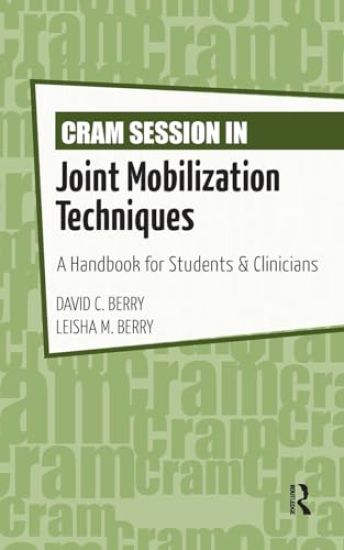
Cram Session in Joint Mobilization Techniques
David Berry; Leisha Berry
TAYLOR FRANCIS LTD
2024
sidottu
When all you need is a basic understanding of joint mobilization techniques, supplemented by succinct and demonstrative examples, look to Cram Session in Joint Mobilization Techniques: A Handbook for Students & Clinicians for quick, at-your-fingertips facts.Cram Session in Joint Mobilization Techniques by Dr. David C. Berry and Leisha M. Berry is a descriptive quick reference that provides the rehabilitation professional with a detailed yet easy-to-digest approach to joint mobilization techniques. Organized into quick-reference tables and concise descriptions of each technique, this resource offers an efficient way to learn the cognitive and psychomotor skills necessary to competently perform joint mobilization techniques.What is in your Cram Session:Easy-reference tables of joint complex osteology and arthrologyPhotographs depicting mobilization techniques for each jointCase studies in mobilizationQuiz questions to test your knowledgeCram Session in Joint Mobilization Techniques: A Handbook for Students & Clinicians is an informative, well-organized handbook for all students and clinicians in athletic training, physical therapy, occupational therapy, osteopathic medicine, and other rehabilitation professions.
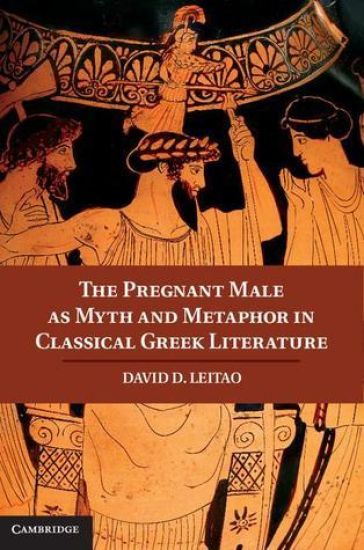
The Pregnant Male as Myth and Metaphor in Classical Greek Literature
David D. Leitao
Cambridge University Press
2012
sidottu
This book traces the image of the pregnant male in Greek literature as it evolved over the course of the classical period. The image - as deployed in myth and in metaphor - originated as a representation of paternity and, by extension, 'authorship' of ideas, works of art, legislation, and the like. Only later, with its reception in philosophy in the early fourth century, did it also become a way to figure and negotiate the boundary between the sexes. The book considers a number of important moments in the evolution of the image: the masculinist embryological theory of Anaxagoras of Clazomenae and other fifth century pre-Socratics; literary representations of the birth of Dionysus; the origin and functions of pregnancy as a metaphor in tragedy, comedy and works of some Sophists; and finally the redeployment of some of these myths and metaphors in Aristophanes' Assemblywomen and in Plato's Symposium and Theaetetus.