Kirjojen hintavertailu. Mukana 11 244 527 kirjaa ja 12 kauppaa.

Kirjahaku

Etsi kirjoja tekijän nimen, kirjan nimen tai ISBN:n perusteella.

1000 tulosta hakusanalla David Morrell

David Copperfield

David Copperfield

Charles Dickens

Penguin Classics
2014
sidottu
Now a major film directed by Armando Iannucci, starring Dev Patel, Tilda Swinton, Hugh Laurie, Peter Capaldi and Ben WhishawDickens's great coming-of-age novel, now in a beautiful clothbound Penguin editionThis is the novel Dickens regarded as his 'favourite child' and is considered his most autobiographical. As David recounts his experiences from childhood to the discovery of his vocation as a successful novelist, Dickens draws openly and revealingly on his own life. Among the gloriously vivid cast of characters are Rosa Dartle, Dora, Steerforth, and the 'umble Uriah Heep, along with Mr Micawber, a portrait of Dickens's own father which evokes a mixture of love, nostalgia and guilt.Dickens's great Bildungsroman (based, in part, on his own boyhood) is a work filled with life, both comic and tragic.Charles Dickens (1812-70) had his first, astounding success with his first novel The Pickwick Papers and never looked back. In an extraordinarily full life he wrote, campaigned and spoke on a huge range of issues, and was involved in many of the key aspects of Victorian life, by turns cajoling, moving and irritating. He completed fourteen full-length novels and volume after volume of journalism. Of all his many works, he called David Copperfield his 'favourite child'.Jeremy Tambling is Professor of Literature at the University of Manchester.
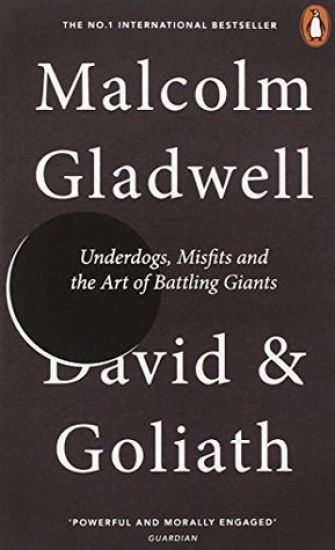
David and Goliath

David and Goliath

Malcolm Gladwell

Penguin Books Ltd.
2014
nidottu
"A Scheherazade for our time". (Daily Telegraph). What if everything we thought about power was wrong? What if, in the ancient story of the shepherd boy who topples a giant, David actually had the advantage? This thought sets Malcolm Gladwell on an extraordinary journey that takes him from art to basketball, the brain to revolutions, along the way weaving unforgettable stories of misfits, outsiders, tricksters and underdogs who have faced outsized challenges and won. With his trademark warmth, humour and gift for showing us the world through new eyes, Gladwell lets us see why the powerful aren't always what we think they are - and that some of us have more strength and purpose than we could ever imagine.
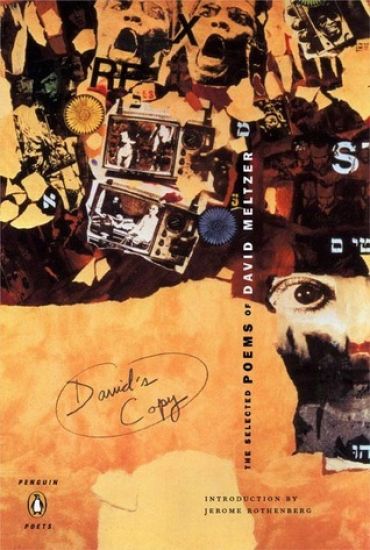
David's Copy: The Selected Poems of David Meltzer
One of the most respected poets of the Beat and San Francisco Renaissance periods, David Meltzer has kept alive interest in the interface between jazz and poetry that exploded in the 1950s. This new edition of selected poems includes previously unpublished material and serves as a map to this very prolific and interesting poet.
David Hackett Souter

David Hackett Souter

Tinsley E. Yarbrough

Oxford University Press Inc
2005
sidottu
When the first President Bush chose David Hackett Souter for the Supreme Court in 1990, the slender New Englander with the shy demeanor and ambiguous past was quickly dubbed a "stealth candidate". Determined to avoid a repeat of the firestorm surrounding President Reagan's nomination of the controversial Robert Bork, Bush opted for Souter, who had, remarkably, produced only one law review article in his legal career. Souter, an obscure but well-respected New Hampshire conservative, seemed unlikely to arouse the kind of passionate opposition that defined the Bork confirmation process. And, indeed, Souter was accepted onto the Court with little fuss. Today, fifteen years into his tenure, Souter remains as enigmatic and unpredictable as ever, a mystery even to avid Court watchers. Who is David Hackett Souter and what will be his legacy on the Supreme Court? Sifting through Souter's opinions, papers of the Justice's contemporaries and other relevant records and interviews, esteemed Supreme Court biographer Tinsley Yarbrough here gives us the real David Souter, crafting a fascinating account of one of the heretofore most elusive Justices in the history of the Court. Though Souter's record on legal issues was generally conservative before his arrival on the Court, his mixed views caused some concern among both the left and the right during the appointment process. His reclusive lifestyle and frugality added to his mystique, making him even more difficult to peg. His penchant for solitude and his seemingly narrow circle of close friends convinced some that the middle-aged bachelor was out of touch with the sort of "real world" problems the nation's highest court regularly confronts. Court watchers soon realized--to their delight or dismay--that President Bush's "stealth" justice was a traditional New England Republican deeply tied to the party's historic roots in the union and civil rights--in stark contrast to most Reagan-Bush I appointees. On the bench, Souter has embraced a flexible, evolving, and highly pragmatic judicial style that embraces a high regard for precedent--even liberal decisions of the Warren and Burger Courts with which he may have personally disagreed. Even more significantly, Souter has become a regular and very effective critic of the set of rulings via which his ostensible political brethren--Chief Justice William Rehnquist, Antonin Scalia and Clarence Thomas--have abandoned precedent to assert their conservative vision. Ultimately, Yarbrough contends, Souter has become the principal Rehnquist Court opponent of the originalist, text-bound jurisprudence that many of the more conservative Justices profess to champion.
David, Saul, and God

David, Saul, and God

Paul Borgman

Oxford University Press Inc
2008
sidottu
The biblical story of King David and his conflict with King Saul (1 and 2 Samuel) is one of the most colourful and perennially popular in the Hebrew Bible. In recent years this story has attracted a great deal of scholarly attention, much of it devoted to showing that David was a far less heroic character than appears on the surface. Indeed, more than one has painted David as a despicable tyrant. Paul Borgman provides a counter-reading to these studies, through an attentive reading of the narrative patterns of the text. He focuses on one of the key features of ancient Hebrew narrative poetics -- repeated patterns -- taking special note of even the small variations each time a pattern recurs. He argues that such 'hearing cues' would have alerted an ancient audience to the answers to such questions as 'Who is David?' and 'What is so wrong with Saul?' The narrative insists on such questions, says Borgman, slowly disclosing answers through patterns of repeated scenarios and dominant motifs that yield, finally, the supreme work of storytelling in ancient literature. Borgman concludes with a comparison with Homer's storytelling technique, demonstrating that the David story is indeed a masterpiece and David (as Baruch Halpern has said) 'the first truly modern human.'
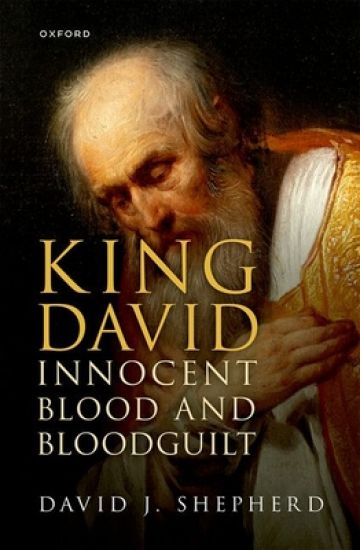
King David, Innocent Blood, and Bloodguilt

King David, Innocent Blood, and Bloodguilt

David J. Shepherd

Oxford University Press
2023
sidottu
Of all the characters bequeathed to us by the Hebrew Bible, none is more compelling or complex than David. Divinely blessed, musically gifted, brave, and eloquent, David's famous slaying of Goliath also confirms that he is a redoubtable man of war. Yet, when his son Absalom rebels, David is dogged by the accusation than he will lose his kingdom because he is not merely a man of war, but a man of 'bloods' - guilty of shedding innocent blood. In this book, for the first time, this language of 'innocent blood' and 'bloodguilt' is traced throughout David's story in the books of Samuel and 1 Kings. The theme emerges initially in Saul's pursuit of David and resurfaces regularly as David rises and men like Nabal, Saul, Ishbosheth, and Abner fall. Innocent blood and bloodguilt also turn out to be central to David's reign. This is seen in a surprising way in David's killing of Uriah, but also in the subsequent deaths of his sons, Amnon and Absalom, his general, Amasa, and even in David's encounters with Shimei. The problem rears its head again when the innocent blood of the Gibeonites shed by Saul comes back to haunt David's kingdom. Finally, the problem reappears when Solomon succeeds David and orchestrates the executions of Joab and Shimei, and the exile of Abiathar. Attending carefully to the text and drawing extensively on previous biblical scholarship, David J. Shepherd suggests that innocent blood is not only a pre-eminent concern of David, and his story in Samuel and 1 Kings, but also shapes the entirety of David's history.
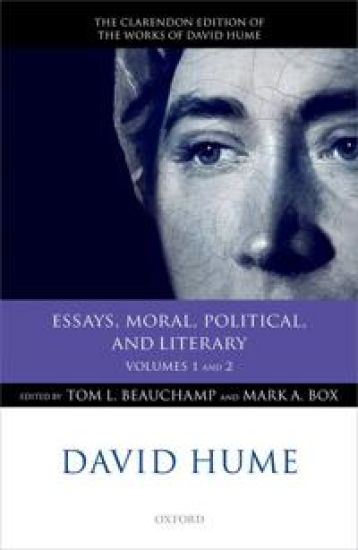
David Hume: Essays, Moral, Political, and Literary
This is the first critical edition ever produced of Essays, Moral, Political, and Literary by David Hume, who is widely widely considered to be the most important British philosopher and an author celebrated for his moral, political, historical, and literary works. The editors' Introduction is primarily historical and written for advanced students and scholars from many disciplines. It is neither an orientation to Hume's philosophy nor an introduction aimed at philosophers. It is not an attempt to interpret Hume's text, but rather discusses the genesis, revision, and reception of the essays, which went into many editions at the author's hand. The annotations provide information about Hume' s sources, allusions, and citations, as well as background facts pertinent to an informed reading of the essays. The primary goal is to aid readers in their interpretations of the text. This edition also includes a detailed commentary on Hume's essay 'On the Populousness of Ancient Nations', which will be of special interest to ancient historians. The two volumes present a full critical edition, in every respect. They assemble a massive amount of historical and textual information never previously published. The editorial apparatus is comprehensive and includes extensive historical and bibliographical detail. The Clarendon Edition of the Works of David Hume as a whole is on the cutting-edge of editorial work in the history of great works in the eighteenth century. This edition will quickly become a necessary addition to the library of any scholar who works on David Hume's Essays.
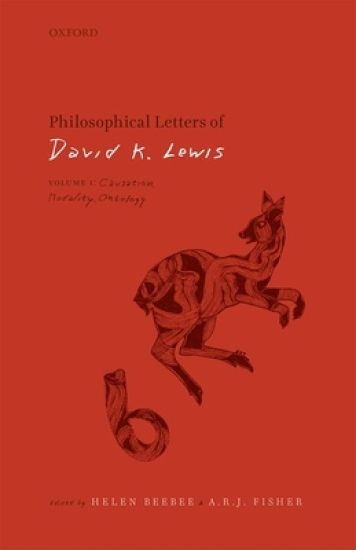
Philosophical Letters of David K. Lewis

Philosophical Letters of David K. Lewis

David K. Lewis

Oxford University Press
2020
sidottu
David Kellogg Lewis (1941-2001) was one of the most influential philosophers of the twentieth century. He made significant contributions to almost every area of analytic philosophy including metaphysics, philosophy of language, philosophy of mind, and philosophy of science, and set the agenda for various debates in these areas which carry on to this day. In several respects he remains a contemporary figure, yet enough time has now passed for historians of philosophy to begin to study his place in twentieth century thought. His philosophy was constructed and refined not just through his published writing, but also crucially through his life-long correspondence with fellow philosophers, including leading figures such as D.M. Armstrong, Saul Kripke, W.V. Quine, J.J.C. Smart, and Peter van Inwagen. His letters formed the undercurrent of his published work and became the medium through which he proposed many of his well-known theories and discussed a range of philosophical topics in depth. A selection of his vast correspondence over a 40-year period is presented here across two volumes. As metaphysics is arguably where Lewis made his greatest contribution, this forms the focus of Volume 1. Arranged under the broad areas of Causation, Modality, and Ontology, the letters offer an organic story of the origins, development, breadth, and depth of his metaphysics in its historical context, as well as a glimpse into the influence of his many interlocutors. This volume will be an indispensable resource for contemporary metaphysics and for those interested in the Lewisian perspective.
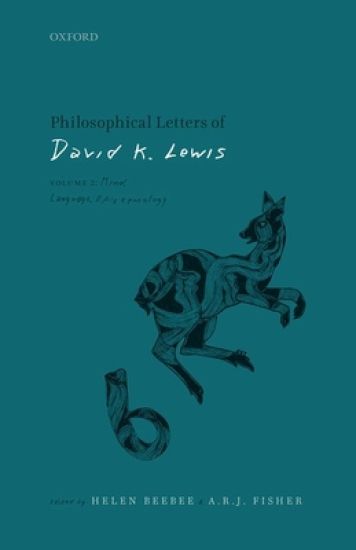
Philosophical Letters of David K. Lewis

Philosophical Letters of David K. Lewis

David K. Lewis

Oxford University Press
2020
sidottu
David Kellogg Lewis (1941-2001) was one of the most influential philosophers of the twentieth century. He made significant contributions to almost every area of analytic philosophy including metaphysics, philosophy of language, philosophy of mind, and philosophy of science, and set the agenda for various debates in these areas which carry on to this day. In several respects he remains a contemporary figure, yet enough time has now passed for historians of philosophy to begin to study his place in twentieth century thought. His philosophy was constructed and refined not just through his published writing, but also crucially through his life-long correspondence with fellow philosophers, including leading figures such as D.M. Armstrong, Saul Kripke, W.V. Quine, J.J.C. Smart, and Peter van Inwagen. His letters formed the undercurrent of his published work and became the medium through which he proposed many of his well-known theories and discussed a range of philosophical topics in depth. A selection of his vast correspondence over a 40-year period is presented here across two volumes. Structured in three parts, Volume 2 explores Lewis' contributions to philosophical questions of mind, language, and epistemology respectively. The letters address Lewis's answer to the mind-body problem, propositional attitudes and the purely subjective character of conscious experience, meaning and reference as well as grammar in language, vagueness, truth in fiction, the problem of scepticism, and Lewis's work on decision theory and rationality, among many other topics. This volume is a testament to Lewis' achievement in these areas and will be an invaluable resource for those exploring contemporary debates concerning mind, language, and epistemology.
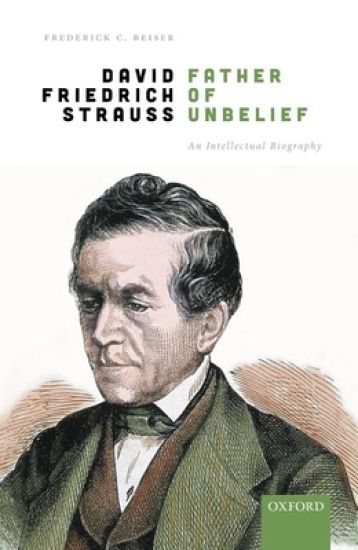
David Friedrich Strauß, Father of Unbelief

David Friedrich Strauß, Father of Unbelief

Frederick C. Beiser

Oxford University Press
2020
sidottu
David Friedrich Strauss is a central figure in 19th century intellectual history. The first major source for the loss of faith in Christianity in Germany, his work Das Leben Jesu was the most scandalous publication in Germany during his time. His book was a critique of the claims to historical truth of the New Testament, which had been the mainstay of Protestantism since the Reformation. As the father of unbelief, his critique of Christianity preceded that of Nietzsche, Marx, Feuerbach, and Schopenhauer. His views imposed a harsh fate upon him - he was persecuted for his beliefs by religious and political authorities and was denied employment in the university and government, forcing him to live as a free-lance writer. He led a wandering and isolated life as an outcast. Here, Frederick C. Beiser studies the intellectual development of Strauss and recounts his fate, which began in faith as a young man but finally ended in unbelief.
David Jones and Rome

David Jones and Rome

Jasmine Hunter Evans

Oxford University Press
2022
sidottu
This interdisciplinary and archival study explores the reception of ancient Rome in the artistic, literary, and philosophical works of David Jones (1895-1974)—the Anglo-Welsh, Roman Catholic, First World War veteran. For Jones, the twentieth century was a period of crisis, an age of conflict, disillusionment and cultural decay, all of which he saw as evidence of the decline of Western civilisation. Across his lifetime, Jones would create a dynamic vision of ancient Rome in an attempt both to understand and to challenge this situation. His reimagining of Rome was not founded on a classical education. Instead, it was fashioned from his lived experience, extensive reading, and—most importantly—his engagement with four areas of contemporary discourse that were themselves built upon intricate and conflicting representations of Rome: British political rhetoric, cyclical history, the Catholic cultural revival, and the Welsh nationalist movement. Tracing Jones's developing approach to Rome across these contexts can provide a way into his art and thought. Whether in his poetic fragments, watercolours, essays, letters, marginalia or unique painted inscriptions, Jones strove to question, complicate and remake Rome's relationship with modernity. In this way, Rome appears in Jones's works both as a symbol of transhistorical imperialism, totalitarianism, and the mechanisation of life, and simultaneously as the cultural and religious progenitor of the West, and in particular, of Wales, with which artists must creatively reconnect if decline was to be avoided.
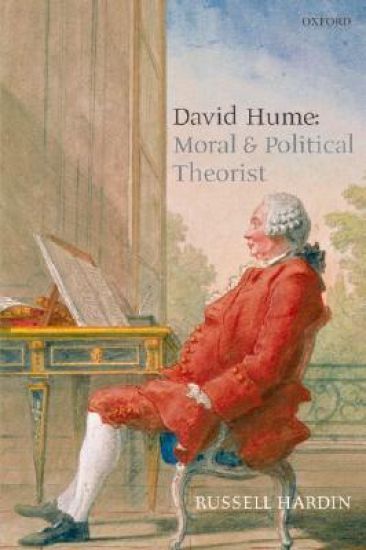
David Hume: Moral and Political Theorist

David Hume: Moral and Political Theorist

Russell Hardin

Oxford University Press
2007
sidottu
Russell Hardin presents a new explication of David Hume's moral and political theory. With Hume, he holds that our normative views can be scientifically explained but they cannot be justified as true. Hume argued for the psychological basis of such views. In particular, he argued for sympathy as the mirroring of the psychological sensations and emotions of others. By placing Hume in the developing tradition of social science, as a strong forerunner of his younger friend Adam Smith, Hardin demonstrates Hume's strong strategic sense, his nascent utilitarianism, his powerful theory of convention as a main source of social and political order, and his recognition of moral and political theory as a single enterprise.
David Hume: A Dissertation on the Passions; The Natural History of Religion
David Hume (1711-1776) is one of the greatest of philosophers. Today he probably ranks highest of all British philosophers in terms of influence and philosophical standing. His philosophical work ranges across morals, the mind, metaphysics, epistemology, religion, and aesthetics; he had broad interests not only in philosophy as it is now conceived but in history, politics, economics, religion, and the arts. He was a master of English prose. The Clarendon Hume Edition will include all of his works except his History of England and minor historical writings. It is the only thorough critical edition, and will provide a far more extensive scholarly treatment than any previous editions. This edition (which has been in preparation since the 1970s) offers authoritative annotation, bibliographical information, and indexes, and draws upon the major advances in textual scholarship that have been made since the publication of earlier editions--advances both in the understanding of editorial principle and practice and in knowledge of the history of Hume's own texts. In this volume, Tom Beauchamp presents two essays from Four Dissertations (1757), the last philosophical work written by Hume, which was subsequently revised by the philosopher in the remaining years of his life. Whilst the bulk of A Dissertation on the Passions was extracted from passages in A Treatise of Human Nature, The Natural History of Religion was an original work when published in 1757, as well as the only major work devoted exclusively to the subject of religion that Hume published in his lifetime. Together with Hume's earlier work on religious topics, this essay drew considerable philosophical commentary from his contemporaries. The last edition of the two works in this volume seen through the press by Hume himself appeared in 1772. It provides the copy-text for this critical edition. The Editor's primarily historical Introduction discusses the genesis, revision, and reception of these two dissertations, which went into ten editions at the author's hand. It will appeal to scholars across many disciplines. General Editors of the Clarendon Hume: Professors T. L. Beauchamp (Georgetown University, USA), D. F. Norton (McGill University, Canada), M. A. Stewart (University of Lancaster, England). The Edition comprises (or will comprise): Vols. 1 and 2: A Treatise of Human Nature, edited by D. F. Norton Vol. 3: An Enquiry concerning Human Understanding, edited by T. L. Beauchamp Vol. 4: An Enquiry concerning the Principles of Morals, edited by T. L. Beauchamp Vol. 5: The Natural History of Religion and A Dissertation on the Passions, edited by T. L. Beauchamp Vols. 6 and 7: Essays, edited by T. L. Beauchamp and M. Box Vol. 8: Dialogues concerning Natural Religion and other posthumous publications, edited by M. A. Stewart
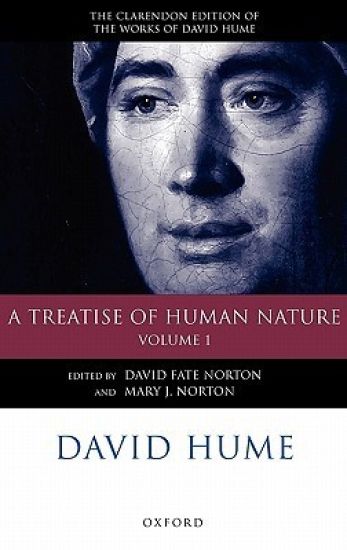
David Hume: A Treatise of Human Nature

David Hume: A Treatise of Human Nature

David Hume

Clarendon Press
2007
sidottu
David and Mary Norton present the definitive scholarly edition of one of the greatest philosophical works ever written. This first volume contains the critical text of David Hume's Treatise of Human Nature (1739/40), followed by the short Abstract (1740) in which Hume set out the key arguments of the larger work; the volume concludes with A Letter from a Gentleman to his Friend in Edinburgh (1745), Hume's defence of the Treatise when it was under attack from ministers seeking to prevent Hume's appointment as Professor of Moral Philosophy at the University of Edinburgh.
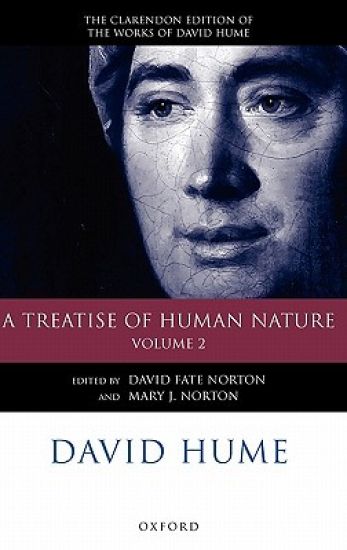
David Hume: A Treatise of Human Nature

David Hume: A Treatise of Human Nature

David Hume

Clarendon Press
2007
sidottu
David and Mary Norton present the definitive scholarly edition of one of the greatest philosophical works ever written. This second volume begins with their 'Historical Account' of the Treatise, an account that runs from the beginnings of the work to the period immediately following Hume's death in 1776, followed by an account of the Nortons' editorial procedures and policies and a record of the differences between the first-edition text of the Treatise and the critical text that follows. The volume continues with an extensive set of 'Editors' Annotations', intended to illuminate (though not intepret) Hume's texts; a four-part bibliography of materials cited in both volumes; and a comprehensive index.
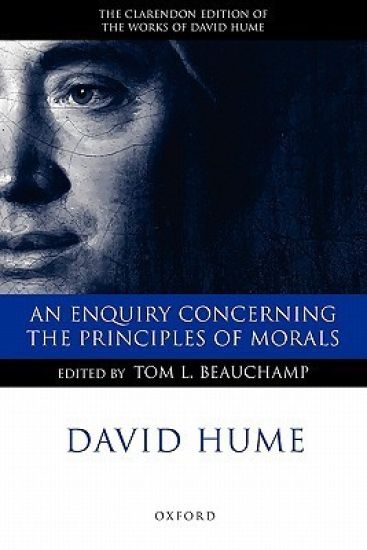
David Hume: An Enquiry concerning the Principles of Morals
About Hume David Hume (1711-1776) is one of the greatest of philosophers. Today he probably ranks highest of all British philosophers in terms of influence and philosophical standing. His philosophical work ranges across morals, the mind, metaphysics, epistemology, and aesthetics; he had broad interests not only in philosophy as it is now conceived but in history, politics, economics, religion, and the arts. He was a master of English prose. The Clarendon Hume Edition General Editors: Professor T. L. Beauchamp, Georgetown University, USA, Professor D. F. Norton, McGill University, Canada, and Professor M. A. Stewart, University of Lancaster, England The Clarendon Hume will include all of his works except his History of England and minor historical writings; it will be the only thorough critical edition, and will provide a far more extensive scholarly treatment than any previous editions. This edition (which has been in preparation since the 1970s) offers authoritative annotation, bibliographical information, and indexes, and draws upon the major advances in textual scholarship that have been made since the publication of earlier editions--advances both in the understanding of editorial principle and practice and in knowledge of the history of Hume's own texts. The Edition will comprise: Volumes 1 and 2: A Treatise of Human Nature, edited by D. F. Norton Volume 3: An Enquiry concerning Human Understanding, edited by T. L. Beauchamp Volume 4: An Enquiry concerning the Principles of Morals, edited by T. L. Beauchamp Volume 5: The Natural History of Religion and the Dissertation on the Passions Volumes 6 and 7: Essays Volume 8: Dialogues concerning Natural Religion and other posthumous publications, edited by M. A. Stewart About this work An Enquiry concerning the Principles of Morals was Hume's third great philosophical work, first published in 1751. Hume's aim in this elegant and lucid work was to present in an accessible way his theory of the foundation of morality in human nature, which had developed significantly since he first addressed the subject in the Treatise of Human Nature (1739/40). He discusses moral psychology; freedom, necessity, and causation; practical reasoning; justice; virtues and other moral qualities. He considered this Enquiry to be 'of all my writings, historical, philosophical, or literary, incomparably the best'. About this volume The authoritative version of the text, based upon the 1772 edition that was seen through the press by Hume himself, is presented here accurately and clearly. The editor's introduction sets the work in its historical context; the annotation and glossary provide information about Hume's sources, allusions, citations, and meanings, to help readers towards a full understanding of the text. A biographical appendix identifies the many people mentioned by Hume in the Enquiry. Bibliographies list the works cited by Hume and a selection of the secondary literature. Hume's original index is reproduced, together with a new general index by the editor.
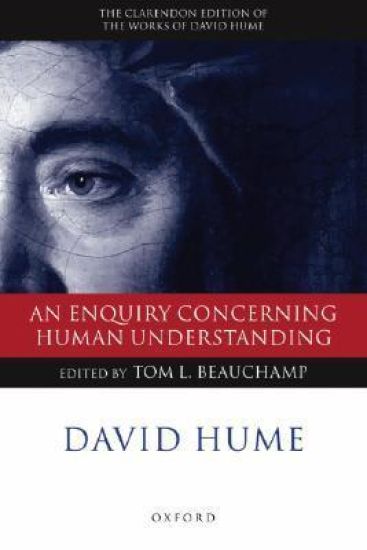
David Hume: An Enquiry concerning Human Understanding
about Hume: David Hume (1711-1776) is one of the greatest of philosophers. Today he probably ranks highest of all British philosophers in terms of influence and philosophical standing. His philosophical work ranges across morals, the mind, metaphysics, epistemology, and aesthetics; he had broad interests not only in philosophy as it is now conceived but in history, politics, economics, religion, and the arts. He was a master of English prose. about the Clarendon Hume Edition: The Clarendon Hume will include all of his works except his History of England and minor historical writings; it will be the only thorough critical edition, and will provide a far more extensive scholarly treatment than any previous editions. This edition (which has been in preparation since the 1970s) offers authoritative annotation, bibliographical information, and indexes, and draws upon the major advances in textual scholarship that have been made since the publication of earlier editions--advances both in the understanding of editorial principle and practice and in knowledge of the history of Hume's own texts. General Editors: Professors T. L. Beauchamp (Georgetown University, USA), D. F. Norton (McGill University, Canada), M. A. Stewart (University of Lancaster, England). The Edition will comprise: Vols. 1 and 2: A Treatise of Human Nature, edited by D. F. Norton Vol. 3: An Enquiry concerning Human Understanding, edited by T. L. Beauchamp Vol. 4: An Enquiry concerning the Principles of Morals, edited by T. L. Beauchamp Vol. 5: The Natural History of Religion and the Dissertation on the Passions Vols. 6 and 7: Essays Vol. 8: Dialogues concerning Natural Religion and other posthumous publications, edited by M. A. Stewart
David Copperfield

David Copperfield

Charles Dickens

Oxford University Press
2008
nidottu
`I have in my heart of hearts a favourite child. And his name is DAVID COPPERFIELD,' wrote Dickens of what is the most personal, certainly one of the most popular, of all his novels. Dickens wrote the book after the completion of a fragment of autobiography recalling his employment as a child in a London warehouse, and in the first-person narrative, a new departure for him, realized marvellously the workings of memory. The embodiment of his boyhood experience in the novel involved a `complicated interweaving of truth and fiction', at its most subtle in the portrait of his father as Mr Micawber, one of Dickens's greatest comic creations. Enjoying a humour that never becomes caricature, the reader shares David's affection for the eccentric Betsey Trotwood and her protégé Mr Dick, and smiles with the narrator at the trials he endures in his love for the delightfully silly Dora. Settings, (East Anglia, the London of the 1820s), people, and events are unified by their relationship to the story of Steerforth's treachery, which reaches its powerful climax in the storm scene. This edition, which has the accurate Clarendon text, includes Dickens's trial titles and working notes, and eight of the original illustrations by `Phiz'. ABOUT THE SERIES: For over 100 years Oxford World's Classics has made available the widest range of literature from around the globe. Each affordable volume reflects Oxford's commitment to scholarship, providing the most accurate text plus a wealth of other valuable features, including expert introductions by leading authorities, helpful notes to clarify the text, up-to-date bibliographies for further study, and much more.