This book offers an introduction to the fundamentals of neurosociology and presents the newest issues and findings in the field. It describes the evolution of the brain and its social nature. It examines the concept of knowing and what can be known, as well as the subjective sensations we experience. Next, it explores the ubiquitousness of New Unconsciousness and the latest conclusions about mirror neurons. Additional themes and concepts described are sex differences in the brain, imitation, determinism and agency.The book brings together neuroscience and sociology, two fields that are very different in terms of method, theory, tradition and practice. It does so building on the following premise: If our brains have been forged evolutionarily over the many centuries for social life, sociologists should have the opportunity, if not the duty, to know about it whatever the reservations of some who think that any approach that includes biology must be reductionistic.
Beim Abriss handelt es sich um eine anonyme Selbstanzeige, durch die Hume die Aufmerksamkeit des Publikums auf seinen Traktat zu lenken hoffte; die Schrift enth lt eine sehr klare und pr gnante Darlegung der Hauptthesen seiner theoretischen Philosophie. Der ebenfalls anonym publizierte Brief ist Humes Versuch, seinen Traktat gegen den Vorwurf zu verteidigen, die vorgetragene Theorie sei skeptizistisch und atheistisch und untergrabe die Grundlagen der Moral.
While the term neural networks may be unfamiliar to many organizational psychologists, exciting new applications of artificial intelligence are attracting notice among organizational behavior researchers. In ""Neural Networks in Organizational Research: Applying Pattern Recognition to the Analysis of Organizational Behavior"", authors David Scarborough and Mark Somers bring researchers, academics, and practitioners up to speed on this emerging field, in which powerful computing capabilities offer new insights into longstanding, complex I/O questions such as employee selection and behavioral prediction. Neural networks mimic the way the human brain works, using interconnected nodes and feedback loops to ""learn"" to recognize even subtle patterns in vast amounts of data. They can process data far more quickly and efficiently than conventional techniques can, and produce better empirical results. They are especially useful for modeling nonlinear processes. The book traces the development of this methodology and demonstrates how it opens up new ways of thinking about traditional problems. Academic researchers will gain a design template for studying both the linear and non-linear elements of a given problem, and thus enhance their own research.
Through engaging stories and studies, the author shows you how to leverage the most provocative neuroscience research to increase your productivity, expand your creative vision, and become a stronger leader. By dispelling brain myths and applying an understanding of how the brain perceives, plans, and influences behavior, you'll transform your leadership, organizational management, and impact. The neuroscience and leadership topics addressed in this book will help you: Deal with information overload and ignore irrelevant information to improve your decision-making process Cultivate and develop creativity and solve problems by thinking differently Increase your emotional intelligence to work and build relationships with colleagues effectively Control stress in the workplace and manage the emotions of a crisis Nurture a healthy brain by understanding the impact of diet, exercise, and sleep on your mental wellness Contents: Introduction Chapter 1: The Curse of Too Much Information Chapter 2: The Myth of Multitasking Chapter 3: Respecting the Emotional Brain Chapter 4: Improving Your Thinking Chapter 5: Leading by Dissent Chapter 6: Moral and Ethical Leadership Chapter 7: Taking Care of Your Brain Notes Bibliography Index About the Author
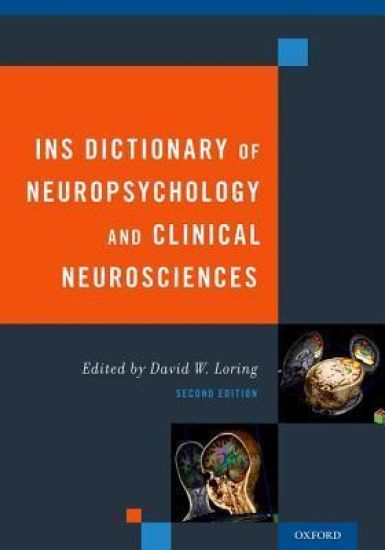
The INS Dictionary of Neuropsychology and Clinical Neurosciences provides concise definitions of neurobehavioral abnormalities, diseases affecting the nervous system, clinical syndromes, neuropsychological tests, neuroanatomy, rehabilitation methods, medical procedures, basic neuroscience, and other important clinical neuroscience terms. Its broad scope not only encompasses the approaches, perspectives, and practice settings of neuropsychology, but also extends to the related disciplines of pharmacology, neurophysiology, neurology, neuropsychiatry, and experimental and cognitive psychology. The Second Edition expands on the content of the First, emphasizing the methodology necessary to critically evaluate research publications according to the highest clinical standards involving evidence-based practice. In addition to definitions, the INS Dictionary includes other information relevant to neuropsychology: abbreviations and acronyms that appear in medical charts and in clinical literature, the origins of specific terminology and how concepts developed, and biographical information on individuals who have influenced the understanding of syndromes, diseases, and anatomy. Although definitions for most terms are readily available on the Internet, the INS Dictionary presents definitions with a neuropsychological perspective with relevance for neuropsychologists more clearly identified. The INS Dictionary is also conceptualized as an active textbook; entries were derived from a variety of sources ranging from grand rounds to scientific literature and professional neuropsychology conferences. The wide variety of terms that have been specifically selected for inclusion makes the INS Dictionary a valuable resource for neuropsychologists and clinical neuroscientists at all levels.
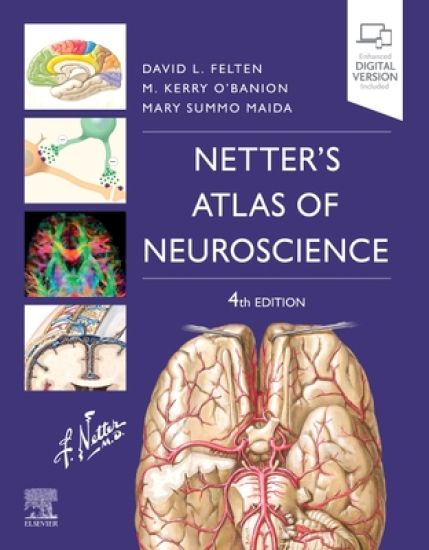
Ideal for students of neuroscience and neuroanatomy, the new edition of Netter's Atlas of Neuroscience combines the didactic well-loved illustrations of Dr. Frank Netter with succinct text and clinical points, providing a highly visual, clinically oriented guide to the most important topics in this subject. The logically organized content presents neuroscience from three perspectives: an overview of the nervous system, regional neuroscience, and systemic neuroscience, enabling you to review complex neural structures and systems from different contexts. You may also be interested in: A companion set of flash cards, Netter's Neuroscience Flash Cards, 3rd Edition, to which the textbook is cross-referenced. Coverage of both regional and systemic neurosciences allows you to learn structure and function in different and important contexts. Combines the precision and beauty of Netter and Netter-style illustrations to highlight key neuroanatomical concepts and clinical correlations. Reflects the current understanding of the neural components and supportive tissue, regions, and systems of the brain, spinal cord, and periphery. Uniquely informative drawings provide a quick and memorable overview of anatomy, function, and clinical relevance. Succinct and useful format utilizes tables and short text to offer easily accessible "at-a-glance" information. Provides an overview of the basic features of the spinal cord, brain, and peripheral nervous system, the vasculature, meninges and cerebrospinal fluid, and basic development. Integrates the peripheral and central aspects of the nervous system. Bridges neuroanatomy and neurology through the use of correlative radiographs. Highlights cross-sectional brain stem anatomy and side-by-side comparisons of horizontal sections, CTs and MRIs. Features video of radiograph sequences and 3D reconstructions to enhance your understanding of the nervous system. Student Consult eBook version included with purchase. This enhanced eBook experience includes access -- on a variety of devices -- to the complete text, 14 videos, and images from the book. Expanded coverage of cellular and molecular neuroscience provides essential guidance on signaling, transcription factors, stem cells, evoked potentials, neuronal and glial function, and a number of molecular breakthroughs for a better understanding of normal and pathologic conditions of the nervous system. Micrographs, radiologic imaging, and stained cross sections supplement illustrations for a comprehensive visual understanding. Increased clinical points -- from sleep disorders and inflammation in the CNS to the biology of seizures and the mechanisms of Alzheimer's -- offer concise insights that bridge basic neuroscience and clinical application.
Ideal for any student of neuroanatomy, neuroscience, or other medical or science disciplines involving the nervous system, Netter's Atlas of Neuroscience, 4th Edition, is a highly visual, clinically oriented exploration of structure and function-from neurons to motor and sensory systems to global neural function and dysfunction. This award-winning text approaches this complex topic from three perspectives: Neuroscience Overview, Regional Neuroscience, and Systemic Neuroscience. Illustrations by Frank H. Netter, MD, and others following in his tradition are framed by concise, expert text and accompanied by neuroimaging, photomicrographs, and summary diagrams. Combines Netter and Netter-like illustrations, and beautiful molecular and cellular illustrations, with succinct text and clinical points, delivering the essential information students need for both basic science and clinical programs. Presents organizational and summarized neurosciences information, enabling students to review complex concepts, functions, and systems in several contexts. Provides an overview of the basic features of cellular and molecular neuroscience; peripheral nerves, spinal cord, brain stem and cerebellum, and the brain; reviews the neural vasculature, meninges and cerebrospinal fluid, and developmental neuroscience. Highlights cross-sectional spinal cord and brain stem anatomy and side-by-side comparisons of Netter illustrations and MRIs of axial and coronal brain sections, including extensive clinical correlations. Focuses on foundational concepts as well as clinically relevant discussions. Expands basic neural connectivity and functional roles of limbic structures and behavior. Reviews Global Neural Functions and Disorders in a brand new chapter with more than a dozen new art plates. Includes many new art plates covering current topics including neural foundations of addiction, dementias, several neuropsychiatric disorders, consciousness, coma and its assessment, sleep regulation, postnatal and adult neurogenesis, endogenous opioid systems, endogenous cannabinoid systems, and others. Enhanced eBook version included with purchase. Your enhanced eBook allows you to access all of the text, figures, and references from the book on a variety of devices.
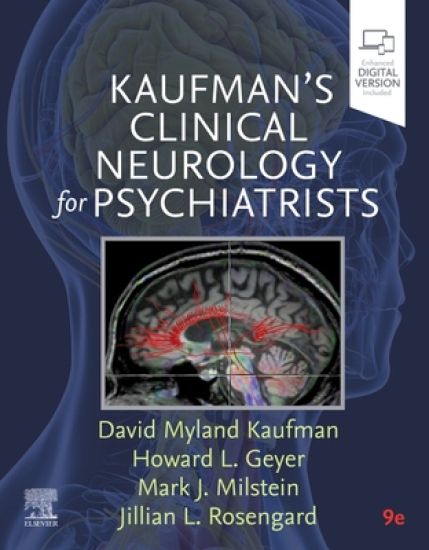
The only reference to focus on the must-know aspects of neurology for psychiatrists, Kaufman's Clinical Neurology for Psychiatrists, 9th Edition, brings you up to date with the knowledge you need to excel on the American Board of Psychiatry and Neurology and other examinations. It fully covers the exam topics you'll encounter, along with new content, high-quality illustrations, and multiple-choice questions. In addition, this book prepares you for clinical work in the 21st century. Discusses timely, clinically-relevant topics such as chronic and acute traumatic brain injury, Alzheimer's disease, correctible causes of dementia, violence, neurologic illnesses that present with symptoms of autism, illicit drug use, stroke, migraine, Parkinson's disease, tardive dyskinesia current treatments, and more. Includes nearly 2,000 multiple-choice questions both in print and online-all written to help you succeed on the ABPN certifying exam. Features new content, new and improved clinical illustrations: life-like patient sketches, anatomy line drawings, CTs, MRIs, and EEGs. Explains each condition's neurologic and psychiatric features, easily performed office and bedside examinations, appropriate tests, differential diagnosis, and management options. Correlates neurologic illnesses with the DSM-5. Enhanced eBook version included with purchase. Your enhanced eBook allows you to access all of the text, figures, and references from the book on a variety of devices.
The first of its kind, this book examines artistic representations of the brain after the rise of the contemporary neurosciences, examining the interplay of art and science and tackling some of the critical-cultural implications. Weaving an MRI pattern onto a family quilt. Scanning the brain of a philosopher contemplating her own death and hanging it in a museum. Is this art or science or something in-between? What does it mean? How might we respond? In this ground-breaking new book, David R. Gruber explores the seductive and influential position of the neurosciences amid a growing interest in affect and materiality as manifest in artistic representations of the human brain. Contributing to debates surrounding the value and/or purpose of interdisciplinary engagement happening in the neuro-humanities, Gruber emphasizes the need for critical-cultural analysis within the field. Engaging with New Materialism and Affect Theory, the book provides a current and concrete example of the on-going shift away from constructivist lenses, arguing that the influence of relatively new neuroscience methods (EEG, MRI and fMRI) on the visual arts has not yet been fully realised. In fact, the very idea of a brain as it is seen and encountered today—or "The Brain," as Gruber calls it—remains in need of critical, wild and rebellious re-imagination.Illuminating how artistic engagement with the brain is often sensual and suggestive even if rooted in objectivist impulses and tied to scientific realism, this book is ideal for scholars in Art, Media Studies, Sociology, and English departments, as well visual artists and anyone seriously engaging discourses of the brain.
The first of its kind, this book examines artistic representations of the brain after the rise of the contemporary neurosciences, examining the interplay of art and science and tackling some of the critical-cultural implications. Weaving an MRI pattern onto a family quilt. Scanning the brain of a philosopher contemplating her own death and hanging it in a museum. Is this art or science or something in-between? What does it mean? How might we respond? In this ground-breaking new book, David R. Gruber explores the seductive and influential position of the neurosciences amid a growing interest in affect and materiality as manifest in artistic representations of the human brain. Contributing to debates surrounding the value and/or purpose of interdisciplinary engagement happening in the neuro-humanities, Gruber emphasizes the need for critical-cultural analysis within the field. Engaging with New Materialism and Affect Theory, the book provides a current and concrete example of the on-going shift away from constructivist lenses, arguing that the influence of relatively new neuroscience methods (EEG, MRI and fMRI) on the visual arts has not yet been fully realised. In fact, the very idea of a brain as it is seen and encountered today—or "The Brain," as Gruber calls it—remains in need of critical, wild and rebellious re-imagination.Illuminating how artistic engagement with the brain is often sensual and suggestive even if rooted in objectivist impulses and tied to scientific realism, this book is ideal for scholars in Art, Media Studies, Sociology, and English departments, as well visual artists and anyone seriously engaging discourses of the brain.