

Kirjahaku
Etsi kirjoja tekijän nimen, kirjan nimen tai ISBN:n perusteella.
1000 tulosta hakusanalla David R Addleman
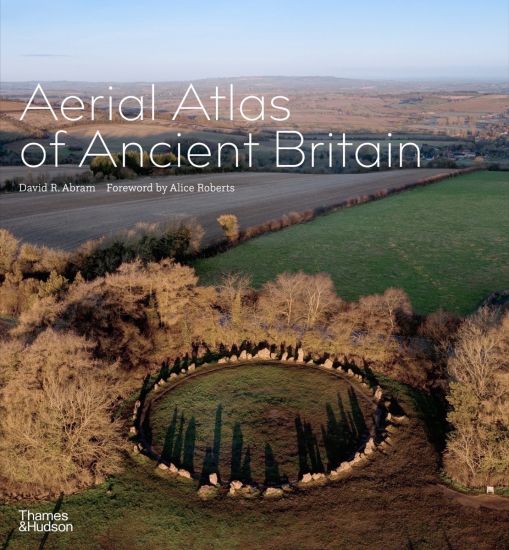
A spectacular collection of aerial photographs of Britain's most extraordinary prehistoric sites. This breathtaking collection of aerial images reveals ancient monuments from all around the British Isles, as they have never been seen before: Neolithic enclosures, cairns and stone circles; Bronze Age villages, farmsteads, tombs and burial mounds; and Iron Age hillforts, all photographed in spectacular bird’s-eye-view detail. Photographs taken directly above the sites, often at dawn, allow uniquely informative views, showing not only how ancient monuments fit into the surrounding landscape, but also how they define or respond to the area’s natural character. Stone cairns and circles evoke lost rituals and religious ceremonies; Iron Age ramparts hint at former strongholds; and tangible geographical clues reveal the scars of real or mythical battles. The oldest site in the collection was created nearly 6,000 years ago; the most recent originated shortly before the Roman invasion of Britain in AD 43. This is an inspiring way to discover the beauty and history of the British landscape, revealing the visible traces of our ancestors, from such famous monuments as Stonehenge to little-known gems that have never before been seen from the air.
David R. Roediger's powerful book argues that in its political workings, its distribution of advantages, and its unspoken assumptions, the United States is a 'still white' nation. Race is decidedly not over. The critical portraits of contemporary icons that lead off the book - Rush Limbaugh, Bill Clinton, O.J. Simpson, and Rudolph Giuliani - insist that continuities in white power and white identity are best understood by placing the recent past in historical context. Roediger illuminates that history in an incisive critique of the current scholarship on whiteness and an account of race-transcending radicalism exemplified by vanguards such as W.E.B. Du Bois and John Brown. He shows that, for all of its staying power, white supremacy in the United States has always been a pursuit rather than a completed project, that divisions among whites have mattered greatly, and that 'nonwhite' alternatives have profoundly challenged the status quo. "Colored White" reasons that, because race is a matter of culture and politics, racial oppression will not be solved by intermarriage or demographic shifts, but rather by political struggles that transform the meaning of race - especially its links to social and economic inequality. This landmark work considers the ways that changes in immigration patterns, the labor force, popular culture, and social movements make it possible - though far from inevitable - that the United States might overcome white supremacy in the twenty-first century. Roediger's clear, lively prose and his extraordinary command of the literature make this one of the most original and generative contributions to the study of race and ethnicity in the United States in many decades.

The first in-depth study of the political, social, and cultural history of juvenile delinquency in modern Japan, "Bad Youth" treats the policing of urban youth as a crucial site for the development of new state structures and new forms of social power. Focusing on the years of rapid industrialization and imperialist expansion (1895 to 1945), David R. Ambaras challenges widely held conceptions of a Japan that did not, until recently, experience delinquency and related youth problems. He vividly reconstructs numerous individual life stories in the worlds of home, school, work, and the streets, and he relates the changes that took place during this time of social transformation to the broader processes of capitalist development, nation-state formation, and imperialism.
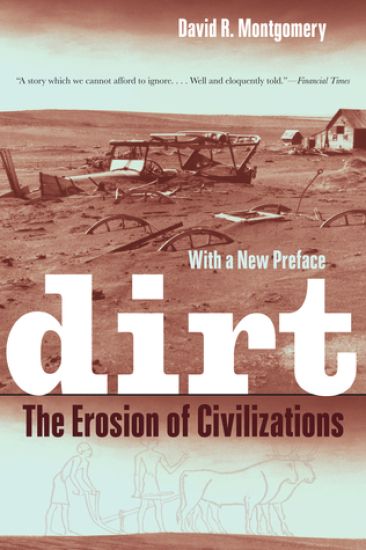
Dirt, soil, call it what you want - it's everywhere we go. It is the root of our existence, supporting our feet, our farms, and our cities. This fascinating yet disquieting book finds, however, that we are running out of dirt, and it's no laughing matter. An engaging natural and cultural history of soil that sweeps from ancient civilizations to modern times, "Dirt: The Erosion of Civilizations" explores the compelling idea that we are - and have long been - using up Earth's soil. Once bare of protective vegetation and exposed to wind and rain, cultivated soils erode bit by bit, slowly enough to be ignored in a single lifetime but fast enough over centuries to limit the lifespan of civilizations. A rich mix of history, archaeology and geology, "Dirt" traces the role of soil use and abuse in the history of Mesopotamia, Ancient Greece, the Roman Empire, China, European colonialism, Central America, and the American push westward. We see how soil has shaped us and we have shaped soil - as society after society has risen, prospered, and plowed through a natural endowment of fertile dirt. David R. Montgomery sees in the recent rise of organic and no-till farming the hope for a new agricultural revolution that might help us avoid the fate of previous civilizations.
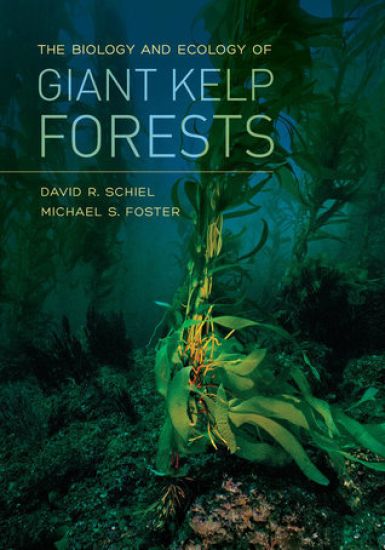
The Biology and Ecology of Giant Kelp Forests
David R. Schiel; Michael S. Foster
University of California Press
2015
sidottu
This is the largest seaweed, giant kelp (Macrocystis) is the fastest growing and most prolific of all plants found on earth. Growing from the seafloor and extending along the ocean surface in lush canopies, giant kelp provides an extensive vertical habitat in a largely two-dimensional seascape. It is the foundation for one of the most species-rich, productive, and widely distributed ecological communities in the world. Schiel and Foster's scholarly review and synthesis take the reader from Darwin's early observations to contemporary research, providing a historical perspective for the modern understanding of giant kelp evolution, biogeography, biology, and physiology. The authors furnish a comprehensive discussion of kelp species and forest ecology worldwide, with considerations of human uses and abuses, management and conservation, and the current and likely future impacts of global change. This volume promises to be the definitive treatise and reference on giant kelp and its forests for many years, and it will appeal to marine scientists and others who want a better appreciation and understanding of these wondrous forests of the sea.
Defects and Geometry in Condensed Matter Physics
David R. Nelson
Cambridge University Press
2002
pokkari
Thermally excited defects such as vortices, disclinations, dislocations, vacancies and interstitials play a key role in the physics of crystals, superfluids, superconductors, liquid crystals and polymer arrays. Geometrical aspects of statistical mechanics become particularly important when thermal fluctuations entangle or crumple extended line-like or surface-like objects in three dimensions. In the case of entangled vortices above the first-order flux lattice melting transition in high temperature superconductors, the lines themselves are defects. A variety of low temperature theories combined with renormalization group ideas are used to describe the delicate interplay between defects, statistical mechanics and geometry characteristic of these problems in condensed matter physics. In this 2002 book, David Nelson provides a coherent and pedagogic graduate level introduction to the field of defects and geometry.
Hong Kong has remained the global metropolis for Asia since its founding in the 1840s following the Opium Wars between Britain and China. David Meyer traces its vibrant history from the arrival of the foreign trading firms, when it was established as one of the leading Asian business centres, to its celebrated handover to China in 1997. Throughout this period, Hong Kong has been prominent as a pivotal meeting place of the Chinese and foreign social networks of capital and as such has been China's window on to the world economy, dominating other financial centers such as Singapore and Tokyo. Looking into the future, the author presents an optimistic view of Hong Kong in the twenty-first century, challenging those who predict its decline under Chinese rule. This accessible and broad-ranging look at the story of Hong Kong's success will interest anyone concerned with its past, present and future.
Animals as geomorphic agents have primarily been considered curiosities in the literature of geomorphology, whose spatial and quantitative influences have been seen as both limited and minor. Zoogeomorphology: Animals as Geomorphic Agents, which is wholly devoted to this topic, examines the distinct geomorphic influences of invertebrates, ectothermic vertebrates, birds and mammals, and demonstrates the importance of animals as landscape sculptors. Specific processes associated with the diversity of animal influences in geomorphology are examined, including burrowing and denning, nesting, lithophagy and geophagy, wallowing and trampling, food caching, excavating for food, and dam building by beavers. Particular emphasis is placed on terrestrial animals, although aquatic animals are also discussed where appropriate.
An attempt at an analysis in depth of the work of Yang Hsiung (53 BC–AD 18), and of the Fu or rhapsody (a mixture of rhythmical prose passages interspersed with free, rhymed verse). Yang Hsiung has figured prominently in Chinese literary history, though he is better known for his philosophical and historical writings than for his literary work. Professor Knechtges shows that Yang is important in the development of the Fu, a poetic genre popular in the Former Han dynasty (206 BC–AD 8) and the mastery of which brought him recognition and honours at the imperial court. The work and development of the genre are analysed from a modern critical viewpoint. Professor Knechtges' book will be of interest to specialists in Chinese literature and to historians of the Han period.

Seventeenth-Century Parliamentary and Financial Papers
David R. Ransome; Mike J. Braddick; Mark Greengrass; J. T. Cliffe
Cambridge University Press
2011
pokkari
The Camden volumes, published by the Royal Historical Society, offer collections of skilfully edited primary source material for historians. The Camden Miscellany collections contain a variety of shorter documents and papers. This volume comprises seventeenth-century documents on parliamentary and financial matters. These include the parliamentary papers of Nicholas Ferrar (1624), the letters of Sir Cheney Culpeper (1641–57) and the assessment lists for the Cromwellian decimation tax of 1655.
It is Professor Heise's premise that the psychology of affect theoretically governs common social actions, such as those of a patient toward a doctor or a mother toward a child. Human behaviour, he argues, normally promotes the maintenance of a steady emotional state. Should events produce undue strain, the individual attempts to anticipate subsequent developments, formulate a course of action and create new events designed to confirm his established sentiments. This book lays the foundation for this approach to interpreting events: it offers a mathematical model grounded in empirical procedures for analysing what happens in social relationships. Topics covered in the book include how situations are defined and events constructed, past research on processes of impression formation, the mathematical derivation for predicting behaviour and the application of this approach to the study of roles. Throughout the book, the theory is shown to be relevant not only for the construction of social action, but also for the reconstruction of events and, in particular, for the identification of social deviants.
Animals as geomorphic agents have primarily been considered curiosities in the literature of geomorphology, whose spatial and quantitative influences have been seen as both limited and minor. Zoogeomorphology: Animals as Geomorphic Agents, which is the only book available wholly devoted to this topic, examines the distinct geomorphic influences of invertebrates, ectothermic vertebrates, birds and mammals, and demonstrates the importance of animals as landscape sculptors. Specific processes associated with the diversity of animal influences in geomorphology are examined, including burrowing and denning, nesting, lithophagy and geophagy, wallowing and trampling, food caching, excavating for food, and dam building by beavers. Particular emphasis is placed on terrestrial animals, although aquatic animals are also discussed where appropriate.
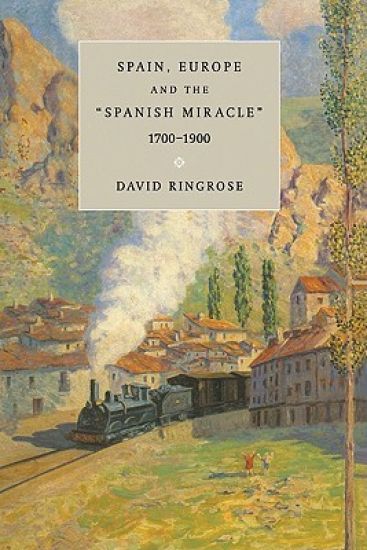
Spain, Europe, and the 'Spanish Miracle', 1700–1900
David R. Ringrose
Cambridge University Press
1996
sidottu
David Ringrose here re-examines the history of Spain in the eighteenth and nineteenth centuries. He challenges the pessimism of prevailing assumptions about Spanish history, and its conventional separation into pre- and post-Napoleonic eras. Spain, Europe, and the ‘Spanish Miracle’, 1700–1900 also questions the importance of the empire for Spain’s own economy, suggesting instead that Spain evolved as part of Europe; indeed, some of the recently documented modernisation of the nineteenth century was already well under way in the eighteenth. In addition, the emergence of a governing élite closely tied to provincial society is placed in the context of traditional networks of patronage based upon close-knit family ties. Such a perspective makes the transitions of the 1930s and 1970s easier to explain. This important and challenging book will change our understanding of the history of modern Spain.
It is hard to think of any significant aspect of our lives that is not influenced by what we have learned in the past. Of fundamental importance is our ability to learn the ways in which events are related to one another, called associative learning. This book provides a fresh look at associative learning theory and reviews extensively the advances made over the last twenty years. The Psychology of Associative Learning begins by establishing that the human associative learning system is rational in the sense that it accurately represents event relationships. David Shanks goes on to consider the informational basis of learning, in terms of the memorisation of instances, and discusses at length the application of connectionist models to human learning. The book concludes with an evaluation of the role of rule induction in associative learning. This will be essential reading for graduate students and final year undergraduates of psychology.
It is hard to think of any significant aspect of our lives that is not influenced by what we have learned in the past. Of fundamental importance is our ability to learn the ways in which events are related to one another, called associative learning. This book provides a fresh look at associative learning theory and reviews extensively the advances made over the last twenty years. The Psychology of Associative Learning begins by establishing that the human associative learning system is rational in the sense that it accurately represents event relationships. David Shanks goes on to consider the informational basis of learning, in terms of the memorisation of instances, and discusses at length the application of connectionist models to human learning. The book concludes with an evaluation of the role of rule induction in associative learning. This will be essential reading for graduate students and final year undergraduates of psychology.
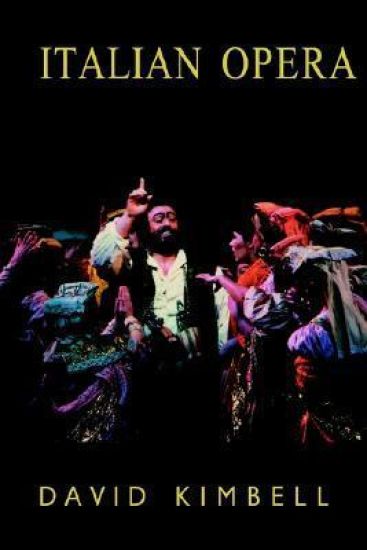
Italy was the birthplace of opera. In this authoritative and accessible account of Italian opera, David Kimbell introduces the composers and dramatists, the singers and audiences who, over three hundred years, have created not only a national tradition but the central tradition from which others have drawn their inspiration. He traces the history of Italian opera from its origins in the humanism of the Renaissance to Puccini in the early twentieth century, drawing attention not only to musical issues but also to the social, literary, and philosophical ideas that have shaped modern Italian civilisation. Each part is illustrated by a detailed critical discussion of a key work.

Norma is by common consent the finest of the ten operas composed during Vincenzo Bellini’s short career, representing his genius more comprehensively than is usually the case with any single work by an operatic composer. This handbook provides the biographical and cultural context of the opera. It gives a full synopsis and an examination of the music and poetry, which is rooted in the aesthetics of early nineteenth-century Italian opera. Professor Kimbell suggests something of the impression Norma has made on our imaginations and sensibilities in the 165 years since it was first produced in Milan in December 1831. He considers the great interpretations of the eponymous leading role. His discussion also embraces Bellini’s work more generally by presenting some of the critical reactions to his music.

The Atlantic slave trade brought to Cuba the African slaves who created the dramatic transformation of the island from a relative backwater of Spain's colonial empire in the mid-eighteenth century to the world's richest plantation colony one hundred years later. Britain played a vital role in this transformation. British slave traders were the chief suppliers of Cuba's slaves in the eighteenth century; in the nineteenth century Britain became the greatest threat to Cuba's prosperity when she attempted to make Spain follow her example and abolish the slave trade. Dr Murray's study, based on a thorough examination of British and Spanish records, reveals how important British influence was on the course of Cuban history.

For well over a century educational reformers have looked for a breakthrough in the sciences of psychology and pedagogy that would dramatically improve the effectiveness of schooling. This book shows why such an ambition is an illusion. Schools are institutions which attempt to balance the needs of a bureaucratic society that funds them with the personal goals, interests, hopes and ambitions of the students who enroll in them. Reform efforts attempt to realign that balance without any clear conception of how the two are related. This book offers a theoretical account of the relation between the minds of learners and the institutional structure of the school that would account both for the ways that schooling remakes minds and societies and why such institutions are resistant to change.